Software for general contractors, run by an AI crew.
One AI platform for the whole GC job. Bid package to closeout. Ruh AI runs the general contractor's job end to end: the RFP package read and the scope pulled by trade, quantities measured off the real drawings, an estimate priced on your own price book, sub bids invited, chased, and leveled, then the budget, baseline schedule, subcontracts, change orders, submittals, RFIs, daily logs, pay applications, and closeout on one project record. Every number carries its source and a confidence score. Your estimator signs the bid and your PM runs the job.
- ✓Scope, takeoff, and a priced estimate from one drawing set
- ✓Around 300 sub proposals per job, leveled with rules you can read
- ✓Budget, schedule, contracts, and closeout on the same record
- ✓Runs in your tenant. Your team signs every line.

Everything a GC Does. What Ruh Does at Each Step.
Software for general contractors is what Ruh AI provides. It reads the bid package and pulls the scope by trade, measures the takeoff off the drawings, prices the estimate on your price book, invites and levels subcontractor bids, generates the budget and the baseline schedule, tracks subcontracts, change orders, submittals, RFIs, daily logs, and pay applications, and assembles the closeout packet. Every quantity carries its source and a confidence score. Your estimator signs the bid. Your PM runs the job.
Every stage is in production with construction teams today. Open a stage for its product page.


The Bid Package Goes In. The Scope Comes Out by Trade.
Ruh reads the whole set: plans, the specification book, addenda, and your estimator's own scope notes, so scope gaps can be raised as RFIs. It pulls the scope by trade, ties every item to the sheet or document it was read from, and checks what it was asked to price against what the documents prove. Where the evidence stops, it raises a formal RFI with a recipient and a priority. It will not price past a blocking gap.
Reads the Set Sheet by Sheet
Plans, the spec book, addenda, and notes. The spec book sets the trade structure, not a template guess.
Scope by Trade, Traced to a Source
Every scope line points at the sheet, photo, or document it was read from, with a state: measured, flagged for review, or assumed.
Gaps Become Questions, Not Zeros
Nine of eighteen buildings measured? It asks about the other nine instead of extrapolating. A missing rate becomes an RFI, not an invented number.
“Field notes and photos feed a fifty-megabyte Excel pricing sheet, then a macro, then a PowerPoint proposal. That is the whole estimating pipeline today.”


Measured off the Drawings. Priced on Your Numbers. Signed by Your Estimator.
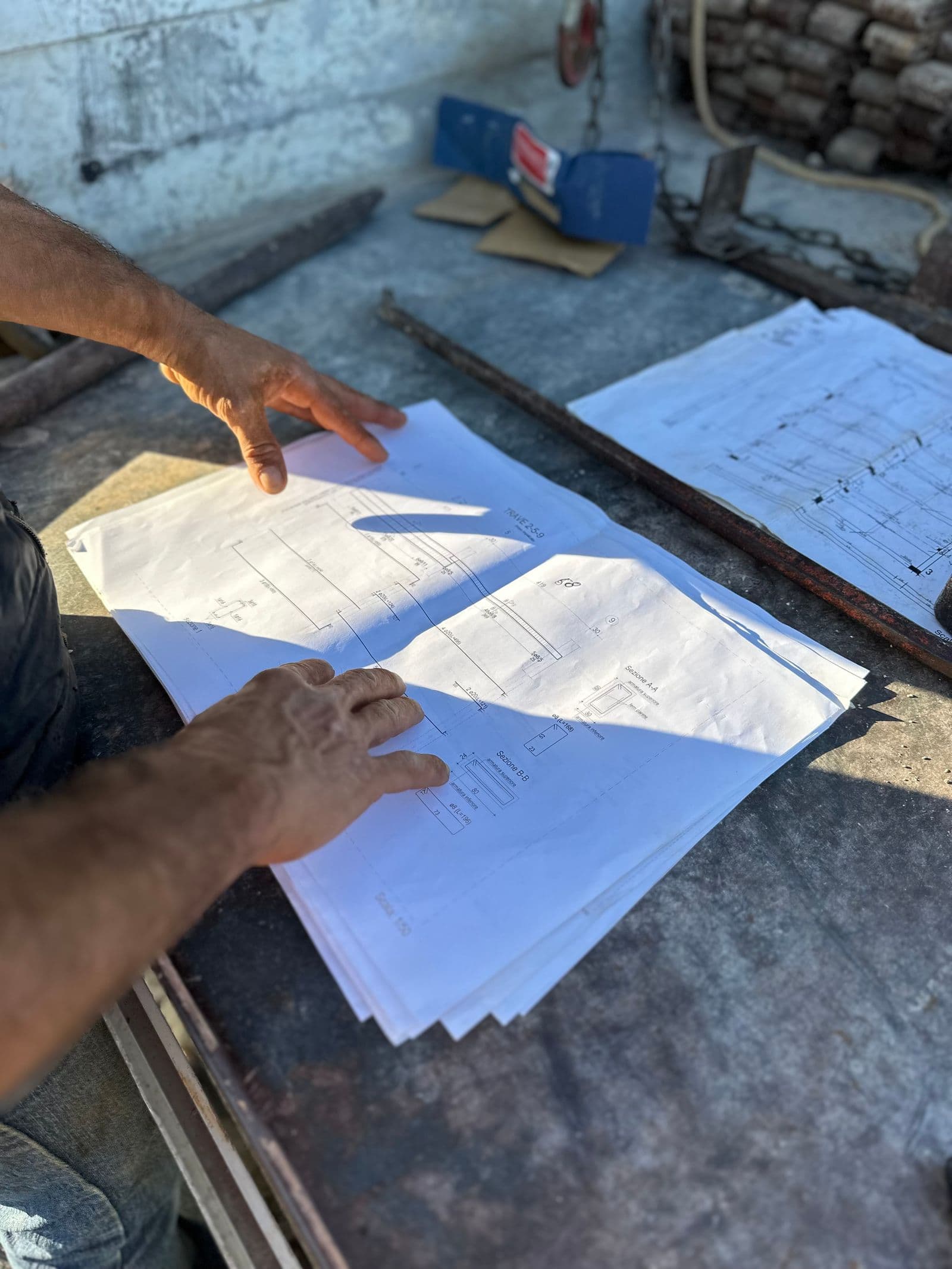
Estimating software for general contractors starts with a takeoff engine that reads the drawing PDFs and CAD files, classifies sheets, measures rooms and wall runs, counts symbols, and calibrates scale. Every quantity carries a verification state and the run reports its page coverage. The estimate is priced from your price book, the leveled sub bids, and labeled allowances for anything not yet hard-priced, then exported into the estimating workbook and proposal template your team already uses.
Send the Drawing Set
PDF or CAD, straight from the bid invite. No setup project, no template mapping.
Ruh Measures and Prices
Takeoff, scope, budget, estimate, and proposal, each stage with its own artifact, version history, and approval.
Your Estimator Reviews and Signs
Confidence and coverage make review fast. Change anything, and the correction is kept for the next bid.
Your Workbook, Not a Lookalike
Exports fill your real estimating workbook and proposal template, with a report of anything the system could not confidently place.

Around 300 Sub Proposals per Job. Leveled, Not Eyeballed.
A general contractor compares 30 to 40 trades, 4 to 7 bids each, against its own estimate. Ruh drafts the bid invitations and the follow-ups for your approval, parses every quote as it lands, and levels them with rules you can read. Then it keeps a performance record on every sub, so the next bid package goes to the right ones.
Invites and Follow-Ups, Drafted
Bid invitations logged by trade and channel. Follow-up keeps running without an estimator burning a day on fifty calls. Your team approves what goes out.
Quotes Parsed, Highest Revision Wins
One bid per document, exact labeled totals, duplicates resolved to the latest revision.
Leveled With Readable Rules
Lowest real bid per trade. A firm quote replaces the line, never stacks on it. A combined multi-trade bid is carried unplaced rather than mis-leveled. Gaps are labeled allowances.
Sub Performance on File
Schedule adherence, RFI volume, defect rate, payment history. Who to invite, who to re-qualify, with the reasoning attached.
“Sometimes it is a one-man shop doing the work, so they answer in the evening or on the weekend.”

The Estimate Becomes the Job. Nothing Gets Re-Keyed.
When the bid is won, the approved estimate freezes as the baseline and the same records run the job: the budget, the baseline schedule, executed subcontracts and their schedules of values, change orders, submittals, RFIs, daily logs, pay applications, and the closeout packet. One canonical record per fact, from the first submittal to the final handover.
Budget Versus Buyout
Original, approved changes, revised, committed and buyout variance, per row, against the as-sold baseline frozen at handoff. A missing amount is disclosed, never counted as zero.
Baseline Schedule
Generated from the takeoff, milestones chained on working days, each flagged on track, at risk, behind, or complete.
Subcontracts, SOV, and Change Orders
Each executed commitment broken into the lines a sub bills against, summing to the commitment. Change events captured, assessed, attributed to a trade, and carried to the owner's decision.
Submittals, RFIs, Pay Apps, Closeout
Submittals on a business-day review clock, RFIs with ball in court, billing periods against the SOV with retainage and compliance gates, and a handover packet built from the same records.
“Most construction companies throw out allowances and call that their contract. And then they change-order people to death.”
The Products Behind the Stages.
Five products, one thread. Each runs inside your process, explains every number, and hands off to the next, from winning the bid to getting paid to filling next quarter.
Your First Bid on Ruh, in Four Steps.
Send the Drawing Set
PDF or CAD, straight from the bid invite. No setup project, no template mapping.
The Agents Run
Scope, takeoff, pricing, sub bid leveling, and assembly, with every number carrying its source.
Your Estimator Reviews
Confidence scores and coverage make review fast. Change anything; the agent learns.
The Bid Goes Out, the Job Begins
Your workbook and proposal template, filled and signed by a human. Win it, and the estimate becomes the budget, the schedule, and the subcontracts.
What GCs Told Us Actually Hurts.
Throughput Decides Revenue
The teams we talk to say it plainly: the more work they can price, the more they win. Estimating capacity, not opportunity, is the ceiling on growth.
The Knowledge Lives in One Estimator
Labor multipliers, facade judgment, coverage rates. When that sits in one senior head, every new estimator and every new office starts from zero.
Three Hundred Proposals, One Spreadsheet
Thirty to forty trades, four to seven bids each, leveled by eye against the estimate the night before the bid is due. Scope gets double-counted or dropped, and nobody can say which.
The Champion Fights Alone
The person pushing AI inside a GC usually has no internal peers, an IT team speaking a different language, and no time to explore. Change needs a sponsor.
In Their Words.
Taken from discovery calls and working sessions with construction teams over the last five months. Anonymized: roles and company types only, and lightly cleaned for transcription.
It is like somebody finally speaking my language, because I am all alone in this company doing that. There are plenty of opportunities on my side.
Any issue identified, management has to have a sponsor for me to push through a solution. It is very difficult in the construction industry to push through a process change.
I do a pre-construction agreement, then I send it out to bid, and I basically give them a much tighter range.
Automating estimates speeds bids, frees estimators for site visits, and centralizes data for consistency.
IT guys do not understand what I am trying to do. They are always about coding and possibilities. Nobody wants to give me time to explore what is happening here.
The scope goes much further than this project. Our president would love to hear this. I really want him to hear it.
What Is Software for General Contractors?
Software for general contractors runs the bid pipeline a GC actually operates, from takeoffs measured off the drawings, to the estimate, to sub bid leveling, to invoices and pay apps after award. In Ruh, AI agents do the measuring and assembly, while the estimator reviews and signs every line. That makes general contractor software an operating layer for the bid, not a replacement for judgment.
Agents on the Work, Not a Chatbot
AI for general contractors is not a chatbot bolted onto a construction logo. It is a set of agents put on the measurable work a GC actually does: reading the set, pulling scope, measuring quantities, pricing on your history, leveling sub bids, reconciling contracts, tracking submittals and RFIs, assembling pay applications and the closeout packet. Each agent works inside your process and your templates, explains every number it produces, and stops at the human gates your team already uses. That is the difference between an assistant that answers questions and a platform that does the job.
Throughput Is the Ceiling
The economics start with throughput. In our discovery calls, GCs describe the same ceiling: bid volume is capped by estimating hours, and win rate is capped by how carefully each bid can be checked before it goes out. When scope, takeoff, and leveling stop consuming the week, the same team prices more work, checks each bid harder, and spends the reclaimed time on site visits, sub relationships, and strategy. More bids at higher quality is how revenue moves, and it moves without adding headcount.
The Senior Estimator Bottleneck
The second problem this solves is quieter: the senior estimator bottleneck. Labor multipliers for height and pitch, how facade variation changes coverage, which subs pad their allowances. That judgment lives in one head, and every new estimator and every new office starts from zero. Ruh writes the assumptions down, keeps the corrections, and prices the next bid on what your best estimator taught it. The knowledge stays in the company when the person is on vacation, on site, or retired.
Scope Automation, Step by Step
Scope automation begins with the package as it came in: the drawing set, the specification book, addenda, and the estimator's own scope notes. The set is read sheet by sheet and classified by discipline and level, so a building level is counted once even when it is drawn on five sheets. The specification derives the trade-to-division map, so the estimate's structure follows the spec book rather than a template. Each scope item is tied to the sheet, photo, or document it was read from and carries a state: measured, flagged for review, or assumed. Where the documents do not support an item, a formal RFI is raised with a recipient and a priority, and the run halts at that gap rather than pricing past it.
How AI Takeoff Measures a Drawing Set
The takeoff engine works on the drawing PDFs and CAD files directly. It classifies sheets, calibrates scale, measures room areas and wall runs, counts doors, fixtures, and symbols, and reconciles vector and vision readings against each other. Every quantity carries a verification state and a source, and every trade pulls from its own physical basis: flooring from floor area, ceilings from ceiling area, painting from wall area, doors from counts. A floor area is never reused as a wall area. The run reports its page coverage, so a partial run finishes honestly as partial with the unmeasured pages named.
Estimating on Your Own Price Book
Pricing comes from your price book, your assemblies, and your closed jobs, not a generic database. Each line carries its pricing source, most grounded first: a firm sub quote, your own unit cost, a derived assembly, or a labeled allowance. The estimate is assembled with your general conditions, fee, contingency, and bond cascade, then exported into your real estimating workbook and proposal template by template parity, not a lookalike. Anything the system could not confidently place is listed in a report rather than hidden in a total.
How Bid Leveling Works
A GC compares 30 to 40 trades with 4 to 7 bids each, around 300 proposals per project, against its own estimate. Ruh parses each received quote from its document, keeps the highest revision, and levels with rules you can read. Only the lowest real quote per trade is used. A firm quote replaces the estimate line rather than stacking on it, so scope is never double-counted. A combined multi-trade bid is carried unplaced rather than mis-leveled as one trade. Gaps are priced as labeled allowances, never as silent zeros, and a coverage score tells you how much of the bid is hard-priced before you submit.
Subcontractor Management Beyond the Bid
Bid invitations are logged by trade and channel, and follow-up keeps running without an estimator spending a day on fifty phone calls. The drafts are yours to approve; your team owns the relationships. After award, the same record tracks each sub's schedule adherence, RFI volume, defect rate, claim history, and payment timeliness, and scores them on every new bid package: who to invite, who to deprioritize, what to ask in prequal for new entrants, with the reasoning attached.
Budget and Baseline Schedule
When the bid is won, the approved estimate freezes as the as-sold baseline. The execution budget compares original, approved changes, revised, committed and buyout variance per row against that baseline, so a subcontract awarded above what was carried is visible as a buyout overrun before any approved change. Spending, payments and reconciliation stay in your accounting system. The baseline schedule is generated from the takeoff, with durations derived from measured quantities and production rates and milestones chained on working days. As the job runs, recorded impacts move the projected finish and each milestone is flagged on track, at risk, behind, or complete.
Contracts, Subcontracts, and Change Orders
Contract terms are reconciled against the proposal, including qualifications and exclusions, so what is signed matches what was priced. Each executed subcontract is broken into a schedule of values that must sum to the commitment, the lines a sub bills against. A change event is captured from a sub, a drawing revision, or the field, assessed for validity and pricing, attributed to a budget trade, and carried to the owner's decision. Approved amounts flow into the revised budget and the next pay application; declined ones stay on the record with the reason.
Submittals, RFIs, Daily Logs, and Punch
Submittals move through a fixed review pipeline with a business-day clock on each review stage and a stamping gate before closeout. RFIs carry ball in court, an answer on the record, and a link back to the estimating stage that raised them when they began as pre-bid questions. Daily logs are versioned manpower records that can arrive from the sub portal or by email. Punch items pin to a drawing or a GPS point with photos and can link to the commitment responsible for the fix.
Pay Applications and Closeout
A pay application is one billing period against a commitment's schedule of values, with retainage and compliance gates such as certified payroll where the job requires it. Invoices are matched to commitments and flagged before money moves. Closeout is not a new data model: the handover packet is a view over the documents, the estimate and its versions, buyouts, allowances, the baseline and the schedule, open RFIs and conflicts, and the stamped-submittal bundle. Nothing is re-keyed at the end of the job.
Integrations: The Tools You Already Run
Ruh wraps the stack a GC already runs rather than replacing it: Procore for the project record, Bluebeam for markups and takeoff exchange, Sage and QuickBooks for the ledger, Excel for the workbook your estimators live in. Exports land in your own templates. The agents use those tools the way a new hire would, so nothing has to be migrated before the first bid runs.
The Objections, Answered Straight
The objections we hear are fair, and they have direct answers. Data ownership: Ruh runs inside your own tenant, on your own AI license, with no training on your data, and client-controlled hosting is supported. Cost: there is no per-takeoff token bill that balloons on a big set; the build is scoped once, then a flat monthly plan. Accuracy: it is earned, not claimed. We run your real drawings against estimates your team already trusts, your corrections teach the system, and a human signs every line. Start with a free takeoff and judge it on your own work.
Adoption, Designed for Reality
Adoption inside a GC is its own project, and we build for that too. The pattern we see across firms, including private-equity-owned groups pushing AI hard, is one champion with no internal peers, an IT department speaking a different language, and management that needs a sponsor before any process change moves. So the rollout is designed around that reality: one real bid, run live, with results your president can read. The walkthrough produces the internal case, not just the takeoff.
Estimating Software for General Contractors vs General Project Management Tools
The tools that rank for general contractor software are mostly project management and document control platforms. Procore and Bluebeam, both of which Ruh already works alongside, sit in that category alongside tools for scheduling, documents, bid distribution, and financials. Those records keep each RFI, submittal, and change order with the rest of the project documents.
Estimating software for general contractors has to do the work those general tools do not: measure quantities off the drawings, price them against the contractor's own history, level sub bids against scope, and fill the GC's own workbook. Ruh carries that work through nine stages, with bids up to 50 percent faster as measured at ADF Group, a structural steel client, and every line human-signed. It is also the standard that bidding software for general contractors must meet before a proposal goes out. From subcontractor prequalification and bid leveling through buyout, the GC's workbook keeps markup, overhead and profit, and general conditions in the price.
Ruh sits beside the PM tool rather than replacing it. It wraps Procore, Bluebeam, QuickBooks, Sage, and Excel workflows while estimating software for general contractors handles the measuring, pricing, leveling, and workbook assembly. Start with a free walkthrough on the GC's own drawings. After award, that project record hosts the schedule of values, each pay application billed on AIA G702 and G703, retainage, and the corresponding lien waiver.
No Guesses. Just Measured Outcomes.
Judge It on Your Own Bid Package, Not a Demo.
Built to Work Together.
Find Your Trade.
Every trade you buy out has two doors: one that measures the work, one that prices it.
How the two stages fit together Construction Estimating and Takeoff Software
- ConcreteTakeoff stageConcrete Takeoff SoftwareEstimating stageConcrete Estimating Software
- DemolitionEstimating stageDemolition Estimating Software
- DrywallTakeoff stageDrywall Takeoff SoftwareEstimating stageDrywall Estimating Software
- ElectricalTakeoff stageElectrical Takeoff SoftwareEstimating stageElectrical Estimating Software
- ExcavationTakeoff stageExcavation Takeoff SoftwareEstimating stageSitework and Earthwork Estimating Software
- Fire ProtectionTakeoff stageFire Protection Takeoff Software
- FlooringTakeoff stageFlooring Takeoff SoftwareEstimating stageFlooring Estimating Software
- FramingTakeoff stageFraming Takeoff SoftwareEstimating stageFraming Estimating Software
- GlazingTakeoff stageGlazing Takeoff SoftwareEstimating stageGlazing Estimating Software
- InsulationTakeoff stageInsulation Takeoff SoftwareEstimating stageInsulation Estimating Software
- LandscapingTakeoff stageLandscaping Takeoff SoftwareEstimating stageLandscape Estimating Software
- MasonryTakeoff stageMasonry Takeoff SoftwareEstimating stageMasonry Estimating Software
- MechanicalTakeoff stageMechanical Takeoff SoftwareEstimating stageHVAC Estimating Software
- PaintingTakeoff stagePainting Takeoff SoftwareEstimating stagePainting Estimating Software
- PavingTakeoff stagePaving Takeoff Software
- PlumbingTakeoff stagePlumbing Takeoff SoftwareEstimating stagePlumbing Estimating Software
- RoofingTakeoff stageRoofing Takeoff SoftwareEstimating stageRoofing Estimating Software
- SidingTakeoff stageSiding Takeoff Software
- Structural SteelTakeoff stageStructural Steel Takeoff SoftwareEstimating stageStructural Steel Estimating Software
- WaterproofingTakeoff stageWaterproofing Takeoff Software
Run Your Next Bid on Ruh.
Send one drawing set. We run scope and takeoff live on a 30-minute call, then you decide. If it does not hold up against your estimator, you have lost nothing.
Proof and Perspective.
One Useful Email. No Drip Campaign.
Takeoff teardowns, cost data, and field notes from teams putting AI on real bids. Sent when there is something worth reading, never on a content calendar.
No spam · Unsubscribe anytime
Frequently Asked Questions
What general contractors ask before putting Ruh on a real bid.
What is the best bidding software for general contractors?
What is the best software for contractor management?
What is the cheapest software for contractors?
Does the AI replace my estimator or my project manager?
No. It does the reading, measuring, pricing, leveling, and assembly work. Your estimator reviews and signs every line of the bid, and your PM owns every decision on the job. Every quantity carries a confidence score and a link back to the sheet or document it came from.
What does a general contractor actually get from Ruh?
How does scope automation work on a real bid package?
How does AI takeoff handle a messy drawing set?
How does bid leveling work, and does the AI contact our subs?
Can it check a subcontract or a contract against our proposal?
How does the schedule get built, and what happens when it slips?
How are change orders handled?
What does closeout look like?
Does it work with Procore, Bluebeam, Sage, and QuickBooks?
How fast can a GC go live?
Is my bid data safe, and who owns it?
How many historical projects do we need to get started?
What does it cost, and how does pricing work?
What happens if accuracy is off at the start?
What does rollout actually look like inside a GC?
Run Your Next Bid on Ruh.
Send one drawing set. We run scope and takeoff and walk you through the result on a 30 minute call. Win the bid, and the same record runs the job to closeout.