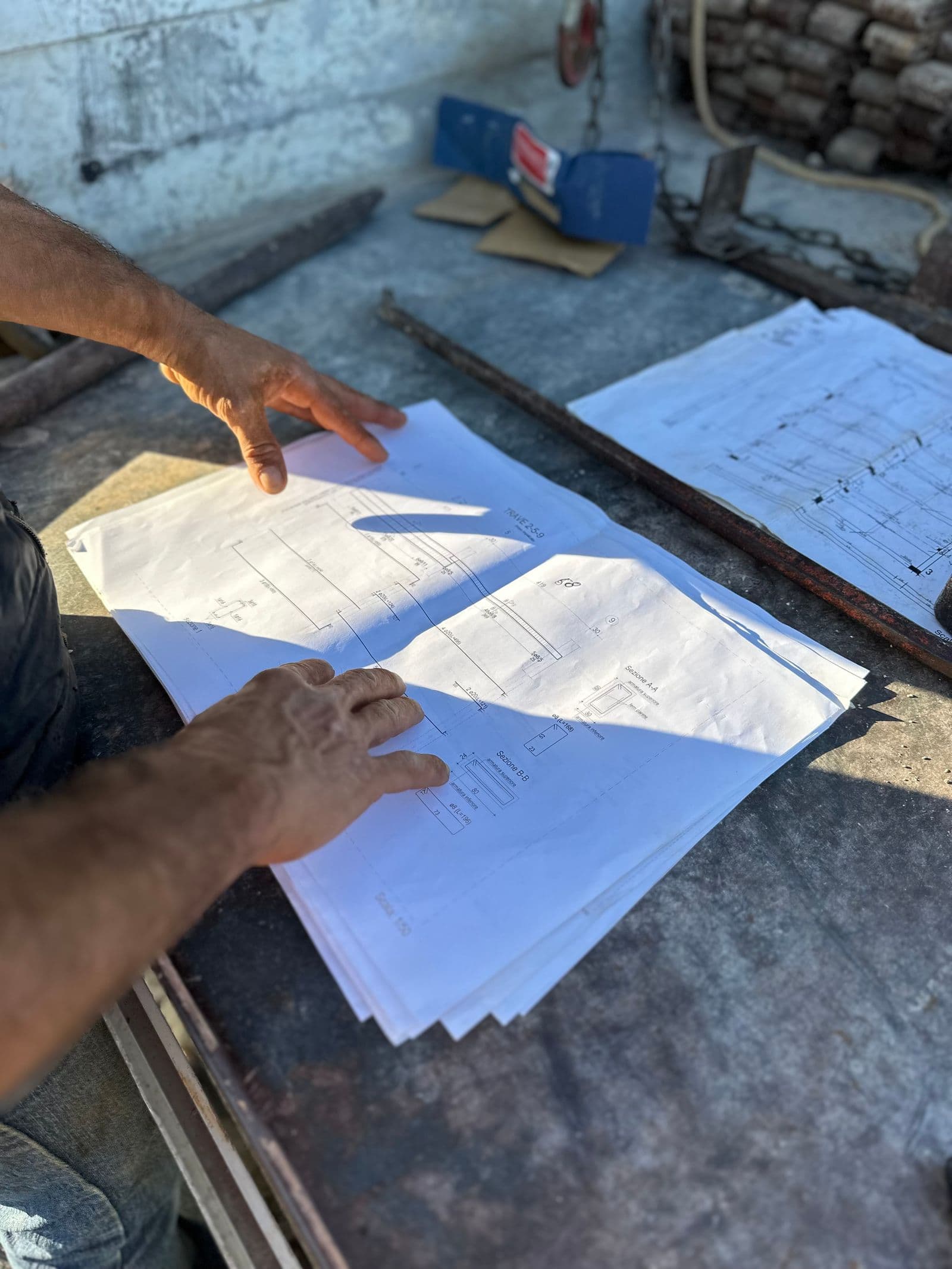
Your finished projects, doing the selling.
Marketing for Construction is a crew of AI agents that turns your real project photos and outcomes into case studies, social posts, newsletters, and site pages that rank. Practitioner voice, construction only, published on a schedule that never slips.
- ✓Case studies written from real project photos and outcomes
- ✓Posts and newsletters on a schedule that never slips
- ✓Pages structured to rank and to be cited by AI search

The Publishing Crew.
Content, social, and SEO agents that work from what your team actually built.
From Job Site Photo to Published Pipeline.
Feed It the Project
Photos, outcomes, and the story from the field. The agent does the writing.
Content Is Drafted
Case studies, posts, and newsletter issues in a practitioner voice, never agency fluff.
You Approve
Everything passes your review before it publishes. Edits teach the agent your taste.
It Ships on Schedule
The calendar never slips, and every page carries full SEO and answer-engine structure.

What Builders Told Us About Marketing.
Marketing Is Somebody's Second Job
At most firms we talk to there is no dedicated function. It is the owner after hours, an office manager, or family helping out, and it shows in the pipeline.
Agencies Bill Retainers for Thin Output
Teams told us about paying an agency a fifth of their ad spend as fees, and forty thousand a year for roughly ten blog posts a month. The math stopped working.
Leads Are the Point, and They Stall
Search drives a third or more of leads for the firms we talk to. When publishing stops in busy season, that pipe quietly closes.
In Their Words.
Taken from discovery calls and working sessions with builders and growth leads. Anonymized: roles and company types only, lightly cleaned for transcription noise.
One place I get stuck is getting leads. The marketing side.
And then my son helps me with marketing.
I want to flip a switch on a new market: find the subs, launch the ads, generate the collateral.
SEO drives a third of our leads, and the agency ships about ten posts a month for the retainer.
My son is a videographer and marketer. He is interacting with Claude all the time for our social media advertising. Me personally, I have not.
Construction Marketing Automation, Explained.
Why Construction Marketing Fails
Construction marketing fails for a structural reason, not a creative one: the people who could do it are building. So it becomes somebody's second job, or it gets handed to an agency that does not know a pay app from a punch list and bills a retainer either way. The numbers builders shared with us are blunt: a fifth of ad spend going to agency fees, tens of thousands a year for a trickle of generic posts, while search quietly drives a third or more of their actual leads.
A Publishing Crew on Real Projects
Ruh replaces that with a publishing crew that works from what your team actually built. Feed it the project: photos, outcomes, the story from the field. It writes the case studies, posts, newsletters, and site pages in a practitioner voice, structures every page to rank and to be cited by AI search engines, and ships on a calendar that does not slip in busy season. You approve everything before it publishes, and your edits teach it your taste.
Content Connected to Pipeline
It also does the part an agency never could: connect content to pipeline. The same system that publishes surfaces the capital projects and bids worth chasing in your market. Marketing measured the way builders measure it: qualified opportunities, not impressions.
A Team of One, Multiplied
For a marketing team of one, this is the difference between doing everything badly and steering a system that produces on schedule. For a firm with no marketer at all, it is a function that finally exists. Bring one finished project to a 30 minute call and watch it become a case study, a post series, and a page that ranks.
From Renders to a System
Marketing is also where most construction firms have already touched AI, usually through whoever handles the social account: photo-realistic renders, ad creative, a chat assistant for captions. That instinct is right and incomplete. Renders make one asset; a system makes a pipeline. Ruh takes the place AI already lives in your firm and turns it into the full loop: content produced from real projects, published on schedule, measured against leads, and connected to the follow-up that converts them.
Marketing as Digital Labor
The ambition we hear from growth-minded contractors goes one step further: marketing as digital labor, a system that lets three people produce what eighteen used to, and that can open a new market on command with local pages, campaigns, and collateral generated from day one. That is the direction this is built toward, and the entry point is deliberately small: one project, one week, one page that ranks.
Marketing That Never Goes Dark.
Judge It on Your Own Work, Not a Demo.
See It on Your Own Work.
A free 30 minute walkthrough on your real work, no card. You decide if you move forward.
Proof and Perspective.
One Useful Email. No Drip Campaign.
Takeoff teardowns, cost data, and field notes from teams putting AI on real bids. Sent when there is something worth reading, never on a content calendar.
No spam · Unsubscribe anytime
Frequently Asked Questions
What marketing teams ask before handing the calendar to an agent.
Where does the content come from?
From your real projects: photos, outcomes, and field stories. The agents write case studies, posts, and newsletters from that raw material, never from generic templates.
Will the content rank on Google?
Can we review before publishing?
What platforms does it publish to?
Can it replace our agency?
Can it launch a new market for us?
How do we know it is working?
We already use AI for renders and social images. How is this different?
What is the smallest way to start?
Let the Projects Do the Talking.
Bring one finished project to a 30 minute call and watch the crew turn it into a case study, posts, and a page that ranks.