100% money-backBook a walkthrough

Construction glossary · Process and contract terms

What is retainage in construction?

Retainage is a percentage of each construction progress payment, typically 5% to 10% in US commercial work, that the owner or general contractor withholds until the work is complete. It protects the paying party against defective or unfinished work and gives the contractor a financial incentive to close out the job. The held funds are released at substantial completion or final closeout, according to the contract's payment terms.

Updated June 2026 · Reviewed by the Ruh construction team

Typical hold 5% to 10%Held on each progress drawReleased at substantial completionOften reduced to 5% at 50% complete

How retainage splits a progress payment

Retainage held 10%Net paid this draw 90%Owner withholds a slice of each progress payment until the work is accepted,…

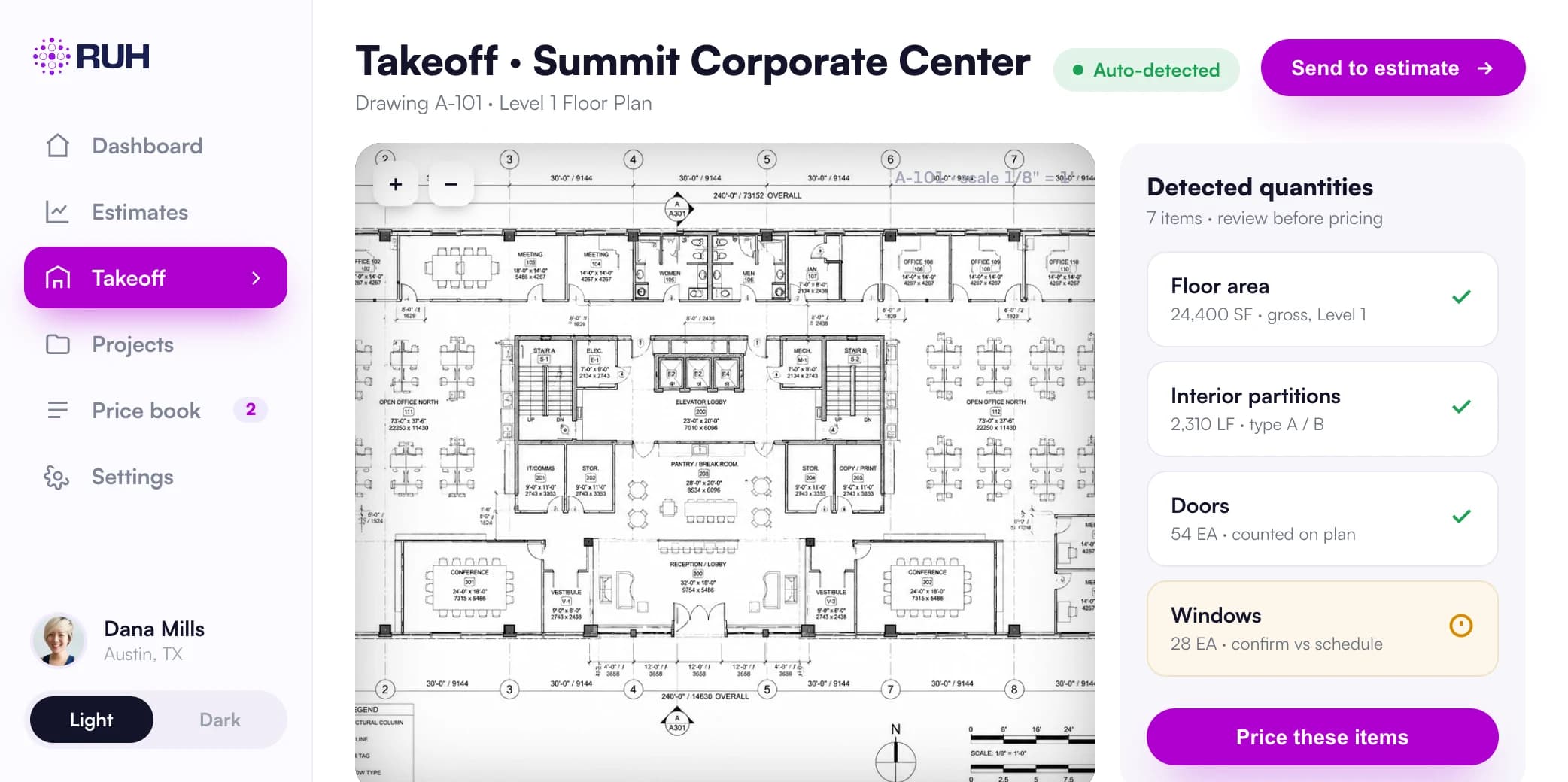
Estimating process and contract terms scope this week? Watch Ruh take off a real plan in 30 minutes.

Book a walkthrough
Definition

Retainage is money earned but not yet paid. The owner holds it back from the general contractor on every progress payment, and the GC usually holds it back from subcontractors on the same terms (back-to-back retainage). You will see it defined in the contract's payment article and the general conditions, and it shows up on every pay application: AIA G702 carries a dedicated retainage line, and the G703 continuation sheet tracks it column by column. Estimators do not take it off; they account for it. The classic new-estimator mistake is treating retainage as a cost deduction and cutting the bid by 5%. It is not a discount, it is deferred cash: you still get the money, just months later. The real cost is the financing carry on that held cash, plus the closeout effort needed to shake it loose. Read the subcontract carefully, some agreements only release sub retainage when the owner releases the GC's, which can stretch the wait well past your scope's completion.

How it is measured

Retainage is expressed as a percentage of each progress billing, most often 5% or 10% in US commercial work. On an AIA G702 pay application it appears as a stated percentage of completed work and stored materials, and the G703 schedule of values tracks the cumulative amount held against each line item. Estimators do not quantify retainage as a takeoff item; they apply it as a cash flow input. Read the payment terms for three things: the rate, whether it steps down (10% reducing to 5% at 50% completion is a common structure), and the release trigger (substantial completion versus final acceptance). On public work, check the state statute, since many states cap the rate. Price the carry cost of the held cash into markup or general conditions if the hold period is long.

Worked example · live calculator

Calculate retainage held

Live calculator
Contract$200,000
5% retainage held$10,000 (net $190,000)
100%

Try Ruh on a real bid. 100% money-back guarantee if you are not satisfied.*

*Scoped delivery, terms apply. Read the guarantee terms

Start with a walkthrough
How Ruh handles it

How Ruh handles retainage

Ruh reads the drawings, runs the takeoff, and prices the quantities against your own price book, then hands the estimator a line-item draft to review, adjust, and sign off. Retainage is a contract term, not a quantity, so it stays a judgment call: the time Ruh saves on takeoff and pricing is time the estimator can spend reading the payment article and pricing the cash flow carry of held retainage into markup. The AI drafts the numbers; the estimator owns the terms.

See construction invoice and pay app software

Retainage: frequently asked questions

Is retainage the same as retention?+

Yes, the terms are interchangeable in US construction. Retention is more common in UK and international contracts, while American contract documents and pay application forms generally say retainage. Either way it refers to the same withheld portion of progress payments.

What does it take to get retainage released?+

Read the contract's release conditions, because they vary. Common requirements include reaching substantial completion, finishing the punch list, delivering final lien waivers from subs and suppliers, submitting closeout documents (as-builts, warranties, O&M manuals), and sometimes consent of surety. Subcontractors should also watch for pay-when-paid language that ties their release to the owner releasing the GC's retainage.

How should an estimator account for retainage in a bid?+

Do not deduct it from the bid; you still earn the full contract amount. Instead, estimate how long the cash will be held and what that carry costs at your borrowing rate, then decide whether to recover it in markup or general conditions. On long jobs with slow closeouts, the carry on held retainage can be a meaningful slice of the fee.

Still measuring by hand? Your next takeoff can run while you review this one.

See it on your plans
The Process and contract terms estimating cheat sheet
Every unit, waste factor, and conversion on one page. Free PDF.

See Ruh price a bid from your own drawings.

AI takeoff and estimating on your price book, your estimator signs off.

Figures on this page are illustrative. Construction estimates depend on project-specific conditions, source documents, market pricing, and professional judgment. Ruh's AI assists the estimator and does not replace professional review: your team reviews, validates, and approves every estimate, bid, and pricing decision.
Retainage in construction: meaning and release | Ruh AI