Roofing estimating software that prices on your numbers.
Roofing estimating software reads your roof plans and performs the takeoff, and Ruh measures roof area in squares of 100 SF, slope-adjusted where the slope is given, with edges and flashing by the foot, priced through 15 starting roofing recipes you can edit. Below: the roofing takeoff table, a worked example priced line by line, and the questions roofing estimators ask.
Measuring first? Roofing Takeoff Software
- ✓Roof field area, measured sq (and sf)
- ✓Single-ply membrane (TPO/EPDM), measured sf
- ✓Shingle roofing, measured sq
Free walkthrough on your own plans. Your estimator signs off.
The Roofing Estimating Problems This Solves.
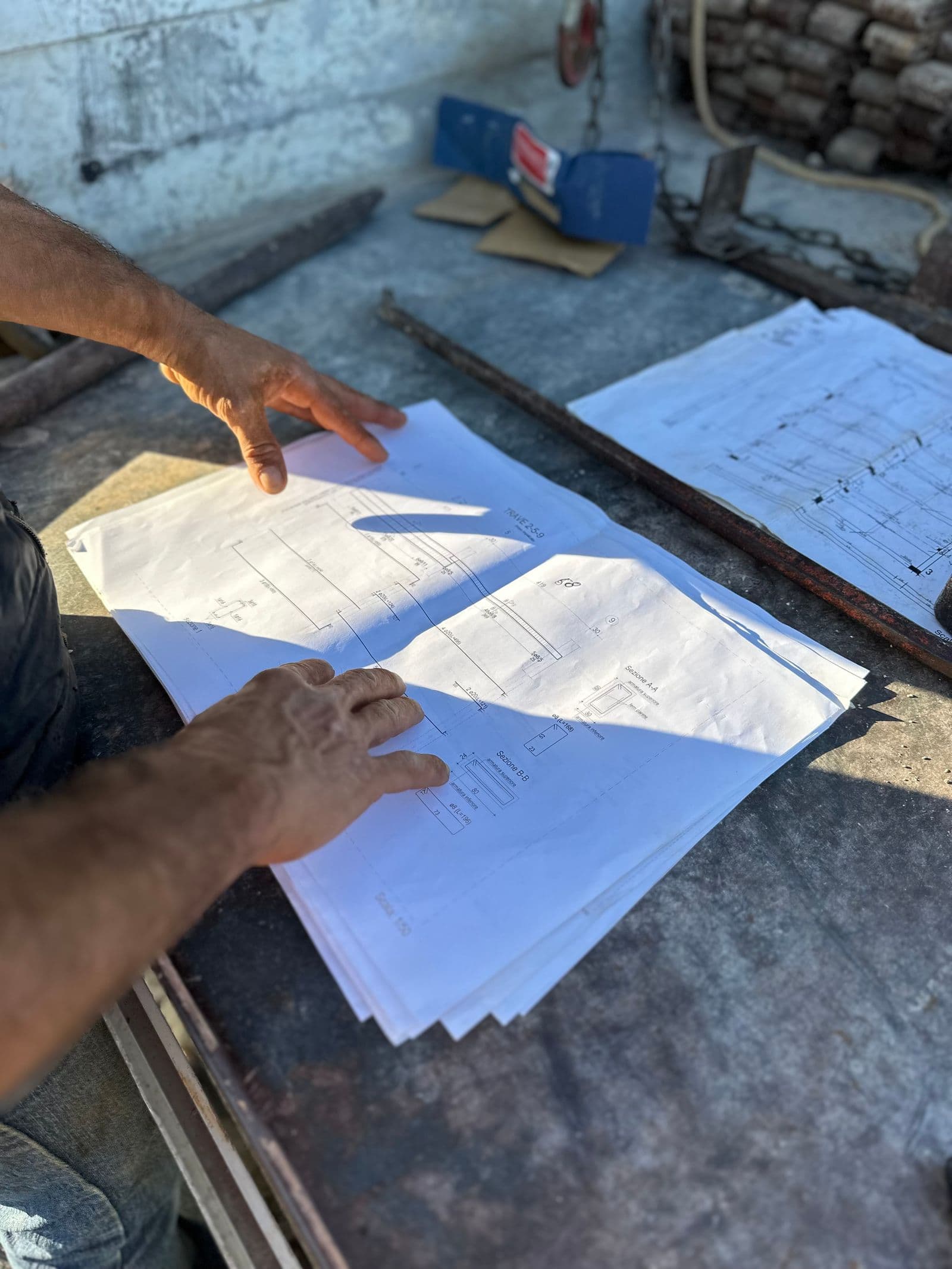
Squares Plus Slope Is Not the Same as Plan Area
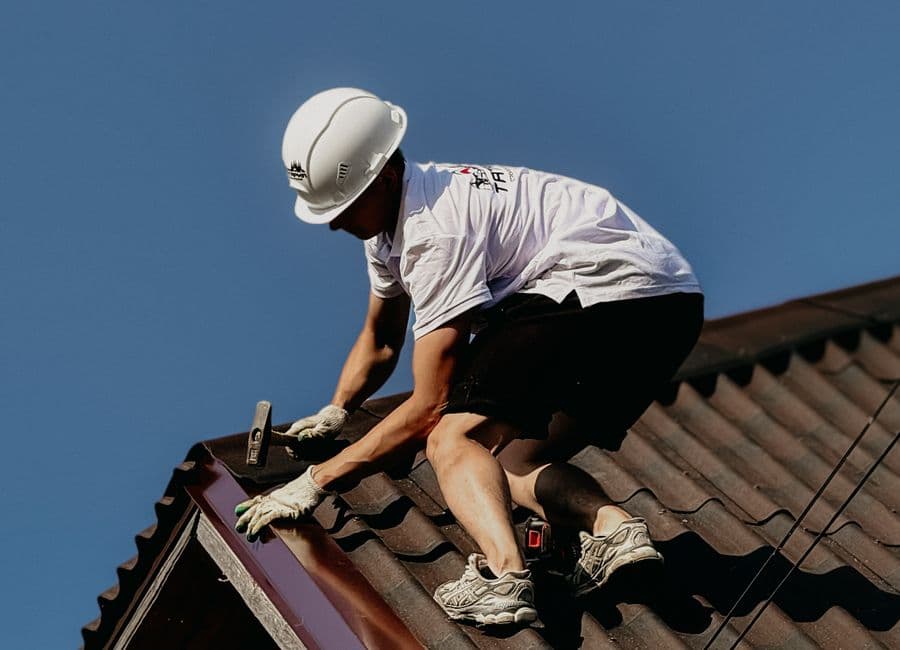
On steep-slope work, the plan footprint understates real roof area, and the slope factor that closes the gap changes per facet. A 6:12 hip with dormers does not measure like a single 6:12 plane, so a flat plan-area number leaves squares (and bundles) on the table. Get the slope factor wrong by a facet or two and you are short shingles before the second day.
Three Roof Systems Estimate Three Different Ways
TPO, EPDM, built-up, and steep-slope shingle are separate assemblies with separate units, separate waste, and separate labor, but they get lumped into one habit. Membrane prices by sf with seam and detail labor; shingle prices by square with starter, hip, and ridge as their own lines. Carry a built-up rate into a single-ply scope and the bid is wrong before you reach flashing.
Insulation by R-Value and Tapered Layers Hides Board Count
A roof spec calls out an R-value, not a board count, and hitting R-30 usually means two staggered polyiso layers, not one. A single sf number understates both material and labor, because two layers over the same field is twice the board plus a second pass to fasten and stagger. Add a tapered system for drainage and the board count moves again; you find out when the crew is short boards on the low end.
From Your Roofing Drawings to a Priced Line.
The same pipeline that runs the takeoff runs the pricing, so the number you send out traces back to the sheet it came from.
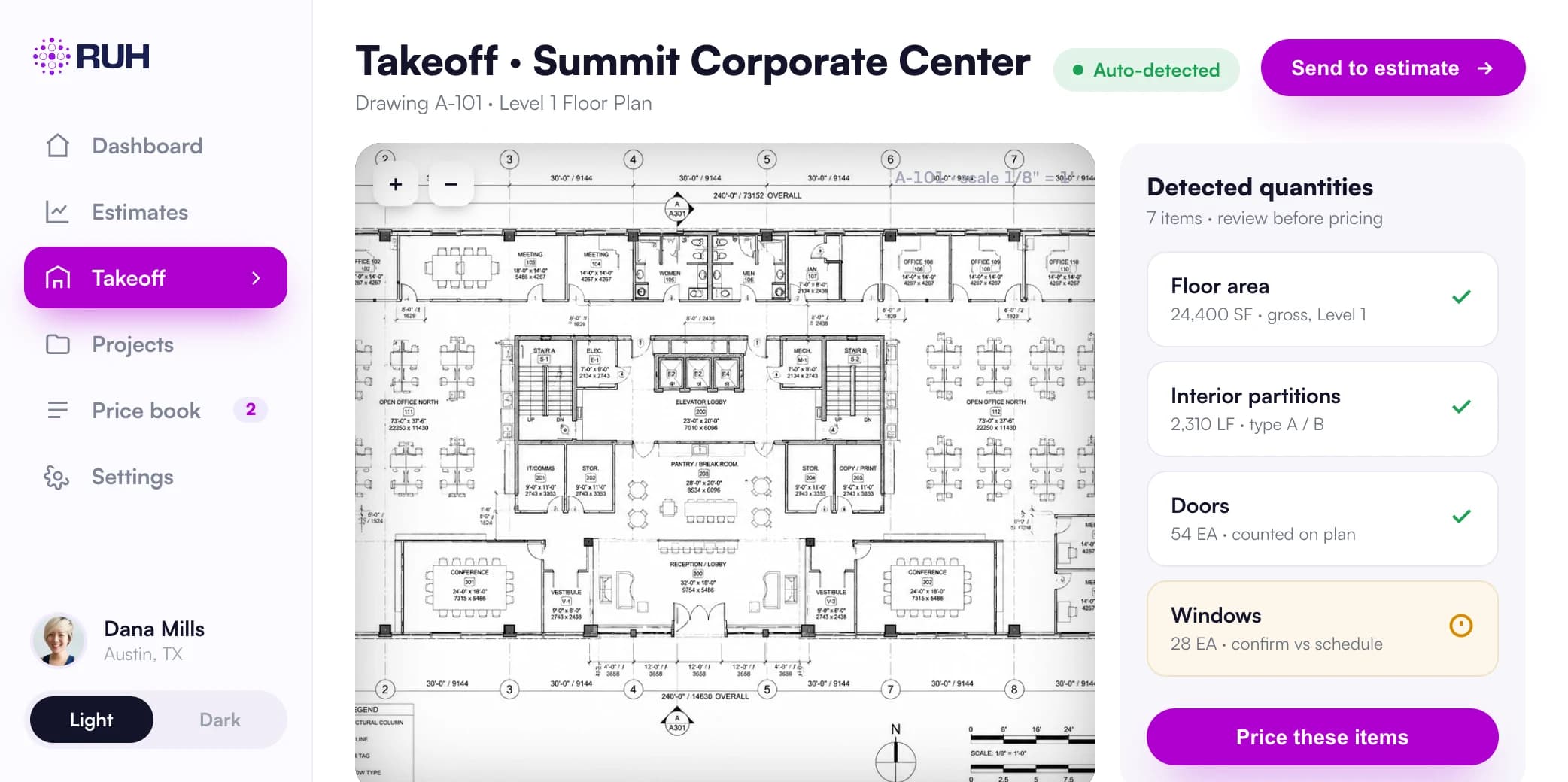
Quantities lifted from the real sheets, each tied to the sheet it came from and checked by a blind second count.
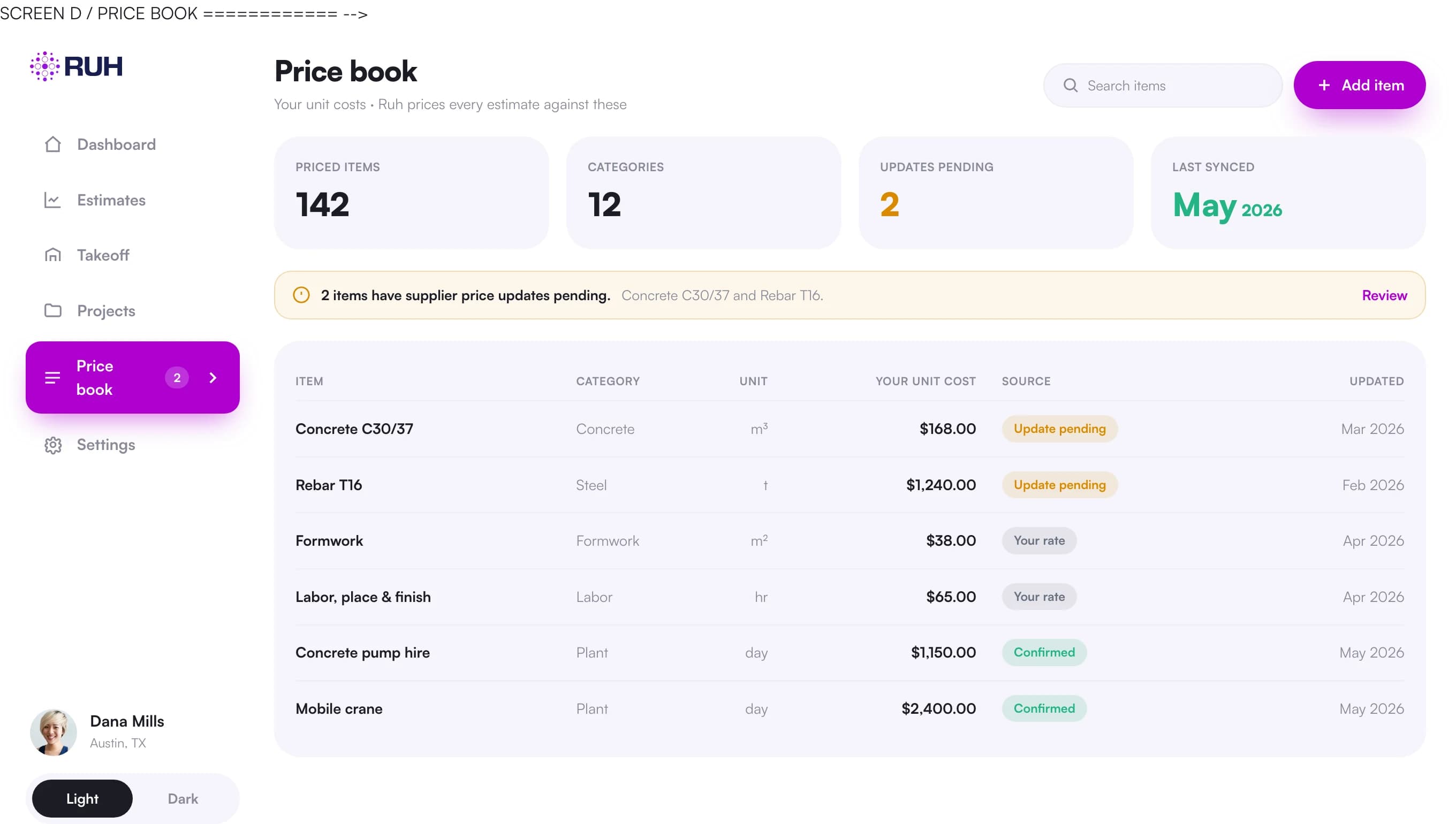
Your own rates and assemblies, not a generic national cost database.
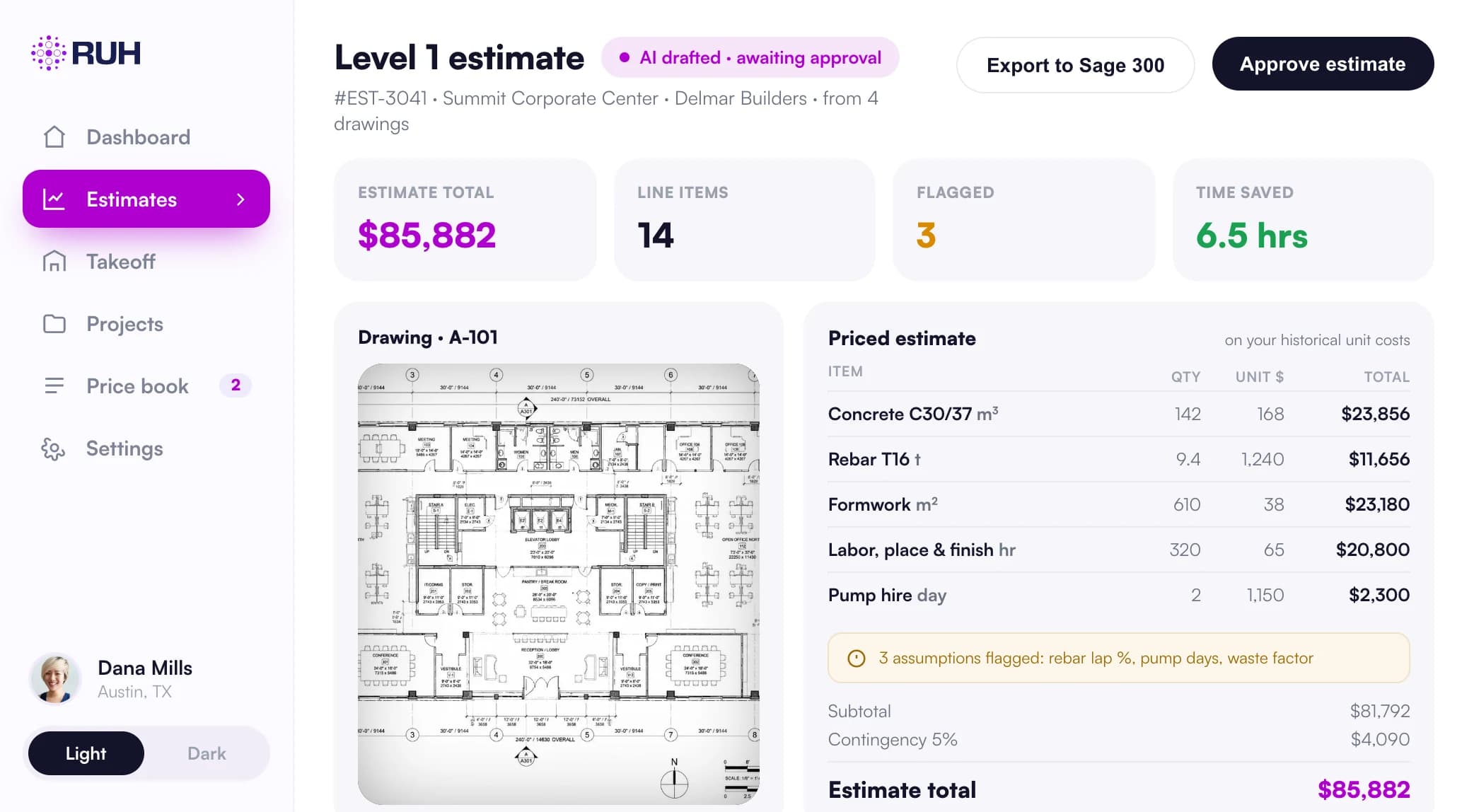
Every line traceable back to the sheet it came from before anything goes out.
What a Roofing Takeoff Counts and Measures.
| Item | Unit | How it is measured and priced |
|---|---|---|
| Roof field area | sq (and sf) | Measured per facet, then converted to squares (100 sf); steep-slope plan area multiplied by the slope factor for that pitch before pricing |
| Single-ply membrane (TPO/EPDM) | sf | Field sf plus 5 to 10 percent waste for seams and trim; priced per sf by mil thickness and attachment (fully adhered vs mechanically fastened) |
| Shingle roofing | sq | Squares by slope-adjusted area plus waste for hips, valleys, and cuts; starter, hip, and ridge counted as separate lf lines |
| Polyiso / cover board insulation | sf and boards | Boards by R-value and thickness; multi-layer buildups counted per layer (two layers equals roughly twice the field sf), tapered systems counted by board layout |
| Fasteners and plates / bonding adhesive | ea and gal | Driven by attachment pattern and deck type; spread by manufacturer coverage rate per square or per gallon, tighter at perimeter and corners |
| Flashing and edge metal | lf | Drip edge, fascia, coping, and base flashing by linear foot of perimeter and parapet; priced by gauge and profile, with detail labor where leaks live |
| Parapet and coping | lf | Linear foot of wall run; coping cap, cleats, and membrane wrap counted together as a parapet assembly |
| Roof drains and penetrations | ea | Drains, scuppers, pipe boots, curbs, and vents counted each; priced as material plus a per-unit labor allowance for the detail work |
A Worked Roofing Example
Small commercial TPO re-roof, 3,000 sf low-slope field (30 squares), illustrative US pricing. Membrane: 3,000 sf plus 5 percent waste is 3,150 sf, at $1.00/sf for 60 mil fully adhered TPO, so 3,150 x $1.00 = $3,150. Insulation to R-30 in two staggered polyiso layers: two layers over the 3,000 sf field is 6,000 sf of board, plus 5 percent waste is 6,300 sf, at $0.95/sf, so 6,300 x $0.95 = $5,985 (note the board count is double the field, not single). Edge metal around a 220 lf perimeter at $14/lf is 220 x $14 = $3,080. Four roof drains at $650 each (material plus detail labor) is 4 x $650 = $2,600. Material subtotal: $14,815. Labor at $145/square for tear-off and install: 30 x $145 = $4,350. Direct cost: $19,165. Overhead and profit at 18 percent: $3,450. Total: $22,615, about $754 per square.
Bidding Roofing Work This Month? Book a 30-minute walkthrough of a takeoff on a real plan.
Book a walkthrough
How Ruh Runs Your Roofing Estimates.
Ruh reads the roof plans and spec, splits the work by system (single-ply, built-up, or steep-slope), and runs the takeoff: field area in squares with the slope factor applied per facet, membrane or shingle quantities with waste, insulation by R-value with each layer counted, and flashing, edge metal, drains, and penetrations by lf and each. It then prices every line against your own price book and labor rates, flags unclear facets and missing details as questions, and assembles a line-item estimate. Your estimator reviews the system assumptions, slope factors, insulation layer count, and unit costs, adjusts anything off, and signs the number before it leaves. The AI does the measuring and the math; professional judgment stays with the estimator.
Try Ruh on a real bid. 100% money-back guarantee if you are not satisfied.*
*Scoped delivery, terms apply. Read the guarantee terms
Roofing Estimating Software FAQs
How accurate is the takeoff, and can I trust the quantities?+
Ruh measures each facet, applies the slope factor, and links every line back to the sheet it measured. Unclear facets and unreadable details surface as issues instead of silent guesses, so your estimator checks the soft spots rather than re-measuring the whole roof. The quantities are a reviewable starting point, not a number you are forced to accept.
Does it price on my price book or some generic database?+
Your price book and labor rates. Ruh prices membrane by mil and attachment, shingles by square, insulation by R-value and layer, and flashing by gauge and lf against the unit costs you load. When your supplier numbers move, you update the price book and the estimate follows.
Will it work with the tools I already use?+
Yes. It reads the PDF or drawing set you already work from, and the line-item estimate exports to the spreadsheet or estimating format your team already runs. You are not switching takeoff platforms to use it.
What stays a human decision?+
Every judgment call. The estimator confirms the roof system, the slope factors, the insulation layer count, waste percentages, and final unit costs, and owns the signed bid. Ruh handles the measuring and the arithmetic; it does not replace the estimator's sign-off.
Doing the roofing takeoff itself?
The quantities side has its own page: counts, measures, and how the AI takeoff reads your drawings.
Roofing Takeoff SoftwareRoofing Terms in the Glossary.
Figures on this page are illustrative. Construction estimates depend on project-specific conditions, source documents, market pricing, and professional judgment. Ruh's AI assists the estimator and does not replace professional review: your team reviews, validates, and approves every estimate, bid, and pricing decision.
Try Ruh on a roofing bid you are pricing now.
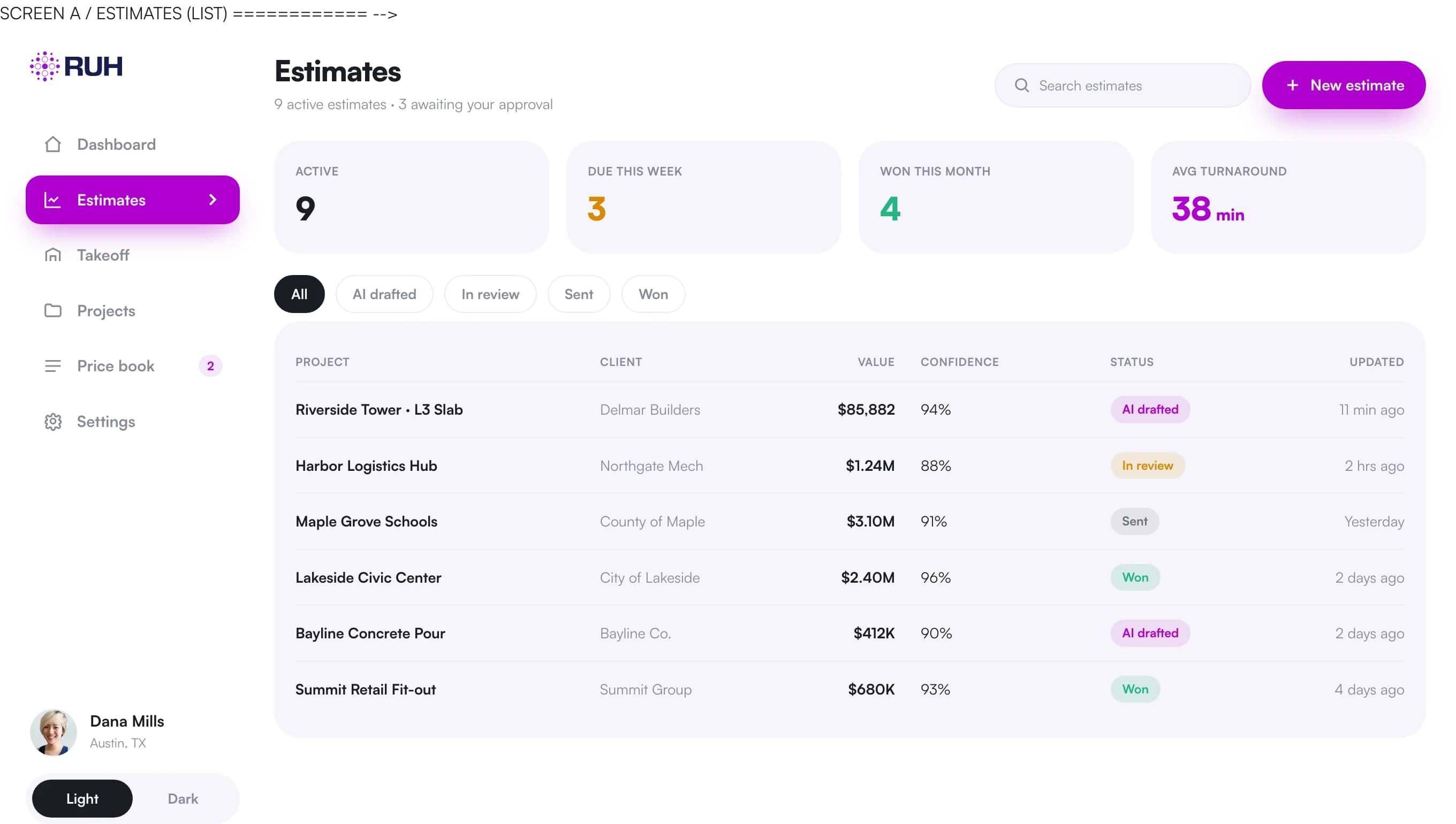
Put us on real work rather than a canned demo. Ruh reads your drawing set, measures the scope, and prices the quantities against your own rates, with every line traceable back to the sheet it came from. If it does not hold up, you are covered by the guarantee below.
- 1Tell us about a bid you are working on and the trade you are pricing
- 2Ruh measures that scope from your drawings and prices it on your own rates, not generic cost data
- 3Every quantity traces back to the sheet it was measured from, so your estimator can check the work
Run Your Next Roofing Bid on Ruh.
Send one roofing set. We run the takeoff and walk you through the quantities, the units, and the pricing on a 30 minute call. If it does not hold up against your estimator, you have lost nothing.