AI electrical estimating software. Takeoff and pricing on your own labor units.
AI electrical estimating software reads the lighting and power plans, counts devices and fixtures, measures conduit and wire, and prices each line on your own labor units and material costs, so the estimate matches how your shop buys and installs. Below, watch an E-sheet get counted, see the electrical budget priced and approved, and get a free takeoff on your own set.
Measuring first? Electrical Takeoff Software
Clients include




Construction companies working with Ruh







Is there AI electrical estimating software that prices on our own labor units?
Yes. Ruh takes off your E-sheets, expands each count through 37 starting electrical recipes you can edit, and prices every line on your own labor units and price files, showing where each price came from. Wire is priced from the run times the conductors pulled, so a 100 ft homerun with 3 conductors is 300 ft of wire before makeup.
- electrical recipes to start from, yours to edit
- 37
- on your own E-sheets
- 1st takeoff free
- in a 100 ft homerun with 3 conductors
- 300 ft of wire
What happens before an electrical line is priced?
Ruh reads the E-sheets against the panel and fixture schedules, counts each device and fixture by type, traces every homerun to its panel, and measures conduit and wire, so each priced line starts from a count you can check on the sheet.
- 1
Fixtures and devices are counted by type against the legend and the fixture schedule, without counting a mark twice.
- 2
Homeruns are traced to their panel and conduit is measured along documented routes, with missing vertical runs flagged.
- 3
Each count and length becomes a line in the electrical budget, still linked to the sheet it came from.
Where electrical estimates lose money
Electrical estimates lose money between takeoffs that should agree: conduit and the wire inside it, the fixtures on the plan and the fixture schedule, and the gear that only shows up on the one-line.
Conduit and wire are one takeoff, not two
A branch run is conduit, conductors, and the labor to pull them. Measured in separate passes, they drift apart, and the bid carries footage for a run nobody wired or wire for a run nobody piped.
The plan and the fixture schedule disagree
Fixture counts on the floor plan rarely match the schedule totals. Pricing either one without reconciling them puts the wrong quantity of the most expensive devices into the bid.
Gear and feeders live on the one-line
Panelboards, switchgear, and feeders price off the one-line and riser, not the floor plan. A takeoff that stops at the branch work misses the lines with the longest lead times.
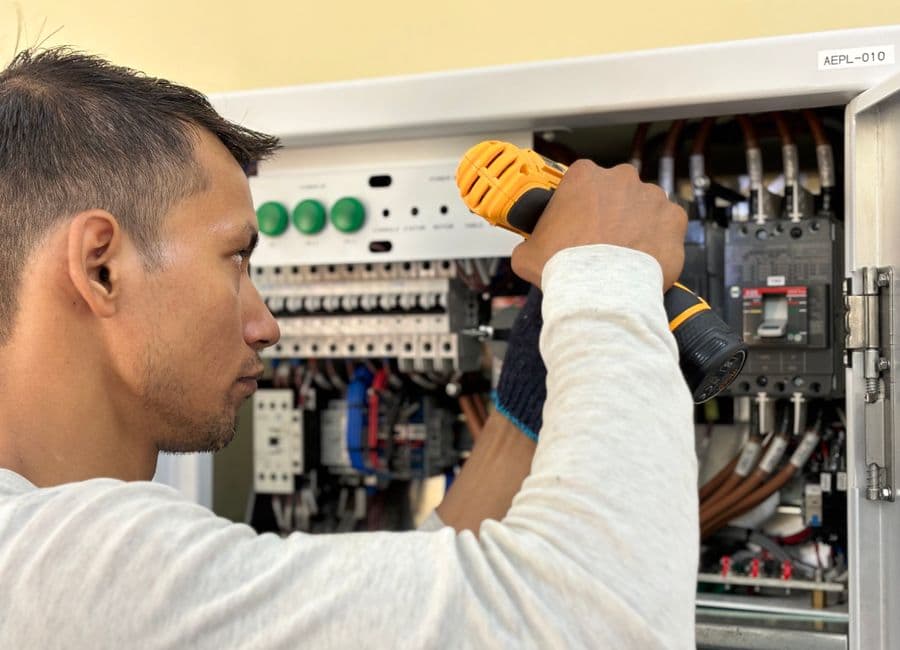
Our view: An electrical estimate is only as good as its labor units. The count tells you how many; your units tell you what it costs your crew to install them, and that is the part no generic database knows.
What an electrical estimate is built from
An electrical estimate, Division 26 of the spec, prices devices and fixtures by the each, raceway and conductors by the foot, and gear off the one-line. For each line, the table names the sheet that supplies the quantity and the price it carries.
| Line | Where the quantity comes from | Unit | What it is priced on |
|---|---|---|---|
| Receptacles, switches, and devices | Power and lighting plans, by type | EA | Device assembly material plus your labor units |
| Lighting fixtures | Lighting plans reconciled with the fixture schedule | EA | Fixture price by type plus installation labor |
| Branch conduit | Plans, measured along documented routes | LF | Material by size and type, labor per 100 LF |
| Branch and feeder wire | Conduit runs times conductors per run | LF | Conductor price per foot plus pulling labor |
| Homeruns | Traced from each circuit to its panel | EA / LF | Raceway and conductors to the panel |
| Panelboards, switchgear, and transformers | One-line diagram and panel schedules | EA | A distributor quote or your price file |
| Feeders | One-line and riser, documented routes | LF | Conduit and conductors by size |
| Lifts | Ceiling heights and duration | DAY | Your equipment rates |
How each line is priced comes from your company price files, rate book, labor units, and quotes. The worked example uses illustrative rates, not benchmarks.
A worked branch-circuit estimate
A small tenant-improvement branch scope, built up line by line: devices, raceway, conductors, one homerun, then labor.
Illustrative rates. In Ruh the material comes from your price files and the hours from your own labor units.
- 1Duplex receptacles as assemblies24 EA x $58 = $1,392
- 2Branch raceway, 1/2 in EMT380 LF x $1.65 = $627
- 3Branch wire, three #12 THHN380 LF x 3 = 1,140 conductor-LF x $0.22 = $250.80
- 4Homerun raceway, 3/4 in EMT90 LF x $2.40 = $216
- 5Homerun wire, four #10 THHN90 LF x 4 = 360 conductor-LF x $0.34 = $122.40
- 6Device labor24 EA x 0.5 HR = 12 HR x $48 = $576
How does an electrical takeoff become a priced bid?
The counts land in a budget grouped by trade. Devices, conduit, and wire price from your price files and rate book, labor from your labor units, gear from a distributor quote, and every line shows which one it used before it rolls up to the proposed bid.
- ✓
Labor units you already trust
Installation hours come from your own labor units, so a troffer or a hundred feet of EMT costs what it costs your crew.
- ✓
Gear waits for its quote
The panelboard stays an unpriced line until the distributor quote is entered, and the line keeps that quote as its source.
- ✓
Markups you set
Margin, overhead, fee, and contingency are yours and roll up to the proposed bid, with a unit rate on the measured quantity.
- ✓
The budget is signed first
The proposal is drafted from the budget only after your estimator approves it.
From E-sheets to a priced electrical bid in three steps
- 1
Send the set
Lighting and power plans, the one-line, panel and fixture schedules, and any distributor quotes already in hand, as PDF or CAD.
- 2
Ruh counts and prices
Devices and fixtures are counted by type, conduit and wire measured, gear read off the one-line, and every line priced on your files and labor units.
- 3
Your estimator approves it
Enter the open quotes, adjust a unit or a markup, and approve. Quantities and priced lines export for your own systems, and the proposal comes from the approved budget.

Price your next electrical bid from a free takeoff.
Share the E-sheets for one job. We return the takeoff at no cost so you can price it on your own labor units and see how the budget keeps gear quotes apart from your branch work.
In a customer's own words
“Our estimators spent more time retyping quantities than thinking about scope. Ruh reads our drawings like a senior estimator and hands back a priced estimate we want to review, not rebuild.”
 Director of PreconstructionADF Group
- faster bid turnaround
- ~50%
- ADF Group, structural steel
- on every takeoff, the second one blind
- 2 counts
- Checks tab, before anything is priced
- tied to the sheet it came from
- Every line
- Takeoff and price sheet
Electrical estimating software FAQs
What electrical contractors ask before pricing a real bid with AI.
What is AI electrical estimating software?
AI electrical estimating software runs the electrical takeoff from your drawings and prices it: devices and fixtures by the each, conduit and wire by the foot, gear off the one-line, then labor and markup. Ruh works as an AI electrical estimator for electrical contractors, pricing on your own labor units and price files while your estimator approves the number.
How accurate are the device and conduit counts?
Does it use our labor units or a national database?
Does it replace our existing estimating software?
What stays the electrical estimator's job?
What is the best electrical estimating software in 2026?
Is this electrical bidding software or estimating services?
Is there free electrical estimating software?
Bring one electrical job. Price it on your units.
One set of E-sheets, a free takeoff, and a 30-minute walk through the counts, the homeruns, and the budget they price into. If the numbers do not hold up against your own, it cost you nothing.