AI landscape takeoff software. Hardscape, planting, and irrigation, measured off the plans.
AI landscape takeoff software reads your landscape plans and plant schedule and turns them into a takeoff where every quantity is tied to the sheet it came from. Below, watch it measure a planting plan, see the checks that catch a missed shrub, and get a free takeoff on your own set.
Then price it Landscape Estimating Software
Clients include




Construction companies working with Ruh








Is there landscaping takeoff software that reads the plans?
Yes. Ruh counts trees and shrubs by type and size against the plant schedule and measures beds, sod, pavers, and edging off your landscape plans. Mulch and topsoil use the depth in the notes, so 3 in of mulch covers 108 SF per cubic yard, and it starts you with 9 landscaping recipes you can edit.
- covered by 1 CY of mulch at 3 in
- 108 SF
- landscaping recipes to start from, yours to edit
- 9
- on every plant, the second one blind
- 2 counts
What happens when Ruh reads a landscape set?
Ruh reads the planting plan against the plant schedule, counts each tree and shrub by type and size, measures planting beds, sod, and paver areas, and runs the edging along every bed edge. Each quantity stays on the sheet where it sits, so a landscape blueprint becomes a takeoff that can be checked plant by plant.
- 1
Each tree and shrub is counted by type and size from the plant schedule as the scan passes, marked where it sits on the plan.
- 2
Planting beds, sod, and pavers are measured by area, and steel edging by the foot along each bed edge.
- 3
The Quantities tab fills with each line and the sheet it came from. Topsoil and mulch volumes use the depths printed in the notes, never a typical depth.
Where landscape bids lose margin
Landscape bids are lost in the counts and the depths, not the big areas: a shrub key miscounted, a bed measured without its mulch depth, and irrigation heads nobody counted off the irrigation plan.
The counts hide the margin
Lawn area is the easy part. The money is in plant counts by key and size, the irrigation heads, and the edging that are easy to miss on a fast manual takeoff.
Coverage decides the year
Landscape installation contractors are invited to more sites than a small estimating room can count by hand. A planting plan left unpriced on bid day is a site another crew will install.
A lump sum has no room for a short count
Most landscape work goes out as a lump sum. A missed irrigation head, the wrong plant count, or a light topsoil number does not come back as a change order. The crew pays for it in the field.

Our view: A landscape takeoff should count what the plan draws, not what the schedule totals say. Plan quantities and schedule quantities disagree more often than they should, and the takeoff is where that disagreement should surface, before it becomes a short order of plants.
What gets measured on a landscape set
A landscape takeoff splits into hardscape, softscape, planting, and irrigation, and each is measured differently. The table lists each landscape item with the sheet it sits on, how it is measured, and the cost it carries.
| Item | Where it is on the set | How it is taken off | What it drives in the price |
|---|---|---|---|
| Trees | Planting plan and plant schedule | Counted per key, caliper from the schedule | Plant material, planting labor, staking |
| Shrubs and groundcover | Planting plan and plant schedule | Counted per key, or by area at a spacing | Plant material by container size, planting labor |
| Softscape: sod and seed | Planting plan and notes | Measured by area | Sod or seed, topsoil at the noted depth, labor |
| Planting beds and mulch | Planting plan and notes | Measured by area, depth from the notes | Mulch and topsoil by the cubic yard, bed prep |
| Hardscape: pavers and walks | Layout plan and details | Measured by area from the layout plan | Pavers, base, edge restraint, labor |
| Steel edging | Planting and layout plans | Measured by run | Edging by the foot, stakes, labor |
| Irrigation heads | Irrigation plan and legend | Heads counted by the each, when irrigation is in scope | Heads, labor |
Typical practice, not a standard. Depths, sizes, and spacing come from your notes and schedules; where the set does not say, the line waits for your estimator rather than taking a typical depth.
How do you know the plant count is right?
No plant is priced until the planting plan has been counted twice, the second time blind. Beds, sod, and edging wait on a confirmed scale, and every line links to its sheet, so a difference is settled before the plant order goes out.
- ✓
A blind second count
Trees and shrubs are counted again without seeing the first pass. When two counts of a plant key disagree, both numbers stay visible until someone settles it from the plan.
- ✓
No scale, no quantity
Bed, sod, and paver areas and edging footage stay withheld on any sheet whose scale has not been checked against a printed dimension.
- ✓
Every legend symbol accounted for
Each plant key on the legend is listed as counted, excluded with a reason, or missing, and a count that disagrees with a total printed on the set is shown as a difference to settle before the order is placed.
- ✓
Your estimator sets the price
Plant, softscape, and hardscape lines show where each price came from, and your estimator approves the budget before a proposal goes out.
From bid invite to a priced landscape takeoff in three steps
- 1
Send the set
Planting and layout plans, the plant schedule, the irrigation plan, details, and the Division 32 spec, as PDF or CAD, straight from the bid invite.
- 2
Ruh measures and checks
Trees and shrubs are counted by type and size, beds, sod, and pavers measured by area, edging by the foot, and irrigation heads counted when irrigation is in your scope. A blind recount checks the plants before any price is set.
- 3
Your estimator signs it
Settle the flagged plant or bed, price on your own price files and rates, and export. The quantities open in Excel as a sheet-by-sheet CSV, and the marked planting plan comes out as a PDF colored by condition.
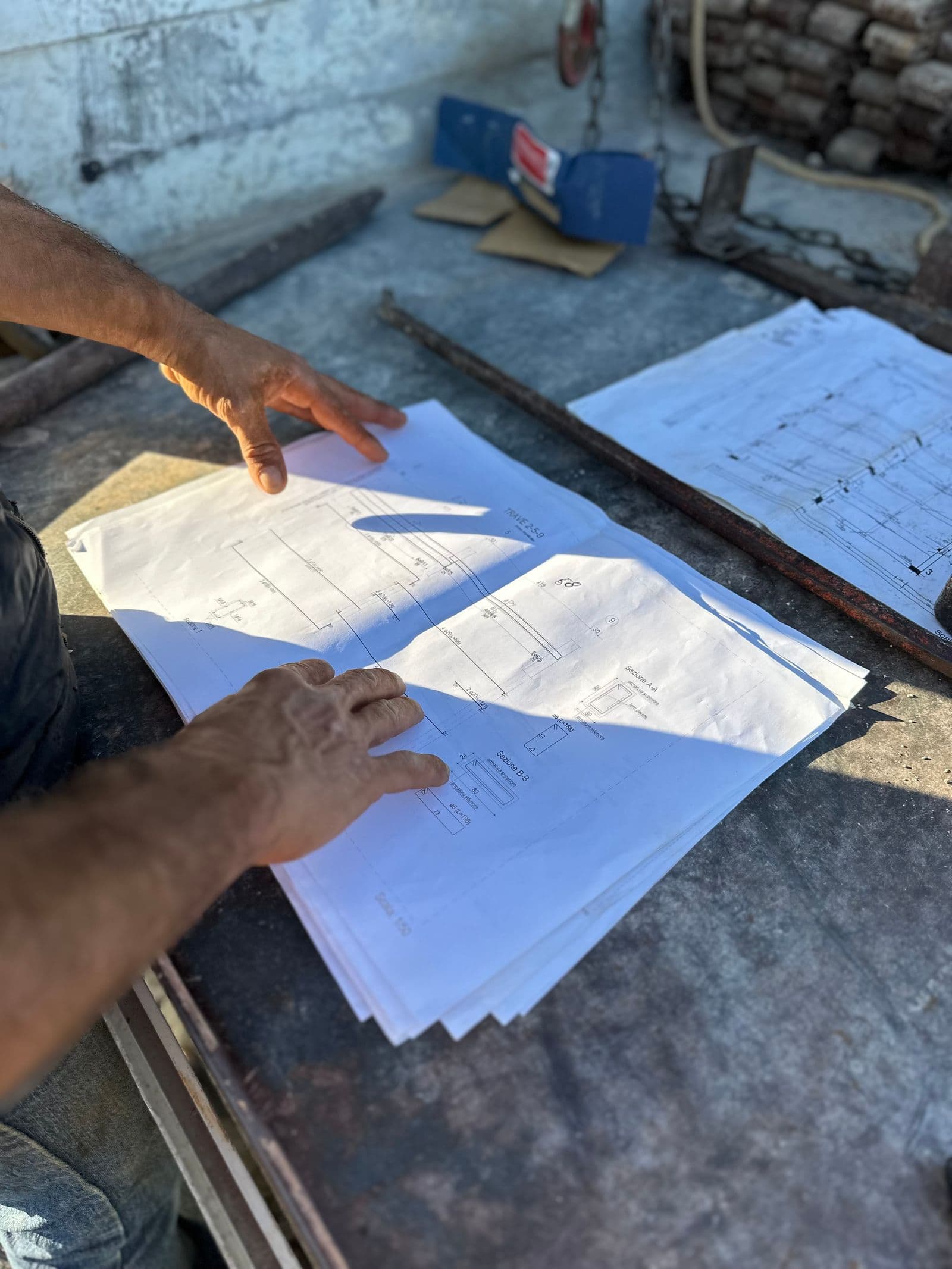
One landscape set, taken off free.
We take off your planting and layout plans at no charge. Use a set you have already bid, so the count is easy to check. Rather count by hand first? The landscape takeoff worksheet is a free CSV with the items, units, and columns for depth, cubic yards, and your own labor units.
In a customer's own words
“Our estimators spent more time retyping quantities than thinking about scope. Ruh reads our drawings like a senior estimator and hands back a priced estimate we want to review, not rebuild.”
 Director of PreconstructionADF Group
- faster bid turnaround
- ~50%
- ADF Group, structural steel
- on every takeoff, the second one blind
- 2 counts
- Checks tab, before anything is priced
- tied to the sheet it came from
- Every line
- Takeoff and price sheet
Questions landscape estimators ask
What landscape contractors ask before trusting an AI takeoff on a real bid.
What is landscaping takeoff software?
Landscaping takeoff software reads landscape plans and the plant schedule and produces what a landscape bid is priced from: plants by type and size, softscape and hardscape by area, edging by the foot, and irrigation heads by the each. Ruh does the measuring for landscape contractors and subcontractors, ties each quantity to its sheet, and leaves the pricing decisions to your estimator.
Is this an AI landscape estimator?
Can it read landscape blueprints and CAD files?
How is it different from a manual takeoff?
How accurate is the landscape takeoff?
Does it work with Excel?
Is there free landscape takeoff software?
Is this landscape takeoff services or software?
Send a set. Judge the takeoff yourself.
One landscape set, a free takeoff, and a 30-minute walkthrough of the plants, beds, sod, hardscape, and irrigation. If the plant counts do not match yours, it cost you nothing.