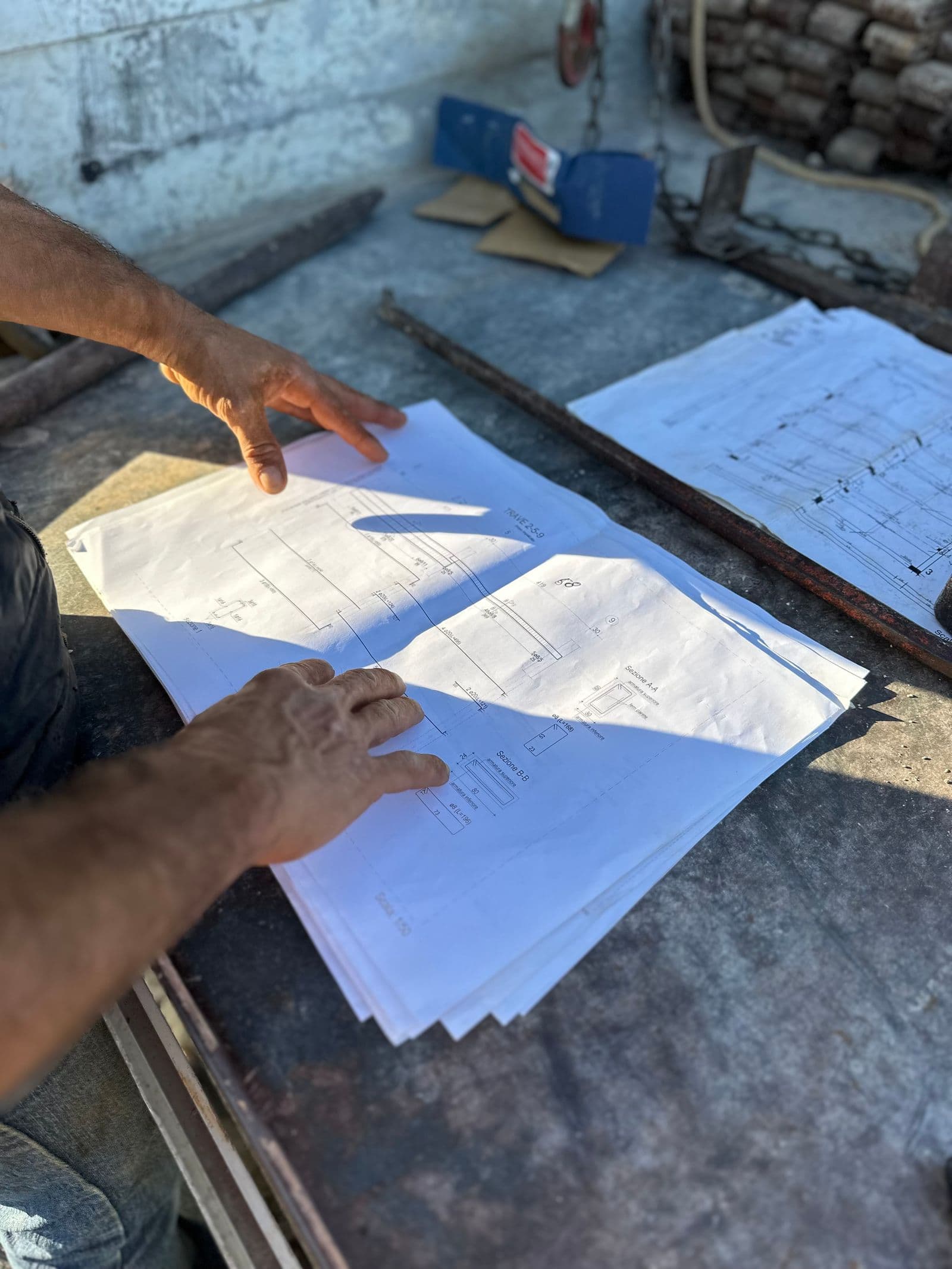
Commercial work, won on speed and coverage.
Ruh AI puts a crew of agents on the commercial construction bid cycle: quantities measured off the drawing set, estimates priced across nine stages from your own history, sub bids leveled with gaps priced as labeled allowances, and invoices matched to commitments before payment. Offices, retail, mixed-use, and tenant improvement, with your estimator signing every line.
- ✓Bid more invitations with the same estimating room
- ✓Sub bids leveled, scope gaps priced as labeled allowances
- ✓Runs on the stack you already run

The Commercial Crew.
The agents that carry an invitation to bid through award and into the money.
From Bid Invite to Award, One Motion.
Send the Set
The invitation package, straight from the email. Sheet classification starts immediately.
Takeoff and Pricing Run
Measured quantities by trade, priced on your book, assumptions written down.
Subs Get Leveled
Quotes checked against scope, gaps flagged and priced as allowances, never silent zeros.
Your Estimator Signs
Review by confidence score, adjust, submit in your own proposal format.

The Commercial Squeeze.
Coverage Decides Revenue
Invitations arrive faster than the estimating room can turn them. Every unpriced invitation is work handed to a competitor.
TI Speed Is a Different Game
Tenant improvement and repositioning work moves on landlord timelines. The first credible number usually wins the room.
Margin Leaks in the Middle
Between the estimate that won and the invoices that arrive, scope drifts, and nobody sees it until closeout.
AI for Commercial Construction, Explained.
The Bid Room Is the Bottleneck
Commercial GCs tell us the same thing: opportunity is not the constraint, estimating hours are. When the first-pass takeoff and pricing run as one motion on the real drawing set, the same room prices more work, pre-screens more invitations, and reserves senior judgment for scope strategy and sub coverage, which is where commercial bids are actually won.
Built for Commercial Scope
Offices, retail, mixed-use, tenant improvement, and repositioning. The pipeline reads full commercial sets, classifies sheets, resolves callouts across the set, and prices on your assemblies and your labor structure, not a national average. Preliminary numbers for a landlord conversation run fast with assumptions labeled; full bids run the complete nine stages.
Subs, Leveled Honestly
Commercial margin lives and dies on sub coverage. Quotes are leveled against scope, gaps are flagged and priced as labeled allowances, and nothing lands in the bid as a silent zero. Your bid review starts from a document where the risk is visible.
From Award Into the Money
The estimate that won becomes the project record. Invoices match against commitments and cost codes, exceptions surface before payment, and the audit trail builds itself. The same record is where the platform preview carries submittals, RFIs, and pay apps.
On Your Stack, in Your Tenant
Procore, Bluebeam, Sage, Vista, QuickBooks, and Excel workflows are supported, with no training on your data. Judge it the way estimators judge everything: send one real set.
Commercial Numbers That Hold Up.
Judge It on Your Own Work, Not a Demo.
Built to Work Together.
See It on Your Own Work.
A free 30 minute walkthrough on your real work, no card. You decide if you move forward.
Proof and Perspective.
One Useful Email. No Drip Campaign.
Takeoff teardowns, cost data, and field notes from teams putting AI on real bids. Sent when there is something worth reading, never on a content calendar.
No spam · Unsubscribe anytime
Frequently Asked Questions
What commercial GCs ask before putting Ruh on a real bid.
What commercial project types does it handle?
Ground-up offices, retail, mixed-use, tenant improvement, and repositioning work. The takeoff engine reads full commercial sets, and pricing runs on your assemblies and history, so it estimates the work your shop actually bids.
Does it work with Procore and our existing stack?
How does sub bid leveling work?
Can it keep up with TI-speed timelines?
How fast can a commercial GC go live?
Run Your Next Commercial Bid on Ruh.
Send one drawing set. We run the takeoff and walk you through the result on a 30 minute call. If it does not hold up against your estimator, you have lost nothing.