Ductwork by gauge, equipment by tag, priced on your own labor units.
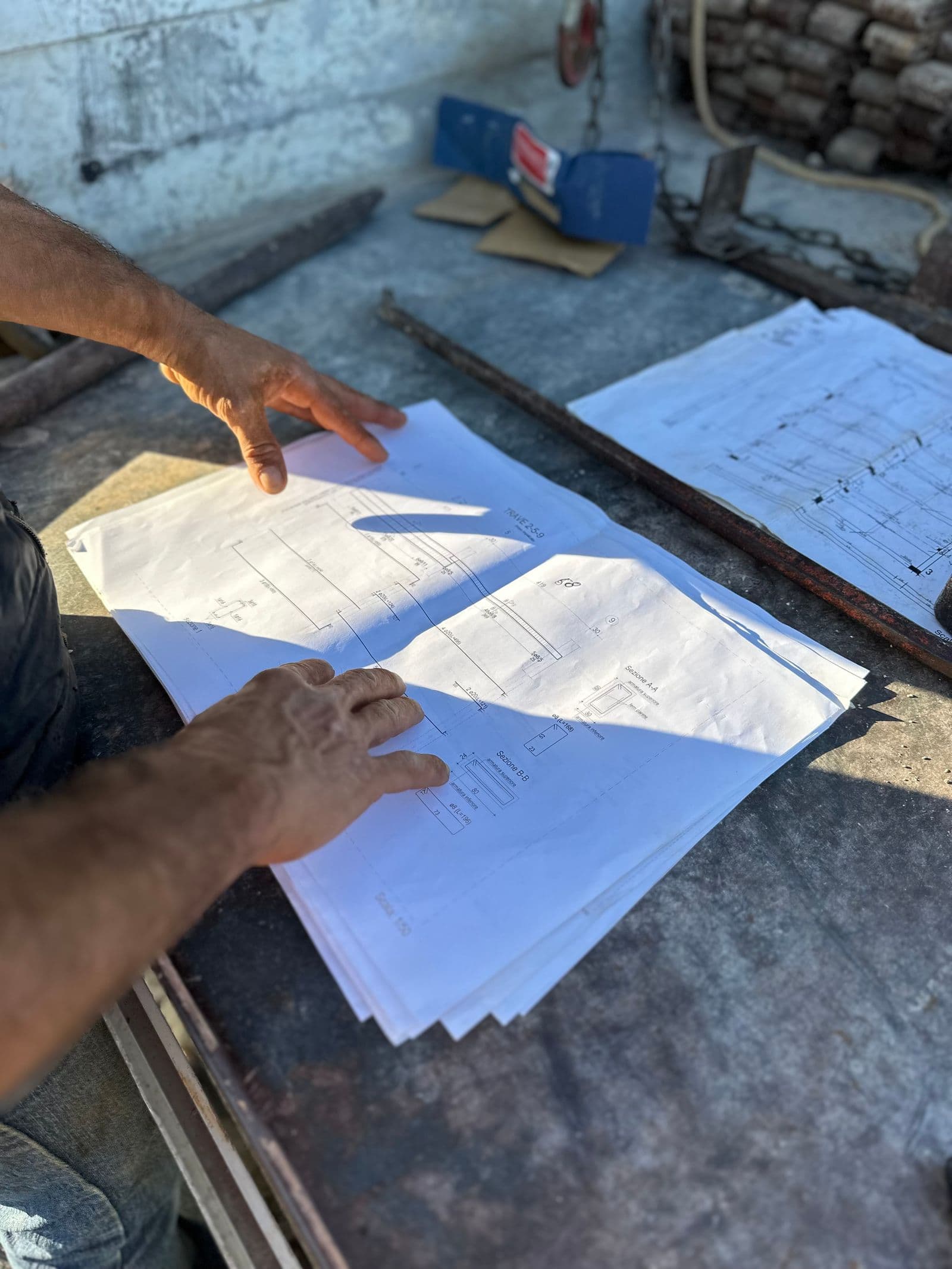
Ruh is mechanical takeoff software that runs the mechanical takeoff the way your estimators do: rectangular duct measured to linear feet and converted to pounds by SMACNA gauge, round and spiral duct by diameter, fittings counted, and duct liner and wrap taken off by the square foot. It reads the equipment schedule and counts every RTU, AHU, VAV box, and fan coil to its tag, ties diffusers, registers, and grilles back to the air-device schedule, and measures refrigerant and hydronic pipe by size and system with valves, specialties, and hangers. Those quantities are priced on your own material costs and labor units, every line is labeled measured, derived, or estimated, and your estimator signs the number. Mechanical work is capital-heavy and schedule-driven, so the takeoff carries both the measured distribution and the scheduled equipment, with the soft spots flagged before you commit.
Then price it HVAC Estimating Software
- ✓Ductwork by size and gauge, pipe by size and system, equipment counted to the schedule
- ✓Priced on your own labor units and your equipment and material costs
- ✓Every quantity labeled measured, derived, or estimated, tied to the sheet it came from

The Mechanical Crew.
Built for mechanical and HVAC contractors and sheet metal shops who price ductwork, pipe, and equipment for a living.
From Drawing Set to a Priced Mechanical Bid.
Forward the Set
Mechanical plans, schedules, details, and riser diagrams, straight from the invite. Duct and pipe running across floors and the schedules sitting on their own sheets are the point, not the exception.
The Takeoff Resolves the Set
Sheet classification and scale calibration, then duct measured to linear feet and pounds by gauge, pipe by size and system, and air devices and equipment matched to their schedule tags across the whole set.
Pricing Runs on Your Rates
Your material costs, your labor units, and your equipment and vendor pricing, with every assumption labeled and scope gaps priced as allowances.
Your Estimator Signs
On capital-heavy work the review is the risk control. A blind second count and sheet-by-sheet citations make the sign-off fast.
What Mechanical Estimators Told Us.
Coverage Across a Heavy Set
Mechanical sets are large and the scope is spread out: duct on the plans, capacities on the equipment schedule, devices on the air-device schedule, systems on the riser diagram. Reconciling all of it by hand under a bid clock is where runs and devices get missed.
One Missed Condition Moves the Number
A VAV box left off the count, a diffuser type not carried, a duct riser between floors, or a piece of scheduled equipment with no plan location. On mechanical work a single missed condition is not a rounding error, it is margin.
Capital-Heavy, Hard-Money Risk
Equipment is the biggest line on the sheet, so a mispriced RTU, chiller, or air handler on a lump-sum bid leaves no room to recover. The team has to see where the number is soft before it goes out the door.
AI for Mechanical Takeoff, Explained.
Schedule-Driven and Measured at Once
Mechanical estimating is two jobs in one. The equipment is scheduled, so the RTUs, air handlers, VAV boxes, fan coils, pumps, and terminal units have to be counted to their tags and reconciled against the schedule, capacity by capacity. The distribution is measured, so the ductwork has to come off by size and convert to pounds at the right SMACNA gauge, the round and spiral runs by diameter, and the refrigerant and hydronic pipe by size and system with its fittings, valves, and hangers. Ruh runs both inside one pipeline, so the scheduled equipment and the measured distribution land in the same estimate instead of two disconnected takeoffs that have to be stitched together by hand. Alongside the ductwork takeoff, Insulation Takeoff Software measures pipe and duct insulation in linear feet by size and material. A VAV box regulates airflow to a zone, and its scheduled controls and reheat requirements affect the scope carried with the terminal unit.
A Pipeline, Not a Prompt
A general chatbot reads a mechanical sheet like a photo and cannot hold the references that make the trade work: a schedule tag on one sheet that ties to a symbol three sheets away, a scale that applies to a single detail, a gauge that depends on duct size and pressure class. Ruh runs takeoff as a purpose-built sequence across the whole set. It classifies the sheets, calibrates the scale, then measures duct and pipe and counts devices and equipment with the schedule tags resolved set-wide. Every quantity is tied to the sheet it came from, and nothing hides inside an average.
Lump-Sum Risk Made Visible, Your Stack Unchanged
On plan-and-spec and hard-money mechanical work the question is not whether every number is exact, it is whether you can see where it is soft before you commit. Ruh labels every quantity measured, derived, or estimated, flags the ambiguous runs and schedule tags as issues, and prices scope gaps as labeled allowances, so the estimator signing the bid sees the risk first. It arrives configured on your drawings and your labor units, run by estimators rather than programmers, and it hands off in Excel and your own formats so it drops into the estimating workflow and the Bluebeam, Procore, and Autodesk tools you already run.
Mechanical Bids You Can Audit.
Judge It on Your Own Mechanical Set, Not a Demo.
Built to Work Together.
See It on Your Own Mechanical Set.
A free 30 minute walkthrough on a real mechanical set, no card. You decide if you move forward.
Proof and Perspective.
One Useful Email. No Drip Campaign.
Takeoff teardowns, cost data, and field notes from teams putting AI on real bids. Sent when there is something worth reading, never on a content calendar.
No spam · Unsubscribe anytime
Frequently Asked Questions
What mechanical and HVAC estimators ask before trusting an AI takeoff.
How accurate is it on ductwork, pipe, and equipment?
Will it read our drawings and our engineers' schedules?
Does it price on our labor units and equipment costs?
Does it fit the software we already use?
How do I know what it measured versus what it assumed?
Can it do a preliminary budget takeoff and a full plan-and-spec bid?
Is this also HVAC takeoff software?
Send the Mechanical Set That Breaks the Demos.
Bring your densest mechanical set to a 30 minute call. We run the takeoff live, duct and pipe measured and equipment counted to the schedule, and walk it line by line against your own numbers.