100% money-backBook a walkthrough

Construction glossary · Process and contract terms

What is submittal in construction?

A submittal is documentation a contractor sends to the design team for review before ordering, fabricating, or installing a product, most commonly shop drawings, product data sheets, and samples. The architect or engineer checks the submittal against the contract documents and returns it with an action such as approved, approved as noted, or revise and resubmit. Nothing covered by a submittal requirement should be fabricated or installed until that review cycle is complete.

Updated June 2026 · Reviewed by the Ruh construction team

Examples shop drawings, data, samplesReviewed by design teamStamps approved / revise & resubmit

The submittal review loop

Sub prepares submittalGC reviews & forwardsArchitect/engineer reviewsReturned approved or reviseOrder & fabricateProves products match the specs before install

Estimating process and contract terms scope this week? Watch Ruh take off a real plan in 30 minutes.

Book a walkthrough
Definition

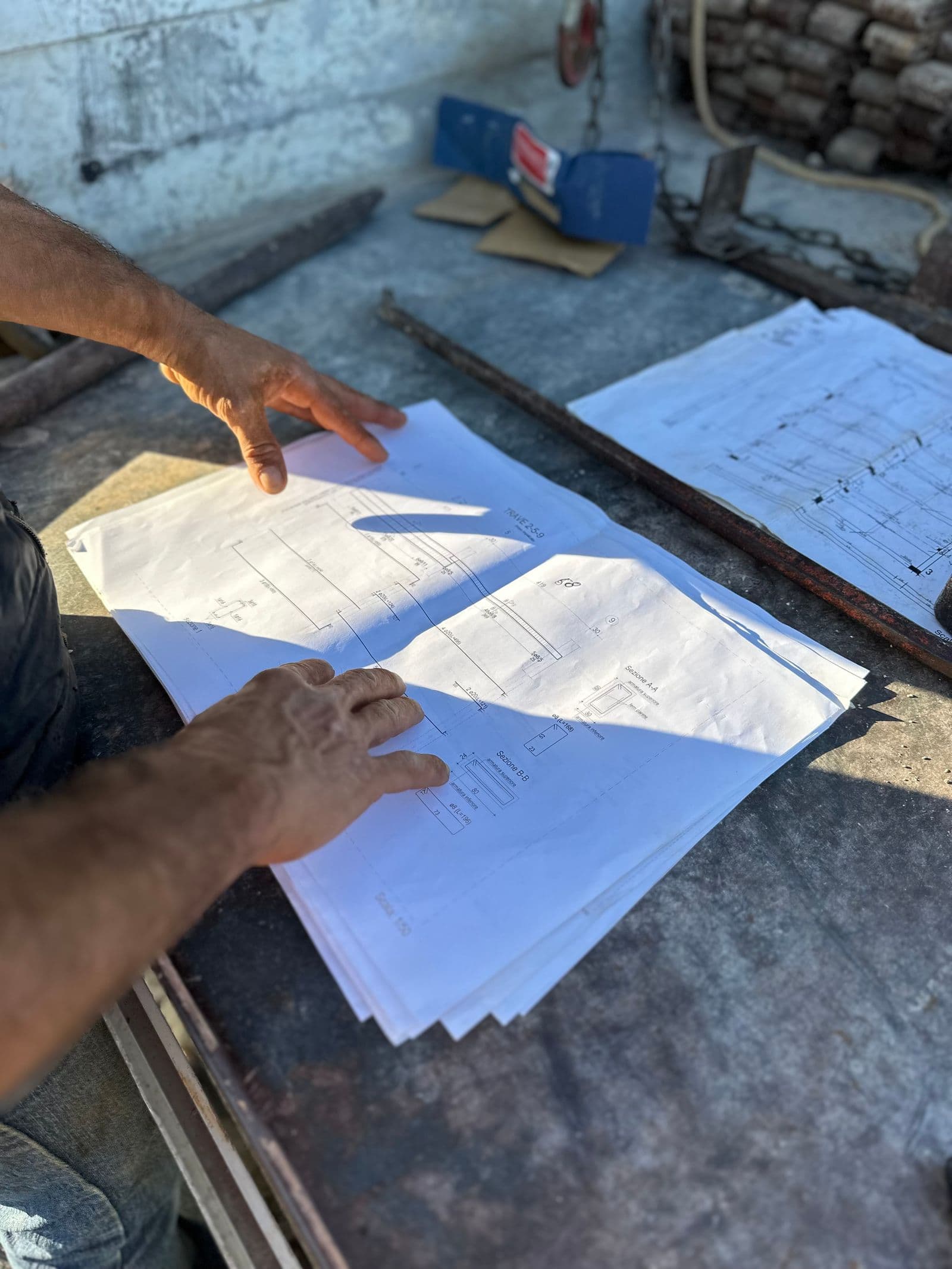
A submittal is the contractor's formal documentation showing exactly what will be furnished and installed, sent for the design team's review before procurement or fabrication. Typical forms include shop drawings, product data sheets, samples, mock-ups, and certifications. The requirement lives in the specifications: Division 01 (usually section 01 33 00) sets the procedure, and each technical spec section lists what must be submitted. On the project side, the subcontractor prepares the package, the general contractor's project engineer reviews and stamps it, then forwards it to the architect or engineer of record, who returns it with an action stamp. The whole flow is tracked in a submittal log or register. Estimators touch submittals in two places: the cost of producing them (detailing, engineering, samples, plus PM and project engineer hours in general conditions) and the schedule risk they carry. The classic new-estimator mistakes are assuming shop drawing or detailing costs are included in a material quote when they are not, and ignoring submittal lead time on long-lead items, which later forces expediting costs the bid never carried.

How it is measured

Submittals are counted in packages and tracked in calendar days. The submittal register lists each required package by spec section number (for example, 03 20 00 for concrete reinforcing), and the Division 01 procedures section states the review duration, commonly 10 to 14 calendar days per cycle. Estimators do not take off submittals the way they take off quantities; they quantify the effort and the time. That means counting the spec sections that require submittals, estimating PM and project engineer hours to process them (an illustrative 2 to 4 hours per package for logging, review, and tracking), pricing third-party deliverables such as engineered shop drawings or stamped calculations, and checking that the review cycles for long-lead items actually fit inside the project schedule before the bid commits to it.

Worked example

Worked example

Say the schedule shows footing rebar needed on site in week 12 after notice to proceed. Work the submittal cycle backward. Detailing the rebar shop drawings takes 15 working days, which is 3 weeks. The spec gives the engineer 14 calendar days to review, which is 2 weeks. Fabrication and delivery after approval runs 15 working days, another 3 weeks. Clean cycle: 3 weeks + 2 weeks + 3 weeks = 8 weeks, leaving 4 weeks of float. Now assume one revise and resubmit, which is common on a first structural package: 1 week to correct plus a second 14 calendar day review adds 3 weeks, so the cycle becomes 8 + 3 = 11 weeks and the float drops to 1 week. If that last week disappears too, expediting might mean overtime detailing at an illustrative $95 per hour for 40 hours, which is $3,800 the bid never included. That is why estimators check submittal lead times before trusting a schedule.

100%

Try Ruh on a real bid. 100% money-back guarantee if you are not satisfied.*

*Scoped delivery, terms apply. Read the guarantee terms

Start with a walkthrough
How Ruh handles it

How Ruh handles submittal

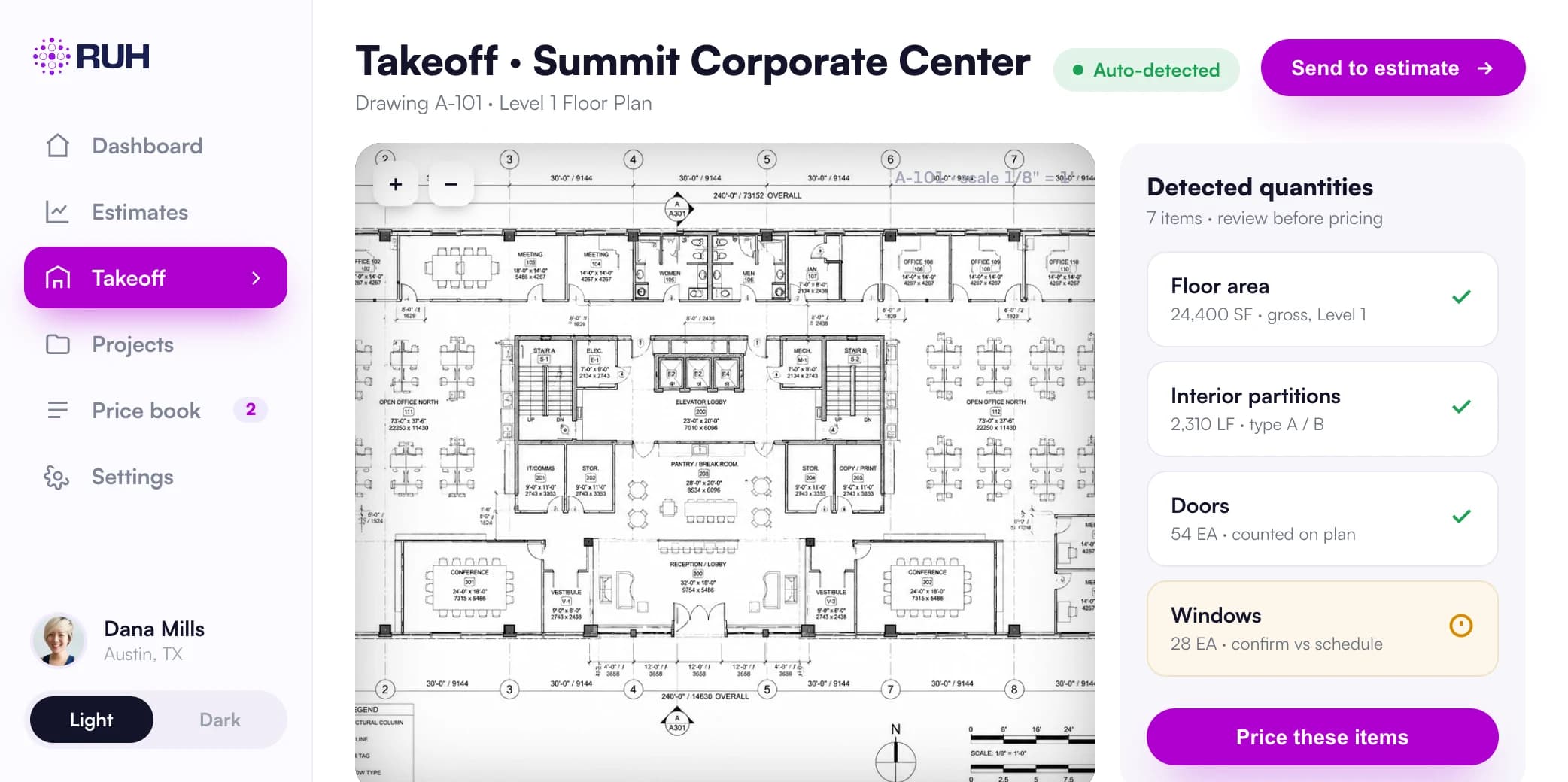
Ruh reads the contractor's drawings, runs the takeoff, and prices the quantities against the contractor's own price book, then hands the estimator a line-item draft to review, adjust, and sign off. Because every line ties back to a drawing and a unit cost the contractor controls, the estimator can quickly spot submittal-heavy scopes, such as reinforcing steel or engineered systems, and add detailing costs and lead-time contingencies before the bid goes out. The AI builds the draft; judgment calls about submittal risk stay with the estimator.

See construction invoice and pay app software

Submittal: frequently asked questions

What is the difference between a submittal and an RFI?+

A submittal shows how the contractor intends to comply with the contract documents, while an RFI (request for information) asks the design team a question when the documents are unclear, incomplete, or in conflict. Submittals are required by the specs and follow a set review procedure; RFIs are raised as needed. The two often interact, since an RFI answer can change what a submittal needs to show.

What do the review stamps on a submittal mean?+

Most design teams use four actions: approved (proceed), approved as noted (proceed after incorporating comments), revise and resubmit (correct it and go through review again), and rejected (does not comply, start over). Only the first two allow ordering or fabrication to move forward. The review confirms design intent; it does not shift responsibility for dimensions, quantities, or means and methods away from the contractor.

What are the most common types of submittals on a commercial project?+

Shop drawings, product data sheets, and physical samples cover most of the log. Larger projects add mock-ups, calculations stamped by a licensed engineer, certifications and test reports, and closeout submittals such as O&M manuals and warranties. Each technical spec section lists exactly which of these apply to that scope of work.

Still measuring by hand? Your next takeoff can run while you review this one.

See it on your plans

Related terms

Keep going: read the full guide or explore construction invoice and pay app software.

The Process and contract terms estimating cheat sheet
Every unit, waste factor, and conversion on one page. Free PDF.

See Ruh price a bid from your own drawings.

AI takeoff and estimating on your price book, your estimator signs off.

Figures on this page are illustrative. Construction estimates depend on project-specific conditions, source documents, market pricing, and professional judgment. Ruh's AI assists the estimator and does not replace professional review: your team reviews, validates, and approves every estimate, bid, and pricing decision.