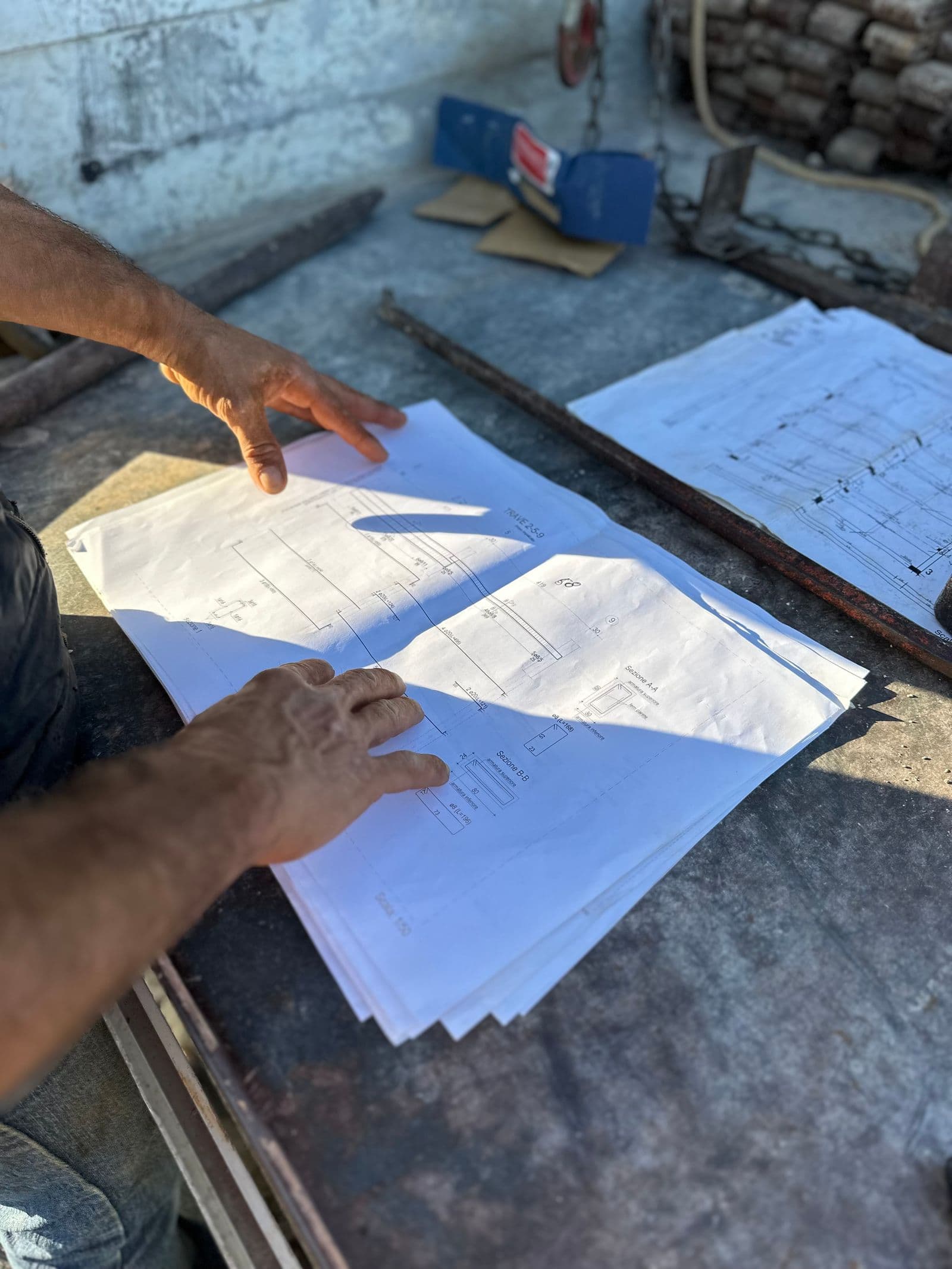
Framing estimating software that prices on your numbers.
Framing estimating software turns your drawings into a priced framing estimate, and Ruh does it by counting studs by spacing, 31 for a 40 LF wall at 16 in on center before kings and jacks, plus plates, headers, and sheathing, priced through 13 starting rough carpentry recipes you can edit. Below: the framing takeoff table, a worked example priced line by line, and the questions framing estimators ask.
Measuring first? Framing Takeoff Software
- ✓Studs (wood or light-gauge), measured ea
- ✓Top and bottom plates / track, measured lf
- ✓Headers, measured ea / lf
Free walkthrough on your own plans. Your estimator signs off.
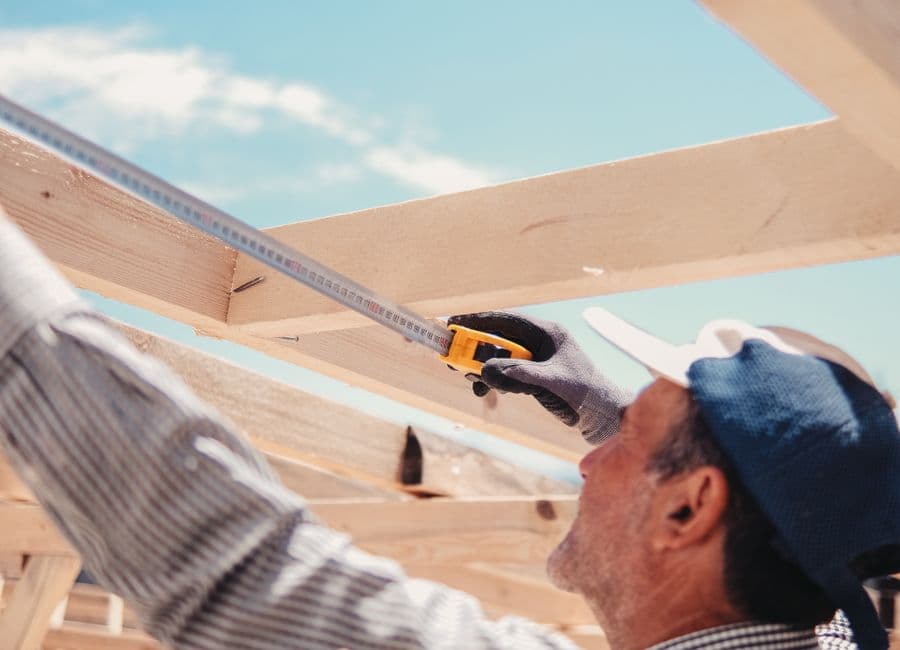
The Framing Estimating Problems This Solves.
Stud Counts Swing With Spacing and Openings
A 40 lf wall at 16 in OC is a different stud count than the same wall at 24 in OC, and that is before you add kings, jacks, cripples, and corner studs around every opening. Miss the opening framing and the count is light on every wall in the building. Doing it by hand across a full floor plan is slow and easy to fat-finger.
Board-Foot Conversion Buries the Real Lumber Cost
Dimensional lumber gets priced by the board foot or by the thousand (mbf), but your takeoff is in pieces and linear feet. Converting a 2x10x16 to board feet, then back to a delivered piece price with the current lumber market, is where margin quietly leaks. One stale mbf number applied across the package moves the bid more than most estimators expect.
Light-Gauge Metal and Wood Are Not the Same Takeoff
Switch a wall from wood to light-gauge metal and the whole path changes: studs by gauge and depth, track instead of plates, screws and clips instead of nails, and a completely different price book. Tools built for one path force you to fudge the other. Pricing a metal-stud scope with wood logic, or vice versa, produces a number you cannot defend in a bid review.
From Your Framing Drawings to a Priced Line.
The same pipeline that runs the takeoff runs the pricing, so the number you send out traces back to the sheet it came from.
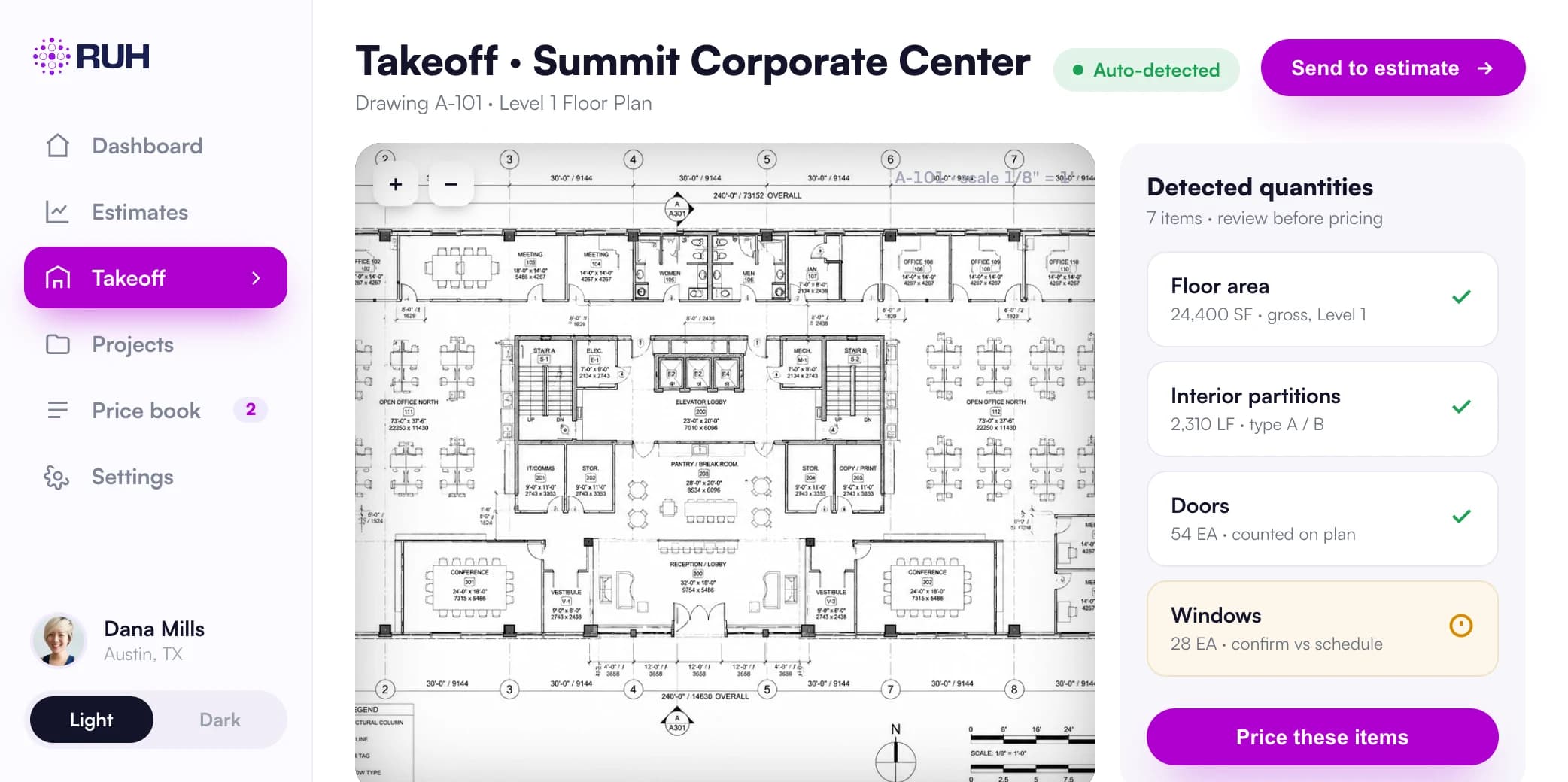
Quantities lifted from the real sheets, each tied to the sheet it came from and checked by a blind second count.
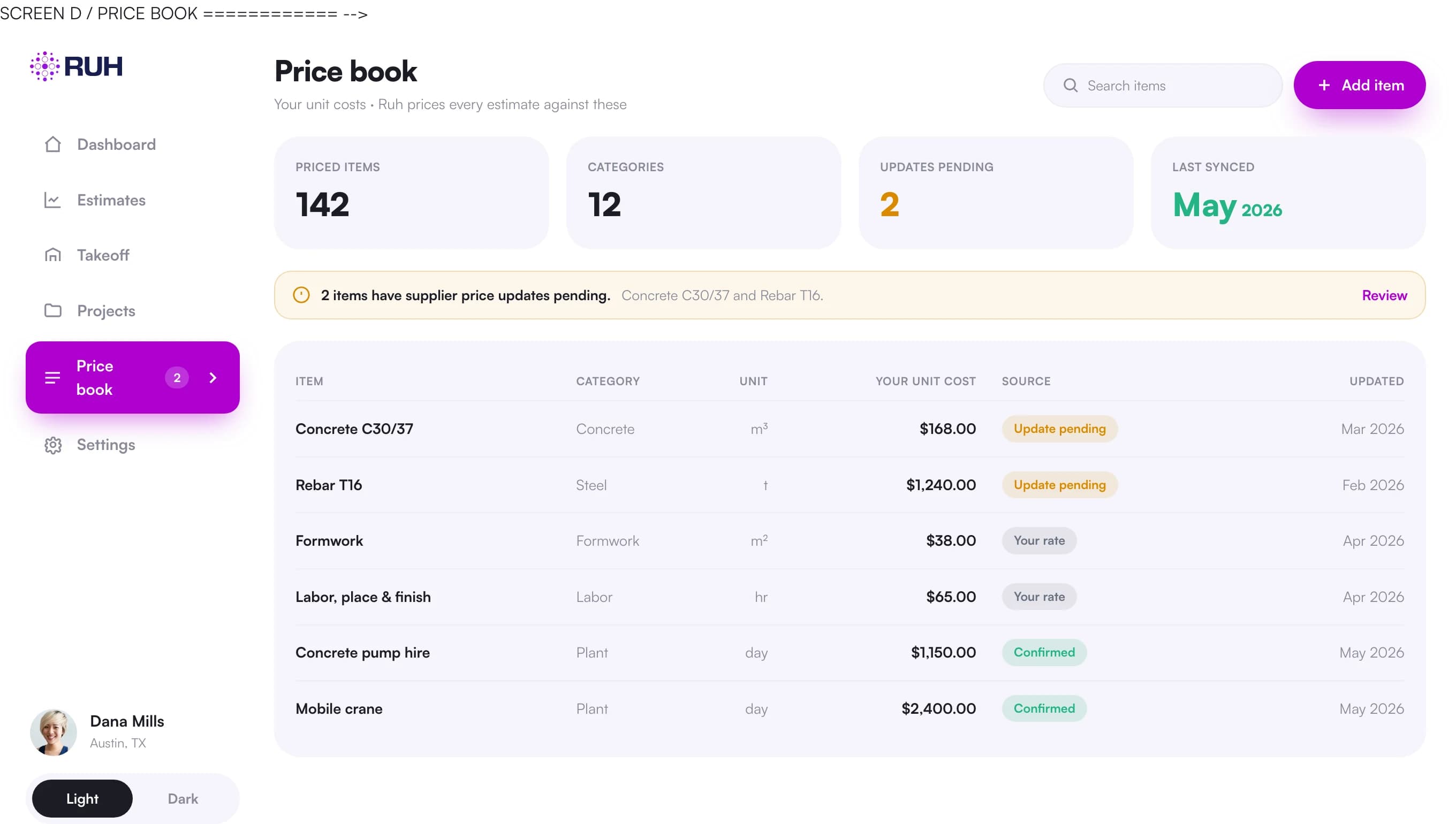
Your own rates and assemblies, not a generic national cost database.
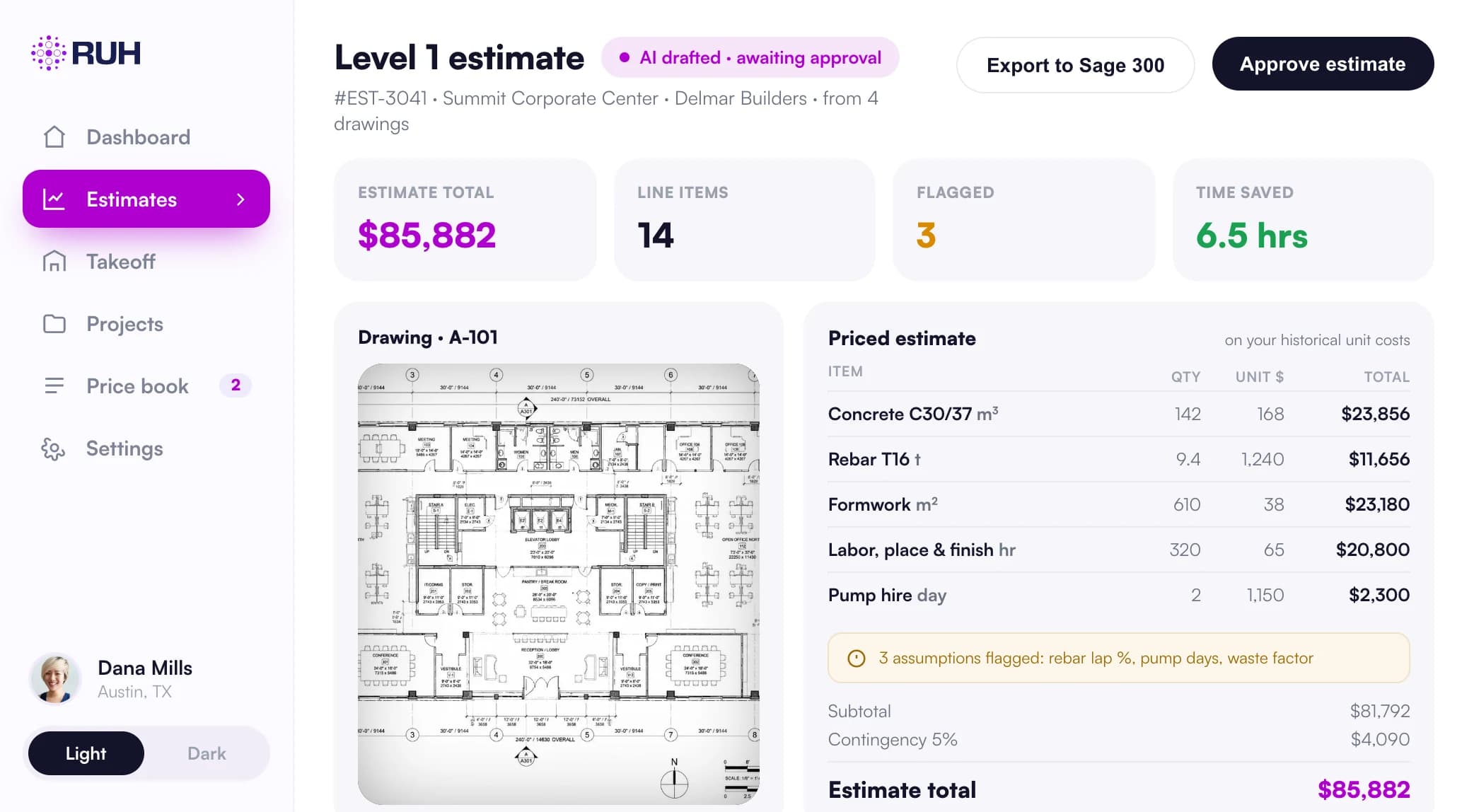
Every line traceable back to the sheet it came from before anything goes out.
What a Framing Takeoff Counts and Measures.
| Item | Unit | How it is measured and priced |
|---|---|---|
| Studs (wood or light-gauge) | ea | Count from wall length divided by spacing (16 vs 24 OC) plus one, then add kings, jacks, cripples, and corner studs per opening; priced by piece for the species, size, or gauge and depth |
| Top and bottom plates / track | lf | Measured as runs along each wall (typically double top plus single bottom for wood, or track top and bottom for metal); priced per lf or converted to pieces with stock lengths |
| Headers | ea / lf | Sized and counted per opening from the schedule (ply count and depth); priced by the assembled lf including any plywood spacer or by the made-up unit |
| Wall sheathing (OSB / plywood) | sf | Net wall area after deducting openings, then a waste factor added; converted to 4x8 sheets (32 sf) and priced per sheet |
| Floor joists / rafters | ea | Counted by span and spacing off the framing plan; priced by piece for the size and length, with hangers and blocking carried separately |
| Dimensional lumber (blocking, misc) | bf | Converted from pieces to board feet, then priced against your current per-bf or mbf number for the species and grade |
| Hardware and connectors | ea | Hangers, clips, straps, hold-downs, and anchor bolts counted per connection from the schedule; priced by piece at your supplier line |
| Fasteners (nails / screws) | lump-sum | Estimated as a percentage allowance or by the box against the assembly; metal framing carries screws and clips, wood carries nails |
Component-Level Framing Estimating
Framing estimates hold up in review when every dollar traces to a counted component, not a lump square-foot allowance. The components are the ones the takeoff already counts: studs by spacing plus the kings, jacks, cripples and corners each opening adds; plate or track runs by wall; headers per opening off the schedule; sheathing net of openings with the waste factor visible; joists and rafters by span and spacing; then the hangers, clips, straps and hold-downs counted per connection. Price each component line against your own supplier numbers (piece price for studs and engineered lumber, per-lf for plates, per-sheet for sheathing, per-bf or mbf for dimensional stock), and the estimate can answer the only question a bid review really asks: where did this number come from?
A Worked Framing Example
Take one wood-framed exterior wall: 40 lf, 9 ft tall, 2x6 studs at 16 in OC, with one 6 ft wide opening. Studs: 40 ft x 12 = 480 in, divided by 16 = 30, plus 1 gives 31, then add 6 for the corner and opening framing for 37 studs. At an illustrative $6.25 each that is 37 x $6.25 = $231.25. Plates: double top plus single bottom is 3 runs x 40 lf = 120 lf at $0.95/lf = $114.00. Sheathing: gross area 40 x 9 = 360 sf, less the 6 ft x 7 ft opening (42 sf) = 318 sf net, plus 10% waste = 350 sf, which rounds to 11 sheets of 4x8 OSB at $24.00 each = $264.00. Header: a 2-ply 2x10 across the opening is about 7 lf at $3.10/lf = $21.70. Material subtotal: $231.25 + $114.00 + $264.00 + $21.70 = $630.95, before labor, markup, and tax. Unit costs are illustrative for the 2024 to 2026 US market.
Bidding Framing Work This Month? Book a 30-minute walkthrough of a takeoff on a real plan.
Book a walkthrough
How Ruh Runs Your Framing Estimates.
Ruh reads your framing drawings and wall schedule, identifies each wall type, and runs the framing takeoff end to end: stud counts from spacing and openings, plate or track footage, headers per opening, sheathing net of openings with your waste factor, and joists or rafters by span. It picks the right path for wood or light-gauge metal and prices every line against your own price book, including board-foot conversion for dimensional lumber. The estimator reviews each quantity, the assumptions and exclusions, and the unit costs, with every dollar traced back to a takeoff line and a price-book entry. Nothing ships until the estimator signs off; the AI assists the takeoff but professional judgment owns the number.
Try Ruh on a real bid. 100% money-back guarantee if you are not satisfied.*
*Scoped delivery, terms apply. Read the guarantee terms
Framing Estimating Software FAQs
How accurate is the framing takeoff?+
Accuracy comes from the drawings and your price book, not a black box. Ruh shows its work on every line: the stud count and the spacing it used, the wall area before and after opening deductions, the waste factor, and the board-foot math. The estimator sees each area tied to its sheet and any open questions logged as issues, so light counts or unclear details get caught before the bid, not after.
Does it price on my price book or a generic database?+
Your price book. Ruh prices the takeoff against your supplier line items, your species and grades, your gauges and depths, and your current lumber and metal numbers, including per-bf or mbf pricing. You can update rates and re-price the whole package in one pass, so a moving lumber market does not leave stale numbers buried in the estimate.
Can it work with our existing takeoff and estimating tools?+
Yes. Ruh reads standard drawing sets and exports the priced takeoff to the format your team already uses, including spreadsheet templates and common estimating platforms. The framing takeoff software is meant to feed your existing workflow, not replace the estimate of record, so your detail, your assemblies, and your sign-off process stay intact.
What stays in the estimator's hands?+
Judgment. The estimator reviews quantities, sets and approves waste factors and assumptions, decides exclusions, applies labor and markup, and signs off on the final number. Ruh handles the slow, error-prone counting and pricing across every wall and floor. The decisions a senior framer is paid to make stay human.
Doing the framing takeoff itself?
The quantities side has its own page: counts, measures, and how the AI takeoff reads your drawings.
Framing Takeoff SoftwareFraming Terms in the Glossary.
Figures on this page are illustrative. Construction estimates depend on project-specific conditions, source documents, market pricing, and professional judgment. Ruh's AI assists the estimator and does not replace professional review: your team reviews, validates, and approves every estimate, bid, and pricing decision.
Try Ruh on a framing bid you are pricing now.
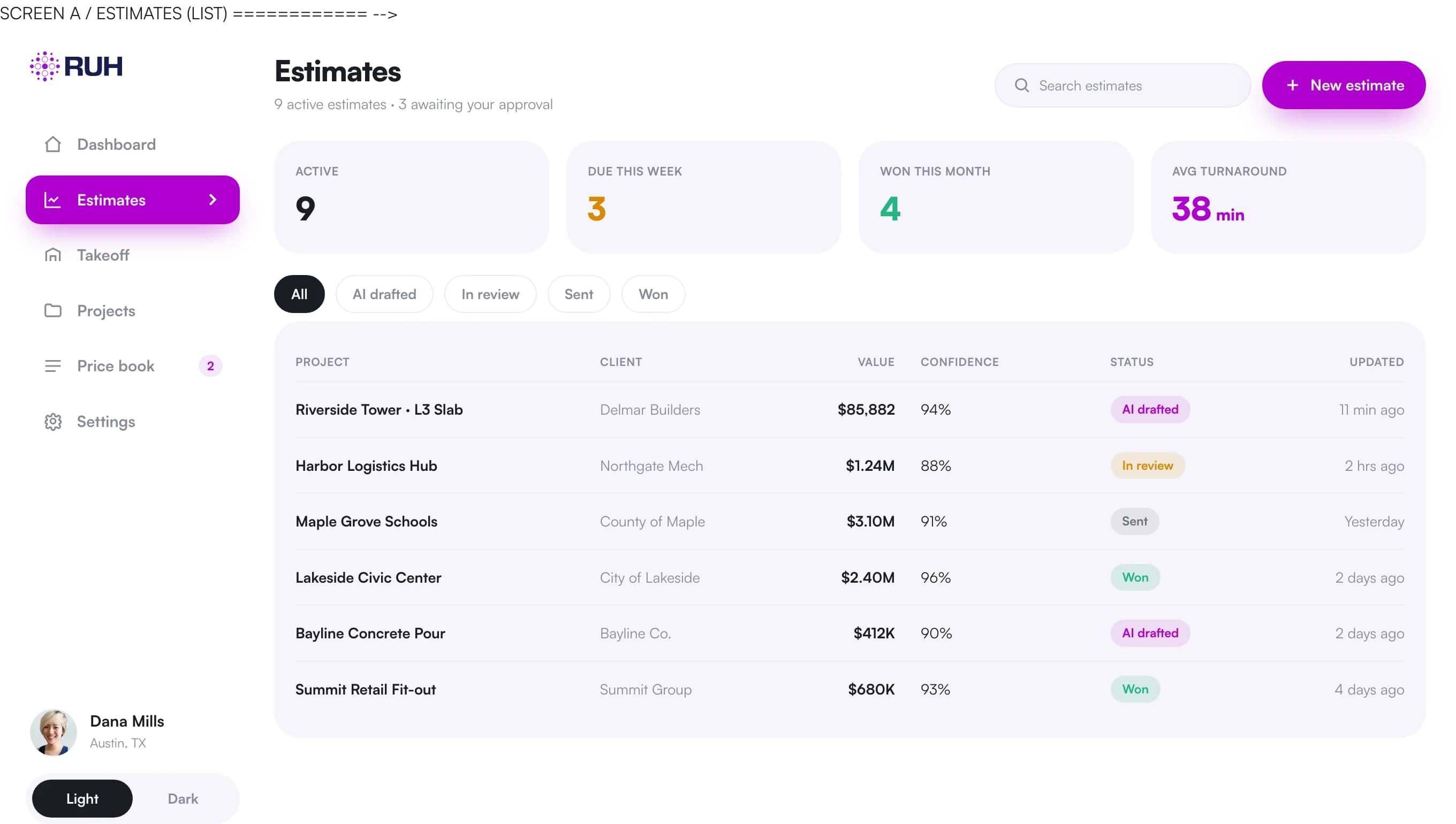
Put us on real work rather than a canned demo. Ruh reads your drawing set, measures the scope, and prices the quantities against your own rates, with every line traceable back to the sheet it came from. If it does not hold up, you are covered by the guarantee below.
- 1Tell us about a bid you are working on and the trade you are pricing
- 2Ruh measures that scope from your drawings and prices it on your own rates, not generic cost data
- 3Every quantity traces back to the sheet it was measured from, so your estimator can check the work
Run Your Next Framing Bid on Ruh.
Send one framing set. We run the takeoff and walk you through the quantities, the units, and the pricing on a 30 minute call. If it does not hold up against your estimator, you have lost nothing.