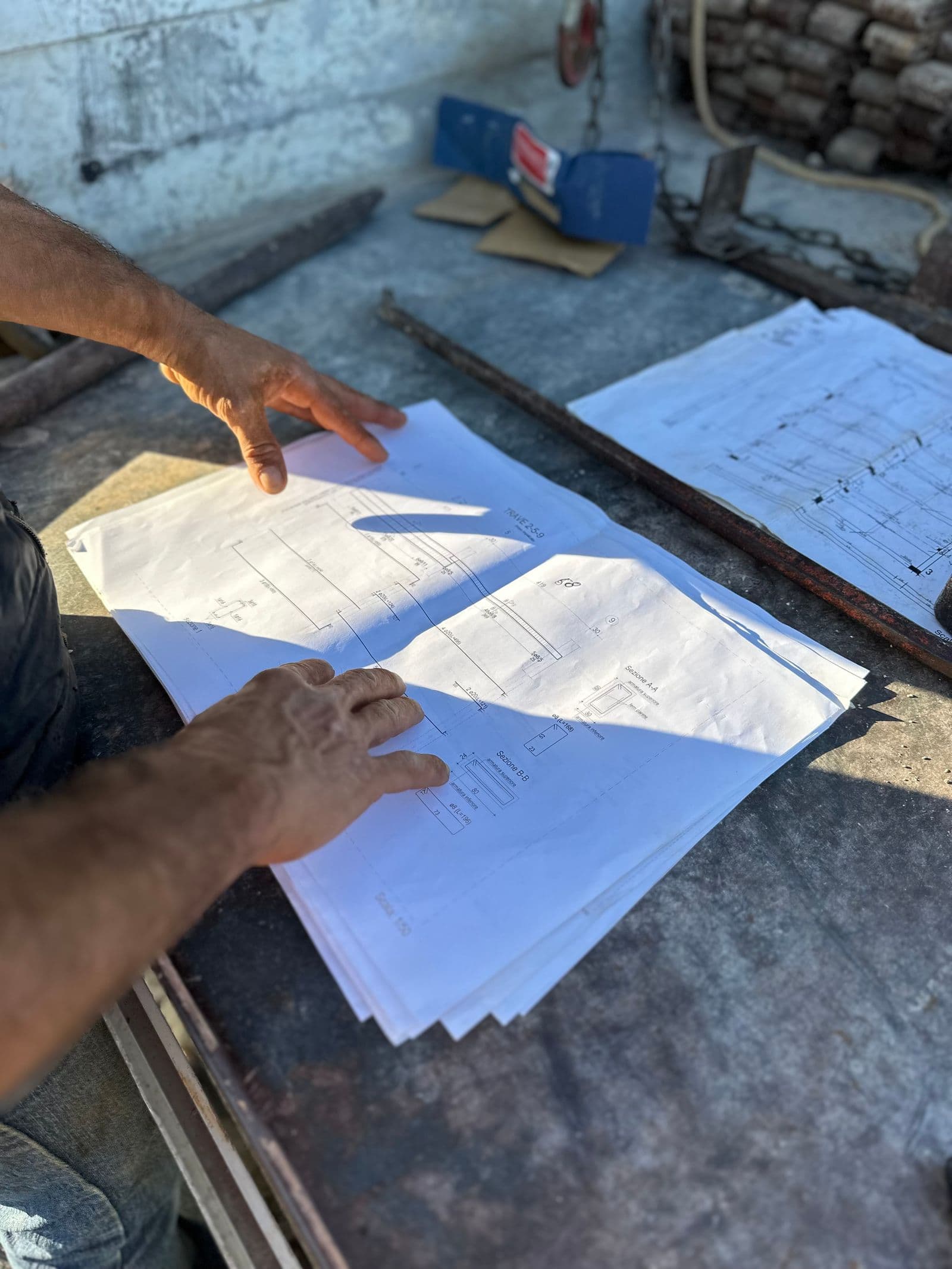
The takeoff is measured. The estimate is yours to sign.
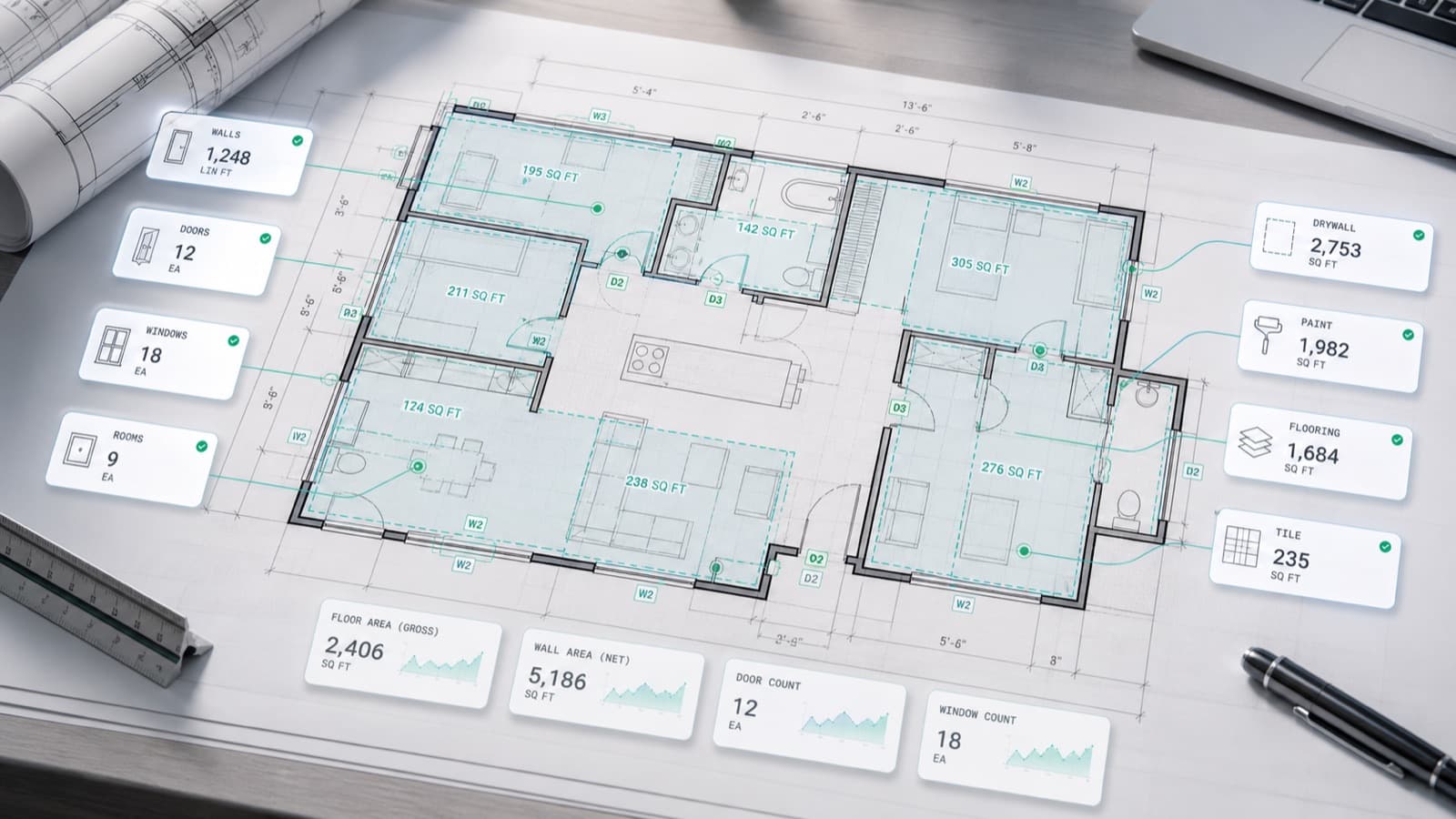
Ruh runs the takeoff and the estimate the way an estimator does: it reads drawing PDFs and CAD files, classifies the sheets, measures rooms, counts symbols, and checks the scale against a printed dimension, then prices the estimate on your own book and fills your own workbook. Every quantity is tied to the sheet it came from, and the first takeoff on 1 set of your own drawings is free.
- ✓Every quantity links back to the drawing it came from
- ✓Coverage scores show what is measured versus allowance
- ✓Exports fill your templates, not ours
The Precon Crew.
Three agents that carry a drawing set to a submittable bid, with your judgment at the center.
From Bid Invite to Submittable Bid.
Drop the Set
Drawing PDFs or CAD, straight from the invite. Sheet classification starts immediately.
Takeoff Runs
Areas, counts, and scale calibration, with a page coverage score so you know what was measured.
Pricing Assembles
Nine stages from scope and budget through sub bid leveling to proposal export.
You Sign
Review by confidence score, change anything, and stamp the bid. The agent learns your corrections.
What Estimators Told Us Actually Hurts.
Weeks to a First Number
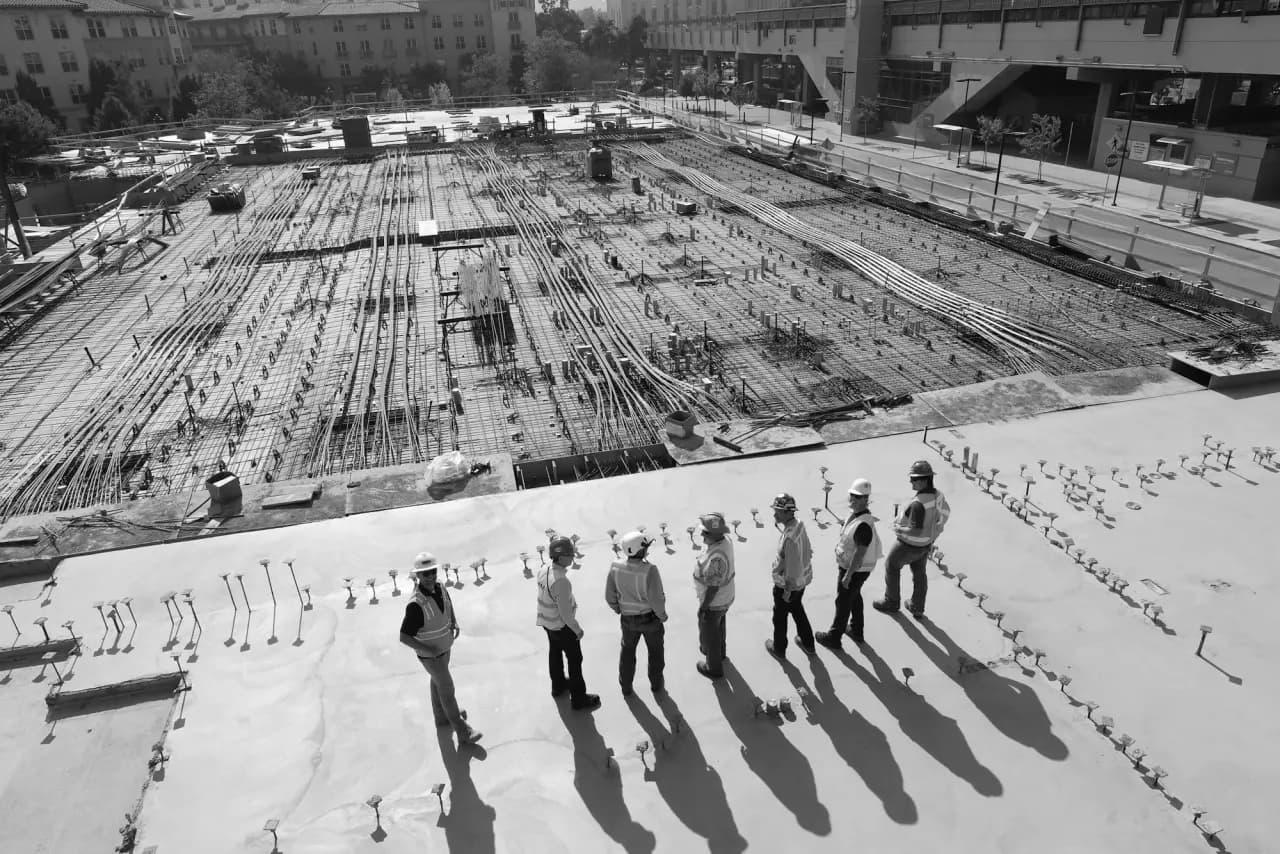
Builders described the same cycle: measure, back to design, then initial pricing, about a four-week turnaround. The deal cools while the number is being made.
Inconsistency Between Estimators
Coverage rates, facade complexity, labor and O&P drift from desk to desk. The bid depends on who priced it, and nobody can see that until margin review.
DIY AI Already Failed You
Teams have tried general chatbots on real takeoffs. Precision detailing has no approximation in it, and generic models break on callouts and spatial references.
In Their Words.
Taken from discovery calls and working sessions with estimating and detailing teams. Anonymized: roles and company types only, lightly cleaned for transcription noise.
I tried my best in ChatGPT and Gemini. It never worked out. Detailing is detailed work; there is no approximation in it.
You have two footings, and there is one callout, F1. On a small drawing it worked. On the real one, that is where it failed.
Once they go into preconstruction, I go out and do a measure, come back to designs, and then do that initial pricing. That is usually about a four-week turnaround.
The more jobs we quote, the better the business gets. But every quote is overhead.
We specialize, we niche, and none of our projects run more than two or three days.
We understand it is not going to replace everything on day one.
AI Takeoff and Estimating, Explained.
Why Chatbots Fail on Takeoffs
The teams that come to us have usually already tried AI on a takeoff, and it failed. That is not surprising, and it is worth being precise about why. A general chatbot reads a drawing the way it reads a photo: it can describe it, but it cannot hold a spatial reference. Two footings sharing one F1 callout, a scale bar that applies to one detail and not the sheet, a symbol legend three pages away. Detailing has no approximation in it, and approximation is all a general model can do on a dense sheet.
A Purpose-Built Pipeline
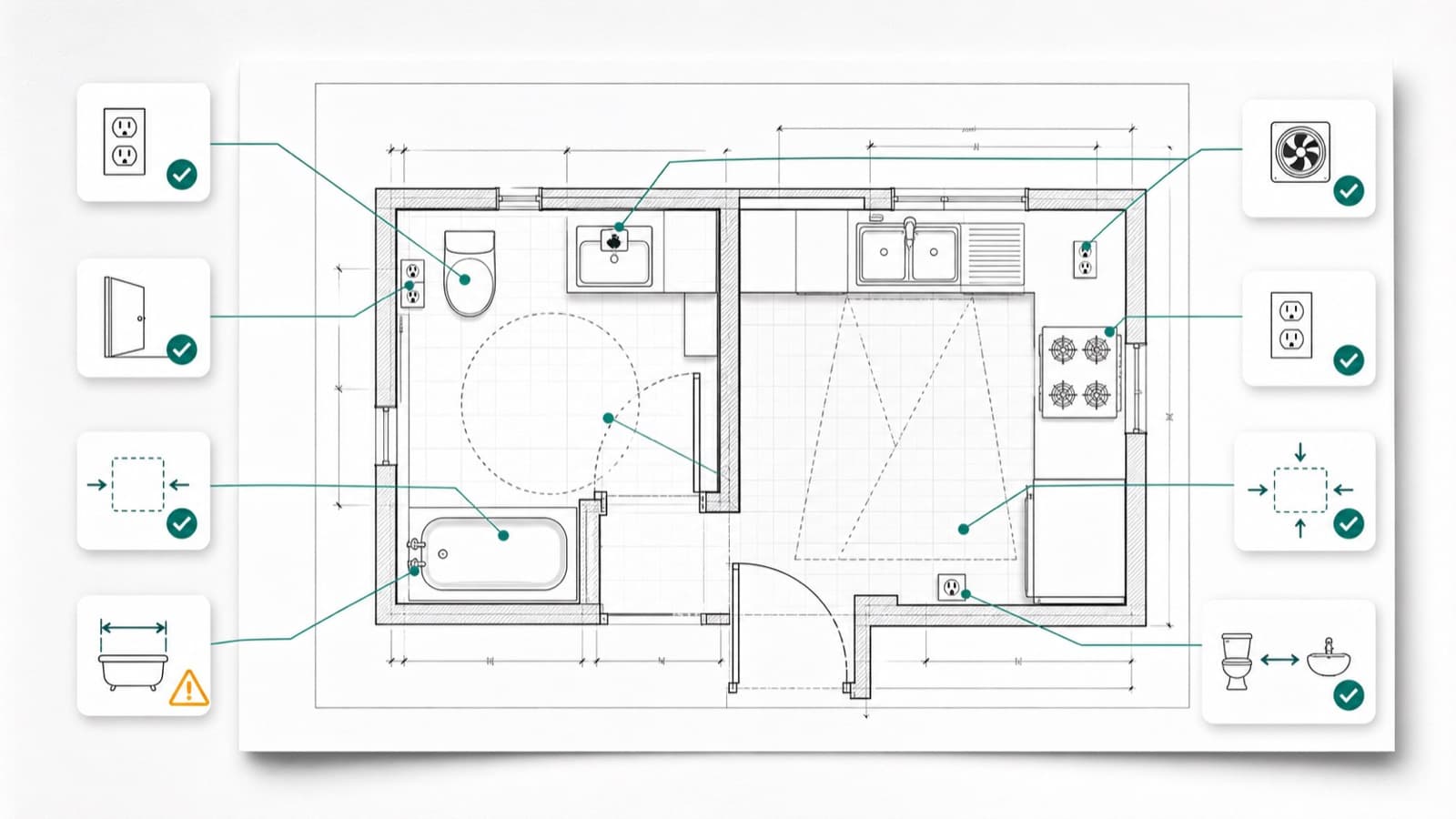
Ruh runs takeoff as a purpose-built pipeline instead: sheet classification first, then scale calibration, then measurement and symbol counting with the callouts resolved against the whole set. Every quantity comes out labeled measured, derived, or assumed, with a confidence score and a page-coverage number, so you know exactly how much of the bid is measured versus allowance before it goes out. Partial runs finish honestly as partial. That is the difference between a tool an estimator can sign and a demo that falls apart on real drawings.
Priced on Your Book
Pricing then runs on your book, not a national average. Your assemblies, your labor multipliers, your history, across nine stages from scope and budget through sub bid leveling to a proposal that fills your own workbook. Sub quotes are leveled against scope, and holes are priced as labeled allowances instead of silent zeros. The estimate that comes back is consistent from desk to desk, because the judgment that used to live in one senior head is encoded where every estimator can use it. Exports land in Excel and your own workbook, beside the Procore and Bluebeam workflows your team already runs.
Throughput Wins Bids
The result is throughput. Quoting volume is revenue for most shops we talk to, and every quote is overhead until it wins. When the first pass arrives measured and priced, the same team prices more work and spends its day on scope gaps and strategy. One structural steel client, ADF Group, measured bid turnaround roughly 50 percent faster. The easiest way to judge any of this is the way estimators judge everything: on your own set. Send one and compare it to your own numbers.
Preliminary Versus Full
Preliminary and full estimates are treated as the different animals they are. A preliminary number from limited documents runs fast with assumptions labeled loudly, which is exactly what a budget conversation needs. A full estimate runs the complete pipeline: detailed takeoff, pricing, sub bid leveling, and assembly. Estimating leads who reviewed early output told us it holds up against junior estimator work, with flagged rates keeping the accuracy honest, and that is the right bar: the machine does the junior pass at machine speed, and your senior judgment does what it always did.
Accuracy, Honestly Framed
On accuracy, the honest framing is thresholds and labels, not marketing percentages. Detailing teams benchmark takeoff tools against the high nineties, and the way to earn a place in that company is transparency: every quantity labeled, every low-confidence item flagged for a person, and side-by-side comparison against estimates your team already trusts. Nobody credible promises day-one perfection; teams told us themselves they do not expect everything replaced on day one. What compounds is the correction loop, because every fix your estimators make teaches the system your standards.
Measured, Not Guessed.
Judge It on Your Own Work, Not a Demo.
Built to Work Together.
Find Your Trade.
Both stages of every trade, so a takeoff hands straight off to a priced estimate.
How the two stages fit together Construction Estimating and Takeoff Software
- ConcreteTakeoff stageConcrete Takeoff SoftwareEstimating stageConcrete Estimating Software
- DemolitionEstimating stageDemolition Estimating Software
- DrywallTakeoff stageDrywall Takeoff SoftwareEstimating stageDrywall Estimating Software
- ElectricalTakeoff stageElectrical Takeoff SoftwareEstimating stageElectrical Estimating Software
- ExcavationTakeoff stageExcavation Takeoff SoftwareEstimating stageSitework and Earthwork Estimating Software
- Fire ProtectionTakeoff stageFire Protection Takeoff Software
- FlooringTakeoff stageFlooring Takeoff SoftwareEstimating stageFlooring Estimating Software
- FramingTakeoff stageFraming Takeoff SoftwareEstimating stageFraming Estimating Software
- GlazingTakeoff stageGlazing Takeoff SoftwareEstimating stageGlazing Estimating Software
- InsulationTakeoff stageInsulation Takeoff SoftwareEstimating stageInsulation Estimating Software
- LandscapingTakeoff stageLandscaping Takeoff SoftwareEstimating stageLandscape Estimating Software
- MasonryTakeoff stageMasonry Takeoff SoftwareEstimating stageMasonry Estimating Software
- MechanicalTakeoff stageMechanical Takeoff SoftwareEstimating stageHVAC Estimating Software
- PaintingTakeoff stagePainting Takeoff SoftwareEstimating stagePainting Estimating Software
- PavingTakeoff stagePaving Takeoff Software
- PlumbingTakeoff stagePlumbing Takeoff SoftwareEstimating stagePlumbing Estimating Software
- RoofingTakeoff stageRoofing Takeoff SoftwareEstimating stageRoofing Estimating Software
- SidingTakeoff stageSiding Takeoff Software
- Structural SteelTakeoff stageStructural Steel Takeoff SoftwareEstimating stageStructural Steel Estimating Software
- WaterproofingTakeoff stageWaterproofing Takeoff Software
See It on Your Own Work.
A free 30 minute walkthrough on your real work, no card. You decide if you move forward.
Proof and Perspective.
One Useful Email. No Drip Campaign.
Takeoff teardowns, cost data, and field notes from teams putting AI on real bids. Sent when there is something worth reading, never on a content calendar.
No spam · Unsubscribe anytime
Frequently Asked Questions
What estimators ask before trusting an AI takeoff on a real bid.
How accurate is the AI takeoff?
Every number is labeled measured, derived, or assumed, and partial runs finish honestly as partial. You see exactly how much of the bid is measured versus allowance before you send it.
What plans can it read?
Will it fill my estimate template?
How does sub bid leveling work?
Do estimators lose control of the number?
We already tried ChatGPT on takeoffs and it failed. Why is this different?
How much historical data do we need?
Can it handle lump-sum work?
Do preliminary and full estimates work differently?
What accuracy should we expect?

Send a Set. Judge the Takeoff Yourself.
We run your real drawings and walk through the result line by line on a 30 minute call. If it does not hold up against your work, you have lost nothing.