
What you are actually bidding
Settle the boundary before you calculate a single cubic yard. Earthwork is the widest scope on the job by area, the least clearly drawn, and it spans four MasterFormat divisions:
- 31 10 00 Site Clearing and 02 41 00 Demolition. Clearing and grubbing, tree removal and tree protection, stripping, and demolition of existing pavement, structures and abandoned utilities — the scope that prices out in structural demolition estimating software.
- 31 22 00 Grading and 31 23 00 Excavation and Fill. Mass excavation, the building pad, structural fill, backfill, rough and final grading.
- 31 25 00 Erosion and Sedimentation Controls, plus 31 50 00 Excavation Support and Protection, and dewatering, which carries its own section under Excavation and Fill.
- Division 32 Exterior Improvements and Division 33 Utilities. Aggregate base, paving, curb, seeding, storm drainage and site utility trenching. Some, all or none of this is yours.
Five boundaries decide whether the job makes money.
Import versus export, and who owns the haul. A site that balances on paper costs nothing to move off site. A site short 8,000 cubic yards is a trucking job with a dirt component. If you are exporting, name the disposal site and say who pays the tipping fee, because dumping is a separate cost from hauling and the GC will assume you carried both. See import/export soil.
Unsuitable material and rock. Never lump sum either one. Both are unit-price items with a written definition and a stated included quantity of zero. Define rock the way your equipment defines it, by the machine and bucket that cannot remove it in a single pass, not by the geologic name.
Building pad versus site grading. The pad is usually the building footprint plus a stated offset, finished to subgrade under the slab section and held to a tolerance. Site grading is everything else. State which one you priced, at what tolerance, and whether the aggregate base under the slab is yours or the concrete sub's.
Trench excavation and backfill for the utility trades. The plumbing and electrical sheets stop a few feet outside the building line and the civil utility plan picks up. Somebody has to dig, bed, backfill and compact each utility trench, and it is frequently assumed to be the earthwork sub because the excavator is already on site. Price it or exclude it by name.
Erosion control for the duration, not for the installation. Installing silt fence is a day of work. Maintaining it, cleaning inlet protection, resetting the construction entrance and doing the inspections required by the SWPPP runs for the whole project. State an assumed duration in months and a monthly rate for anything beyond it.
Read the drawings for your sheets
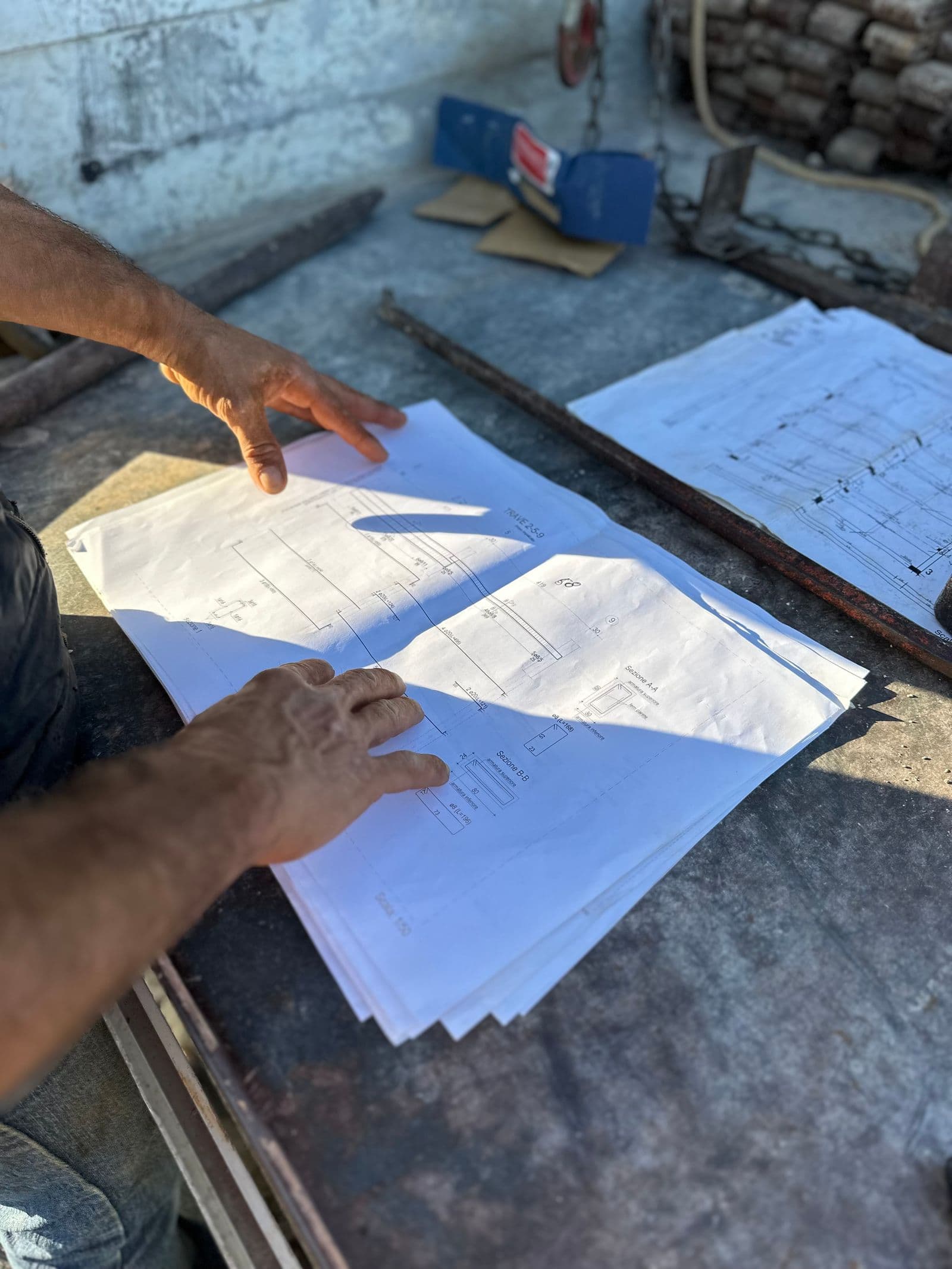
- The C-series civil sheets carry the work. Existing conditions and demolition, the grading plan, the drainage plan, the utility plan, the erosion control plan, and the details and cross sections.
- The geotechnical report is a bid document, whether or not the contract says so. Strip depth, reuse of on-site material, over-excavation below footings, proof roll requirements, groundwater elevation, and the compaction requirement as a percentage of maximum dry density from the Proctor test all live in its recommendations section, not on the drawings. Read it before you read the plans.
- The structural foundation plan gives you bottom-of-footing elevations. The grading plan does not. If you are digging footings, that sheet sets your depths.
- The architectural sheets give you finish floor elevation and the true building footprint, which is what your pad limit is measured from.
- The landscape sheets set topsoil respread depth, which is a different number from your strip depth and comes from a different spec section.
- Check the contour interval on the survey. Existing contours interpolated from spot shots at a 2 foot interval are an approximation of the existing surface, and your whole volume calculation sits on top of it.
Getting the quantities right
Earthwork is bid in cubic yards (cy) for volume, square yards for area work, linear feet for trench and perimeter items, each for structures, and acres for clearing and permit-driven items. The volume comes from a surface-to-surface comparison of existing and proposed grades, which is the cut and fill analysis. That number is where the estimate starts, not where it ends.
Here is what the neat volume misses.
Bank, loose and compacted are three different volumes of the same dirt. You cut bank cubic yards, you haul loose cubic yards, and you place compacted cubic yards. Swell governs the truck count and shrink governs how much bank volume you need to make a compacted fill. Derive both factors from your own production history by soil type rather than from a generic table, because a lean clay and a sandy silt do not behave alike. Bid the haul off the bank number and you under-buy trucks.
Topsoil is not fill. Topsoil gets stripped and stockpiled at the start and respread at the end, and it cannot count toward structural fill. A site that looks balanced gross frequently goes to import the moment you pull the strip volume out of the fill side. This is the single most common reason an earthwork bid comes in low.
Your cost is per handle, not per cubic yard in the ground. Strip to stockpile is one handle, respread is a second. Cut stockpiled while the pad is proof rolled and then placed back is two more. The volume is the same cubic yard every time and you pay for it each time you touch it.
Finish grade on the civil sheets is the top of the finished section, not your subgrade. Subtract the full pavement or slab section, base course included, from the proposed surface before you compute cut. As illustrative arithmetic, a 100,000 square foot lot with a 10 inch section is roughly 3,090 cubic yards of cut that is not visible anywhere on the grading plan. Recompute that with your own section thicknesses and areas.
Over-excavation and undercut are separate line items. Over-ex below footings, undercut of unsuitable material found at proof roll, and the engineered fill that replaces both are geotech-driven volumes that no contour comparison will produce.
Trench volumes are not just the trench. Pipe and bedding stone displace backfill, and the spoils that will not go back have to be hauled.
What the GC checks when leveling this trade's bids
Bid leveling normalizes every earthwork proposal to one scope. Expect them to compare:
- Total cut, total fill, and the import or export quantity with its direction.
- Assumed haul distance, named disposal or borrow site, and who pays tipping fees.
- Whether you ran your own volumes or accepted a quantity the GC handed out.
- Unit prices for rock, undercut, import fill, export haul, over-ex and dewatering.
- Erosion control duration, and who prepares the SWPPP as opposed to implementing it.
- Utility trench excavation and backfill, in or out, trade by trade.
- Whether aggregate base, paving, curb, topsoil respread and seeding are yours.
- Number of mobilizations, because a phased site is a different price than an open one.
- Who pays for compaction testing.
Structure the proposal
- The number, with the cut, fill and import or export volumes you carried, and the revision date of the grading plan you measured.
- Inclusions, as line items, not a paragraph.
- Exclusions, the same way. This is the most valuable section in the document.
- Clarifications and assumptions. Haul distance and disposal site, strip depth, no rock encountered, groundwater at or below a stated elevation, unrestricted single-phase access, on-site stockpile space, number of mobilizations, working hours, and the erosion control duration.
- Unit prices for every quantity that depends on what is in the ground. Earthwork lives on unit prices more than any other trade, and a proposal with a unit cost table turns a dispute into a lookup.
Where this fits
If you are leveling site packages as the GC rather than submitting one, the same gaps read from the other seat. If you are running the takeoff, Ruh reads the drawing set, measures the scope, and prices the measured quantities against your own price book, with every line traceable back to the sheet it came from, which is what you need when a GC asks why your export volume is higher than everyone else's.
Try Ruh on a real bid. 100% money-back guarantee if you are not satisfied.*
*Scoped delivery, terms apply. Read the guarantee terms
Frequently asked questions
How do I calculate cut and fill volumes for an earthwork bid?+
Compare the existing surface to the proposed surface from the civil grading plan to get the neat cut and fill in cubic yards, then correct it. Subtract the pavement and slab sections from the proposed grade so you are measuring to subgrade rather than to finished surface. Pull topsoil strip volume out of the usable fill. Add over-excavation below footings and any undercut the geotech report calls for. Then apply your own swell and shrink factors, because you cut bank volume, haul loose volume and place compacted volume, and those are three different numbers for the same dirt.
Should rock excavation be a lump sum or a unit price?+
A unit price, always, with a written definition and an included quantity of zero. Borings tell you what was found at a handful of points, not what is under the whole site, so a lump sum for rock is a bet you have no way to price. Define rock by what your equipment cannot remove, naming the machine class and bucket and the single-pass condition, rather than by geologic description. Handle unsuitable material undercut the same way. If the GC insists on a lump sum, carry a stated allowance and say what it covers.
Who is responsible for utility trench excavation and backfill?+
It depends entirely on the bid documents, which is why it is one of the most common scope gaps on a site package. The plumbing and electrical drawings stop a few feet outside the building line and the civil utility plan takes over, and the GC often assumes the earthwork sub is digging because the excavator is already mobilized. Decide whether you are carrying trenching, bedding, backfill and compaction for each utility trade, then list it either way by trade name. Silence will be read as inclusion.
How long do I have to maintain erosion control on a site?+
Normally for the full construction duration until the site is stabilized, which is far longer than the installation. Silt fence repair, inlet protection cleaning, construction entrance resetting, and the inspection and reporting cadence in the SWPPP all continue while everyone else builds. Price it with a stated duration in months and a monthly rate for time beyond that, so a schedule slip becomes a change rather than an uncompensated cost. Also state whether you are preparing the SWPPP or only implementing one somebody else stamped.
Still pricing in a spreadsheet? Your price book, automated end to end. Your estimator signs off.
See it runTerms used in this guide
Figures on this page are illustrative. Construction estimates depend on project-specific conditions, source documents, market pricing, and professional judgment. Ruh's AI assists the estimator and does not replace professional review: your team reviews, validates, and approves every estimate, bid, and pricing decision.