

Construction glossary · Units of measure
What is CY (cubic yard) in construction?
A cubic yard (cy) is the standard volume unit in US construction, equal to 27 cubic feet, the volume of a cube measuring 3 feet on each side. Concrete, excavation, gravel, and fill are all ordered and priced by the cubic yard, so estimators convert measured volumes from cubic feet to cy by dividing by 27.
Updated June 2026 · Reviewed by the Ruh construction team
What one cubic yard fills
Estimating units of measure scope this week? Watch Ruh take off a real plan in 30 minutes.
Book a walkthroughThe cubic yard shows up anywhere volume is bought or moved: ready-mix concrete tickets, earthwork cut and fill summaries, aggregate base quotes, demolition haul-off, and landscaping soil. Concrete subs price placement by the cy, excavation contractors price digging and hauling by the cy, and trucking capacity is rated in cy. The unit matters because suppliers sell in it while drawings dimension in feet and inches, so every takeoff includes the conversion step. New estimators trip on three things: forgetting to divide cubic feet by 27 (not 9, that is square yards), mixing inches and feet in the same multiplication, and treating earthwork volumes as one number when bank, loose, and compacted cubic yards differ because soil swells when dug and shrinks when compacted. A clean estimate states which condition the cy quantity represents and applies swell or shrink factors deliberately.
For concrete, take the plan area in square feet times the thickness in feet to get cubic feet, then divide by 27. Slabs, footings, walls, and columns are each computed from their own dimensions and summed. For earthwork, cut and fill volumes come from comparing existing and proposed grades, often by the average end area method or grading software. Estimators then add a waste factor for concrete (spillage, over-excavation, uneven subgrade) or a swell or shrink factor for soil, and round up to the supplier's ordering increment.
Convert dimensions to cubic yards
Live calculatorTry Ruh on a real bid. 100% money-back guarantee if you are not satisfied.*
*Scoped delivery, terms apply. Read the guarantee terms
How Ruh handles CY (cubic yard)
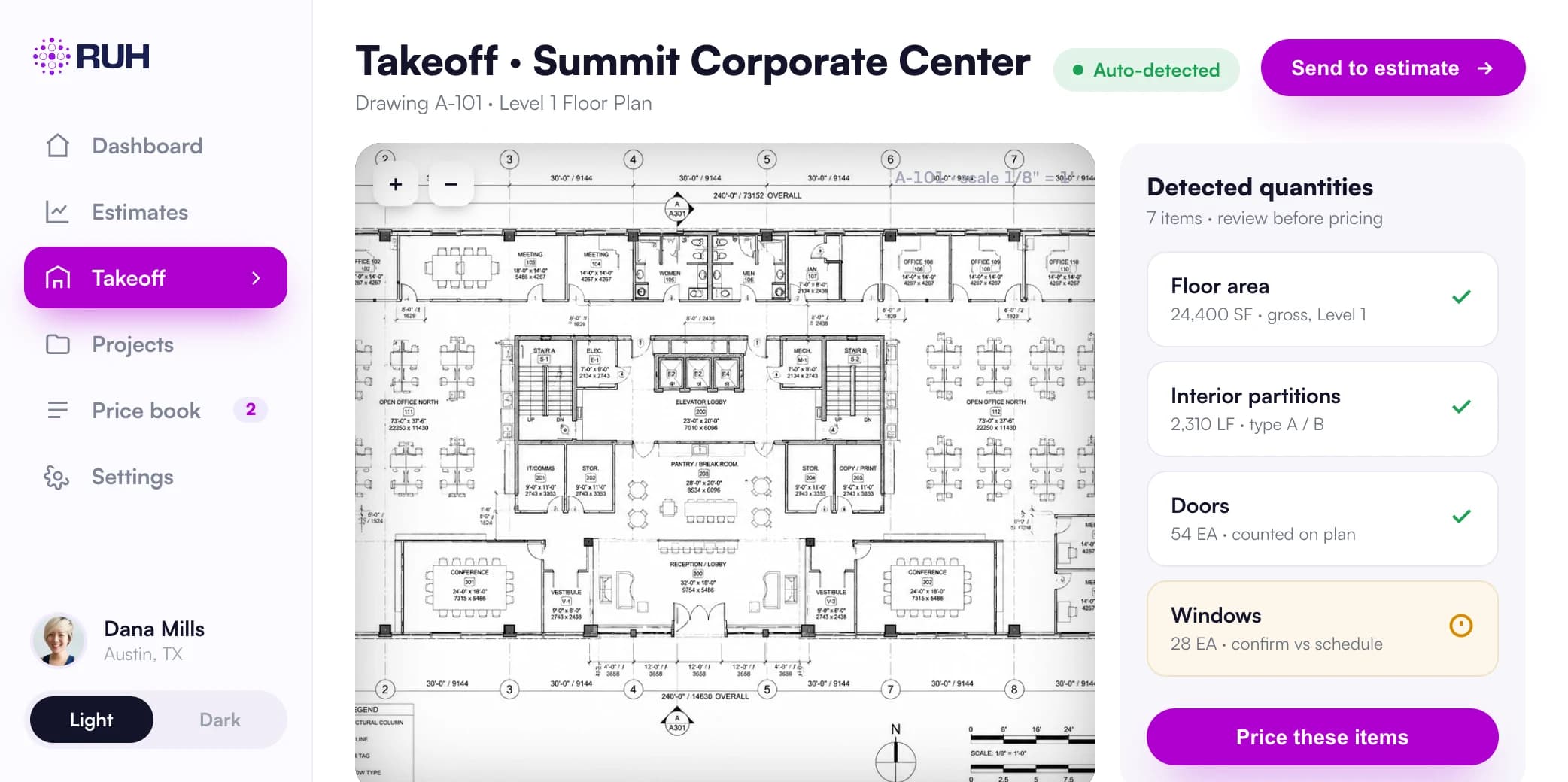
Ruh reads the slab and foundation dimensions from your drawings, computes the volumes, applies your standard waste factor, and converts everything to cubic yards automatically. It then prices the cy quantity against the mix designs and rates in your own price book and hands the line to your estimator to review and sign off.
See AI construction takeoff and estimating softwareCY (cubic yard): frequently asked questions
How many cubic feet are in a cubic yard?+
There are 27 cubic feet in one cubic yard, because a yard is 3 feet and 3 x 3 x 3 = 27. That single divisor handles every cf to cy conversion in a concrete or earthwork takeoff.
What is the difference between bank, loose, and compacted cubic yards?+
Bank cy is soil measured in its natural undisturbed state, loose cy is the same soil after digging when it has swelled, and compacted cy is after placement and compaction when it occupies less volume. A common rule of thumb is that a bank cy swells around 10 to 30 percent when excavated, depending on the soil, so haul-off trucking is sized on loose volume.
How much does a cubic yard of concrete weigh?+
Normal weight concrete runs about 4,000 pounds per cubic yard, which is why a loaded 10 cy mixer truck weighs roughly 20 tons more than an empty one. Weight matters for site access, slab-on-deck pours, and pump sizing.
Still measuring by hand? Your next takeoff can run while you review this one.
See it on your plansRelated terms
Keep going: read the full guide or explore AI construction takeoff and estimating software.
See Ruh price a bid from your own drawings.
AI takeoff and estimating on your price book, your estimator signs off.
Figures on this page are illustrative. Construction estimates depend on project-specific conditions, source documents, market pricing, and professional judgment. Ruh's AI assists the estimator and does not replace professional review: your team reviews, validates, and approves every estimate, bid, and pricing decision.