100% money-backBook a walkthrough

Construction glossary · Sitework

What is backfill in construction?

Backfill in construction is the soil or aggregate placed back into an excavation after foundations, walls, or utility pipe are installed, then compacted in lifts to a specified density. Estimators split it into structure backfill (around foundations and walls) and trench backfill (over utility lines) and price it per compacted cubic yard. The material is either native soil reused from the excavation or imported select fill when the geotech report disqualifies the native material.

Updated June 2026 · Reviewed by the Ruh construction team

Measured in compacted cyTwo scopes structure vs trenchKey rule deduct pipe volumeBiggest swing native vs import

How trench backfill is measured

lengthdepthwidth180 cy compacted

Estimating sitework scope this week? Watch Ruh take off a real plan in 30 minutes.

Book a walkthrough
Definition

Backfill is what goes back in the hole, and estimators split it into two scopes that price very differently. Structure backfill wraps foundations, basement walls, and retaining walls, shown in the structural details and wall sections, often with a granular zone and drainage requirements against the wall. Trench backfill covers utility pipe and lives in the trench details on the civil utility sheets, layered as bedding, pipe zone material, and trench backfill above, each with its own material spec. The geotech report rules on whether excavated native soil can be reused or imported select fill is required, and the sitework or utility contractor owns the scope. New estimators make three recurring mistakes: paying for the full trench volume without deducting the pipe and bedding displacement, assuming native reuse when the geotech disqualifies the material (which hits twice, once for the import and once for hauling off the spoils), and pricing trench compaction at open-area production rates when confined trenches force walk-behind equipment and slow the work down.

How it is measured

Backfill is measured in compacted cubic yards. Trench backfill comes from the trench detail: pay width times depth times length, minus the volume displaced by the pipe and any separately priced bedding zone. Structure backfill comes from the foundation plans and wall sections, the excavation envelope minus the structure itself. Cost drivers are material source (native reuse versus imported select fill), the compaction spec (lift thickness and density), confined-space production in trenches, and haul distance for spoils when native is rejected. The trench detail sheet and the geotech report are the two documents that move the number most, so read both before extending a unit price.

Worked example

Worked example

Gross trench volume3 x 6 x 300 = 5,400 cf; 5,400 / 27 = 200 cy
Pipe displacement (18 in line)3.1416 x 0.75 x 0.75 x 300 = 530 cf; about 19.6 cy
Backfill to carry200 - 19.6 = 180.4, say 180 cy compacted
Native placement (illustrative)180 x $12 = $2,160
100%

Try Ruh on a real bid. 100% money-back guarantee if you are not satisfied.*

*Scoped delivery, terms apply. Read the guarantee terms

Start with a walkthrough
How Ruh handles it

How Ruh handles backfill

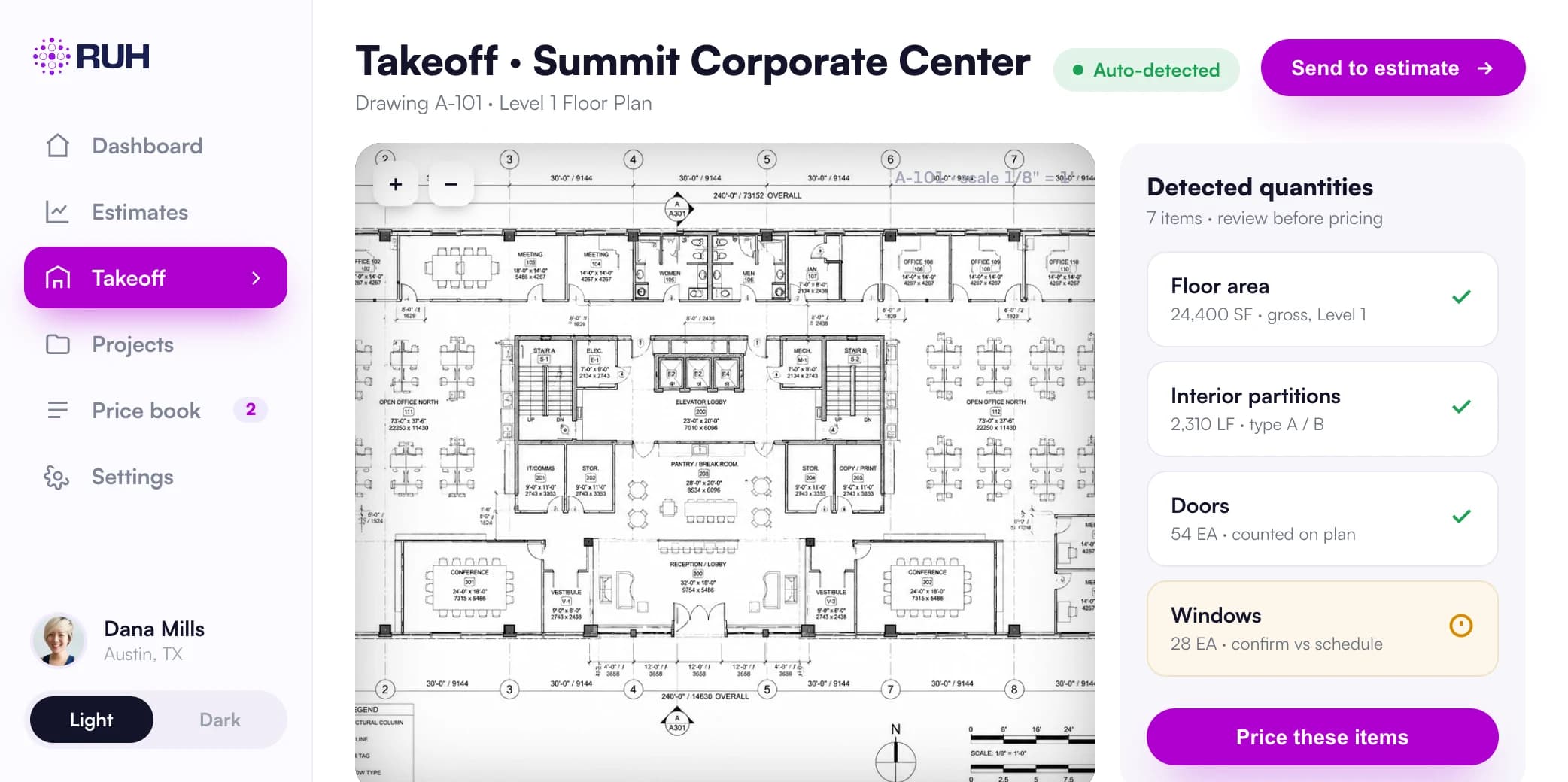
Ruh takes off trench and structure backfill straight from the utility plans, trench details, and wall sections, netting out pipe displacement, and prices the compacted cubic yards from the contractor's own price book. The estimator then reviews the native versus import call against the geotech's suitability findings and signs off on the final quantities.

See AI construction takeoff and estimating software

Backfill: frequently asked questions

What is the difference between backfill and fill?+

Fill, or embankment, raises grades over open area and is shown on the grading plan as mass placement. Backfill goes back into an excavation: against a foundation wall, over a utility pipe, behind a retaining wall. The distinction matters at pricing time because backfill carries confined-space compaction, layered material specs like bedding and pipe zone, and deductions for the structure or pipe, none of which apply to open fill.

Can excavated soil be reused as backfill?+

Only if the geotech report and spec allow it. Native soil gets rejected for high plasticity, excess moisture, organics, or oversized rock, and many specs require granular material in the pipe zone regardless of what came out of the trench. Reuse is one of the biggest swings in a sitework bid, because rejection costs twice: you buy the import and you pay to haul the native away as spoils.

What is flowable fill and when is it used?+

Flowable fill, also called controlled low strength material (CLSM), is a low strength cement slurry placed instead of compacted soil, most often in utility trenches under pavement where compaction is slow, risky, or hard to verify. It self-levels and needs no lifts or density testing, trading higher material cost for less labor and less settlement risk. Many DOT and municipal specs require it for trench cuts in existing roads.

Still measuring by hand? Your next takeoff can run while you review this one.

See it on your plans
The Sitework estimating cheat sheet
Every unit, waste factor, and conversion on one page. Free PDF.

See Ruh price a bid from your own drawings.

AI takeoff and estimating on your price book, your estimator signs off.

Figures on this page are illustrative. Construction estimates depend on project-specific conditions, source documents, market pricing, and professional judgment. Ruh's AI assists the estimator and does not replace professional review: your team reviews, validates, and approves every estimate, bid, and pricing decision.