Try Ruh on a real bid. 100% money-back guarantee if you are not satisfied.*
*Scoped delivery, terms apply. Read the guarantee terms
Dewatering: frequently asked questions
What is the difference between sump pumping and a wellpoint system?+
A sump collects water that has already entered the excavation in a low pit and pumps it out, which works for rain, perched water, and minor seepage. A wellpoint system lowers the water table before the water reaches the cut: dozens of small wells around the excavation connect to a header pipe and vacuum pump and pull the groundwater down. Permeable soil with a high water table generally needs wellpoints; sumps alone just chase the inflow.
How is construction dewatering priced in an estimate?+
As setup plus run time. Setup is the fixed cost: mobilization, wellpoint and header installation, sumps, and discharge piping. Run time is the operating cost per day or week the pumps run: rental, fuel or power, and monitoring. Duration moves the number most, and it comes from the construction schedule rather than the drawings, so the estimator should state the assumed weeks of pumping right on the line item.
Do you need a permit to discharge dewatering water?+
Usually, yes. Pumped groundwater typically has to pass through sediment controls, a tank, filter bag, or basin, before discharge, and most jurisdictions regulate where it can go; storm systems often require approval and sanitary sewers usually prohibit it without a permit. On projects disturbing an acre or more, the discharge points and controls belong in the SWPPP. Carry treatment and permit costs with the dewatering line instead of assuming free discharge to grade.
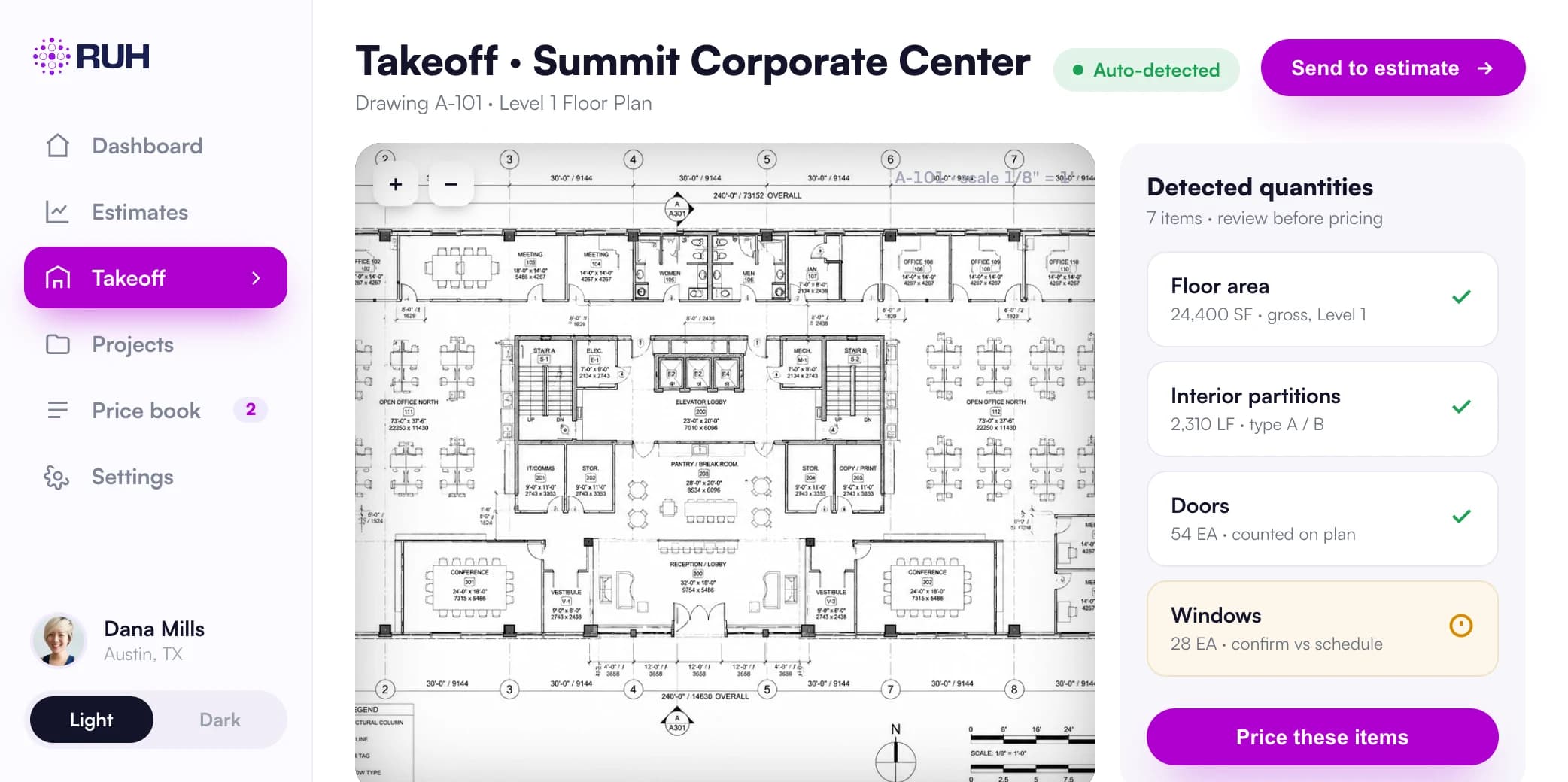
Still measuring by hand? Your next takeoff can run while you review this one.
See it on your plansRelated terms
Keep going: read the full guide or explore AI construction takeoff and estimating software.
Figures on this page are illustrative. Construction estimates depend on project-specific conditions, source documents, market pricing, and professional judgment. Ruh's AI assists the estimator and does not replace professional review: your team reviews, validates, and approves every estimate, bid, and pricing decision.