
100% money-backBook a walkthrough
Construction glossary · Sitework

What is SWPPPin construction?

A SWPPP (Stormwater Pollution Prevention Plan) is a site-specific plan describing how a construction project will keep sediment and other pollutants out of stormwater runoff, including the BMPs to be installed, the inspection schedule, and who is responsible for maintenance. Under the EPA construction general permit, and the state permits modeled on it, a SWPPP is required when construction disturbs 1 acre or more, or less than an acre if the project is part of a larger common plan of development. For estimators it is both a document cost and a recurring scope of inspections and maintenance that runs for the life of the disturbance.

Free 30-minute walkthrough on your own drawings. No card.

Updated June 2026 · Reviewed by the Ruh construction team

Permit trigger 1 acre or moreInspection cadence every 7 or 14 daysBMP takeoff lives in ESC sheetsMain cost driver duration of disturbance

How a SWPPP moves through a project

Prepare planFile NOIInspect and logFile NOT
The definition

SWPPP, explained.

The SWPPP is the compliance backbone of the erosion control scope. The civil engineer or a SWPPP consultant usually prepares the document, the erosion and sediment control sheets in the C-set implement it graphically, and the operator (typically the GC, sometimes jointly with the owner) certifies it and files a Notice of Intent (NOI) for permit coverage before disturbance begins. Coverage ends with a Notice of Termination (NOT) after final stabilization. The plan lives on site, gets updated as grading phases change, and every inspection gets logged against it; regulators audit the paperwork as hard as the BMPs themselves. New estimators tend to price the SWPPP as a one-time document fee and stop there. The real money is in the recurring obligations: routine inspections by a qualified person for the entire disturbance window, the repairs those inspections trigger, documentation time, and permit fees. On a long project the administration can cost several times the plan itself.

How it is measured

SWPPP costs split into three measurement types. Plan preparation, NOI filing, and permit fees are lump sum lines. The physical BMPs the plan requires are taken off from the ESC sheets in their own units: silt fence in lf, inlet protection in ea, blankets in sy, construction entrances in ea. Inspections and maintenance are duration-driven, priced per inspection or per month and multiplied across the disturbance window. The EPA construction general permit lets the operator choose between inspecting every 7 calendar days, or every 14 calendar days plus within 24 hours of a quarter-inch or larger rain event, so the chosen schedule and the local rain pattern drive the inspection count.

Worked example

A worked SWPPP example.

Worked example

Plan prep and NOI (illustrative)$3,500 lump sum
Weekly inspections14 months x 4.33 weeks = 60.62, carried as 61 inspections
Inspection cost (illustrative)61 x $150 = $9,150
Maintenance allowance (illustrative)$500 per month x 14 = $7,000
SWPPP administration$3,500 + $9,150 + $7,000 = $19,650
How Ruh handles it

How Ruh handles SWPPP.

100%

Try Ruh on a real bid. 100% money-back guarantee if you are not satisfied.*

*Scoped delivery, terms apply. Read the guarantee terms

Start with a walkthrough

SWPPP: frequently asked questions

When is a SWPPP required on a construction project?+

Under the EPA construction general permit, and the state permits that mirror it, coverage is required when a project disturbs 1 acre or more, or disturbs less than an acre but is part of a larger common plan of development or sale. Many municipalities add their own grading or land disturbance permits with lower thresholds, so check local requirements even on small sites. The operator files an NOI before disturbance begins.

Who prepares and signs the SWPPP?+

The plan is usually drafted by the project's civil engineer or a SWPPP consultant, but preparation is not the legally significant act, certification is. The operator, generally the general contractor and sometimes the owner as co-permittee, certifies the SWPPP, files the NOI, keeps the plan current on site, and signs inspection reports. Subcontractors can install and maintain the BMPs, but the compliance responsibility cannot be subcontracted away.

How often does a SWPPP site have to be inspected?+

The EPA construction general permit offers two routine frequencies: at least once every 7 calendar days, or at least once every 14 calendar days plus within 24 hours of a storm event of 0.25 inches or more. State permits set similar schedules. Inspections must be performed by a qualified person and documented, and the reports become part of the SWPPP record that regulators review during audits and enforcement visits.

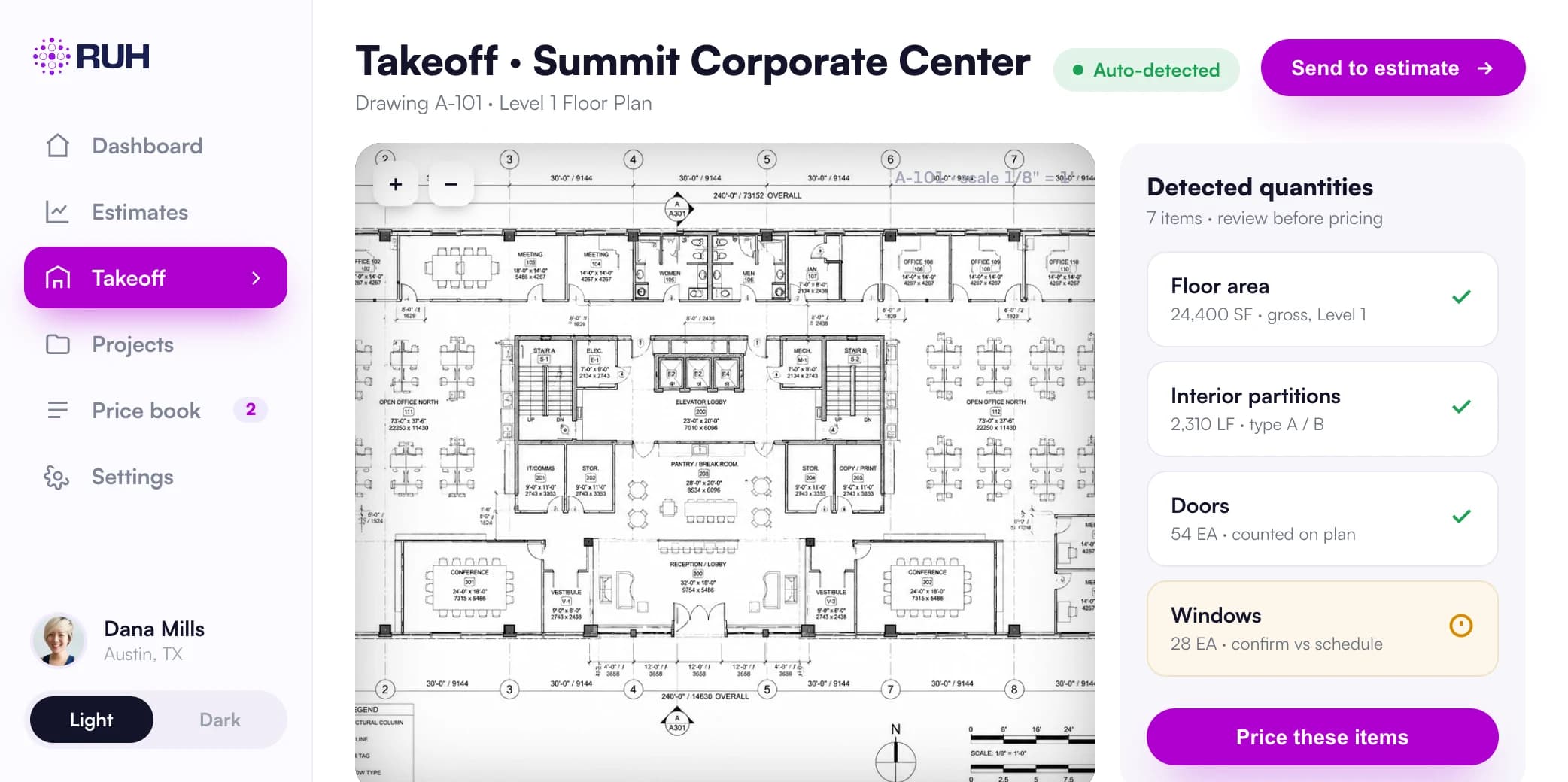
Still measuring by hand? Your next takeoff can run while you review this one.

See it on your plans

Related terms

Keep going: read the full guide or explore AI construction takeoff and estimating software.

The Sitework estimating cheat sheet
Every unit, waste factor, and conversion on one page. Free PDF.

Figures on this page are illustrative. Construction estimates depend on project-specific conditions, source documents, market pricing, and professional judgment. Ruh's AI assists the estimator and does not replace professional review: your team reviews, validates, and approves every estimate, bid, and pricing decision.
100% money-back guarantee

Try Ruh on a bid you are pricing now.

Put your next takeoff on Ruh.