Try Ruh on a real bid. 100% money-back guarantee if you are not satisfied.*
*Scoped delivery, terms apply. Read the guarantee terms
Silt fence: frequently asked questions
How deep is silt fence buried?+
Typical details call for the bottom of the fabric to be trenched in about 6 inches deep and 6 inches horizontal (an L-shaped toe), then backfilled and compacted so runoff cannot pipe underneath the fence. Machine-sliced installation cuts a narrow slot and pulls the fabric in, achieving the same embedment faster. Fence laid flat on grade without a buried toe fails inspection and fails in the first storm.
What is the difference between silt fence and wire-backed silt fence?+
Standard silt fence is geotextile fabric stapled or wired to posts. Wire-backed (reinforced) silt fence adds welded wire or field fence behind the fabric and typically heavier posts, so it can hold up where runoff concentrates or where ponding loads the fabric. Designers call it out at low points, channel crossings, and below steep slopes. It carries a higher unit cost, so take it off as a separate lf line rather than blending it with standard fence.
When does silt fence get removed?+
After the area draining to it reaches final stabilization under the project's stormwater permit, typically meaning established vegetation or completed hard surfacing. Removal includes pulling posts and fabric, disposal, removing accumulated sediment (most specs require cleanout whenever sediment reaches about one third to one half of the fence height), and restoring the trench line. It is a real pay item, and forgetting it is one of the most common erosion control estimating misses.
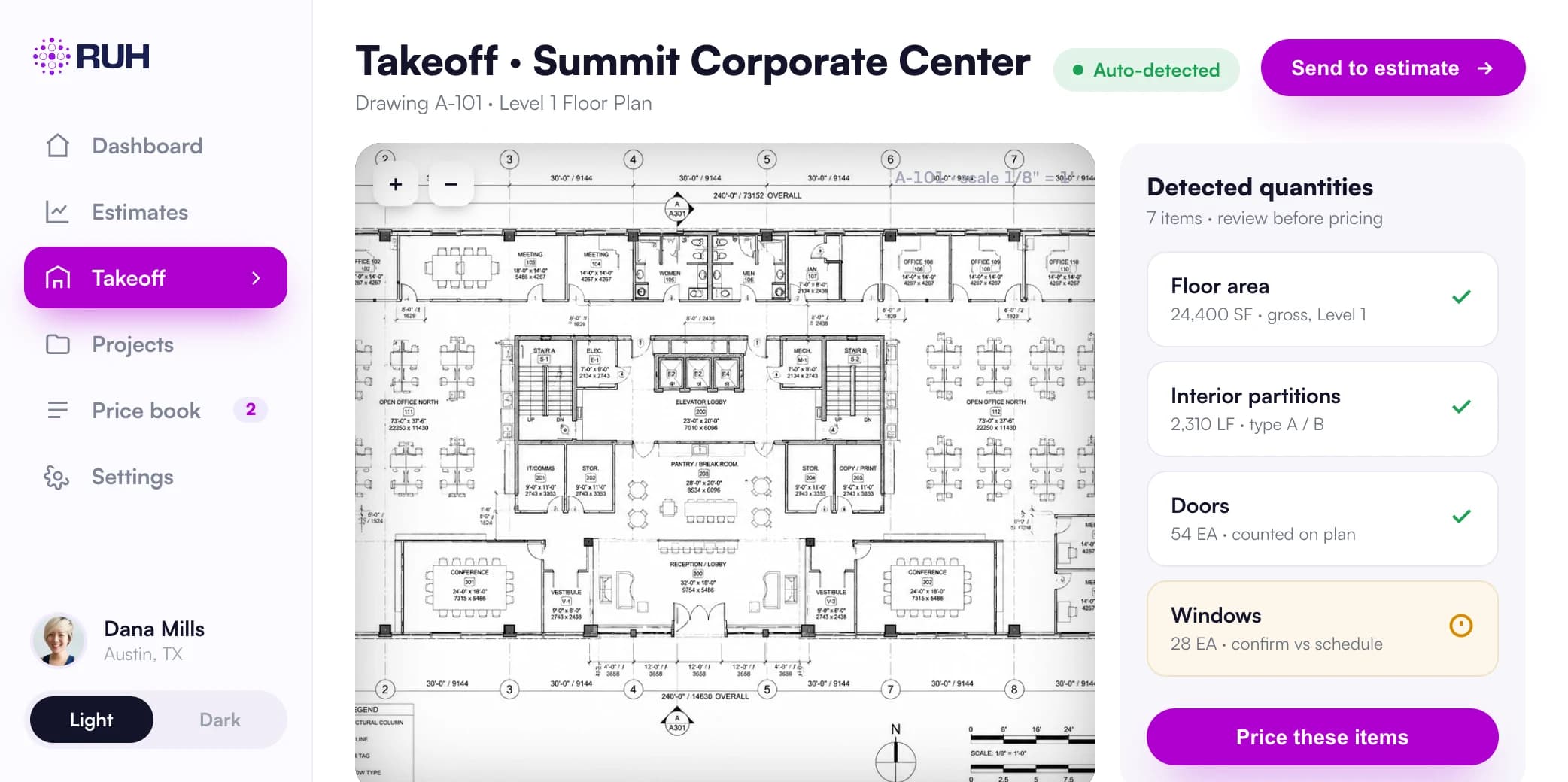
Still measuring by hand? Your next takeoff can run while you review this one.
See it on your plansRelated terms
Keep going: read the full guide or explore AI construction takeoff and estimating software.
Figures on this page are illustrative. Construction estimates depend on project-specific conditions, source documents, market pricing, and professional judgment. Ruh's AI assists the estimator and does not replace professional review: your team reviews, validates, and approves every estimate, bid, and pricing decision.