Try Ruh on a real bid. 100% money-back guarantee if you are not satisfied.*
*Scoped delivery, terms apply. Read the guarantee terms
Erosion control: frequently asked questions
What is the difference between erosion control and sediment control?+
Erosion control keeps soil from moving in the first place, using measures like erosion control blankets, mulch, and temporary seeding on slopes and stockpiles. Sediment control intercepts soil that is already moving in runoff, using silt fence, inlet protection, check dams, and sediment basins. Construction drawings and permits treat them as one combined scope on the erosion and sediment control (ESC) sheets, and most contractors price them as a single BMP package.
Who is responsible for erosion control on a construction site?+
The permit holder, usually the general contractor as the operator under the construction general permit, carries legal responsibility for keeping BMPs installed and working. In practice the GC subcontracts installation to the grading contractor or a dedicated SWPPP firm, but enforcement actions and stop work orders land on the permit holder. That is why many GCs carry erosion control in their own general conditions rather than burying it in the earthwork subcontract.
How long does erosion control have to stay in place?+
Until the site reaches final stabilization as defined by the permit, which commonly means a uniform perennial vegetative cover at about 70 percent of background density on all disturbed areas, or hard surfaces like paving in place. Temporary BMPs are then removed and the fence lines or anchor trenches restored. For estimating, that means the maintenance window often runs well past substantial completion of the building itself.
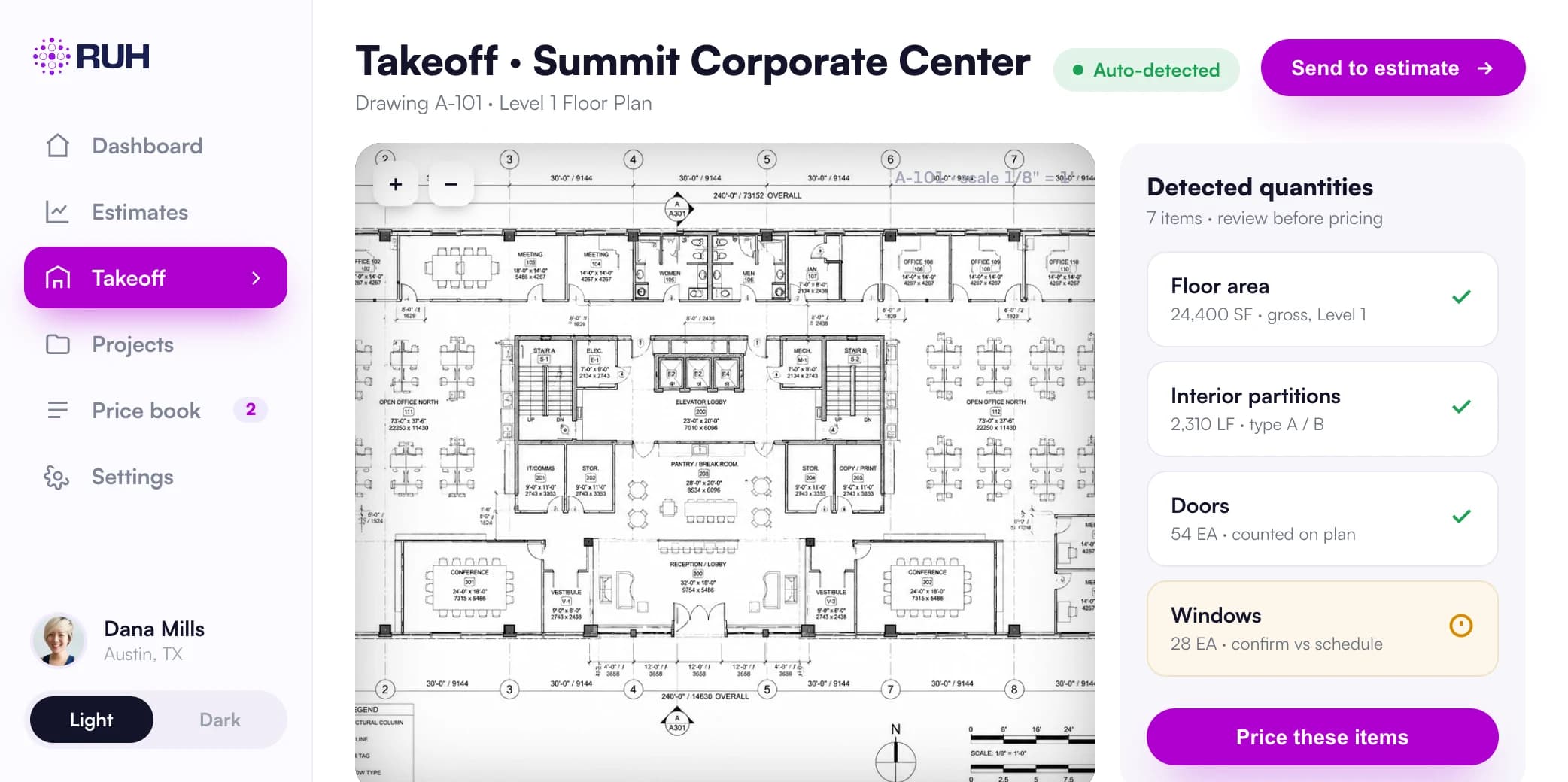
Still measuring by hand? Your next takeoff can run while you review this one.
See it on your plansRelated terms
Keep going: read the full guide or explore AI construction takeoff and estimating software and landscape estimating software.
Figures on this page are illustrative. Construction estimates depend on project-specific conditions, source documents, market pricing, and professional judgment. Ruh's AI assists the estimator and does not replace professional review: your team reviews, validates, and approves every estimate, bid, and pricing decision.