
What drives excavation cost
Excavation cost is driven by the kind of dig, the volume in the correct soil state, the material being excavated, the depth and access, and where the material goes after it leaves the cut. Treating every cubic yard as one activity hides the difference between an open mass cut, a confined footing excavation, and a utility trench.
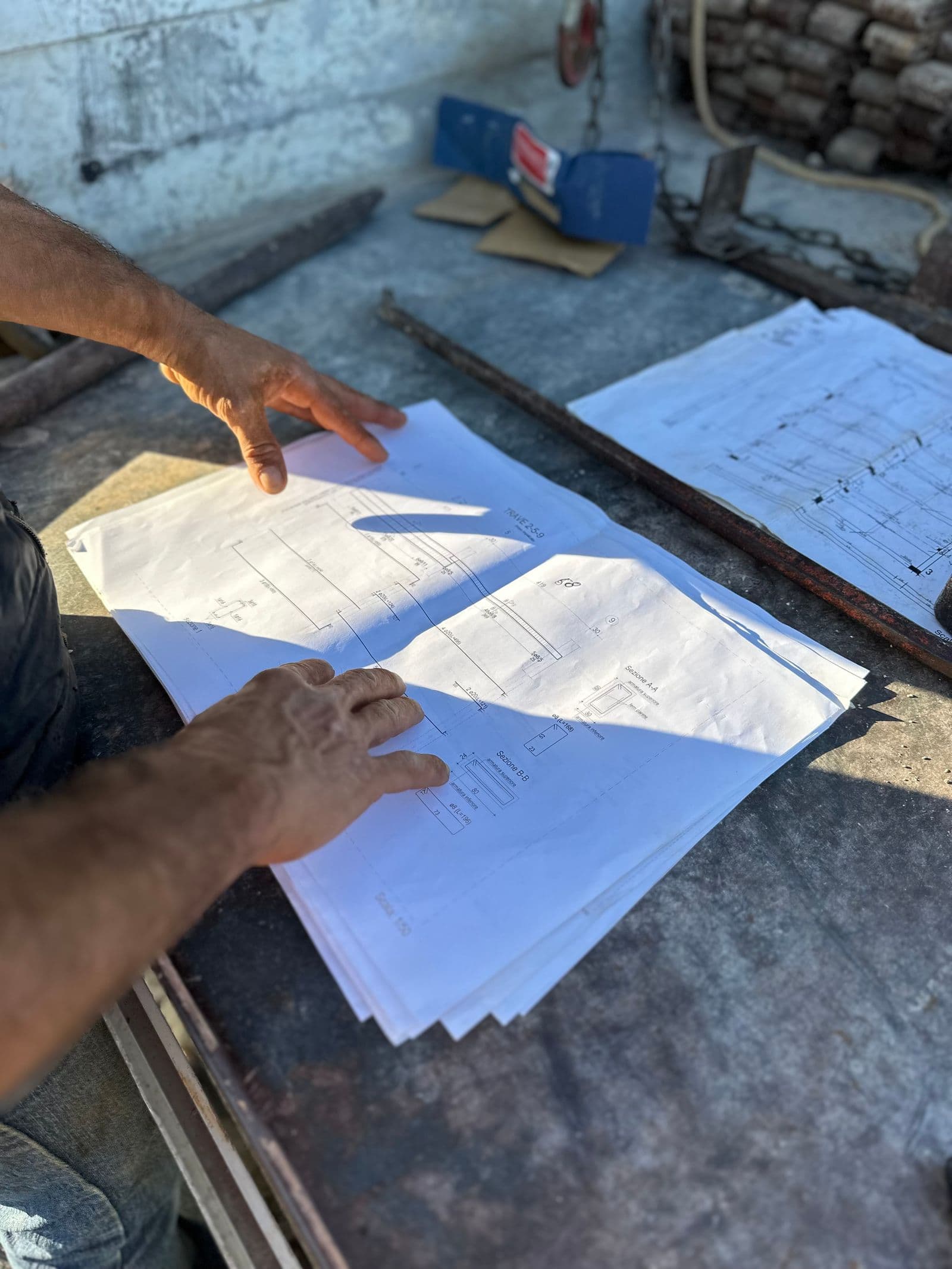
Start by classifying the excavation. The civil grading plan supplies open site cuts, structural foundation plans and sections supply footing and pit dimensions, utility profiles supply trench depths, and the geotechnical report identifies soil conditions, rock, groundwater, and whether excavated material is suitable for reuse.
Build the estimate as a set of reviewable lines:
- Excavation and loading in bank cubic yards, separated by type.
- On-site haul or short pushes for suitable material reused as fill.
- Export trucking and disposal for surplus or unsuitable material.
- Imported fill or borrow where suitable cut cannot meet compacted fill demand.
- Bedding, backfill, compaction, dewatering, and protective systems where the scope requires them.
- Rough and final grading by area, separate from the volume moved.
Apply the contractor's own crew, equipment, haul, disposal, and supplier rates to those quantities. The live excavation takeoff page covers how the drawing set becomes the measured scope; this guide focuses on turning that scope into a cost structure that can be checked.
How excavation quantities are measured
Excavation is measured in cubic yards, but the estimate must name the soil state. A bank cubic yard is measured in place before digging, a loose cubic yard is the excavated volume in a truck or stockpile, and a compacted cubic yard is fill after placement and compaction. These are related quantities, not interchangeable units.
For an open cut, compare the existing surface with the proposed subgrade. Earthwork software performs that surface-to-surface comparison, while hand methods use a grid or average end areas. For a rectangular structural cut, multiply length by width by depth to get cubic feet, then divide by 27 to get cubic yards. Include the working room and side slopes shown by the excavation approach rather than using the neat concrete volume.
A cut and fill takeoff keeps cut and fill separate. Cut is reported in bank cubic yards, while the design need for fill is stated in compacted cubic yards. Strip topsoil before balancing the surfaces, then use the project soil conversion to place both sides on the same basis.
Keep grading separate as well. Excavation and fill lines carry volume; grading lines carry the area and precision required to shape what remains. Final grading is a later precision pass, not another mass dirt quantity.
Swell and shrinkage, and why the truck count is not the dig count
Soil changes volume as its state changes. Excavated material develops voids and occupies more loose volume than it did in the bank. Material placed and compacted as fill occupies a different volume again. That is why the truck count does not come directly from the bank cubic yards shown in the takeoff.
Do not apply one generic factor to every project. Use the soil-specific swell and shrink assumptions supported by the geotechnical information, the contractor's completed-job records, and the estimator's review. Keep each factor visible beside the quantity it converts so a reviewer can replace the assumption without rebuilding the takeoff.
The haul calculation follows a simple chain:
- Bank cubic yards to export x the reviewed swell factor = loose cubic yards to haul.
- Loose cubic yards to haul / confirmed loose capacity per truck = truck loads, rounded up.
- Check whether legal payload weight limits the actual load before the truck reaches its volume capacity.
- Price the resulting loads or loose yards from the current trucking and disposal quote.
For fill, run the conversion in the other direction. Compacted cubic yards required must be converted to the bank or loose quantity needed from the on-site cut or borrow source. The estimate is only balanced when cut and fill are compared in the same soil state.
Import and export of soil
Import and export of soil starts with the adjusted cut and fill balance. If suitable cut cannot supply the compacted fill requirement, the shortage is imported borrow. If suitable cut remains after fill demand is met, the surplus is exported. Material the geotechnical report rejects for reuse can create both lines at once: export the unsuitable soil and import approved replacement.
Keep the movement and the material visible. An export line can include loading, trucking, and disposal or tipping. An import line can include borrow material, trucking, placement, moisture conditioning, and compaction. Round-trip cycle time, the actual truck type, the borrow or disposal location, and the material classification belong in the estimate assumptions because none is established by the raw cut quantity.
Where the documents allow an alternative, compare removal and replacement with soil stabilization. Stabilization is measured by area at a stated treatment depth, while over-excavation creates export and import cubic yards. The geotechnical engineer selects the acceptable treatment; the estimator compares the priced scopes.
Trench excavation versus mass excavation
Mass excavation is the large open cut that lowers a site, pad, basement, or pond area. It is measured in bank cubic yards from the difference between existing and design surfaces. Open access allows different equipment and production from confined structural or trench work, so mass excavation needs its own cost line.
A utility trench begins as linear feet by pipe size and depth class, then converts to volume by segment. Multiply trench width by average depth by length, divide cubic feet by 27, and keep bedding, pipe displacement, and compacted backfill as separate quantities. Read depth from the utility profile and invert elevations rather than applying one average to the plan length.
Trench costs also depend on the assembly around the excavation. Bedding is imported material. Pipe and bedding displace soil, so not every excavated yard returns as backfill. Deeper segments can require a trench box, shoring, sloping, access, or dewatering, and the protective system can widen the working cut. Break the run where depth, section, or conditions change instead of blending the whole utility into one rate.
Worked example: cut and fill to cubic yards to truck loads
The figures below are illustrative. They reproduce the site's cut-and-fill method with four 100 foot by 100 foot cells, then extend the export quantity to truck loads using an illustrative truck capacity. An actual estimate must replace the shrink, swell, and truck-capacity inputs with project values.
- Measure cut in bank volume.
- Cell A: 10,000 sf x 2.0 ft average cut = 20,000 cf.
- Cell B: 10,000 sf x 1.2 ft average cut = 12,000 cf.
- Total cut: 32,000 cf / 27 = about 1,185 bank cy.
- Measure fill in compacted volume.
- Cell C: 10,000 sf x 0.8 ft average fill = 8,000 cf.
- Cell D: 10,000 sf x 1.6 ft average fill = 16,000 cf.
- Total fill: 24,000 cf / 27 = about 889 compacted cy.
- Convert fill demand to bank measure.
- Use an illustrative 12 percent shrink, under which 1 bank cy yields 0.88 compacted cy.
- Bank volume required for fill: 889 / 0.88 = about 1,010 bank cy.
- Find the bank surplus.
- 1,185 bank cy available - 1,010 bank cy required = 175 bank cy to export.
- Convert export to loose truck volume.
- Use an illustrative 25 percent swell for this example.
- 175 bank cy x 1.25 = about 219 loose cy.
- Convert loose volume to loads.
- At an illustrative 12 loose cy per truck: 219 / 12 = 18.25 loads.
- Round up to a whole trip: 19 truck loads, subject to the actual truck and legal payload.
Skipping the shrink conversion would compare 1,185 bank cy directly with 889 compacted cy and overstate the surplus. Skipping swell would divide 175 bank cy by the truck capacity and understate the loads. Keeping bank, compacted, and loose columns separate makes both errors visible.
Where excavation estimates go wrong
One blended excavation rate. Mass, structural, and trench excavation use different equipment, access, and work sequences. Separate the quantities before pricing them.
Bank volume used as truck volume. The takeoff measures soil in place, while the trucks carry loose material. Apply the reviewed swell factor before calculating loads.
Cut compared directly with compacted fill. Convert both sides to the same soil state before deciding that the site balances or needs import or export.
Topsoil left inside the balance. Organic topsoil stripped before earthwork is not structural fill. Removing it changes the material available under pads and paving.
The geotechnical report ignored. Soil suitability, rock, groundwater, moisture, and stabilization requirements can change the handling plan even when the geometric quantity is correct.
Trench depth averaged across the whole run. Inverts change along the profile. Split the length by depth and section so excavation, protection, bedding, and backfill follow the actual run.
Displaced trench material forgotten. Pipe and imported bedding occupy volume, so a trench can generate export even when the excavated soil is otherwise suitable for backfill.
Import and export treated as one allowance. Show borrow, trucking, loading, disposal, placement, and compaction separately. A reviewer can then update the location, quote, or quantity without replacing the entire excavation estimate.
Try Ruh on a real bid. 100% money-back guarantee if you are not satisfied.*
*Scoped delivery, terms apply. Read the guarantee terms
Frequently asked questions
How do you estimate excavation costs?+
Classify the work as mass, structural, or trench excavation, measure bank cubic yards from the controlling drawings, and then price each operation separately. Add on-site handling, loose-volume export, imported fill, backfill, compaction, protection, dewatering, and grading only where the scope requires them. Use the contractor's current rates and supplier or trucking quotes rather than a published average.
What is the difference between bank, loose, and compacted cubic yards?+
Bank cubic yards measure soil in its undisturbed state before excavation. Loose cubic yards measure the expanded material in a truck or stockpile, while compacted cubic yards measure placed fill after compaction. An estimate must state the soil state because the same material occupies a different volume in each condition.
How do you calculate cut and fill for an excavation estimate?+
Compare the existing surface with the proposed surface, using a surface model, grid method, or average end areas, and total cut and fill separately. Report cut in bank cubic yards and fill in compacted cubic yards, then apply the reviewed soil conversion so both sides share one basis before calculating import or export.
Why is the excavation truck count different from the dig quantity?+
The dig quantity is measured in bank cubic yards, but excavated soil swells into loose volume. Convert the export quantity with the reviewed swell factor, divide by the actual truck's loose capacity, round up to whole loads, and check whether legal weight limits reduce the volume each truck can carry.
What belongs in a trench excavation estimate?+
Measure the trench in linear feet by pipe size and depth class, then calculate excavation, bedding, pipe displacement, backfill, and spoils from the trench section. Carry protective systems, dewatering, compaction, and surface restoration where the drawings, specifications, and site conditions require them.
Which documents control an excavation estimate?+
Use the topographic survey and civil grading plan for existing and proposed surfaces, foundation plans and sections for structural cuts, utility plans and profiles for trench lengths and depths, and the geotechnical report for soil, rock, groundwater, suitability, and treatment assumptions. Read the earthwork and utility specifications for material, compaction, and scope requirements.
Still pricing in a spreadsheet? Your price book, automated end to end. Your estimator signs off.
See it runTerms used in this guide
Figures on this page are illustrative. Construction estimates depend on project-specific conditions, source documents, market pricing, and professional judgment. Ruh's AI assists the estimator and does not replace professional review: your team reviews, validates, and approves every estimate, bid, and pricing decision.