Construction glossary · Steel and structural
What is moment connection in construction?
A moment connection is a rigid structural steel connection that transfers bending moment from a beam into a column, not just vertical shear like a standard connection. It is typically built with complete joint penetration (CJP) flange welds plus a bolted web, or with bolted end plates, and it costs far more than a simple shear connection. On framing plans each one is identified by a symbol or tag at the beam end, and estimators count them each and carry a cost adder per connection.
Updated June 2026 · Reviewed by the Ruh construction team
Moment connection at beam-to-column
Estimating steel and structural scope this week? Watch Ruh take off a real plan in 30 minutes.
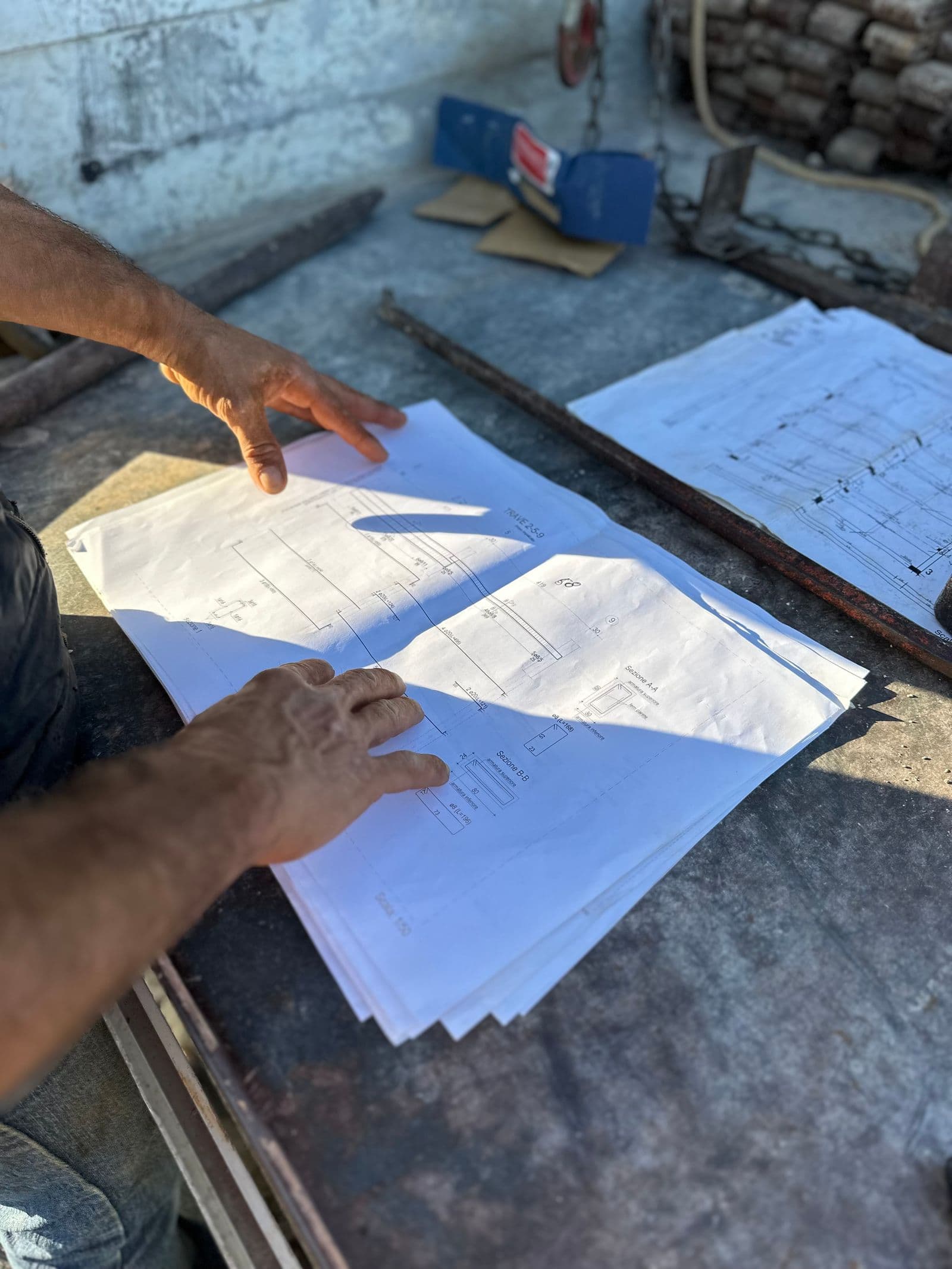
Book a walkthroughA moment connection makes a beam-to-column joint rigid so the frame can resist lateral loads, which is why they cluster on the moment frame grid lines that form the building's lateral system. On a US commercial job they show up on the structural framing plans as a symbol at the beam end, usually a solid triangle or flag defined in the general notes legend, with the actual connection geometry in the typical details and sometimes a connection schedule. The structural engineer specifies them, the fabricator details them on shop drawings, the erector's certified welders build the field welded ones, and a special inspector performs ultrasonic testing (UT) on the CJP welds. New estimators make three predictable mistakes: pricing the steel on tonnage alone and missing the per-connection adder, scanning the plan too fast and reading a moment symbol as a standard shear connection, and ignoring the shop versus field welded split even though field welded connections cost meaningfully more. Continuity plates and doubler plates at the column are part of the same scope and are easy to miss.
Moment connections are counted each (ea) off the structural framing plans, using the symbol legend on the general notes sheet; some sets also list them in a connection schedule. Estimators split the count by connection type, field welded CJP versus bolted end plate, and often by member size, since heavier flanges mean more weld passes and longer fit up. There is no waste factor because the count is exact, but careful estimators check both ends of every beam on each framed level so nothing is missed. In the estimate the quantity lands as a per-each cost adder, covering extra fabrication, erection labor, and UT inspection, stacked on top of the base price per ton of erected steel.
Worked example
The framing plan shows moment frames on two grid lines, each with 3 bays and a moment connection at both ends of every frame beam: 2 lines x 3 bays x 2 ends = 12 connections per level. The building has 2 framed levels: 12 x 2 = 24 moment connections total. The details split them: 12 field welded CJP flange connections at the second floor and 12 shop welded bolted end plate connections at the roof. Using illustrative adders of $1,500 each for field welded (extra weld passes, fit up, and UT inspection) and $700 each for bolted end plates: 12 x $1,500 = $18,000 and 12 x $700 = $8,400. Total connection adder: $18,000 + $8,400 = $26,400, carried as a separate line on top of the base steel tonnage price so the number can be defended at bid review.
Try Ruh on a real bid. 100% money-back guarantee if you are not satisfied.*
*Scoped delivery, terms apply. Read the guarantee terms
How Ruh handles moment connection
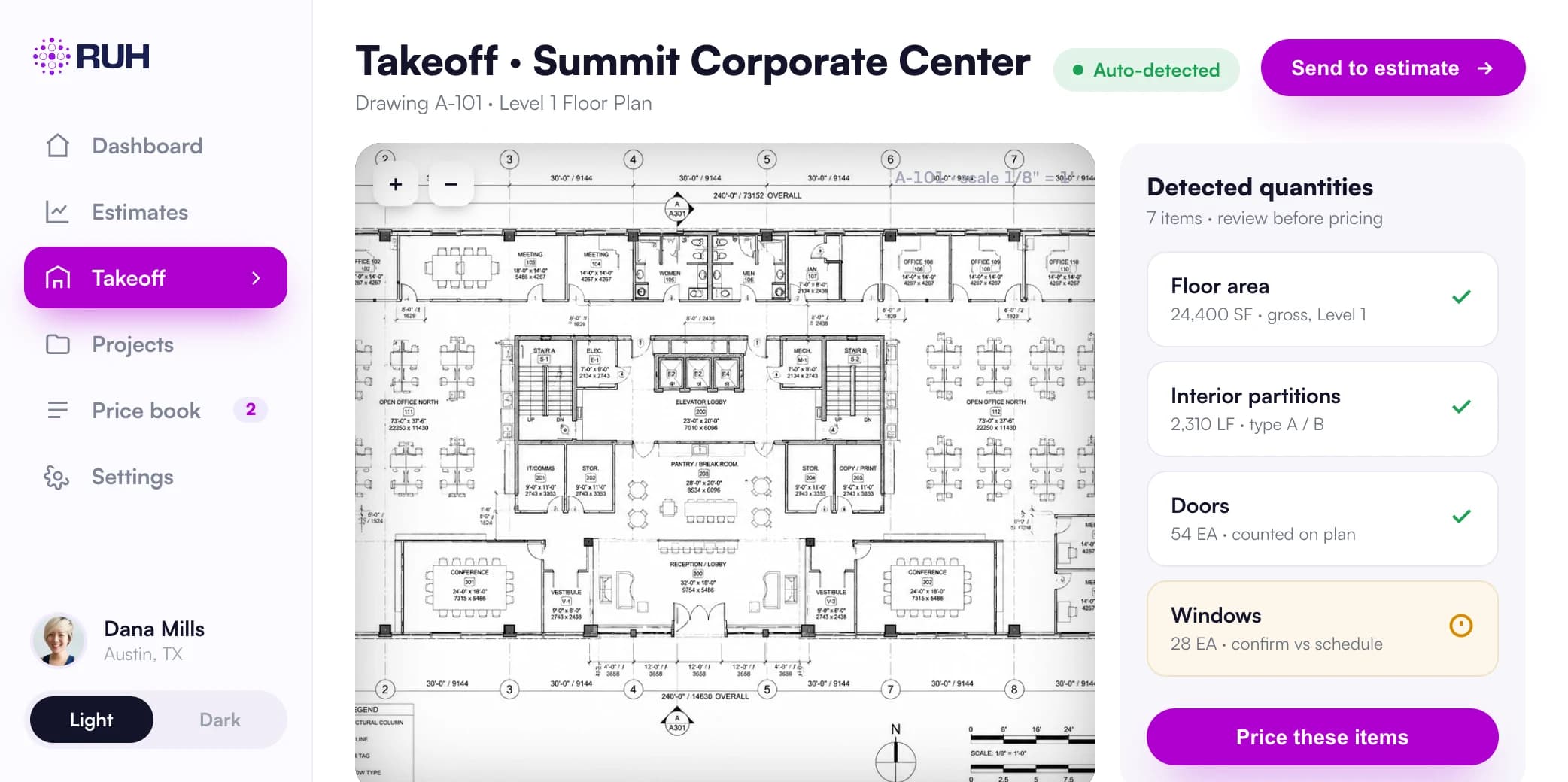
Ruh reads the structural framing plans, picks up the moment connection symbols, and counts every connection by type, shop welded versus field welded, as part of the steel takeoff. It then prices those counts against the contractor's own price book, applying their real per-connection adders alongside the base tonnage. The estimator reviews the counts and the shop versus field split, then signs off before the line goes into the bid.
See construction estimating softwareMoment connection: frequently asked questions
Why do moment connections cost so much more than simple shear connections?+
A shear tab is a small plate with a few bolts, while a CJP moment connection needs beveled flange preparation, backing bars, preheat, multiple weld passes, tight fit up, and ultrasonic testing by a special inspector. Continuity plates and doubler plates at the column add fabrication cost on top of that. The result is a connection that can run several times the installed cost of a simple shear connection, which is exactly why estimators carry it as a separate adder.
How do I find every moment connection on a set of drawings?+
Start with the symbol legend on the structural general notes sheet, then walk every framing plan and check both ends of each beam on the moment frame grid lines. The symbol is usually a small solid triangle or flag at the beam end, and it is easy to miss at half scale on a crowded plan. Cross check against the lateral system elevations or a connection schedule if the set includes one, because the plan symbols and the schedule occasionally disagree and the conflict needs an RFI.
Is a field welded moment connection really more expensive than a shop welded one?+
Yes, and the gap is significant. Field welding happens off a lift or scaffold, exposed to weather, with welding machines and leads staged on site, and the UT inspection happens in the field too, so labor productivity drops compared to a fabricator's shop. A shop welded connection with a bolted end plate moves most of that work into controlled conditions and leaves only bolting for the erector, which is why estimators split the count and carry a higher adder for field welded connections.
Still measuring by hand? Your next takeoff can run while you review this one.
See it on your plansRelated terms
Keep going: read the full guide or explore construction estimating software.
See Ruh price a bid from your own drawings.
AI takeoff and estimating on your price book, your estimator signs off.
Figures on this page are illustrative. Construction estimates depend on project-specific conditions, source documents, market pricing, and professional judgment. Ruh's AI assists the estimator and does not replace professional review: your team reviews, validates, and approves every estimate, bid, and pricing decision.