Construction glossary · Steel and structural
What is bolt grades in construction?
Bolt grades are the strength classifications for high strength structural bolts, historically ASTM A325 (120 ksi minimum tensile) and A490 (150 ksi), both now consolidated as grades within ASTM F3125. The grade governs how much load each bolt can carry, so the connection details on the structural drawings call out grade, diameter, and length for every joint. Estimators count and price bolts by grade because A490 and tension control assemblies cost meaningfully more than plain A325 hardware.
Updated June 2026 · Reviewed by the Ruh construction team
Structural bolt grade scale
Estimating steel and structural scope this week? Watch Ruh take off a real plan in 30 minutes.
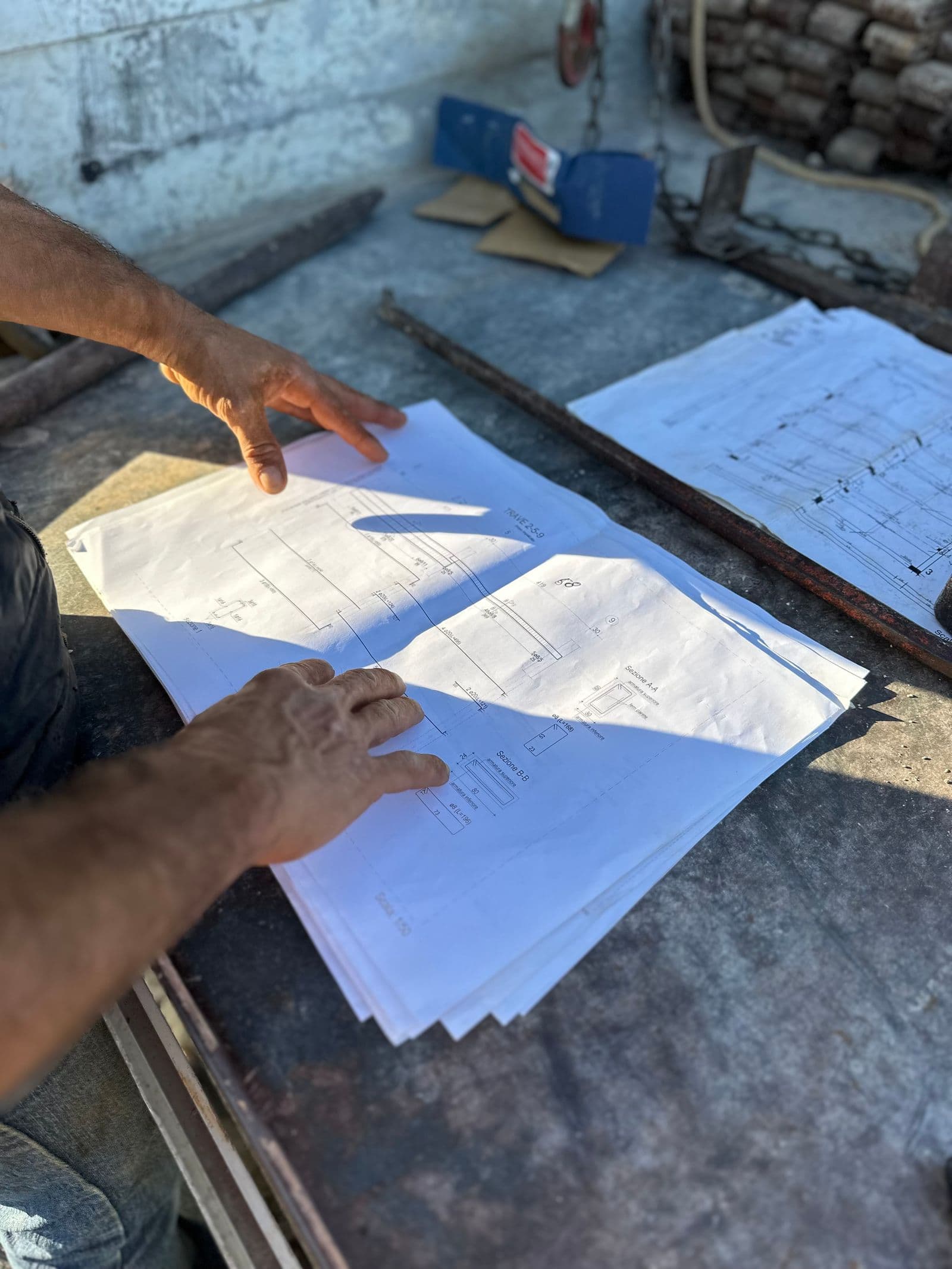
Book a walkthroughBolt grade is the strength classification of the high strength bolts that hold structural steel connections together, historically specified as ASTM A325 (120 ksi minimum tensile) and A490 (150 ksi), both now grades under the consolidated ASTM F3125 standard. The governing grade lives in the structural general notes, and each connection detail repeats or overrides it along with diameter and length; the shop drawings then list every bolt. The fabricator buys shop bolts, the erector buys field bolts, and the connection design fixes the count and grade of each. Connections are either bearing type or slip critical (SC); SC joints need verified pretension and prepared faying surfaces, often achieved with tension control (TC) bolts whose spline ends shear off at the target tension. New estimators stumble in predictable ways: pricing every bolt as a plain A325 when the details call for A490 or TC assemblies, missing the SC surface preparation and inspection labor, and double counting bolts that already sit inside the fabricator's per-ton price. Read the general notes first, because the grade callouts there govern anything the details do not override.
Structural bolts are taken off and priced as each (ea), grouped by grade, diameter, and length, with TC assemblies (bolt, nut, washer) carried as one unit. Counts come from the connection details and schedules on the S-series sheets: bolts per connection x number of connections, repeated for each detail type. On jobs with delegated connection design, many estimators instead carry field bolts inside the per-ton connection allowance and true it up at buyout. Add a loss factor, commonly 2 to 5 percent, for dropped bolts and rejected installations. In the estimate, shop bolts ride inside the fabrication price per ton, while field bolt assemblies land as a material line under steel erection next to the bolting labor.
Worked example
A two story office building shows 24 moment connections and 130 shear connections across the framing plans. Step 1, moment connections: the detail calls for sixteen 1 in F3125 Grade A490 TC bolts each, so 24 x 16 = 384 bolts. Step 2, shear connections: four 3/4 in Grade A325 TC bolts each, so 130 x 4 = 520 bolts. Step 3, apply a 5 percent loss factor for dropped and rejected bolts: 384 x 1.05 = 403.2, carried as 405, and 520 x 1.05 = 546, carried as 550. Step 4, price at illustrative assembly costs: 405 x $4.00 = $1,620 for the A490 assemblies and 550 x $2.20 = $1,210 for the A325 assemblies, so field bolt material totals $1,620 + $1,210 = $2,830. The bolting labor, SC faying surface prep, and inspection hours are separate lines and usually dwarf the hardware cost.
Try Ruh on a real bid. 100% money-back guarantee if you are not satisfied.*
*Scoped delivery, terms apply. Read the guarantee terms
How Ruh handles bolt grades
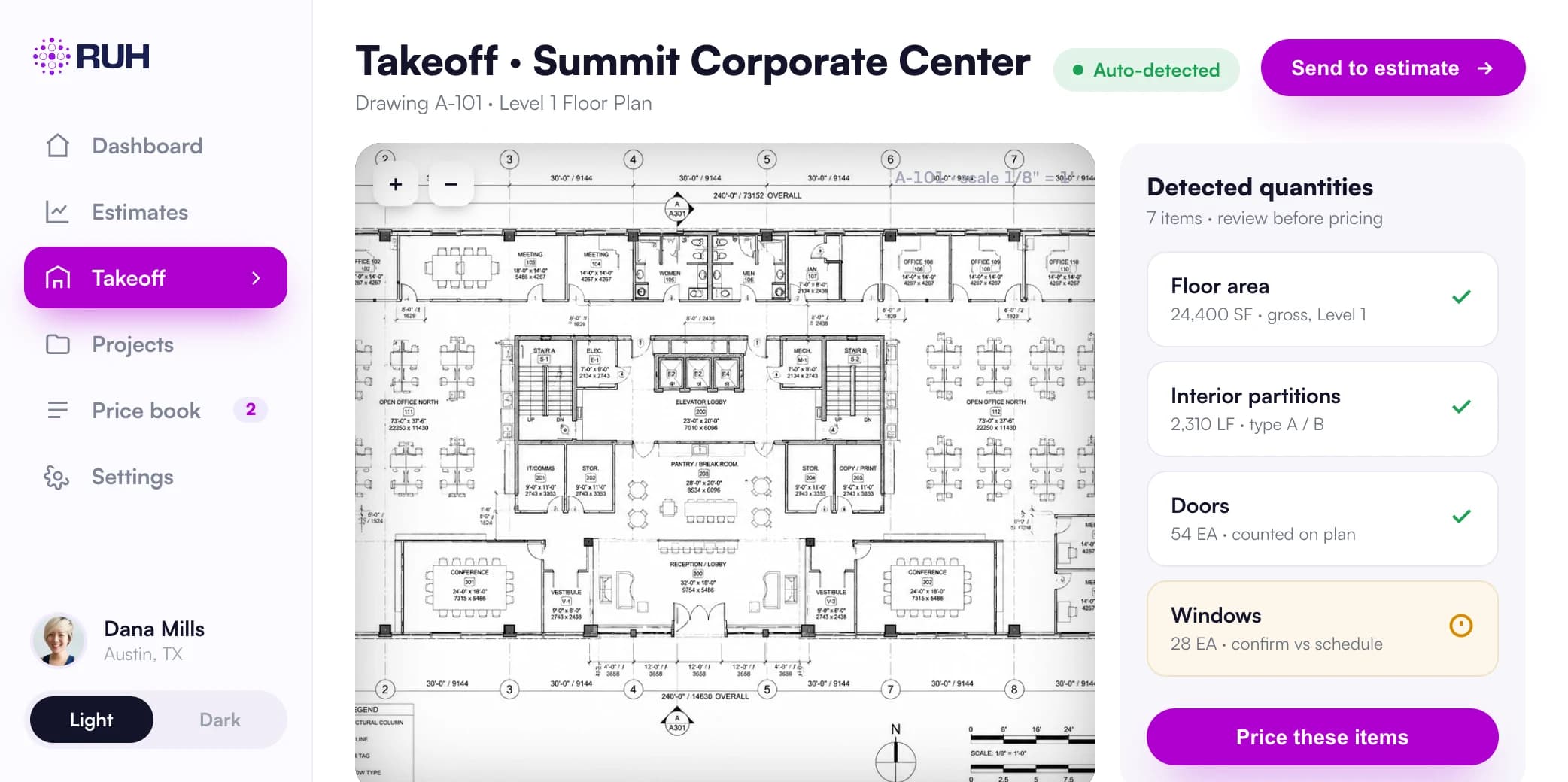
Ruh reads the structural drawings and connection details, counts the bolts by grade, diameter, and connection type, and extends those quantities against the contractor's own price book so the unit costs are theirs rather than generic averages. The estimator then reviews the counts, adjusts the loss factor or the per-ton allowance call where judgment says so, and signs off before anything reaches the bid.
See construction estimating softwareBolt grades: frequently asked questions
What is the difference between A325 and A490 bolts?+
A325 bolts carry a 120 ksi minimum tensile strength while A490 bolts carry 150 ksi, so A490 shows up where connections see heavy loads, typically moment frames and braced frames. Both are now grades within ASTM F3125 rather than standalone standards. A490 bolts cannot be hot dip galvanized because of hydrogen embrittlement risk, and they may not be reused after tensioning, both of which matter for pricing and field logistics.
Why do slip-critical connections cost more than bearing connections?+
A slip-critical joint transfers load through friction between the connected plies, so every bolt must be pretensioned to a verified minimum and the faying surfaces must meet a specified condition, usually unpainted clean mill scale or a Class A or B coating. That means TC bolts or calibrated wrench methods, surface prep, and more inspection hours. The hardware premium is real but the labor and inspection delta is usually the bigger number.
Do I count shop bolts and field bolts separately in the estimate?+
Yes. Shop bolts are installed at the fabricator and are already inside the fabrication price per ton, so counting them again double dips. Field bolts belong to the erector and should be carried either as a counted each quantity by grade and diameter or inside the per-ton connection allowance, but never both. Flag which method you used so buyout can reconcile it.
Still measuring by hand? Your next takeoff can run while you review this one.
See it on your plansRelated terms
Keep going: read the full guide or explore construction estimating software.
See Ruh price a bid from your own drawings.
AI takeoff and estimating on your price book, your estimator signs off.
Figures on this page are illustrative. Construction estimates depend on project-specific conditions, source documents, market pricing, and professional judgment. Ruh's AI assists the estimator and does not replace professional review: your team reviews, validates, and approves every estimate, bid, and pricing decision.