100% money-backBook a walkthrough

Construction glossary · Steel and structural

What is field weld in construction?

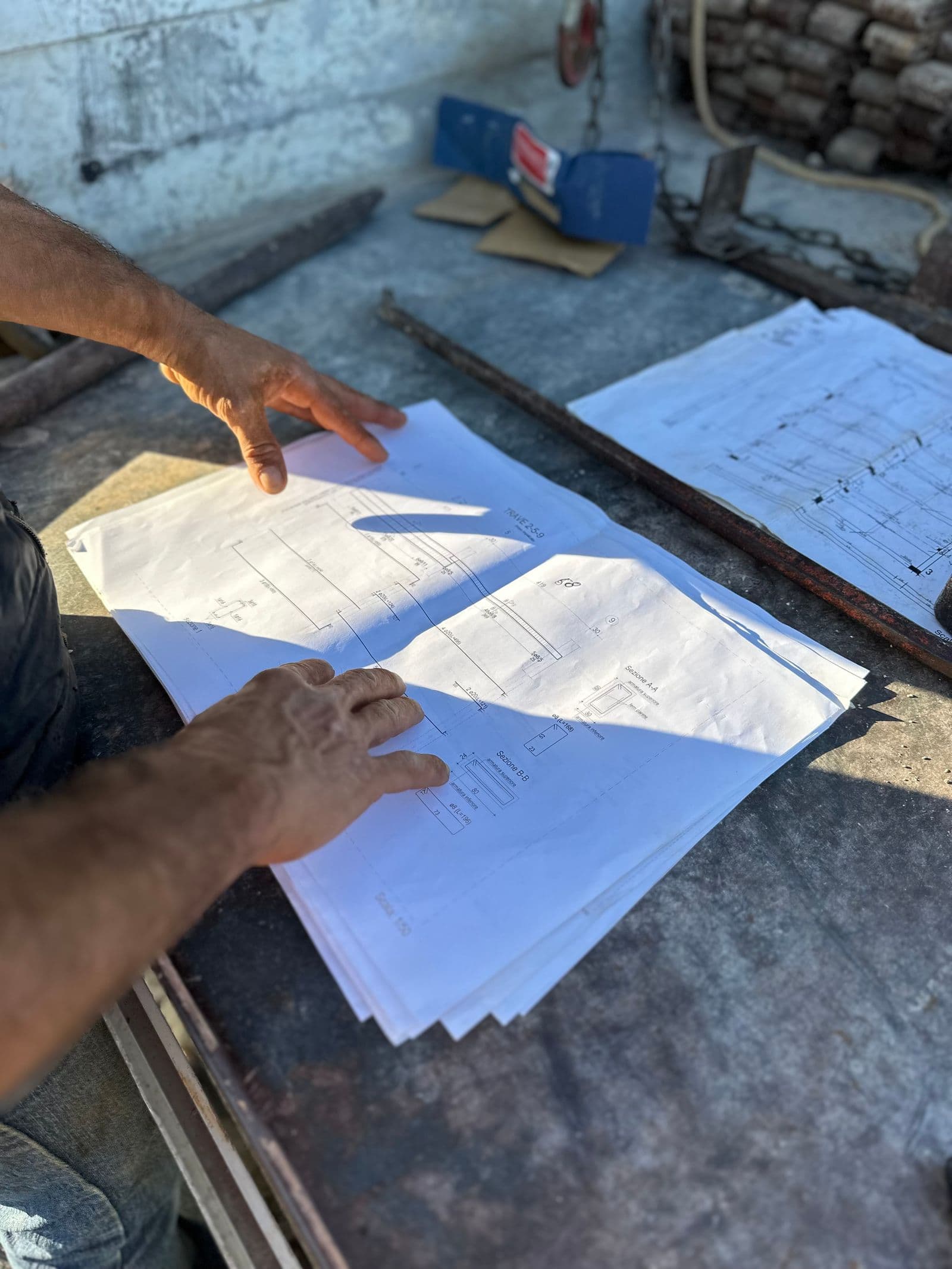
A field weld is a weld made at the job site during steel erection rather than in the fabrication shop, identified on drawings by a flag at the bend of the weld symbol. Because field welding involves position welding, limited access, weather, staging, and field inspection, the same weld costs several times more than its shop equivalent. Estimators count field welds from the erection drawings and price them as erection labor.

Updated June 2026 · Reviewed by the Ruh construction team

Done on site after erectionSymbol flag on weld markCosts more than shop welds

How field welds get made & checked

Erect & fit membersWeld in place on siteVisual / NDT inspectionTouch-up coatingWelding done at the jobsite, not the shop

Estimating steel and structural scope this week? Watch Ruh take off a real plan in 30 minutes.

Book a walkthrough
Definition

A field weld is any weld executed during erection at the project site, called out on shop and erection drawings by a flag at the junction of the weld symbol's reference line and arrow. The fabricator details the connection, the steel erector makes the weld, and a third party special inspector verifies it under AWS D1.1, with CJP groove welds usually requiring ultrasonic testing. Field welds show up most often at moment connections, column splices, embed plates, and anywhere shipping or erection tolerance prevents shop welding. For the estimator, every flag is erection labor, not fabrication cost. New estimators make three predictable mistakes: pricing field welds at shop production rates, missing the flags buried in connection details and typical notes, and forgetting the support costs that ride along with each weld, including lifts or staging, weather protection, preheat, and inspection access. On negotiated work, estimators also flag heavy field welding as a value engineering opportunity, since swapping field welds for bolted connections almost always erects cheaper and faster.

How it is measured

Field welds are taken off two ways: counted as each for connection-level pricing, or measured in linear inches (or feet) of weld by size and type, such as 5/16 in fillet or CJP groove. The counts come from the erection drawings and the connection details on the shop drawings, cross checked against the structural typical details where flags hide. The estimator converts weld inches to crew hours using field production rates, which run a fraction of shop rates because of position welding and access, then adds allowances for fit-up, preheat, weather, and staging. The result lands in the estimate as erection labor under the structural steel division, with field inspection and testing carried as a separate line or by the owner.

Worked example

Worked example

An erection plan shows 18 beam-to-column connections flagged for field welding, each with two 12 in long, 5/16 in fillet welds. Step 1, count: 18 connections x 2 welds = 36 field welds. Step 2, length: 36 welds x 12 in = 432 in of 5/16 in fillet. Step 3, field hours: at an illustrative field production rate of 36 in per hour, which covers position welding, access, and fit-up, 432 in / 36 in per hour = 12 hours. Step 4, cost: a field welder with rig at an illustrative $115 per hour gives 12 x $115 = $1,380. Step 5, shop comparison: the same 432 in welded in the shop at 108 in per hour and $95 per hour takes 432 / 108 = 4 hours, and 4 x $95 = $380. The field version costs $1,380 / $380 = roughly 3.6 times the shop version, before adding field UT inspection and weather delays, so it is carried as erection labor at the field rate.

100%

Try Ruh on a real bid. 100% money-back guarantee if you are not satisfied.*

*Scoped delivery, terms apply. Read the guarantee terms

Start with a walkthrough
How Ruh handles it

How Ruh handles field weld

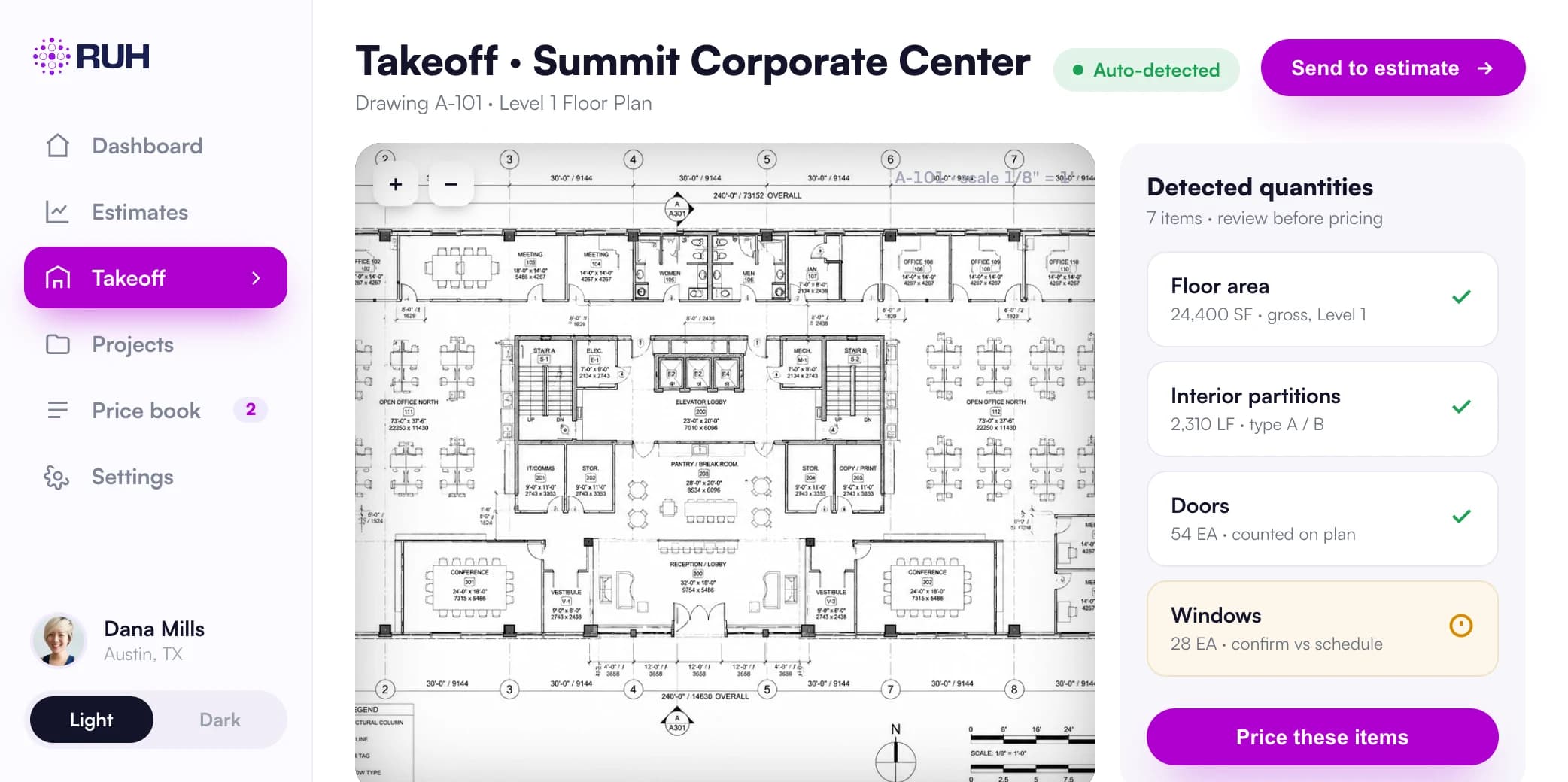
Ruh scans the contractor's erection and shop drawings, picks up the flagged weld symbols, and builds the field weld counts and weld inch quantities as part of the structural steel takeoff. It then prices that erection labor against the contractor's own price book, using their real crew rates and production assumptions, and hands back a draft. The estimator reviews the counts, tunes the field production rates, and signs off before the number goes in the bid.

See construction estimating software

Field weld: frequently asked questions

Why does a field weld cost several times more than the same weld made in the shop?+

In the shop the work rotates to the flat position, the welder stands at a bench, and conditions are controlled. In the field the same weld is often vertical or overhead, reached from a lift or staging, and exposed to wind, cold, and moisture that force preheat and weather protection. Add field inspection access and slower fit-up, and a multiplier of three to five times the shop cost is a normal planning assumption, not pessimism.

How do I spot field welds in a drawing set?+

Look for the flag at the bend of the weld symbol, where the arrow meets the reference line; that flag is the only thing separating a shop weld from a field weld. Check the erection drawings, connection details, column splice details, and the typical notes, because a flag in a typical detail applies across many locations. If a flagged detail calls for a CJP groove weld, plan on field ultrasonic testing as well.

Should I price a bolted alternative when a design is heavy on field welds?+

On negotiated or design assist work, yes. Bolted connections erect faster, are less weather sensitive, and need only visual and pretension inspection instead of UT, so swapping field welded moment connections for bolted end plate or flange plate connections is one of the most reliable structural value engineering moves. On hard bid work you price what is drawn, but flagging the bolted alternative in your proposal can help win the job.

Still measuring by hand? Your next takeoff can run while you review this one.

See it on your plans

Related terms

Keep going: read the full guide or explore construction estimating software.

The Steel and structural estimating cheat sheet
Every unit, waste factor, and conversion on one page. Free PDF.

See Ruh price a bid from your own drawings.

AI takeoff and estimating on your price book, your estimator signs off.

Figures on this page are illustrative. Construction estimates depend on project-specific conditions, source documents, market pricing, and professional judgment. Ruh's AI assists the estimator and does not replace professional review: your team reviews, validates, and approves every estimate, bid, and pricing decision.