100% money-backBook a walkthrough

Construction glossary · Steel and structural

What is anchor bolt in construction?

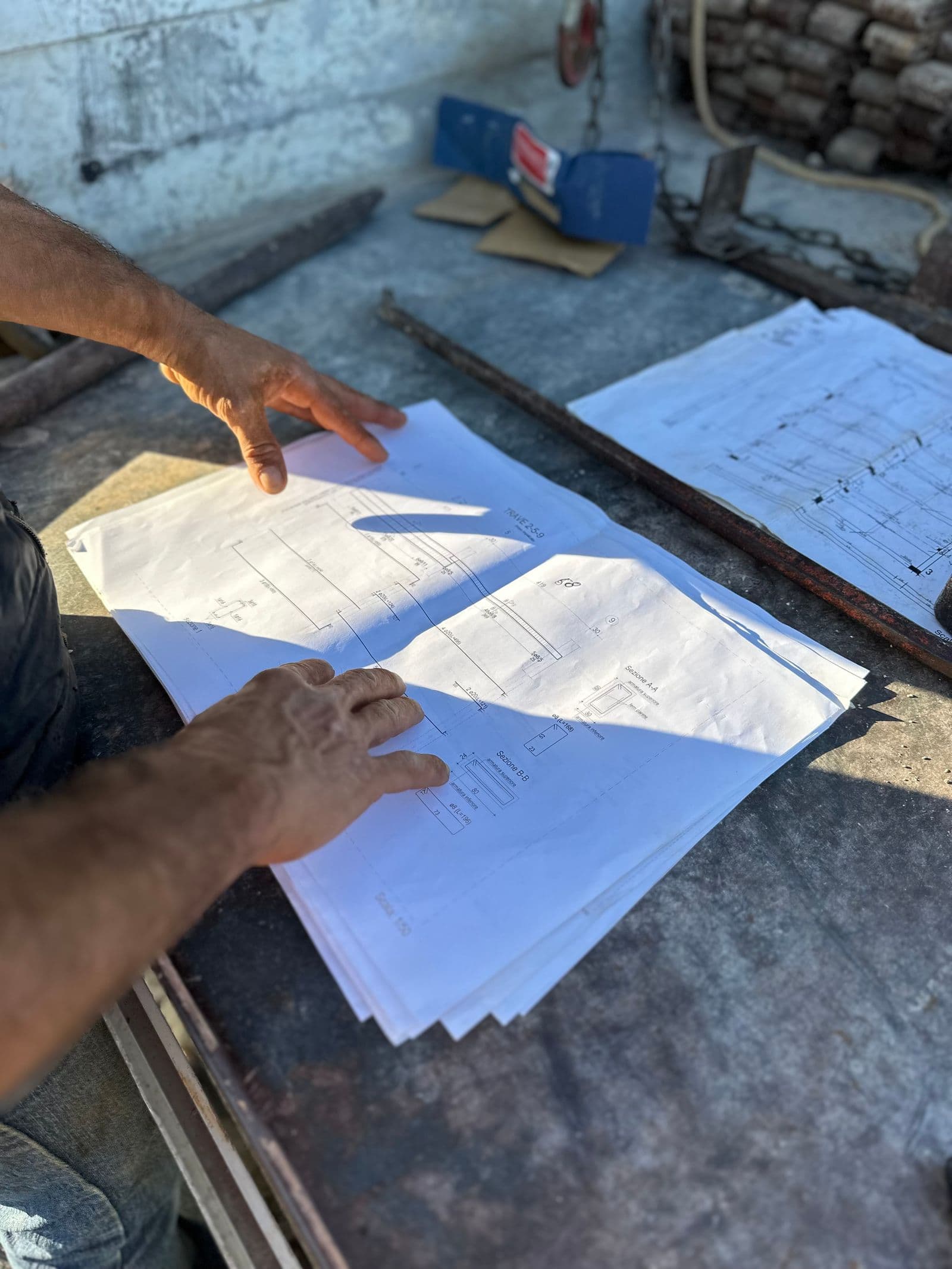
An anchor bolt is a threaded steel rod, typically ASTM F1554 grade 36, 55, or 105, cast into a concrete footing or pier to anchor a steel column baseplate to the foundation. The bolts are placed by the concrete trade before the pour, then the steel erector sets the column over the projecting threads and bolts it down. Estimators count them each from the anchor bolt plan and baseplate details, usually four per column.

Updated June 2026 · Reviewed by the Ruh construction team

Sets column baseplatesTypical 4 per columnCounted from the AB plan

How anchor bolts are counted

4 per baseplateAnchor boltanchor bolt plan

Estimating steel and structural scope this week? Watch Ruh take off a real plan in 30 minutes.

Book a walkthrough
Definition

An anchor bolt is the cast-in-place rod, headed or hooked, that ties a steel column to its concrete foundation. On US commercial jobs the spec almost always calls for ASTM F1554 in grade 36, 55, or 105, matching the yield strength the engineer needs at each column. They live in two places in the structural set: the anchor bolt plan, which locates every bolt group on the foundation, and the baseplate details, which give diameter, projection, embedment, and the bolt pattern for each column type. Four bolts per baseplate is the standard pattern, since OSHA requires a minimum of four for column stability during erection, but braced frame and moment frame columns often carry six, eight, or more. The trap for new estimators is contractual, not technical: the steel fabricator supplies the bolts, the concrete trade sets them, and neither sub's quote may include the templates, layout, or setting labor. That gap between divisions 3 and 5 is one of the most common buyout misses on structural steel.

How it is measured

Anchor bolts are counted each (ea), grouped by diameter, length, grade, and finish, because a 3/4 in x 12 in grade 36 rod and a 1 1/2 in x 36 in grade 105 rod price nothing alike. The counts come from the anchor bolt plan cross-checked against the baseplate details and column schedule: number of columns of each type x bolts per pattern. Estimators add a small spare allowance, typically around 5 percent, since a cast-in bolt that gets damaged or buried cannot be reused. Supply usually lands in division 5 with the steel package, while setting labor, templates, and layout land in division 3 or with the GC's own concrete crew, so the estimate should show both lines.

Worked example

Worked example

A single story warehouse shows 18 columns on the anchor bolt plan: 14 standard columns with 4 bolt baseplates and 4 braced frame columns with 6 bolt baseplates. Step 1, standard columns: 14 x 4 = 56 bolts. Step 2, braced frame columns: 4 x 6 = 24 bolts. Step 3, total: 56 + 24 = 80 bolts, F1554 grade 36, 3/4 in diameter x 18 in long. Step 4, spares: cast-in bolts cannot be reused if damaged, so carry 5 percent: 80 x 1.05 = 84 bolts. Step 5, price it with illustrative numbers: at $9.50 per bolt with nut and washer, 84 x $9.50 = $798 material. Setting templates and layout at $120 per column location: 18 x $120 = $2,160 labor. Total: $798 + $2,160 = $2,958, split between the steel supply quote and the concrete setting scope.

100%

Try Ruh on a real bid. 100% money-back guarantee if you are not satisfied.*

*Scoped delivery, terms apply. Read the guarantee terms

Start with a walkthrough
How Ruh handles it

How Ruh handles anchor bolt

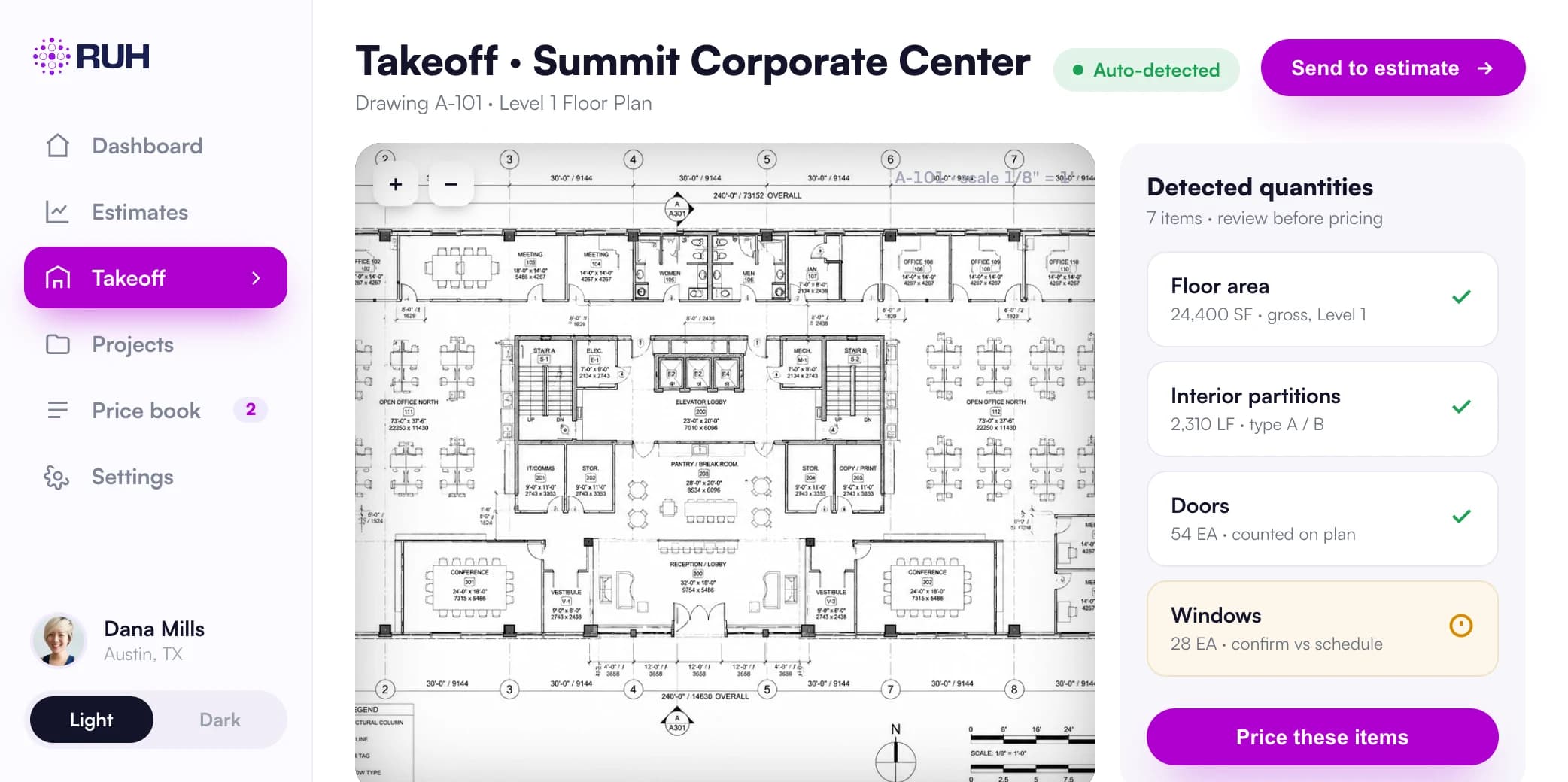
Ruh reads the anchor bolt plan and baseplate details straight from the contractor's structural set, counts every bolt by diameter, length, and grade, and flags the setting scope so it does not fall between the concrete and steel quotes. The quantities are then priced against the contractor's own price book, their real material and labor costs, and the estimator reviews each count and signs off before anything reaches the bid.

See construction estimating software

Anchor bolt: frequently asked questions

Who supplies anchor bolts and who sets them?+

On most commercial jobs the steel fabricator supplies the anchor bolts as part of the division 5 package, because they are detailed on the steel shop drawings, but the concrete trade physically sets them in the footings and piers before the pour. Templates, layout, and setting labor frequently appear in neither sub's quote, so scope it explicitly at buyout and name who furnishes and who installs in both subcontracts.

What is the difference between F1554 grade 36, 55, and 105?+

The grade is the minimum yield strength of the rod in ksi: 36, 55, or 105. Grade 36 covers most gravity columns, while grades 55 and 105 show up at braced frames, moment frames, and columns with high uplift or overturning loads. Grade 55 is often specified with the S1 weldability supplement so field fixes can be welded, and the cost difference per rod between grades is real, so check the grade on the anchor bolt schedule before pricing.

What happens if anchor bolts are set out of position?+

Anchor bolt placement tolerances are tight, and a bolt group that misses them means the column baseplate will not land on its pattern. Common fixes, all of which need the engineer's approval, include slotting or oversizing the baseplate holes with heavy plate washers, cold bending small misalignments, or core drilling and installing epoxy anchors. Every fix costs money and erection time, which is why surveyed layout and rigid templates are worth carrying in the estimate.

Still measuring by hand? Your next takeoff can run while you review this one.

See it on your plans

Related terms

Keep going: read the full guide or explore construction estimating software.

The Steel and structural estimating cheat sheet
Every unit, waste factor, and conversion on one page. Free PDF.

See Ruh price a bid from your own drawings.

AI takeoff and estimating on your price book, your estimator signs off.

Figures on this page are illustrative. Construction estimates depend on project-specific conditions, source documents, market pricing, and professional judgment. Ruh's AI assists the estimator and does not replace professional review: your team reviews, validates, and approves every estimate, bid, and pricing decision.