Try Ruh on a real bid. 100% money-back guarantee if you are not satisfied.*
*Scoped delivery, terms apply. Read the guarantee terms
Stiffener: Frequently Asked Questions
What are stiffeners used for?+
Stiffeners keep a beam or girder web from buckling or crippling under load. Bearing stiffeners do it at reaction points and under concentrated loads, intermediate stiffeners do it along deep plate girder webs where the web would otherwise buckle in shear, and continuity plates do the same job inside moment connections, welded between the column flanges in line with the beam flanges.
How do estimators count bearing stiffeners from framing details?+
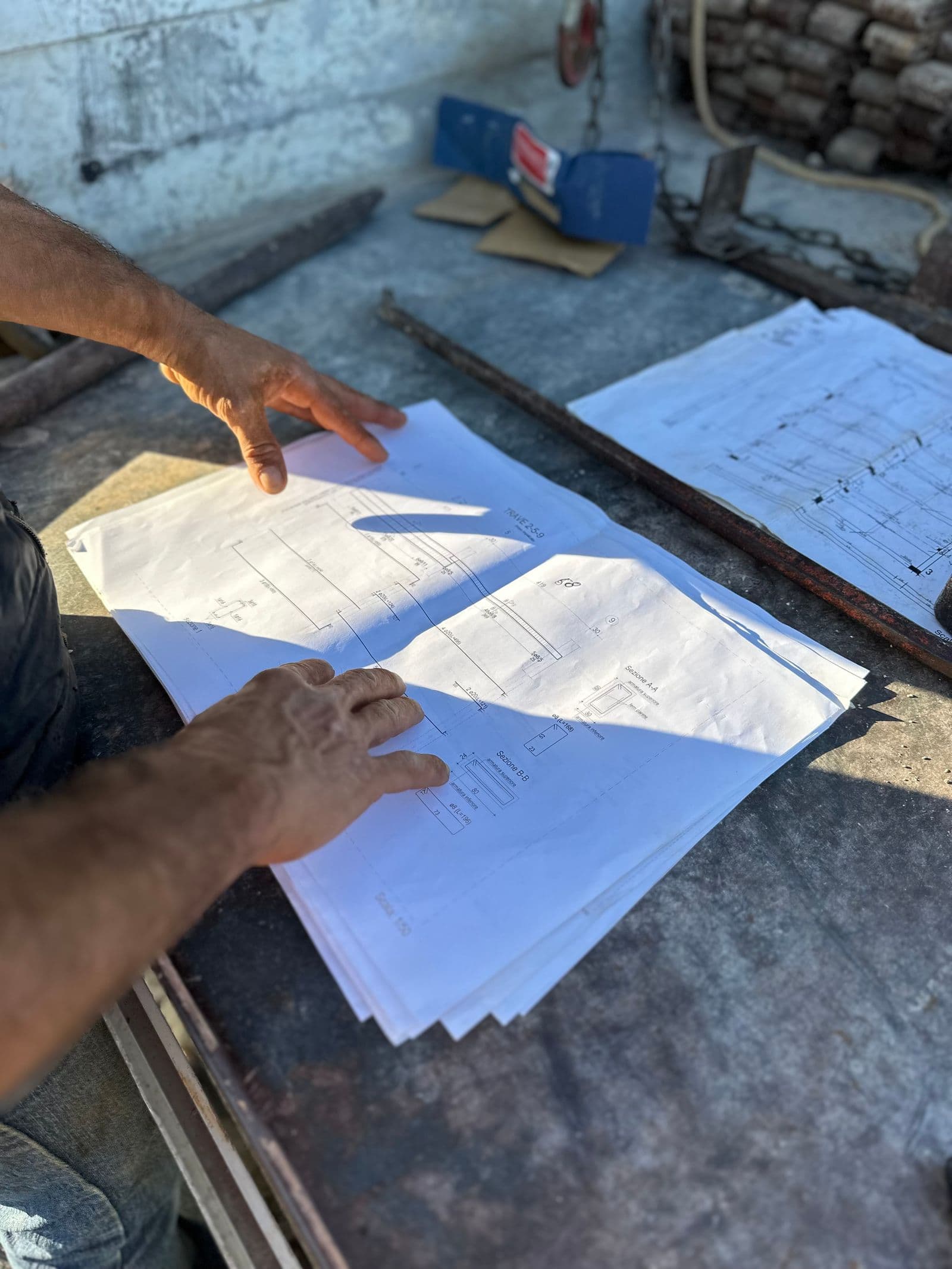
Counts come off the steel framing details, girder elevations, and the connection or moment frame schedules, not the framing plans. Count plates, not locations: bearing stiffeners normally come as a pair on both sides of the web, so each end of a girder is two plates, and the worked example's two ends give 4 bearing plates. Trace every callout, because a typical detail flagged on twenty beams means twenty sets of plates. Each plate then converts to square feet and to weight at 40.8 lb per sf per inch of thickness.
What is the difference between a bearing stiffener and an intermediate stiffener?+
A bearing stiffener sits at a reaction point or under a concentrated load and is fitted tight to the loaded flange so it carries force directly into the web; it works like a short column inside the girder. An intermediate stiffener is spaced along a deep plate girder web purely to stop shear buckling, so it can be smaller, sometimes single-sided, and does not need a fitted bearing end. They look similar in elevation, which is why the takeoff has to read the detail, not just count vertical plates.
Are continuity plates at moment connections counted as stiffeners?+
Yes. Continuity plates are horizontal stiffeners welded between the column flanges in line with the beam flanges, and they get counted each from the moment connection details exactly like web stiffeners. Watch for web doubler plates in the same detail; those are a separate item with different welding requirements and should not be lumped into the stiffener count.
Why do stiffeners cost so much per pound compared to the main steel?+
The plates are small, so the weight is trivial, but each one has to be cut, fitted against the web and flanges, and welded on multiple sides, often with tight fit-up tolerances at bearing locations. That shop labor runs far past the material value, which is why estimators carry stiffeners with a per-each labor line instead of burying them in the per-ton rate. A girder with a heavy stiffener layout can carry more fabrication hours than a plain beam twice its weight.
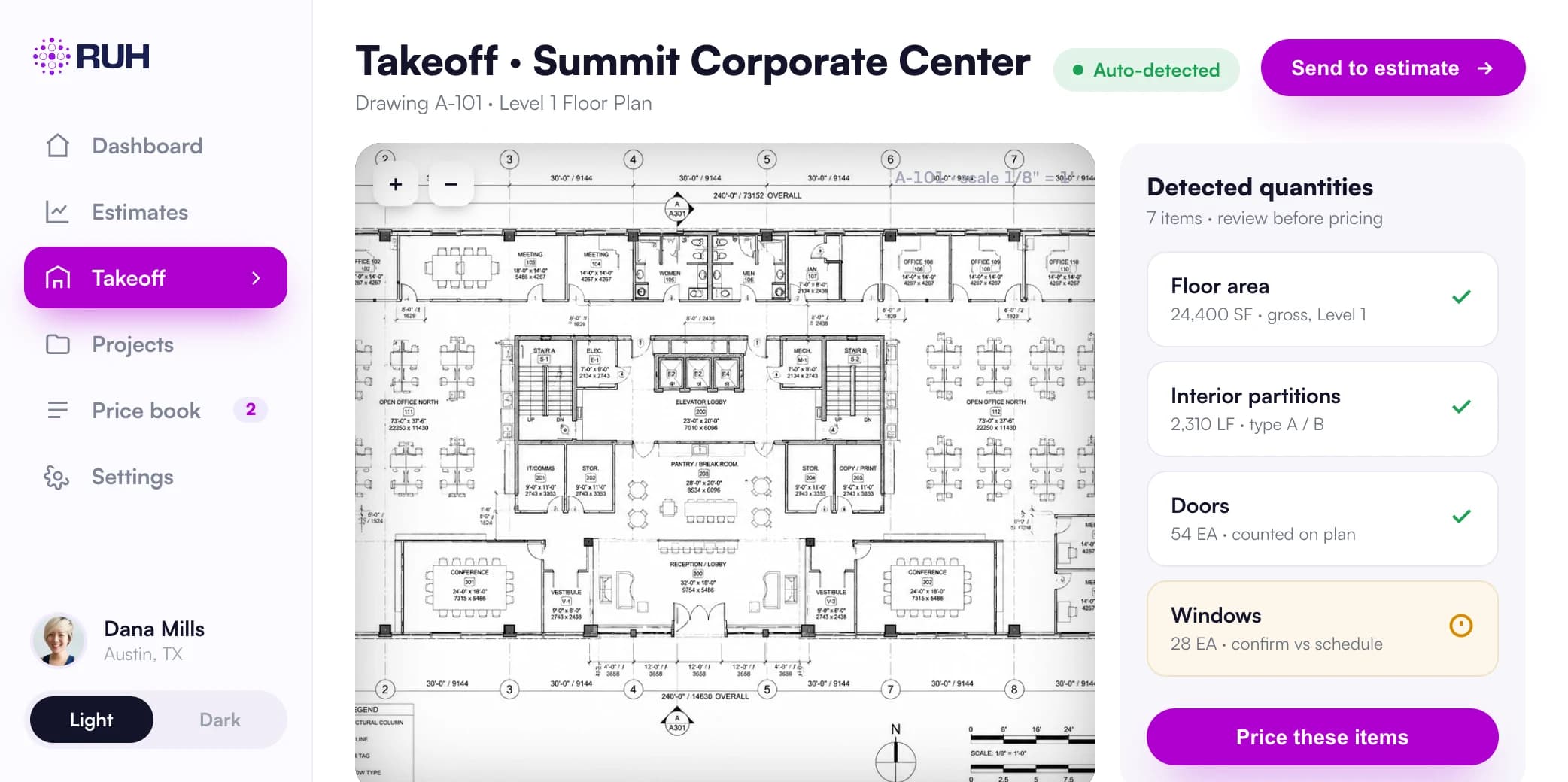
Still measuring by hand? Your next takeoff can run while you review this one.
See it on your plansRelated Terms
Keep going: Steel Stiffener Weight Takeoff, read the full guide or explore Construction Estimating Software.
Figures on this page are illustrative. Construction estimates depend on project-specific conditions, source documents, market pricing, and professional judgment. Ruh's AI assists the estimator and does not replace professional review: your team reviews, validates, and approves every estimate, bid, and pricing decision.