Construction glossary · Steel and structural
What is plate steel in construction?
Plate steel is flat rolled steel specified by its thickness, used in commercial construction for column baseplates, gusset plates, stiffeners, cap plates, and embed plates. Because steel weighs 490 pounds per cubic foot, a plate 1 inch thick weighs 40.8 pounds per square foot, the constant estimators use to turn plate dimensions into weight. Plate is taken off as area x thickness x 40.8 and priced with the rest of the structural steel in pounds or tons.
Updated June 2026 · Reviewed by the Ruh construction team
Common steel plate thicknesses
Estimating steel and structural scope this week? Watch Ruh take off a real plan in 30 minutes.
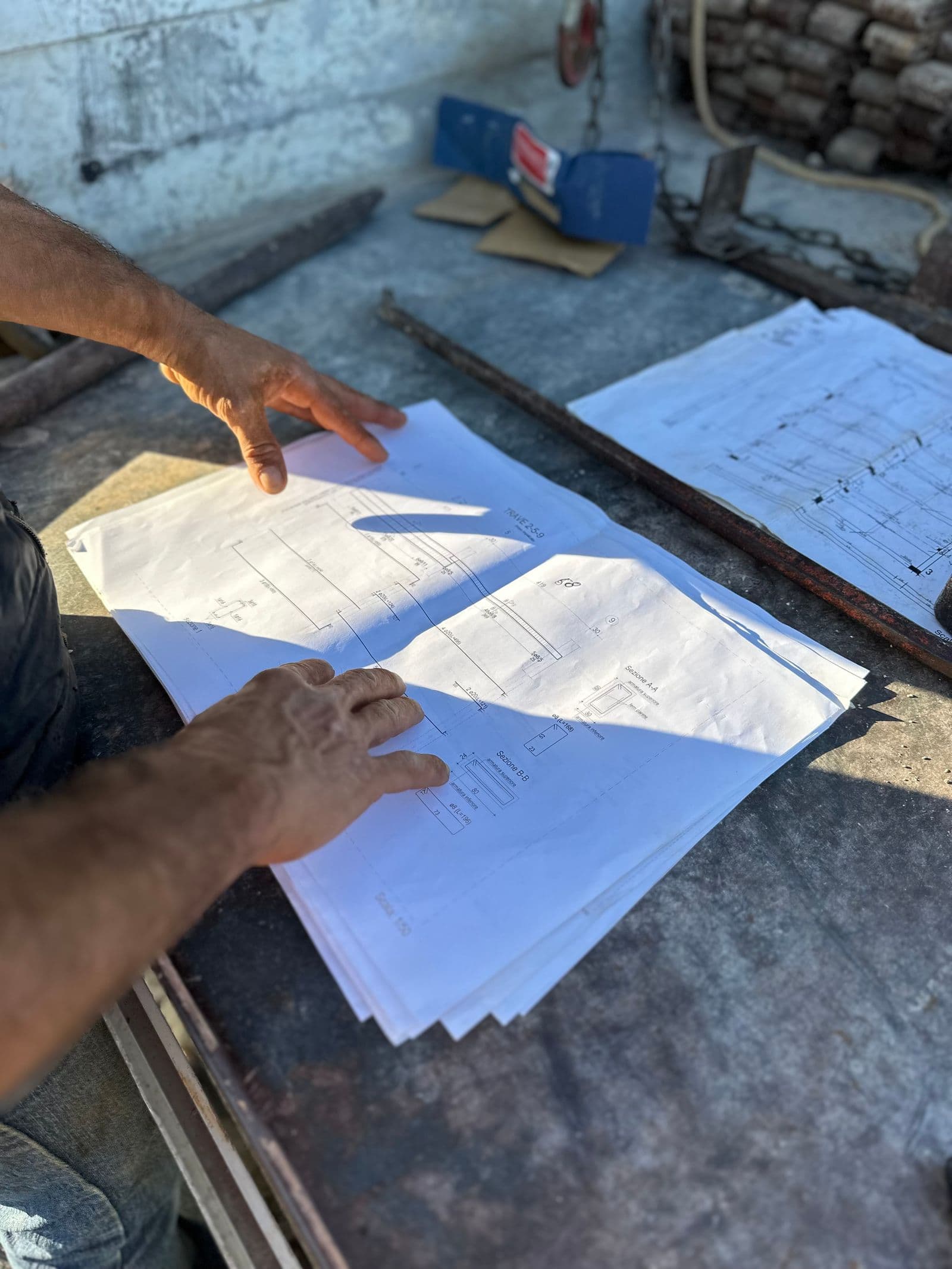
Book a walkthroughPlate steel is flat rolled product called out on structural drawings with the PL prefix followed by thickness, width, and length, as in PL 3/4 x 12 x 18, meaning a 3/4 inch thick plate 12 inches by 18 inches. On commercial jobs it appears as column baseplates, gusset plates at braced frames, web and bearing stiffeners, cap plates, shim and leveling plates, and embed plates cast into concrete walls and slabs. The fabricator cuts and drills plate in the shop, the erector sets it in the field, and embed plates often land in the concrete sub's scope even though the steel detailer draws them, a classic bid time scope gap between the GC, the steel sub, and the concrete sub. Estimators find plate in connection details, sections, baseplate and embed schedules, and general notes rather than the framing plans, so new estimators routinely miss it. The other predictable mistakes are misreading the first PL number as a width instead of a thickness, and forgetting that connection material adds real tonnage on top of the main members.
Plate is taken off in pounds and summarized in tons of 2,000 pounds alongside the wide flange and HSS members. The quantities come from the S series connection details, the baseplate and embed schedules, the braced frame elevations, and, when available, the fabricator's shop drawings. The math is area in square feet x thickness in inches x 40.8 pounds, since 490 pounds per cubic foot divided by 12 gives 40.8 pounds per square foot per inch of thickness. Estimators count piece multipliers carefully (one baseplate per column, two gussets per brace line), round each piece up to the nearest pound, and let the fabricator handle cutting waste through nesting. The pounds roll into the structural steel tonnage line, with embeds sometimes carried separately under miscellaneous metals.
Worked example
Take a one story building with 24 columns, each on a baseplate PL 1-1/4 x 18 x 18. Step 1, area of one plate: 18 in x 18 in = 324 sq in, and 324 / 144 = 2.25 sf. Step 2, weight of one plate: plate weighs 40.8 lb per sf per inch of thickness, so 2.25 sf x 40.8 x 1.25 in = 114.75 lb. Step 3, extend: 24 plates x 114.75 lb = 2,754 lb. Step 4, convert to tons: 2,754 / 2,000 = 1.377 tons, carried as 1.38 tons. Step 5, check a small gusset with the same formula: PL 3/4 x 12 x 18 is 1.5 sf x 40.8 x 0.75 = 45.9 lb. At an illustrative fabricated and erected price of $2.50 per lb, the baseplates alone come to 2,754 lb x $2.50 = $6,885.
Try Ruh on a real bid. 100% money-back guarantee if you are not satisfied.*
*Scoped delivery, terms apply. Read the guarantee terms
How Ruh handles plate steel
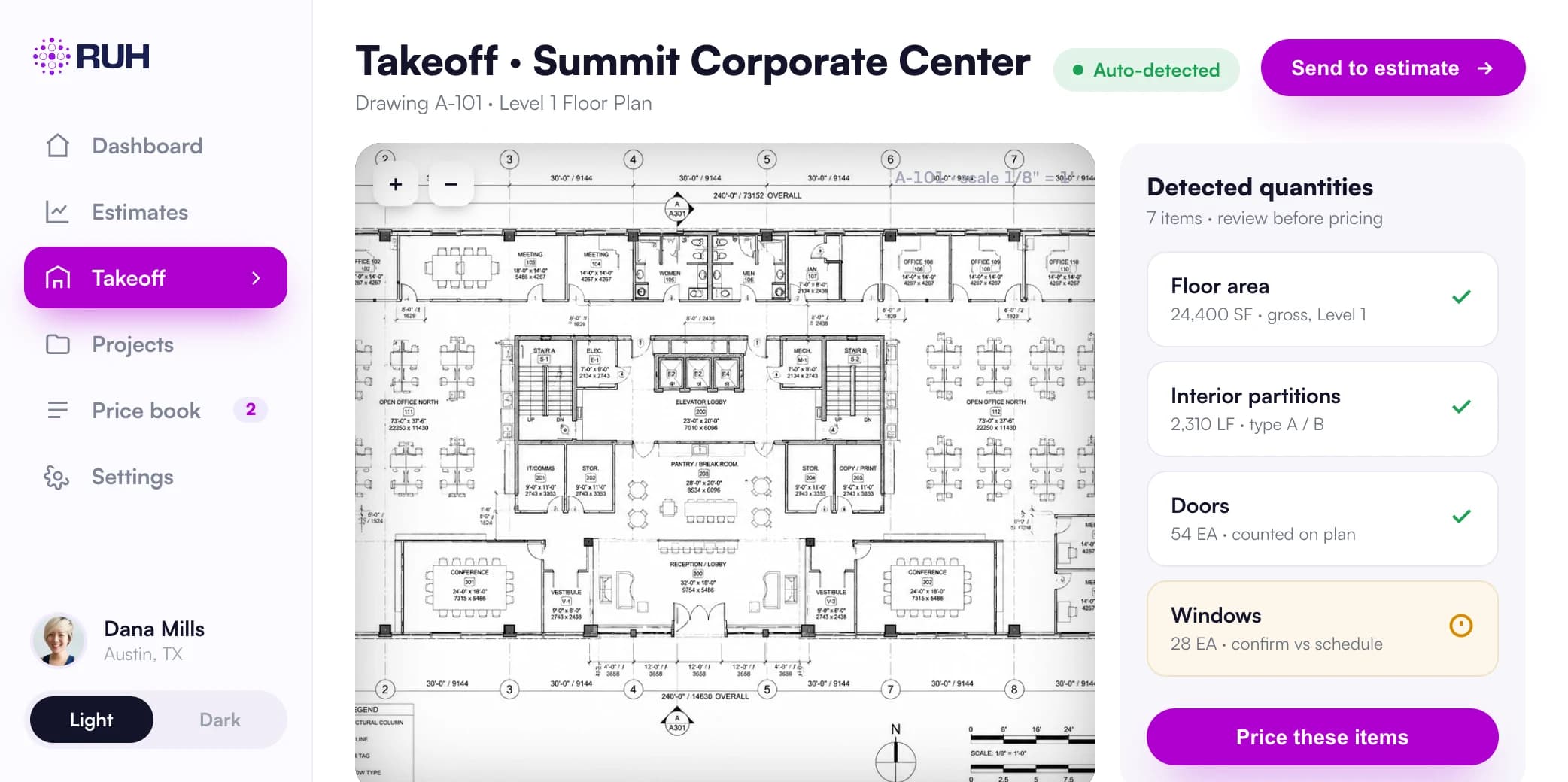
Ruh reads the structural drawings, pulls the plate callouts out of the connection details, baseplate schedules, and embed schedules, and runs the area x thickness x 40.8 weight math on every piece. It then prices the resulting pounds and tons against the contractor's own price book, so the unit costs are that shop's real numbers rather than a database average. The estimator reviews the plate list, adjusts connection allowances and scope calls, and signs off before the quantities go into the bid.
See construction estimating softwarePlate steel: frequently asked questions
How do I calculate the weight of a steel plate?+
Multiply the plate area in square feet by the thickness in inches by 40.8 pounds. The constant comes from steel's density of 490 pounds per cubic foot divided by 12, which gives the weight of a 1 inch thick plate per square foot. For example, a PL 1 x 24 x 24 is 4 sf x 40.8 x 1 = 163.2 lb.
What is the difference between plate steel and sheet steel?+
The dividing line is thickness. Material roughly 3/16 inch and thicker is sold as plate and specified by fraction or decimal thickness, while thinner flat stock is sheet and specified by gauge number. In structural work that distinction matters because plate is connection and bearing material priced by the pound with the steel package, while sheet shows up as decking, flashing, and light gauge framing priced under different trades.
Where do plate quantities hide on structural drawings?+
Almost never on the framing plans. Look in the connection details and typical details, the baseplate schedule, the embed plate schedule, braced frame elevations, and the general notes, which often specify minimum gusset and stiffener thicknesses. Estimators who take off only the beam and column schedules will miss most of the plate on the job, and connection material is real tonnage the fabricator will absolutely bill for.
Still measuring by hand? Your next takeoff can run while you review this one.
See it on your plansRelated terms
Keep going: read the full guide or explore construction estimating software.
See Ruh price a bid from your own drawings.
AI takeoff and estimating on your price book, your estimator signs off.
Figures on this page are illustrative. Construction estimates depend on project-specific conditions, source documents, market pricing, and professional judgment. Ruh's AI assists the estimator and does not replace professional review: your team reviews, validates, and approves every estimate, bid, and pricing decision.