Construction glossary · Steel and structural
What is baseplate in construction?
A baseplate is a steel plate shop welded to the bottom of a structural column that spreads the column load onto the concrete foundation below. The plate bears on a bed of non-shrink grout over the footing or pier and is held down by cast-in anchor bolts. Estimators pull baseplate sizes from the column schedule or base details and carry the plate weight inside the steel tonnage.
Updated June 2026 · Reviewed by the Ruh construction team
Column baseplate section
Estimating steel and structural scope this week? Watch Ruh take off a real plan in 30 minutes.
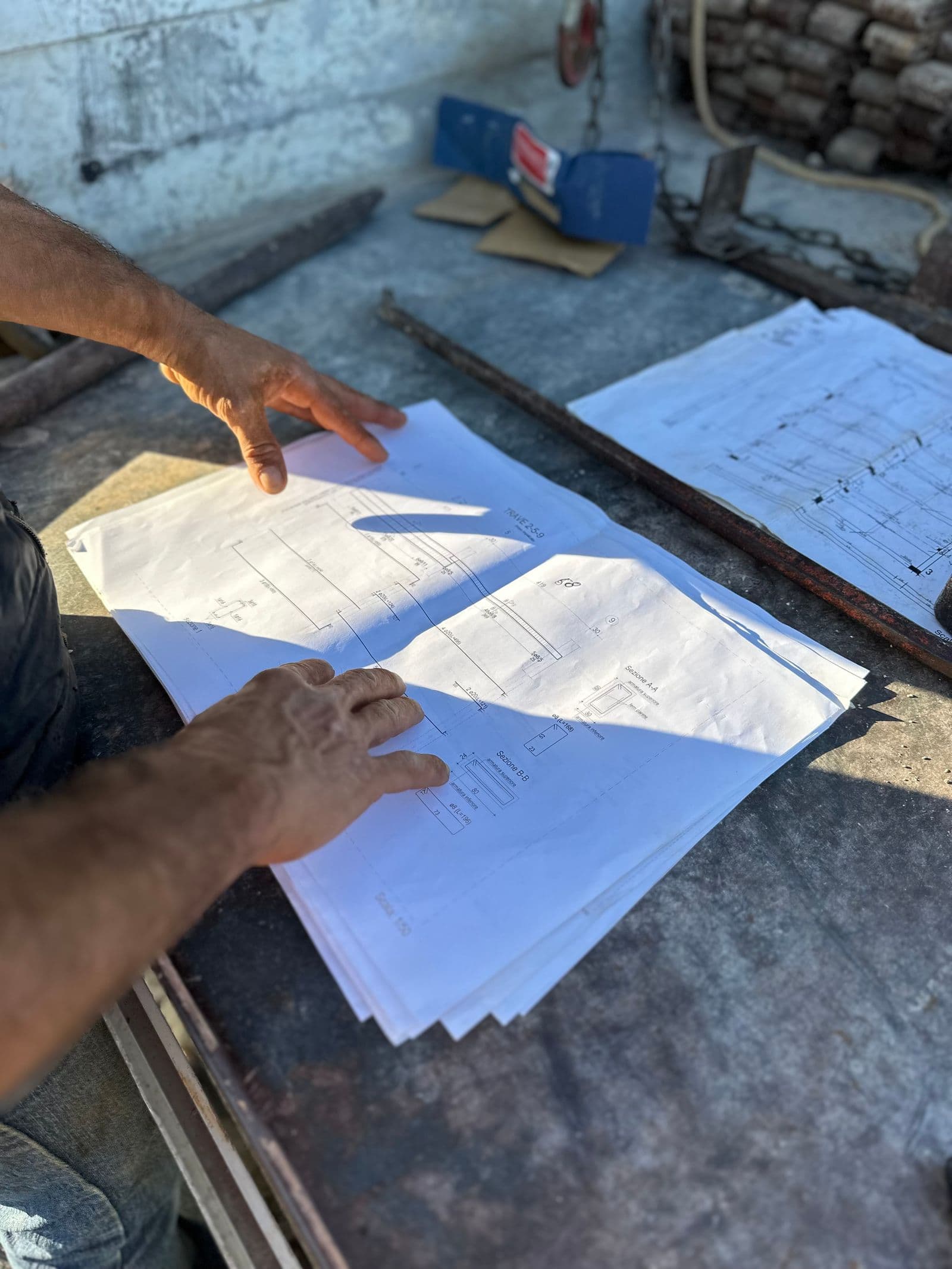
Book a walkthroughA baseplate is the steel plate shop welded to the bottom of a column that transfers the column load into the foundation. The fabricator welds it on in the shop, the erector sets the column over cast-in anchor bolts, and the plate bears on a bed of non-shrink grout packed between the underside of the plate and the top of the footing or pier. On the drawings, sizes live in the column schedule or a base plate schedule plus the base details on the structural sheets, called out like PL 1 x 14 x 14, meaning a plate 1 in thick by 14 in square. New estimators get burned three ways: they miss plates entirely because the sizes sit in details rather than plan views, they forget the plate weight belongs in the steel tonnage, and they assume someone else is carrying the grout. Grout under baseplates is a classic scope gap, claimed by neither the concrete sub nor the steel erector unless the specs and the bid scope sheets pin it down.
Baseplates are counted each off the column schedule, one per column, then converted to weight so they ride in the steel tonnage. Plate weight is area in square feet times 40.8 lb per square foot per inch of thickness, and the total rolls into the fabricated steel line priced per ton or per pound. The grout bed beneath is a separate quantity: plate count times plate area times grout thickness, priced in cubic feet or bags of non-shrink grout plus setting labor. Quantities come from the S series sheets, the column schedule, and the base details. Round plate weights up to whole pounds and grout to whole bags, and write the grout scope call, concrete sub or steel erector, directly on the estimate line so it survives buyout.
Worked example
The column schedule calls out PL 1 x 14 x 14 at 24 columns. Step 1, plate area: 14 in x 14 in = 196 sq in, and 196 / 144 = 1.36 sf. Step 2, weight: steel plate weighs 40.8 lb per sf per inch of thickness, so 1.36 sf x 40.8 lb x 1 in = 55.5 lb per plate. Step 3, total: 24 plates x 55.5 lb = 1,332 lb, and 1,332 / 2,000 = 0.67 tons, carried as 0.67 tons inside the fabricated steel tonnage. At an illustrative fabricated and erected price of $4,500 per ton, 0.67 tons x $4,500 = $3,015. Step 4, grout: each plate gets a 1.5 in bed, 196 sq in x 1.5 in = 294 cu in, and 294 / 1,728 = 0.17 cf per plate. Then 24 plates x 0.17 cf = 4.08 cf, and at a typical yield of 0.5 cf per bag, 4.08 / 0.5 = 8.16 bags, ordered as 9 bags of non-shrink grout.
Try Ruh on a real bid. 100% money-back guarantee if you are not satisfied.*
*Scoped delivery, terms apply. Read the guarantee terms
How Ruh handles baseplate
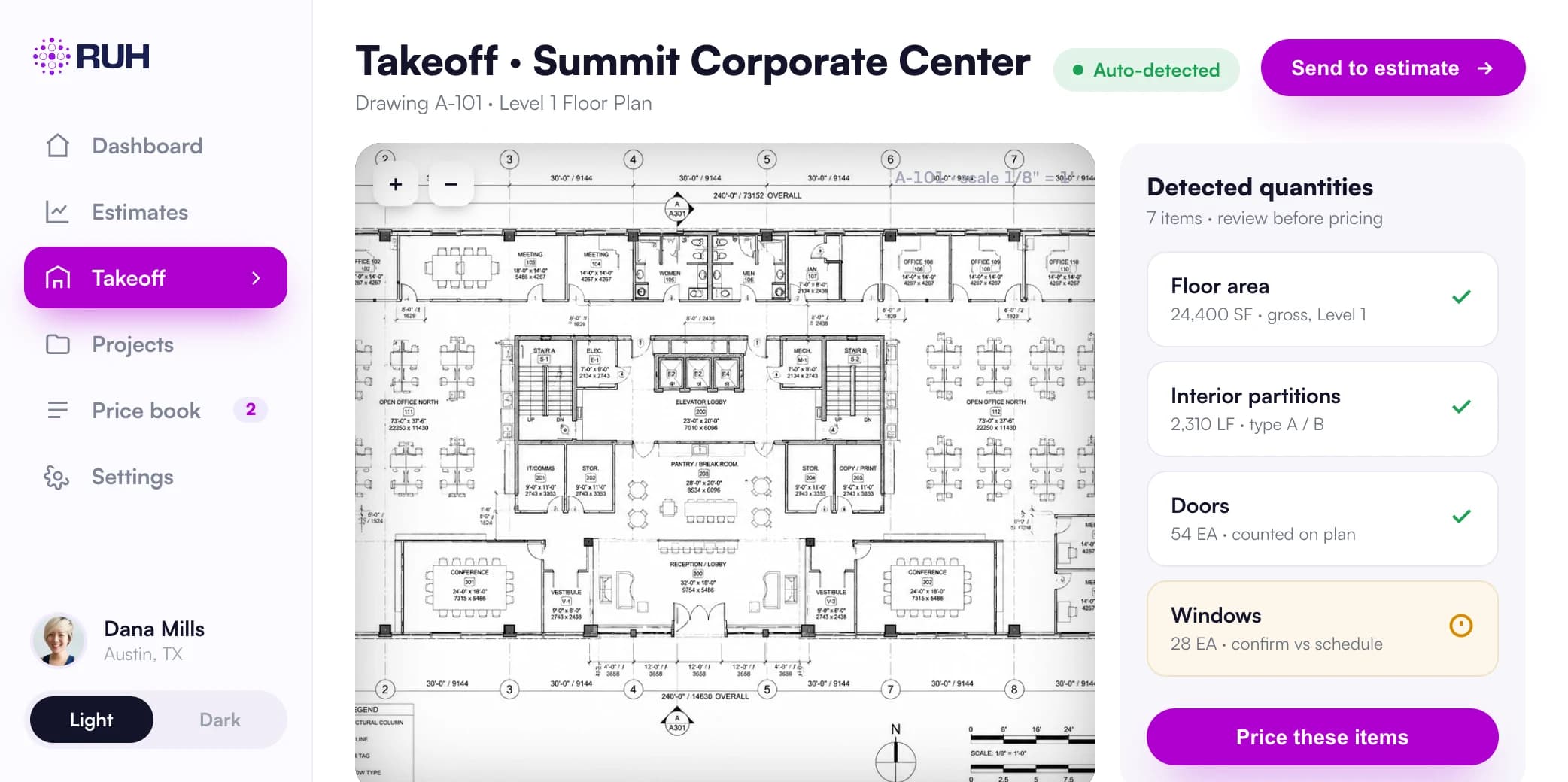
Ruh reads the structural set, pulls every baseplate off the column schedule and base details, and computes plate weights and grout quantities as part of the steel takeoff. It then prices those quantities against the contractor's own price book, so the numbers reflect their real fabrication and erection costs rather than book averages. The estimator reviews the counts and the grout scope call, then signs off before the line items go into the bid.
See construction estimating softwareBaseplate: frequently asked questions
Who furnishes and installs the non-shrink grout under baseplates?+
It floats. The concrete sub often excludes it as steel work, and steel erectors routinely exclude grouting in their standard scope letters, so it lands on the GC unless someone is pinned down. Check the Division 5 specs, the erector's exclusions, and the concrete scope sheet at bid time, and carry the grout yourself if nobody claims it. It is a small dollar item with an outsized ability to stall column plumbing if missed.
Are baseplates included in the fabricator's steel tonnage?+
Shop welded baseplates are part of the fabricated piece, so their weight rides in the fabricator's tonnage and price. The exception is loose plates, such as setting or leveling plates shipped separately and placed before erection, which can fall to the erector or even the foundation contractor. Read the shop drawings and the fab quote to confirm which plates ship loose and who sets them.
What if the column schedule does not give baseplate sizes?+
Look first at the typical base details and the general structural notes, since many sets show one detail that governs all columns. On delegated design work, such as metal buildings, the fabricator sizes the plates and the drawings stay silent until shop drawings arrive. In that case carry an allowance scaled to the column sizes, flag it as an assumption in the bid, and confirm it with an RFI or against the shop drawings.
Still measuring by hand? Your next takeoff can run while you review this one.
See it on your plansRelated terms
Keep going: read the full guide or explore construction estimating software.
See Ruh price a bid from your own drawings.
AI takeoff and estimating on your price book, your estimator signs off.
Figures on this page are illustrative. Construction estimates depend on project-specific conditions, source documents, market pricing, and professional judgment. Ruh's AI assists the estimator and does not replace professional review: your team reviews, validates, and approves every estimate, bid, and pricing decision.