100% money-backBook a walkthrough

Construction glossary · Steel and structural

What is galvanizing in construction?

Galvanizing in construction is the hot-dip application of a zinc coating to fabricated steel per ASTM A123 to protect it from corrosion. It is specified for exterior and moisture-exposed steel such as lintels, stairs, railings, and embed plates, and it is priced per pound or per hundredweight (cwt) of steel on top of the fabrication cost. Estimators take off the weight of every member flagged galvanized in the finish schedule and general notes.

Updated June 2026 · Reviewed by the Ruh construction team

Coating zinc, corrosion barrierTypical ~3.9 mil thickPriced by the ton coated

Hot-dip galvanized coating layers

Pure zinc (eta)Zinc-iron alloyBase steel

Estimating steel and structural scope this week? Watch Ruh take off a real plan in 30 minutes.

Book a walkthrough
Definition

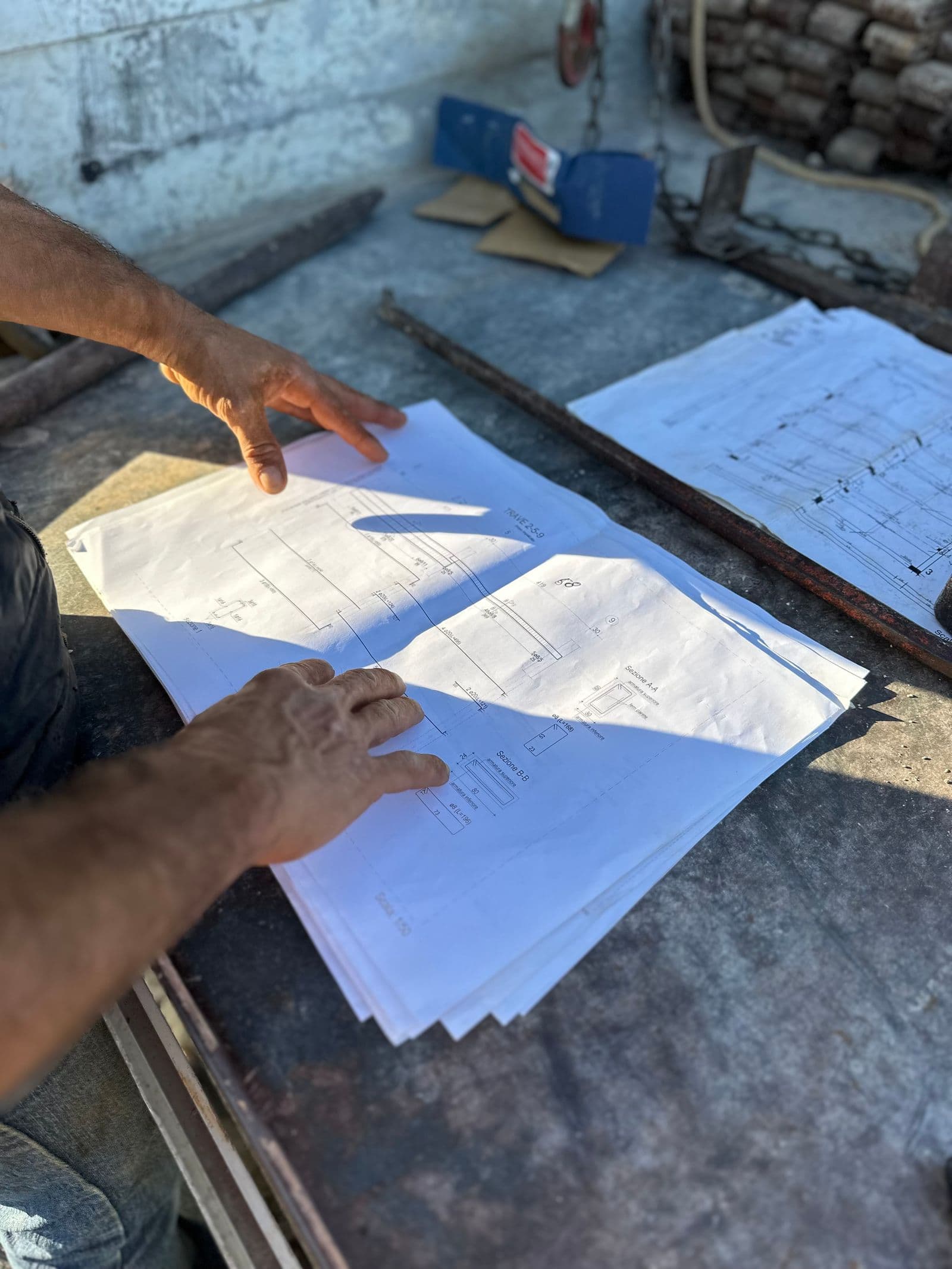
Galvanizing is a hot-dip zinc coating applied to fabricated structural and miscellaneous steel under ASTM A123, and on commercial jobs it shows up wherever steel lives outside or stays wet: loose lintels, exterior stairs and railings, ledger angles, embed plates, dunnage, and rooftop supports. The requirement hides in the structural general notes, the finish column of the lintel or misc metals schedules, and spec sections 05 12 00 and 05 50 00, not on the framing plans themselves. The fabricator trucks finished pieces to a galvanizer, dips them, and trucks them back, so the cost sits on top of fabrication, not instead of it. New estimators get burned three ways: missing HDG flags scattered through details and notes, pricing the dip but forgetting freight in both directions and minimum lot charges, and ignoring kettle length, which caps how long a member can be dipped in one pass and can force splices or a progressive dipping surcharge on long girders and stringers.

How it is measured

Galvanizing is taken off and priced by weight: pounds or hundredweight (cwt, 100 lb) of steel actually dipped, applied as an adder on top of the fabricated steel cost. The weight comes from the same takeoff that builds steel tonnage: member unit weights times lengths, plus plate areas times thickness, pulled from framing plans, lintel and misc metals schedules, and the general notes that flag which pieces are HDG. Estimators add a small allowance, often 5 to 10 percent, for connection material and hardware galvanized with the members, round up to cover minimum lot charges, and carry freight to and from the galvanizer as a separate line or a per lb adder.

Worked example

Worked example

A two story office building flags the loose lintels, the exterior stair, and the dock embeds for hot-dip galvanizing. Step 1, lintels: 24 pieces of L6x4x3/8 at 5 ft each is 24 x 5 = 120 lf, and 120 lf x 12.3 lb/ft = 1,476 lb. Step 2, stair stringers: 4 C12x20.7 stringers x 18 ft = 72 lf, and 72 lf x 20.7 lb/ft = 1,490.4 lb. Step 3, embeds: 30 plates x 22 lb each = 660 lb. Step 4, total: 1,476 + 1,490.4 + 660 = 3,626.4 lb, carried as 3,630 lb. Step 5, price it: at an illustrative galvanizing rate of $0.35 per lb, 3,630 lb x $0.35 = $1,270.50, plus an illustrative $600 freight allowance to and from the galvanizer = $1,870.50 total adder. The galvanizer may quote the same job as 36.3 cwt; same weight, different unit.

100%

Try Ruh on a real bid. 100% money-back guarantee if you are not satisfied.*

*Scoped delivery, terms apply. Read the guarantee terms

Start with a walkthrough
How Ruh handles it

How Ruh handles galvanizing

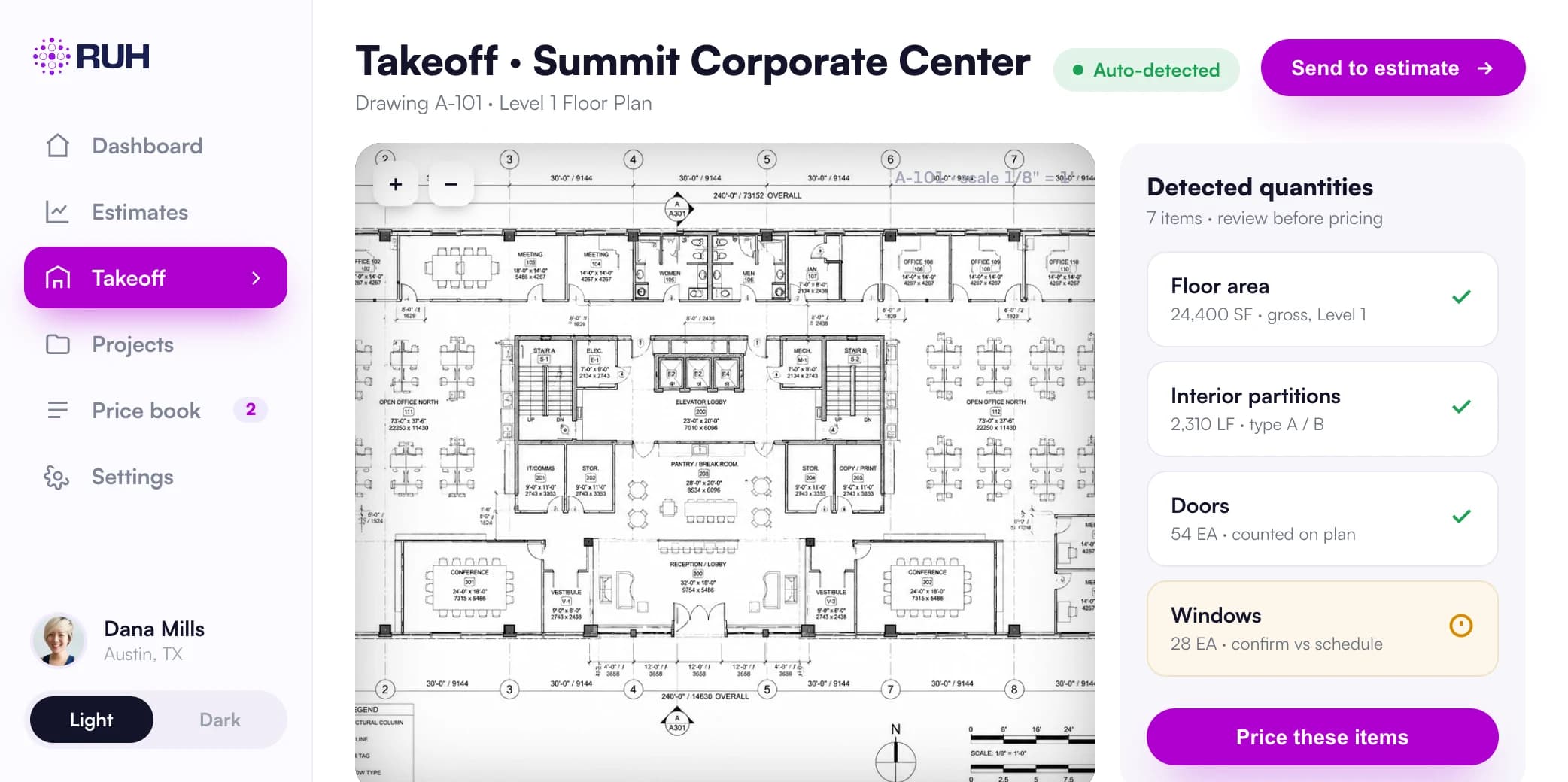
Ruh scans the contractor's drawing set for galvanizing flags in the general notes, schedules, and details, takes off the weight of every member marked HDG, and prices the adder against the contractor's own price book using their real galvanizing and freight rates. The estimator reviews the flagged members and weights, adjusts allowances, and signs off before the number goes into the bid.

See construction estimating software

Galvanizing: frequently asked questions

Does kettle size really limit what can be galvanized?+

Yes. The piece has to fit in the galvanizer's molten zinc kettle, and kettle lengths vary by plant, with many US kettles in the 40 to 60 ft range. Longer members can sometimes be progressively dipped one end at a time, but that adds cost and distortion risk, so check member lengths against the local galvanizer's kettle early and price splices or double dipping if needed.

Can you weld galvanized steel in the field?+

You can, but the heat burns the zinc off around the weld and the fumes are a health hazard that requires ventilation and respiratory protection. The bare area must then be repaired per ASTM A780, usually with zinc rich paint or solder sticks, and inspectors look for that touch-up. Where practical, detail bolted field connections on galvanized work instead.

Why not substitute zinc rich primer for hot-dip galvanizing?+

Paint and hot-dip are not interchangeable. An A123 hot-dip coating is metallurgically bonded, reaches every surface including holes and properly vented hollow sections, and generally outlasts shop paint systems in exterior exposure. The spec dictates the system, so swapping primer for HDG without an approved substitution is a rejection risk at submittal or in the field.

Still measuring by hand? Your next takeoff can run while you review this one.

See it on your plans

Related terms

Keep going: read the full guide or explore construction estimating software.

The Steel and structural estimating cheat sheet
Every unit, waste factor, and conversion on one page. Free PDF.

See Ruh price a bid from your own drawings.

AI takeoff and estimating on your price book, your estimator signs off.

Figures on this page are illustrative. Construction estimates depend on project-specific conditions, source documents, market pricing, and professional judgment. Ruh's AI assists the estimator and does not replace professional review: your team reviews, validates, and approves every estimate, bid, and pricing decision.