Construction glossary · Steel and structural
What is steel channel in construction?
Steel channel is a hot rolled structural shape with a C shaped cross section, made up of a flat web and two parallel flanges that point the same direction. It comes in two series, standard C shapes and MC miscellaneous channels, and the designation reads depth then weight, so a C8x11.5 is 8 inches deep and weighs 11.5 pounds per foot. On commercial jobs it shows up as stair stringers, frames around roof openings, kickers, and other miscellaneous metals, and estimators take it off in linear feet converted to pounds.
Updated June 2026 · Reviewed by the Ruh construction team
Steel channel (C-shape) section
Estimating steel and structural scope this week? Watch Ruh take off a real plan in 30 minutes.
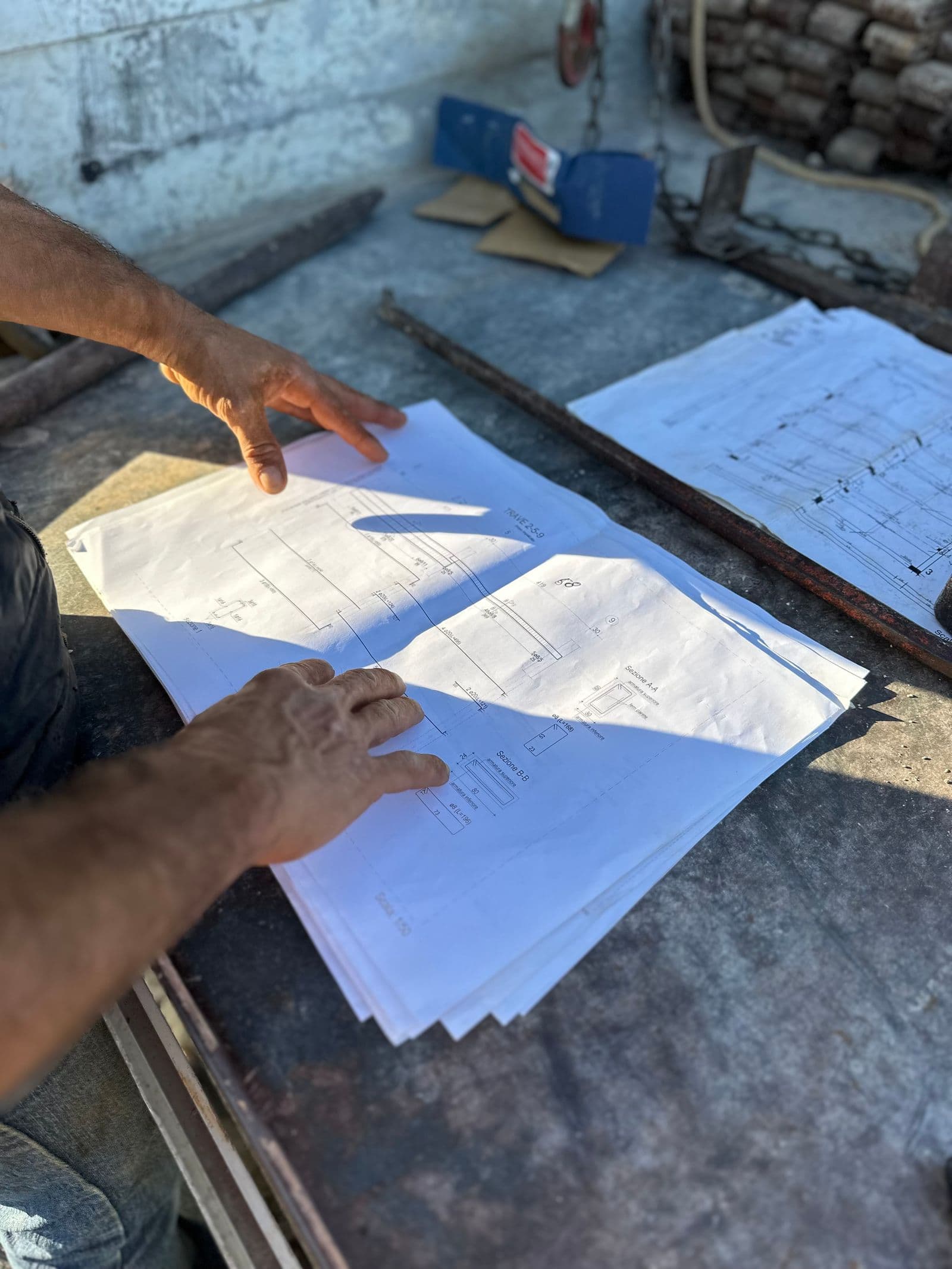
Book a walkthroughSteel channel is the C shaped cousin of the wide flange beam, rolled in two series: standard C shapes and MC miscellaneous channels. The designation reads depth then weight, so a C8x11.5 is 8 inches deep at 11.5 pounds per linear foot, and an MC shape of the same depth has different flange and web dimensions, which means the two are not interchangeable. On commercial work channel rarely sits in the beam schedule with the wide flanges; it hides in the details: stair stringers, headers and frames around roof and floor openings, kickers, braces, lintels, and the metal fabrications specified under Division 05 50 00. The fabricator details it on shop drawings, a miscellaneous metals sub or the steel erector installs it, and the GC's estimator decides which bucket each piece prices in. New estimators trip in predictable spots: reading the second number as a thickness instead of weight per foot, swapping C and MC sections, missing channel that appears only in stair sections and details, and double counting pieces that land in both the structural steel takeoff and the miscellaneous metals allowance.
Channel is taken off in linear feet by shape, then converted to pounds by multiplying length by the weight per foot in the designation, because structural steel prices by weight. Stringer lengths come off the stair plans and sections, opening frames off the roof and floor framing plans, and kickers and braces off the details; little of it sits in a tidy schedule the way beams do, so the takeoff is a sheet by sheet hunt. Estimators round lengths up to the next foot or to mill ordering lengths and often carry a small percentage add for connections and cut waste. Channel on the main framing plans rolls into the structural steel tonnage; channel in stairs, rails, and frames usually lands in the miscellaneous metals allowance or the misc metals sub's number.
Worked example
Take a two story stair with two flights, each flight riding on a pair of C12x20.7 stringers 14 ft long. Step 1, length: 2 flights x 2 stringers x 14 ft = 56 lf. Step 2, weight: 56 lf x 20.7 lb per ft = 1,159.2 lb. Step 3, add C8x11.5 frames around one 6 ft x 4 ft roof opening: perimeter is 2 x (6 ft + 4 ft) = 20 lf, and 20 lf x 11.5 lb per ft = 230 lb. Step 4, total channel: 1,159.2 lb + 230 lb = 1,389.2 lb, and 1,389.2 lb divided by 2,000 lb per ton = 0.695 tons, carried as 0.7 tons. Step 5, price it: at an illustrative fabricated and erected miscellaneous metals rate of $4,500 per ton, 0.7 tons x $4,500 = $3,150. The lengths are pure measurement off the stair sections and roof framing plan; the rate and the rounding are estimator judgment.
Try Ruh on a real bid. 100% money-back guarantee if you are not satisfied.*
*Scoped delivery, terms apply. Read the guarantee terms
How Ruh handles steel channel
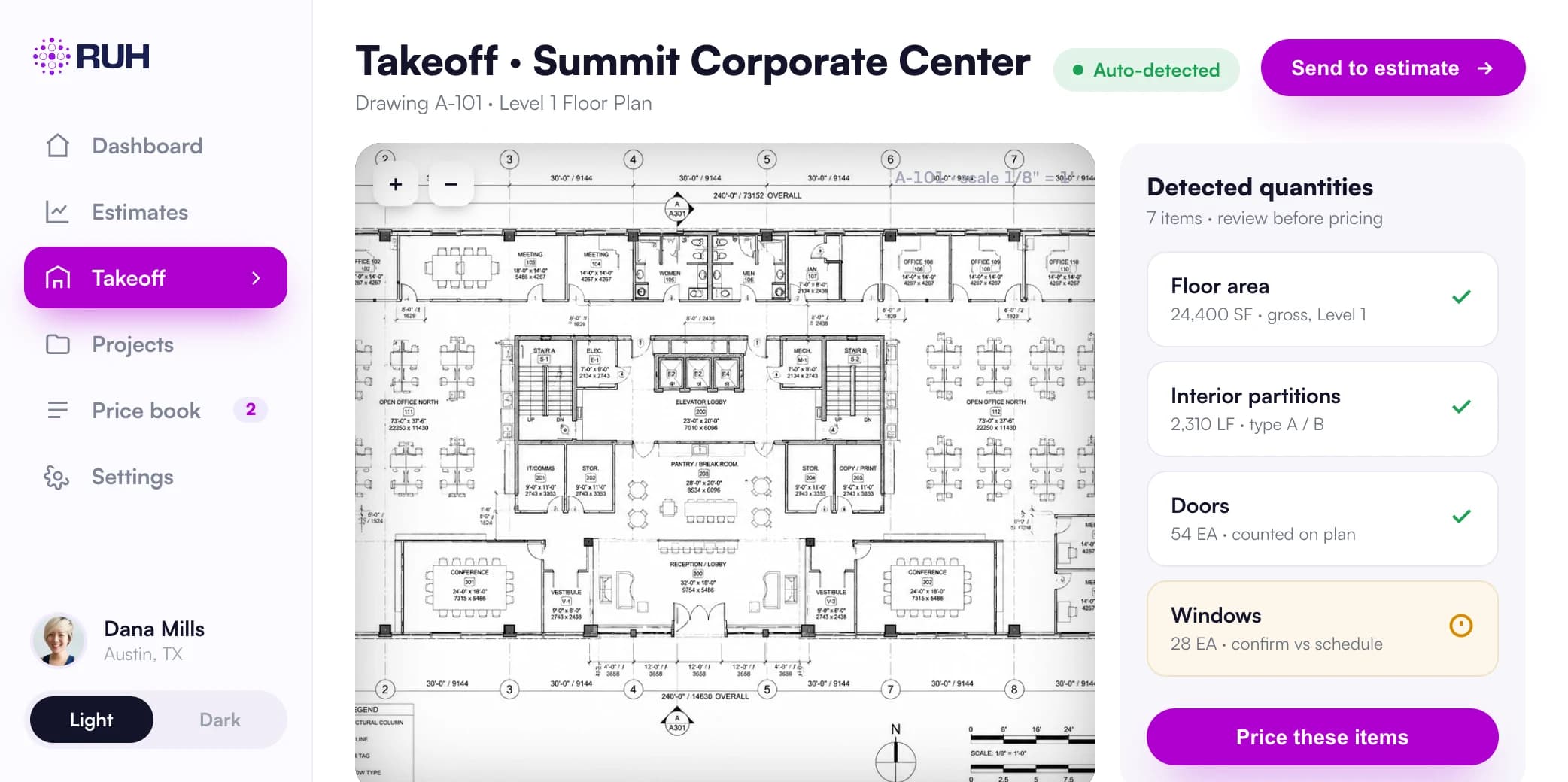
Ruh scans the contractor's drawing set, pulls the channel out of the framing plans, stair sections, and details, and runs the takeoff in linear feet and pounds by shape. It then prices those weights against the contractor's own price book, so the unit costs are the shop's real numbers rather than industry averages. The estimator reviews every measured length, moves pieces between the steel line and the misc metals allowance where needed, and signs off before anything hits the bid.
See construction estimating softwareSteel channel: frequently asked questions
What is the difference between C channel and MC channel?+
Both are channels, but they are rolled to different dimension series. At a given depth an MC (miscellaneous channel) typically carries different flange widths and web thicknesses than the standard C shape, which changes the weight per foot and the connection geometry. They are not drop in substitutes, so take off and price the exact shape the drawings call out; if the fabricator wants to substitute, that goes through the engineer, not the estimate.
Does steel channel belong in the structural steel bid or the miscellaneous metals allowance?+
It depends on where the piece lives. Channel shown on the main framing plans, such as roof opening frames detailed with the structural steel, usually rolls into the steel fabricator's tonnage, while channel in stairs, railings, ladders, and support frames typically prices under the Division 05 50 00 miscellaneous metals scope. The real risk is the seam: pieces that get counted in both numbers, or in neither, so flag every channel line item with the scope it was assigned to.
How do I convert channel linear feet into weight for pricing?+
Multiply the length by the weight per foot built into the designation. For example, 40 lf of C10x15.3 is 40 x 15.3 = 612 lb, or about 0.31 tons. Most estimators then add a connection and waste allowance, often in the range of 5 to 10 percent on miscellaneous metals, because clip angles, plates, and drops do not show up in the neat length.
Still measuring by hand? Your next takeoff can run while you review this one.
See it on your plansRelated terms
Keep going: read the full guide or explore construction estimating software.
See Ruh price a bid from your own drawings.
AI takeoff and estimating on your price book, your estimator signs off.
Figures on this page are illustrative. Construction estimates depend on project-specific conditions, source documents, market pricing, and professional judgment. Ruh's AI assists the estimator and does not replace professional review: your team reviews, validates, and approves every estimate, bid, and pricing decision.