What goes into a construction cost estimate?
Every construction estimate, from a napkin number to a 400-line bid, is built from the same parts: quantities of work, prices applied to those quantities, and allowances for everything that is not a direct quantity, such as supervision, overhead, risk, and profit. The estimate is only as strong as its weakest part. A perfect takeoff priced with stale labor rates misses just as badly as sloppy quantities priced with perfect rates.
A useful way to think about it: the quantity takeoff answers "how much work is there," the pricing step answers "what does each unit of that work cost me," and the closing steps answer "what must I charge so the company survives the job and earns something for the risk."
Step 1: review the scope before you measure anything
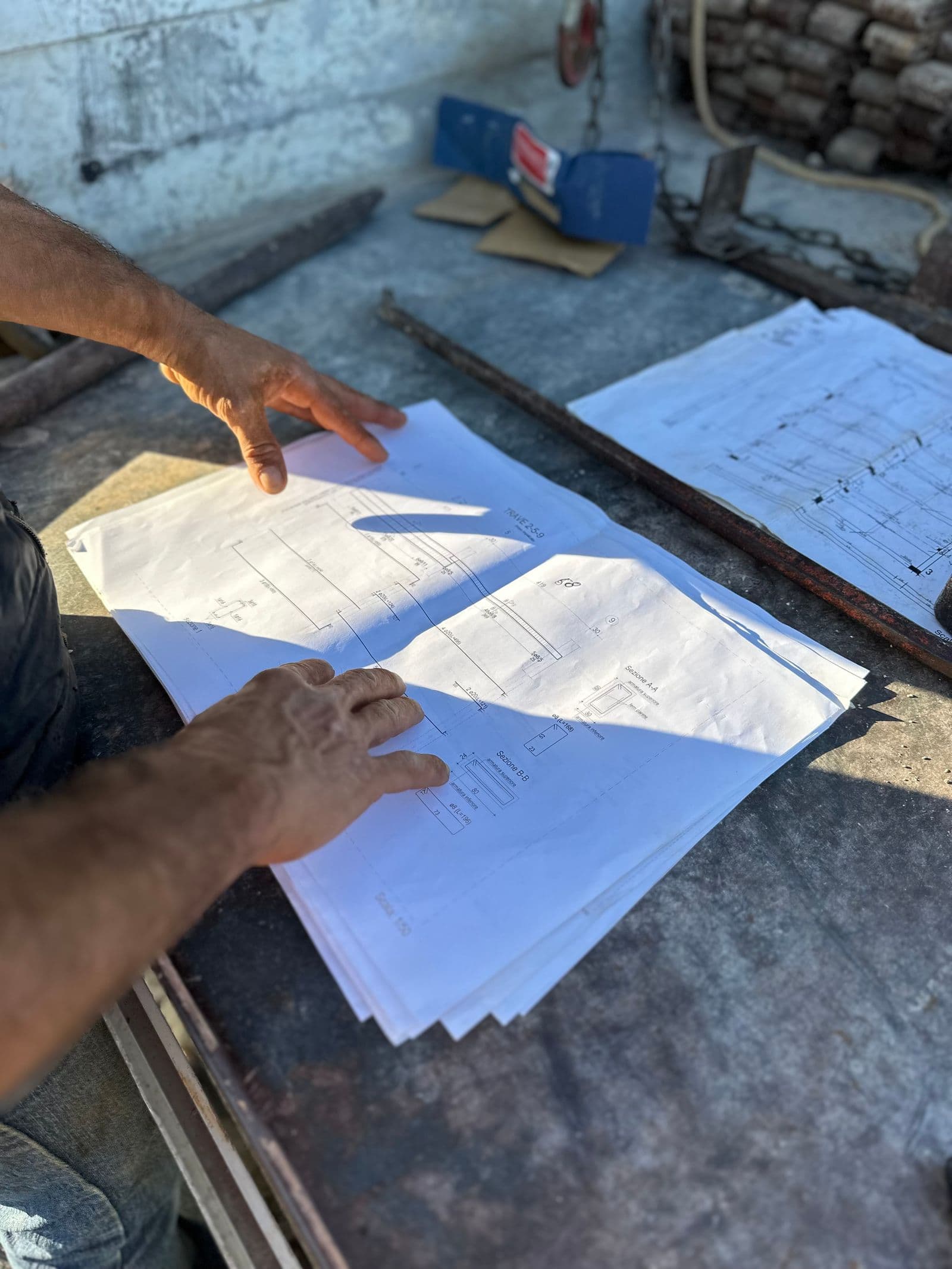
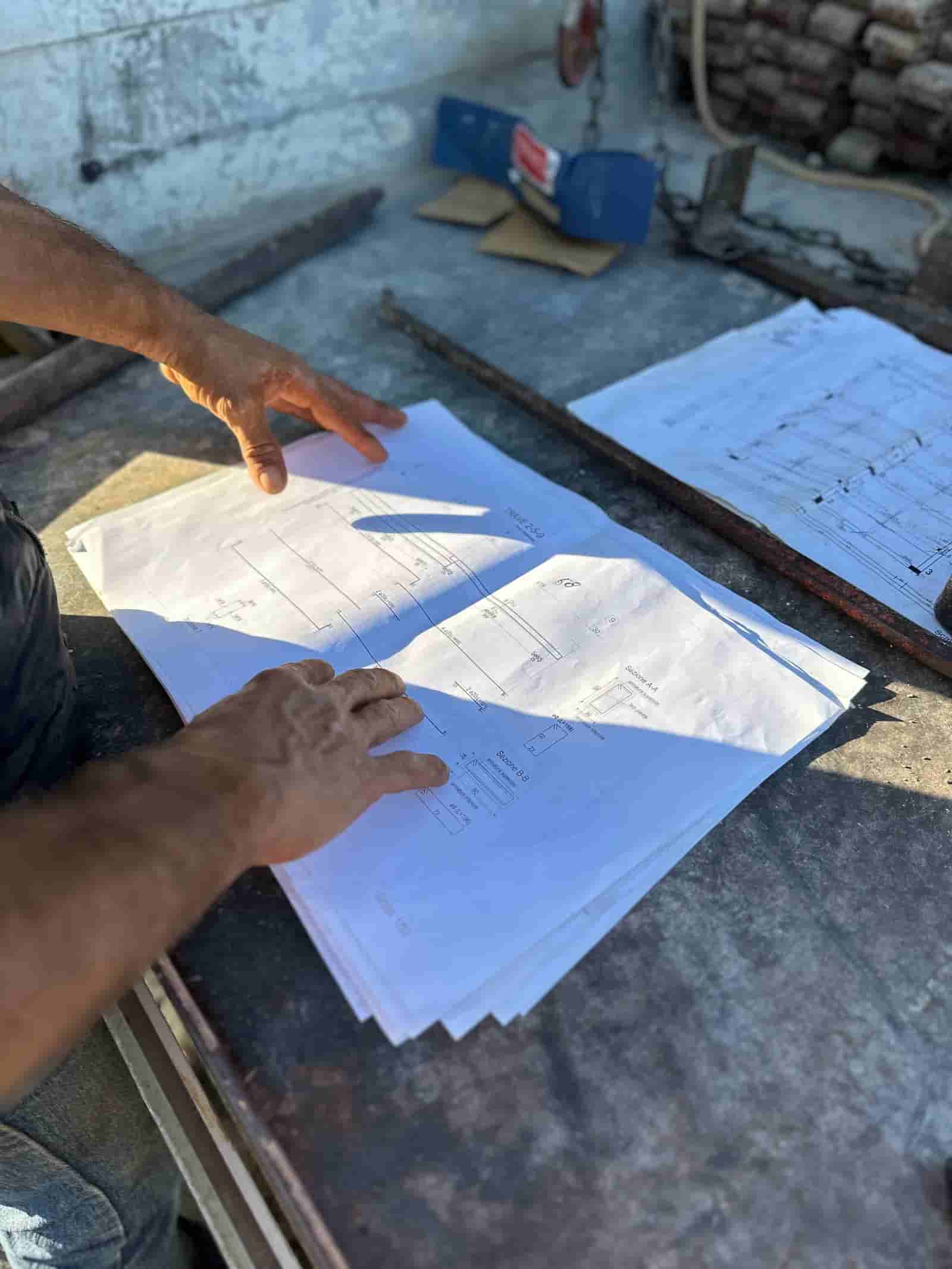
Read the drawing index, the general notes, and the specifications before opening a single plan sheet. The goal is to understand what is in your scope, what is excluded, and where the documents disagree with each other. Note the addenda. An estimate built on superseded drawings is wrong before the first quantity lands.
Practical habits that prevent expensive misses: build a checklist of divisions touched by the project, mark scope boundaries with the trades next to yours (who owns the rebar, who owns the embeds), and start an RFI list for anything ambiguous. Questions cost nothing during bidding and a fortune after award.
Step 2: perform the quantity takeoff
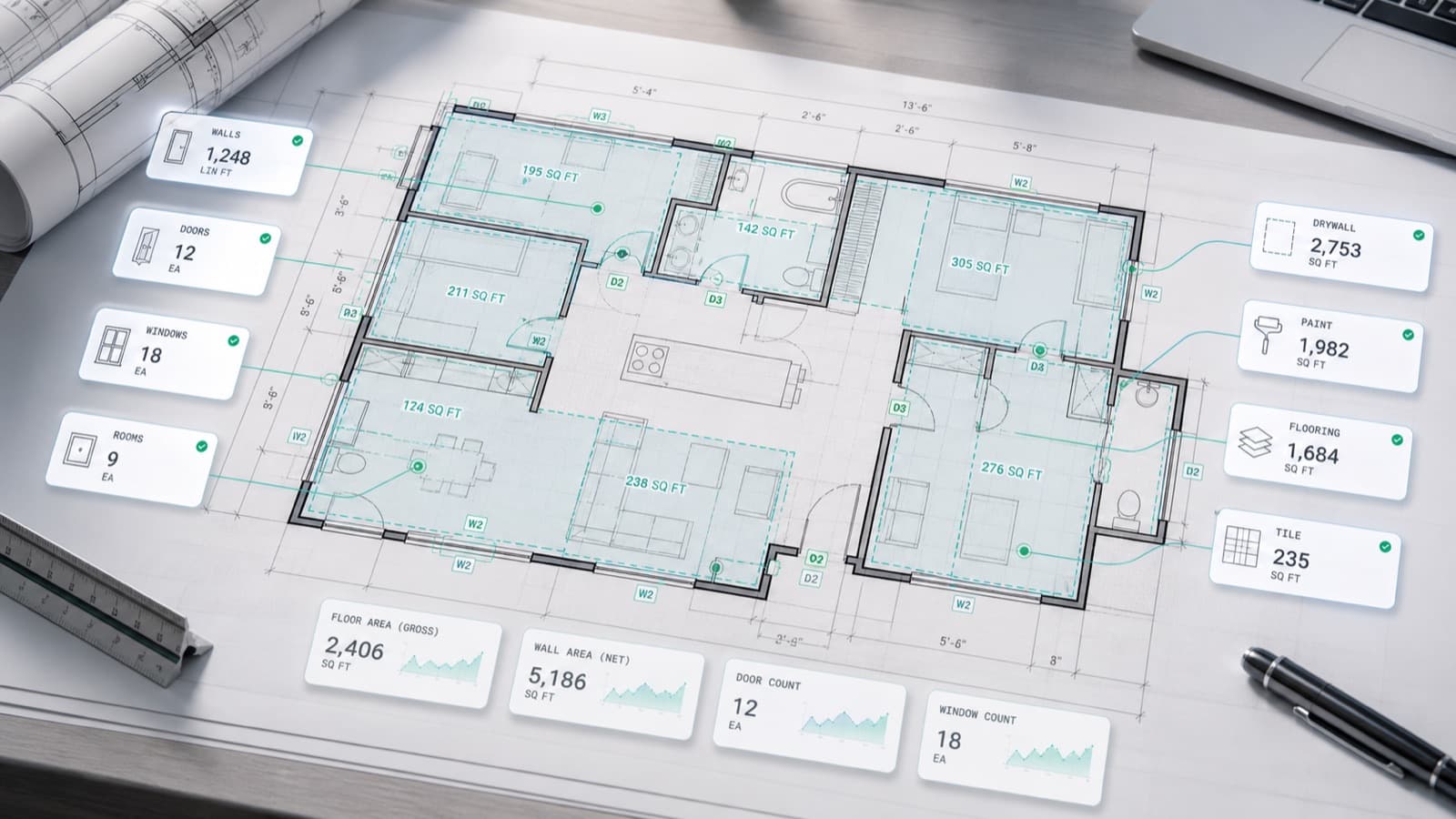
The takeoff converts drawings into measurable quantities: each (ea) for counted items, linear feet (lf) for runs, square feet (sf) for areas, and cubic yards (cy) for volumes. Work systematically, one trade or one CSI division at a time, and record the sheet number behind every quantity so the number can be traced and defended later.
A short example of the discipline involved. A slab on grade measures 120 ft by 80 ft at 5 in thick. Area: 120 x 80 = 9,600 sf. Volume: 5 in is 5/12 ft, so 9,600 sf x 5/12 = 4,000 cf. Convert: 4,000 / 27 = 148.1 cy. Add 8 percent waste: 148.1 x 1.08 = 160.0, carried as 160 cy. Five numbers, each one checkable. A full guide to this step lives in how to do a construction takeoff.
Waste factors deserve respect: drywall, lumber, and concrete all lose material to cuts, spillage, and field conditions. Typical allowances run 5 to 15 percent depending on the material and the complexity of the layout, and the right number comes from your own job history, not a textbook.
Step 3: price labor, material, and equipment
Each quantity gets extended against a unit cost, which bundles the labor, material, and equipment needed to put one unit of work in place. Material prices come from current supplier quotes, labor from your crew rates and production tracking, and equipment from owned-cost schedules or rental quotes.
The math itself is simple multiplication. The judgment is in the rates. A drywall unit price assumes a production rate (how many sf a crew hangs and finishes per hour) and a burdened labor cost (wages plus taxes, insurance, and benefits). If either assumption is off by 10 percent, every drywall line in the estimate is off by the same amount. This is why estimators guard their historical cost data so carefully: your own price book, built from your own completed jobs, beats any national average.
Worked example, continuing the slab: 161 cy of 4,000 psi mix at an illustrative $185 per cy delivered is 161 x 185 = $29,785 material. Place and finish labor at an illustrative $3.10 per sf over 9,600 sf adds 9,600 x 3.10 = $29,760. Pump rental for the pour day, say $1,800. The slab package lands around $61,345 before overheads, and every component of that number traces back to either a measurement or a rate you can defend.
Step 4: add project overheads
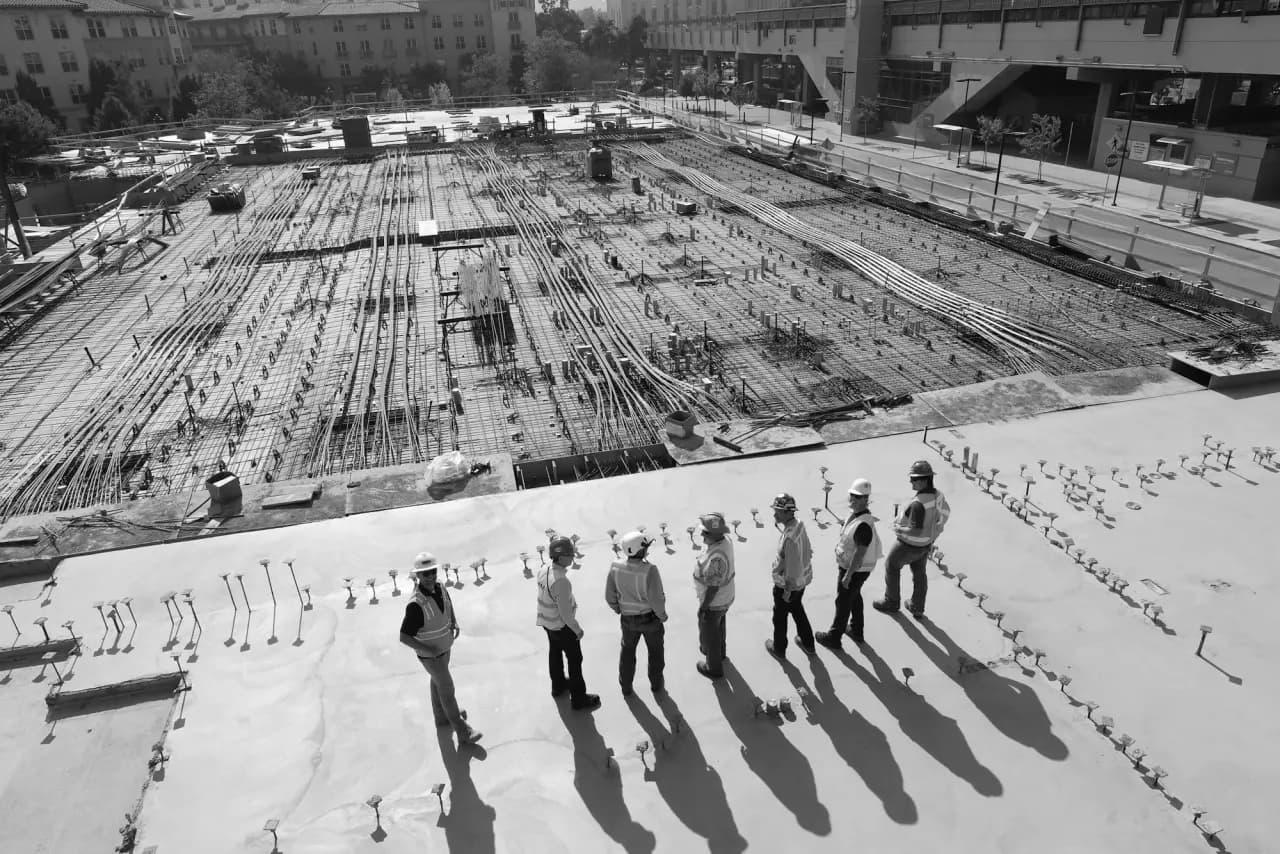
Direct costs are not the whole job. General conditions carry the cost of running the project itself: supervision, the trailer, temporary utilities, dumpsters, safety, cleanup. These are usually priced against the schedule rather than the drawings, because most of them are time-driven. A superintendent at an illustrative $12,000 per month on a 10 month job is $120,000 that no plan sheet will ever show you.
Estimate general conditions as their own mini-estimate with a line for every time-driven and task-driven item. Lump-sum guessing here is one of the most common ways otherwise healthy bids lose money.
Step 5: apply markup, contingency, and assemble the bid
The final layer turns cost into price. Markup covers home-office overhead and profit, and contingency prices the risk that remains in the documents and the site. On a hard bid from complete drawings the contingency is small and the competitive pressure is high; on a budget from 60 percent drawings the contingency is the most honest line in the estimate.
Keep the layers explicit: direct cost, general conditions, contingency, markup, bond, tax. When each layer is visible, a bid review meeting can challenge any of them on its own merits, and post-award cost tracking can compare actuals against the exact assumption that was made.
The 4 types of estimates, by accuracy
Estimates get more accurate as design gets more complete, and the industry names the stages. A rough order of magnitude or ROM estimate prices a concept, often from cost per square foot, and carries the widest range. A square foot estimate refines that with a defined building size and type. Assembly estimating prices building systems (a wall assembly per lf, a roof assembly per sf) when drawings are partial. A detailed unit cost estimate, built from a full takeoff, is the bidding standard and the most accurate of the four.
Choosing the right type for the design stage matters in both directions: a detailed estimate from 30 percent drawings manufactures false precision, while a square foot number carried into a hard bid is negligence.
Where estimates go wrong
The same failure patterns repeat across companies. Scope gaps: work that is in the specs but not on the plans, or visible only in a detail nobody opened. Stale pricing: material quotes that expired or labor rates that no longer match the market. Math and unit errors: sf priced as sy, cf never converted to cy, a waste factor applied twice or not at all. Missed addenda: quantities pulled from drawings that were revised during bidding. And schedule blindness: general conditions priced for 8 months on a job that will take 12.
Two habits catch most of these: a second set of eyes on the takeoff against a scope checklist, and a bid review that walks the estimate top down comparing each major system against historical cost per sf benchmarks. When a number disagrees with history, one of them is wrong, and it is cheaper to find out before bid day.
How software and AI change the workflow
Digital takeoff tools replaced the scale ruler years ago; the current shift is AI doing the measuring itself. Ruh reads the drawing set, performs the takeoff, and drafts a priced estimate against your own price book rather than generic cost data, with every quantity traceable back to its sheet. The estimator's job concentrates where it always belonged: checking scope boundaries, challenging assumptions, pricing risk, and signing off. Teams that adopt this split, machine measures and human judges, get faster turnaround on more bids without surrendering control of a single number. You can see the workflow on your own plans with construction estimating software built for exactly this division of labor.
The fundamentals in this guide do not change with the tooling. Quantities, defensible rates, explicit overheads, honest risk pricing. A tool that accelerates those steps is leverage; a tool that hides them is a liability. Estimate accordingly.
Try Ruh on a real bid. 100% money-back guarantee if you are not satisfied.*
*Scoped delivery, terms apply. Read the guarantee terms
Frequently asked questions
What are the 5 steps to estimate construction costs?+
Review the scope documents, perform the quantity takeoff, price the quantities (labor, material, equipment), add project overheads like general conditions, then apply markup and contingency to assemble the bid. Skipping or rushing any one step shows up later as margin erosion.
What is the most accurate construction estimating method?+
A detailed unit cost estimate built from a complete quantity takeoff is the most accurate method, typically used for bidding. Conceptual methods like square foot or assembly estimating trade accuracy for speed and are appropriate earlier in design when drawings are incomplete.
How long does a construction estimate take?+
It scales with the size of the drawing set and the level of detail. The takeoff is usually the largest share of the effort on a detailed bid, which is why takeoff automation has the biggest impact on turnaround time. The pricing and review steps still need an experienced estimator regardless of how the quantities were produced.
What should a contingency be on a construction estimate?+
It depends on design completeness and risk. Early conceptual estimates carry larger design contingencies, while a hard bid from complete documents carries a smaller construction contingency. The discipline is to state the contingency explicitly as its own line rather than burying padding inside unit prices.
Can AI estimate construction costs?+
AI can now read drawings, perform the takeoff, and draft a priced estimate against your own cost data, which removes most of the manual measuring. It does not replace the estimator: scope interpretation, means and methods, risk pricing, and final sign-off remain human decisions on every bid.
Still pricing in a spreadsheet? Your price book, automated end to end. Your estimator signs off.
See it runTerms used in this guide
Figures on this page are illustrative. Construction estimates depend on project-specific conditions, source documents, market pricing, and professional judgment. Ruh's AI assists the estimator and does not replace professional review: your team reviews, validates, and approves every estimate, bid, and pricing decision.