
Construction glossary · Process and contract terms
What is addendum in construction?
An addendum is a formal written revision to the bidding documents that the architect or owner issues during the bid period, before bids are due. It can change drawings, specifications, or the instructions to bidders, and it becomes part of the contract documents that every bidder must price. Addenda are numbered sequentially and distributed to all plan holders so every contractor is bidding the same scope.
Updated June 2026 · Reviewed by the Ruh construction team
How an addendum changes a bid
Estimating process and contract terms scope this week? Watch Ruh take off a real plan in 30 minutes.
Book a walkthroughAn addendum is the design team's official mechanism for changing bid documents after they hit the street but before bids are due. Architects and owners issue addenda to fix drawing errors, answer pre-bid RFIs, swap specified products, add or delete scope, or move the bid date itself. Each one becomes part of the contract documents, so the low bidder is bound by every addendum whether or not anyone on the bid team actually read it. You will see addenda land in the plan room or bid portal as numbered packages: a cover letter, revised drawing sheets, and reissued spec sections. The classic rookie mistakes are pricing from a superseded sheet because the revision was never logged, forgetting to acknowledge all addenda on the bid form (which can get the bid thrown out as non-responsive), and treating a late addendum as a clarification when it actually adds scope. Keep a running addendum log with numbers, dates, and affected sheets, and reconcile it against the bid portal the morning of bid day.
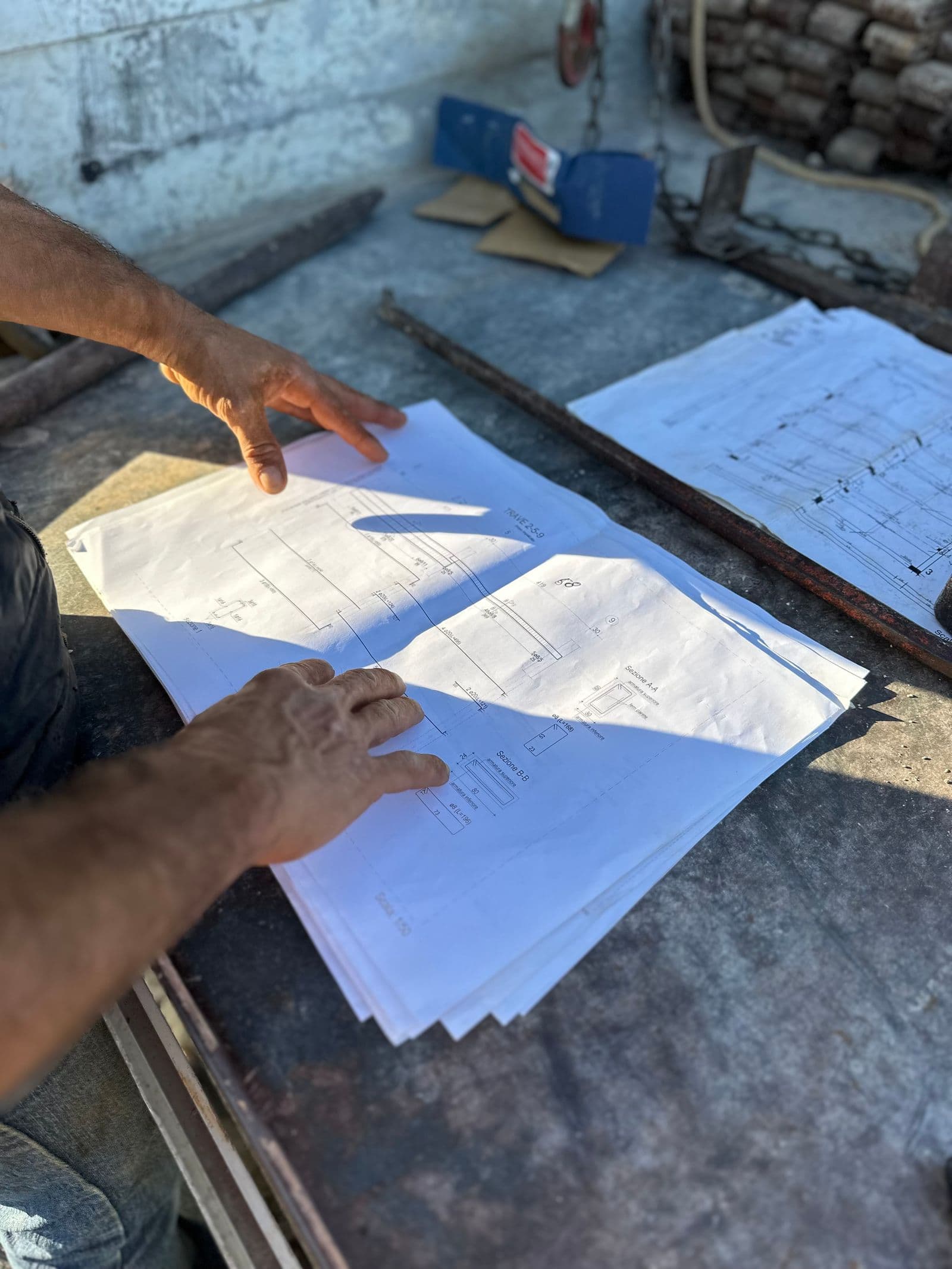
Addenda are not measured in units. They are tracked by number and date, and their cost impact is quantified as deltas to existing line items. Each addendum is numbered sequentially (addendum 1, addendum 2, addendum 3) and the bid form has blanks to acknowledge every one by number and date. To quantify the impact, compare the reissued sheets or spec sections against the originals, run a takeoff on just the affected areas, and price the difference. Revised sheets usually carry a revision cloud and a delta tag, which tells you exactly where to look. In the estimate, tag every changed line item with the addendum number so you can defend the price later. The impact ranges from zero dollars (a pure clarification) to a full re-takeoff of an entire division.
Worked example
Say addendum 3 revises spec section 09 91 23 (interior painting) on an office renovation, upgrading all corridor walls from one prime coat plus two coats of latex to one prime coat plus two coats of epoxy. Your takeoff shows 18,500 sf of corridor wall. Your price book carries latex at an illustrative $1.10 per sf applied and epoxy at $1.65 per sf applied, labor and material included. Original corridor paint: 18,500 sf x $1.10 per sf = $20,350. Revised: 18,500 sf x $1.65 per sf = $30,525. Delta: $30,525 minus $20,350 = $10,175 add. Then check whether the epoxy system requires a different primer. If it does, at an illustrative $0.15 per sf premium, that is 18,500 sf x $0.15 per sf = $2,775 more, bringing the total add to $12,950. Update the affected line items, note "per addendum 3" on each, and acknowledge addendum 3 on the bid form.
Try Ruh on a real bid. 100% money-back guarantee if you are not satisfied.*
*Scoped delivery, terms apply. Read the guarantee terms
How Ruh handles addendum
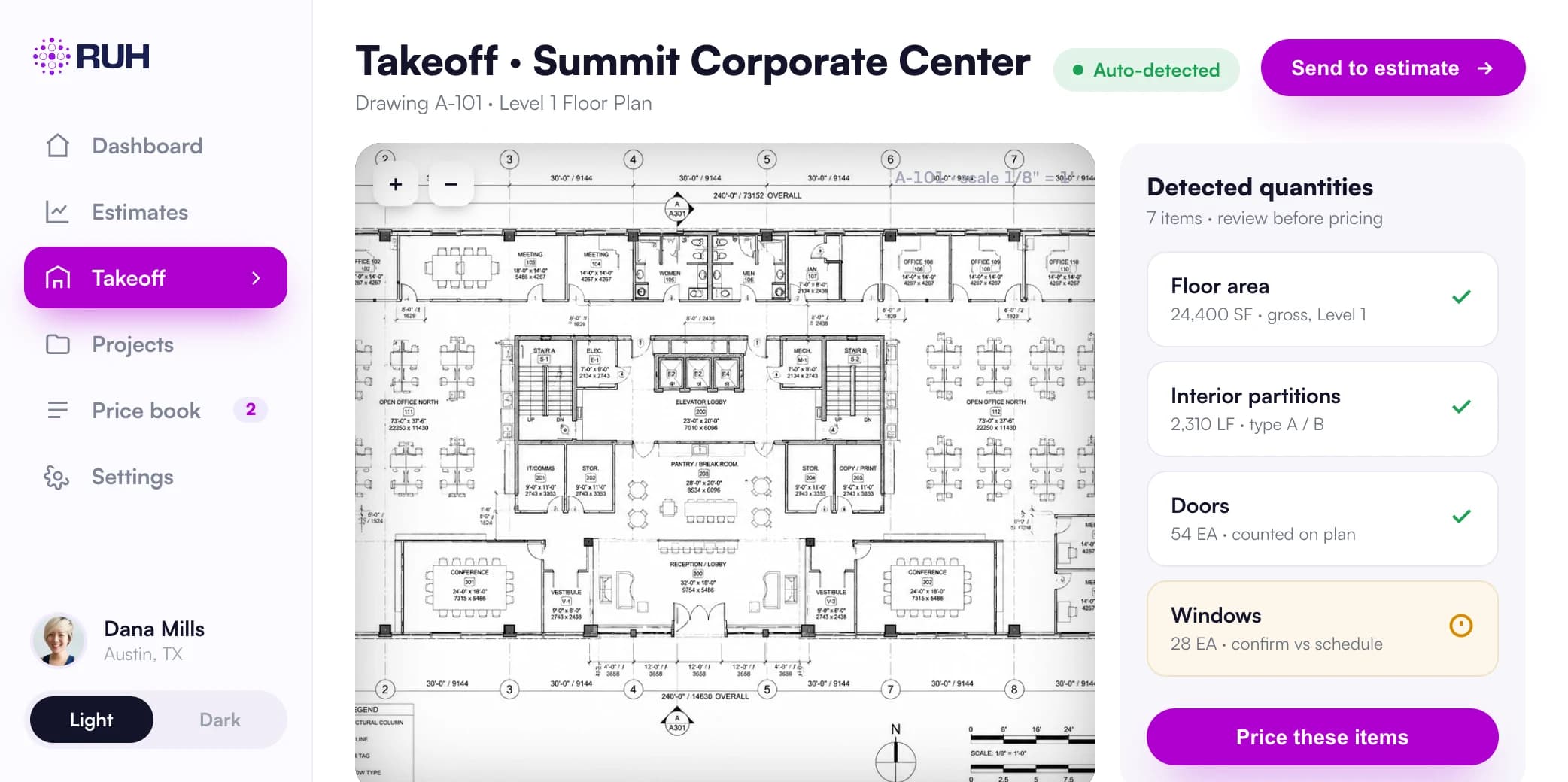
When an addendum drops, you load the revised sheets and reissued spec sections into Ruh, and it re-reads the drawings, reruns the takeoff on the affected areas, and prices the deltas against your own price book rather than generic unit costs. It hands back a line-item draft with the changed quantities flagged, so bid-day pressure goes into judgment calls like acknowledging addenda and vetting sub coverage instead of re-measuring walls. The estimator still reviews, adjusts, and signs off on every number.
See construction invoice and pay app softwareAddendum: frequently asked questions
What is the difference between an addendum and a change order?+
An addendum changes the bid documents before the contract is signed, so its cost is baked into every bidder's competitive number. A change order modifies the contract after award and is negotiated between the owner and the contractor as an add or deduct. The content can look identical, but the commercial position is completely different: addenda are priced under competition, change orders are not.
Do I have to acknowledge addenda on my bid form?+
On nearly all public work and most private hard bids, yes. The bid form has spaces to list each addendum by number and date, and missing one can render the bid non-responsive, meaning it gets rejected without the price even being read. Confirm the addendum count against the bid portal or the architect's office an hour or two before the deadline, because a final addendum sometimes drops the day before bids.
What should I do if an addendum is issued a day or two before the bid date?+
Ask for an extension. Most instructions to bidders let the owner push the bid date, and a substantive addendum issued 24 to 48 hours before the deadline is a legitimate reason to request one. If no extension comes, isolate the changed scope, re-price only the affected line items, and document any assumption you could not verify in the time available.
Still measuring by hand? Your next takeoff can run while you review this one.
See it on your plansRelated terms
Keep going: read the full guide or explore construction invoice and pay app software.
See Ruh price a bid from your own drawings.
AI takeoff and estimating on your price book, your estimator signs off.
Figures on this page are illustrative. Construction estimates depend on project-specific conditions, source documents, market pricing, and professional judgment. Ruh's AI assists the estimator and does not replace professional review: your team reviews, validates, and approves every estimate, bid, and pricing decision.