100% money-backBook a walkthrough

Construction glossary · Process and contract terms

What is subcontractor in construction?

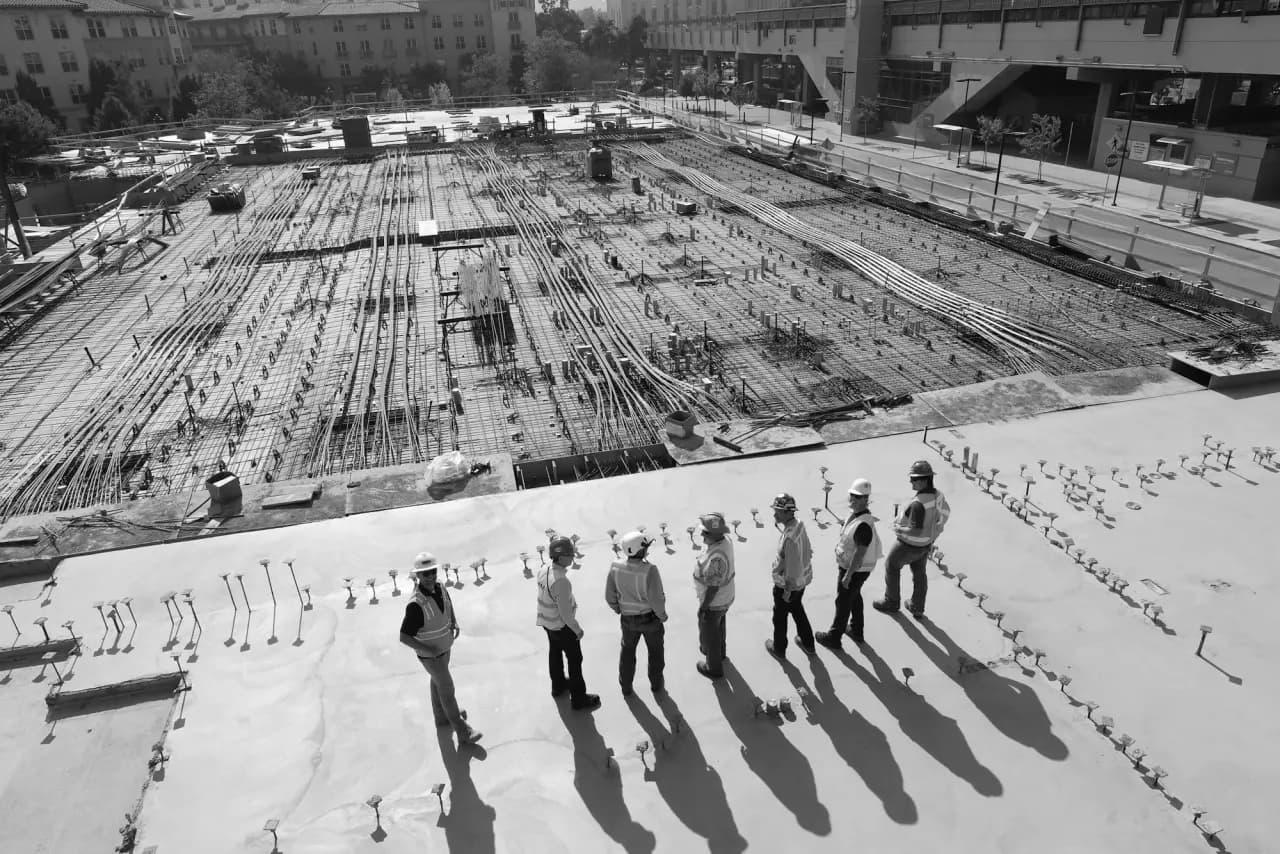
A subcontractor is a specialty trade contractor hired by the general contractor, not the owner, to perform a defined scope of work on a project, such as electrical, plumbing, or drywall. The general contractor holds the prime contract with the owner and buys out the job as scope packages, each one covered by a subcontract agreement. On a typical US commercial project, subcontractors perform most of the field work while the GC coordinates schedule, contracts, and payment.

Updated June 2026 · Reviewed by the Ruh construction team

Contracts with the GC, not ownerPerforms one trade scopeBills via sub pay apps

Where the subcontractor sits

GC issues scope/RFQSub bids the tradeGC awards subcontractSub performs & bills GCTrade specialist contracted under the GC

Estimating process and contract terms scope this week? Watch Ruh take off a real plan in 30 minutes.

Book a walkthrough
Definition

A subcontractor (sub) is a trade firm that contracts with the general contractor rather than the owner. The GC breaks the project into scope packages that usually track the spec divisions (concrete, structural steel, mechanical, electrical) and buys each package from the sub market, typically on a subcontract form such as the AIA A401 that flows down the terms of the prime contract. For an estimator, subs show up at bid time. You issue invitations to bid, define each scope package, collect quotes, and carry the best leveled number in the estimate. The classic rookie mistakes: taking the lowest bid without reading inclusions and exclusions, letting scope fall into the gap between two packages (who furnishes hollow metal frames versus who installs them), and double-counting items that two subs both carried. A sub bid is only as good as its scope letter, so leveling bids against a scope checklist is part of the estimate, not an extra step.

How it is measured

Subcontractor pricing arrives as a lump sum per scope package, sometimes supported by unit prices such as dollars per square foot of drywall or dollars per plumbing fixture. The numbers live in bid proposals and scope letters during pricing, then in the subcontract value and schedule of values after award. Estimators do not just accept the number. You run your own takeoff of the package (square feet of partition, tons of steel, fixture counts) so each quote can be sanity-checked in unit cost terms, for example a $400,000 drywall bid across 30,000 SF of partition is about $13.33 per SF of wall, which you compare against your historical range. The leveled sub number is then carried on its estimate line and marked up with the GC's general conditions, insurance, bond, and fee.

Worked example

Worked example

You are buying the drywall package and three sub bids land: Sub A at $396,000, Sub B at $415,000, and Sub C at $424,000. The raw numbers say take Sub A. Now read the scope letters. Sub A excludes scaffolding, in-wall blocking, and the Level 5 finish at the lobby. Sub B excludes blocking only. Sub C is complete per your scope checklist. From your own takeoff you assign illustrative plug values: scaffolding $9,500, blocking $12,000, Level 5 finish $7,500. Leveling the bids: Sub A becomes $396,000 + $9,500 + $12,000 + $7,500 = $425,000. Sub B becomes $415,000 + $12,000 = $427,000. Sub C stays at $424,000. After leveling, the apparent high bidder is actually the best number, and the true spread is about $3,000 instead of $28,000. Carry $424,000, and confirm Sub C bid per plans and specs before award.

100%

Try Ruh on a real bid. 100% money-back guarantee if you are not satisfied.*

*Scoped delivery, terms apply. Read the guarantee terms

Start with a walkthrough
How Ruh handles it

How Ruh handles subcontractor

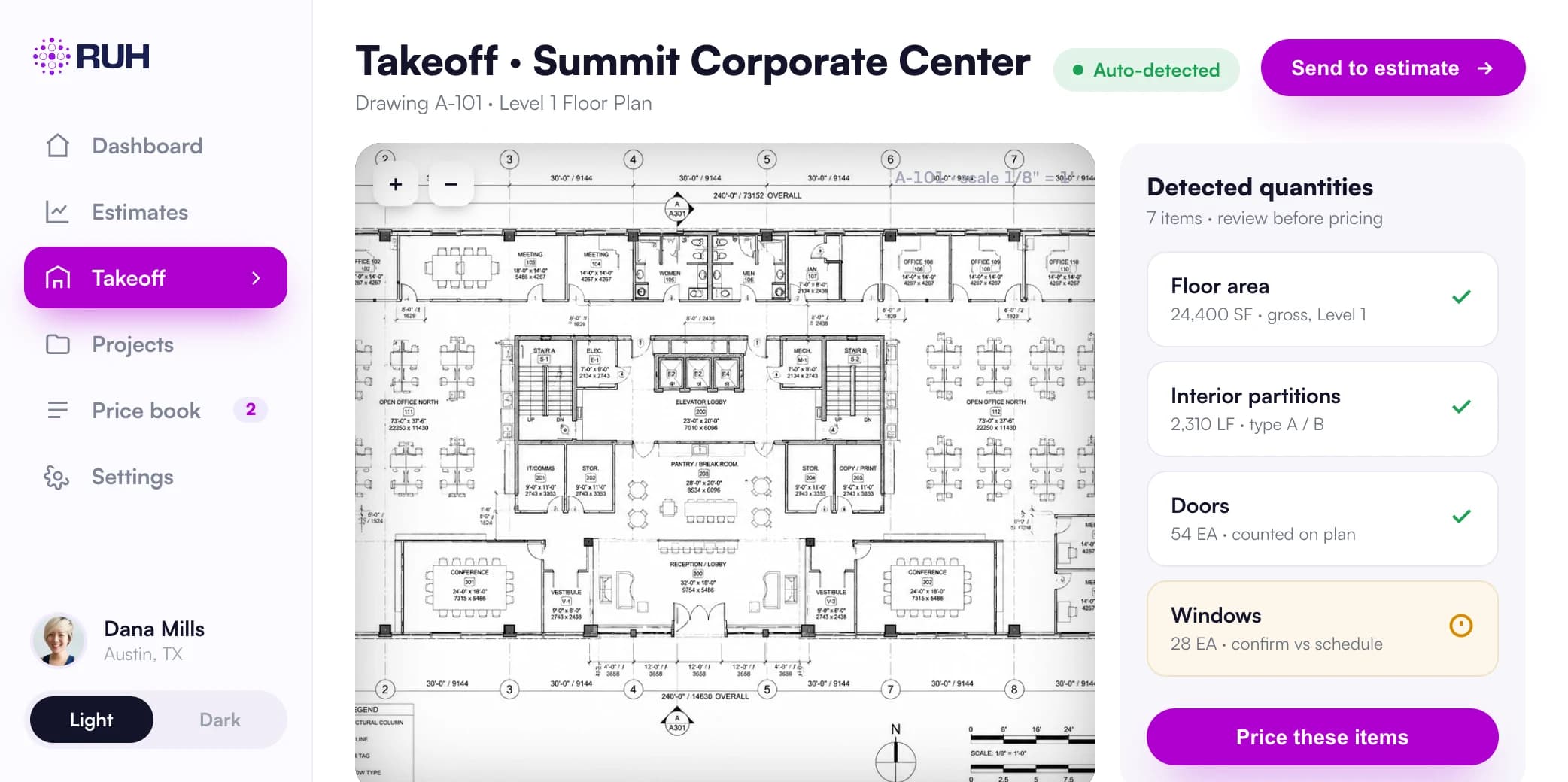
Ruh reads the drawings and runs the takeoff for each scope package, then prices the quantities against the contractor's own price book, so the estimator has independent quantities and unit costs in hand before sub bids arrive. That gives you a defensible plug value for every exclusion when you level subcontractor bids, instead of guessing what missing scaffolding or blocking is worth. The estimator still reads each scope letter, makes the leveling calls, and signs off on the number that gets carried.

See construction invoice and pay app software

Subcontractor: frequently asked questions

What is the difference between a subcontractor and a general contractor?+

The general contractor holds the prime contract with the owner and is responsible for the whole project: schedule, coordination, safety, and delivering the complete building. A subcontractor contracts with the GC for one defined scope, such as roofing or electrical, and answers to the GC rather than the owner. Money follows the same chain, owner to GC to sub, which is why pay applications and lien waivers track that hierarchy.

What is a scope package in subcontractor bidding?+

A scope package is the bundle of work a GC defines for bidding to a single trade, usually organized around CSI divisions or spec sections, for example Division 09 finishes split into drywall, flooring, and painting packages. The estimator writes a scope sheet listing inclusions, exclusions, and which shared items (hoisting, layout, cleanup) belong to that trade. Tight package definitions are what prevent scope gaps and double coverage between subs.

How many subcontractor bids should an estimator get for each trade?+

Three bids per trade is a common working target on US commercial projects, enough to see where the market is without drowning in leveling work, though specialty scopes sometimes return only one or two. Coverage matters most on the big dollar packages, typically mechanical, electrical, and plumbing, because a bad number there moves the whole estimate. If only one bid shows up, check it against your own takeoff and unit costs before carrying it.

Still measuring by hand? Your next takeoff can run while you review this one.

See it on your plans

Related terms

Keep going: read the full guide or explore construction invoice and pay app software.

The Process and contract terms estimating cheat sheet
Every unit, waste factor, and conversion on one page. Free PDF.

See Ruh price a bid from your own drawings.

AI takeoff and estimating on your price book, your estimator signs off.

Figures on this page are illustrative. Construction estimates depend on project-specific conditions, source documents, market pricing, and professional judgment. Ruh's AI assists the estimator and does not replace professional review: your team reviews, validates, and approves every estimate, bid, and pricing decision.