100% money-backBook a walkthrough

Construction glossary · Units of measure

What is PSI (pounds per square inch) in construction?

PSI (pounds per square inch) is the unit US construction uses to measure pressure and stress, and on commercial projects it most often describes the compressive strength of concrete. A 4,000 psi mix must withstand 4,000 pounds of force on each square inch, verified by breaking field-cast cylinders at 28 days. Estimators use the psi values on the structural drawings to separate concrete quantities by mix strength and price each class at its own unit cost.

Updated June 2026 · Reviewed by the Ruh construction team

PSI = lb per sq inSlab mix 3,000-4,000 psiMeasured at 28 days

Concrete strength on the PSI scale

2,500 psi3,000 psi4,000 psi5,000 psi6,000 psi4,000 psi typical structural mix

Estimating units of measure scope this week? Watch Ruh take off a real plan in 30 minutes.

Book a walkthrough
Definition

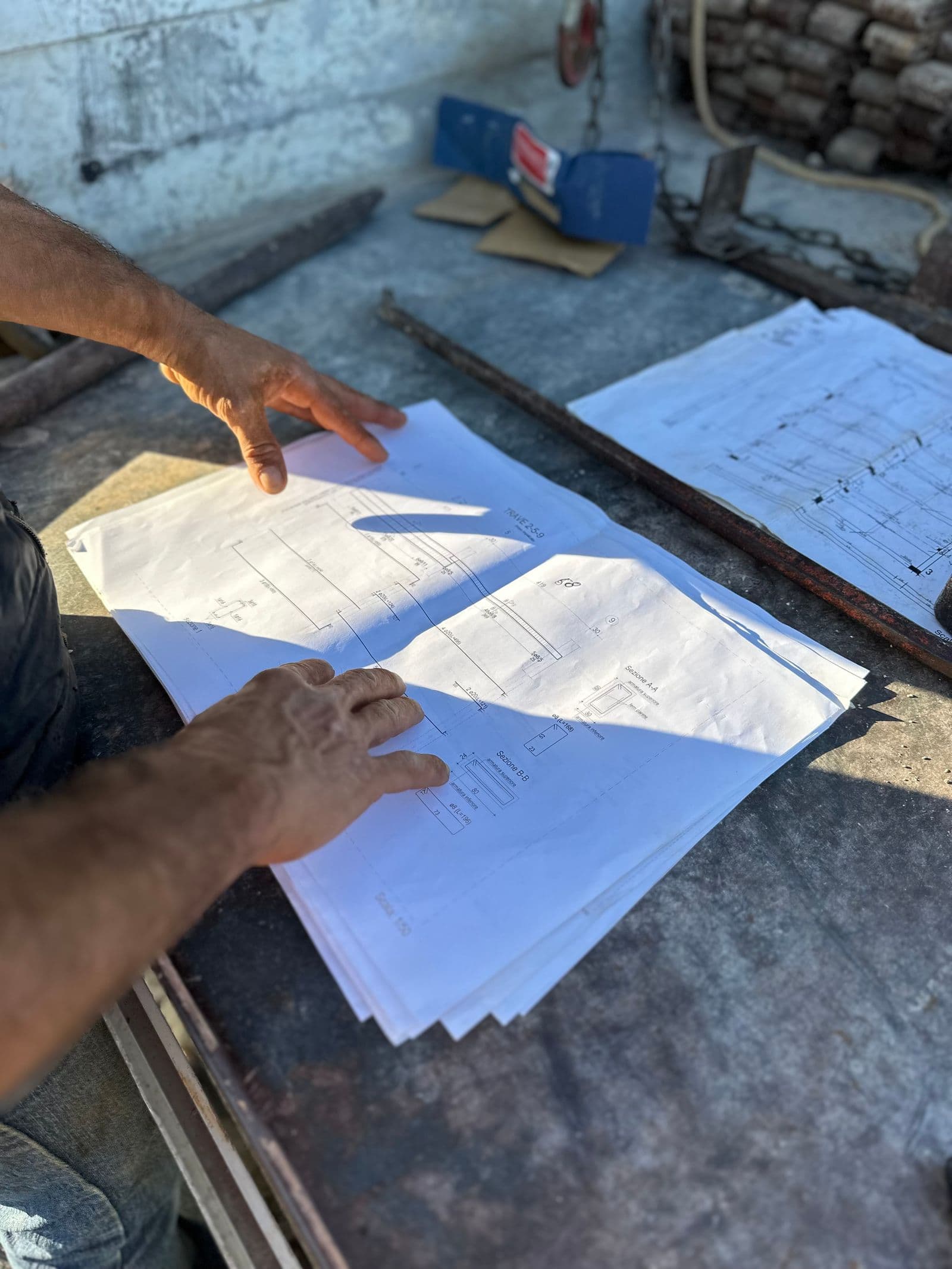
Pounds per square inch (psi) is the standard US unit for pressure and stress, and in commercial estimating it most often means the specified compressive strength of concrete, shown as f'c on the structural drawings. You will find it in the general structural notes (usually a table assigning a strength to each element: 3,000 psi footings, 4,000 psi slabs, 5,000 psi columns), in the Division 03 cast-in-place concrete spec (section 03 30 00), and in ready-mix quotes, which price each strength class separately. It also shows up outside concrete: pipe pressure tests, pneumatic system ratings, and grout strengths. The structural engineer sets the value, the testing lab verifies it, and the estimator prices by it. The classic new-estimator mistakes: carrying one concrete unit price across every psi class, missing the mix attributes that travel with the psi callout (air entrainment, water-cement ratio, fly ash or slag content) and often move price more than strength does, and confusing psi with psf, which is how the geotech report states soil bearing capacity.

How it is measured

Psi is pounds of force divided by square inches of area, so a 4,000 psi cylinder carries 4,000 lb on every square inch of cross section before it fails. For concrete, field techs cast cylinders during the pour (ASTM C31) and a lab breaks them in a compression machine (ASTM C39), typically at 7 days for an early read and at 28 days for acceptance. The estimator never measures psi; you read it from the structural general notes and the 03 30 00 spec, then quantify concrete in cubic yards separated by strength class, because each class carries its own price per cubic yard in the bid. Watch the related units: psf for soil bearing and floor loads, ksi for steel (1 ksi equals 1,000 psi).

Worked example

Worked example

The slab spec calls for 4,000 psi concrete at 28 days. The testing lab breaks two 6 in. by 12 in. cylinders cast from the pour. Cross-section area: 3.14 x 3 in. x 3 in. = 28.3 square inches. Cylinder A fails at 118,000 lb: 118,000 lb / 28.3 square inches = 4,170 psi. Cylinder B fails at 112,000 lb: 112,000 lb / 28.3 square inches = 3,958 psi. The strength test is the average of the two: (4,170 psi + 3,958 psi) / 2 = 4,064 psi. That passes: 4,064 psi beats the 4,000 psi spec, even though one cylinder broke below it. Under ACI 318 acceptance rules, a single strength test may fall as low as f'c minus 500 psi (3,500 psi here) and the pour can still be acceptable, provided the average of three consecutive tests stays at or above 4,000 psi. The cylinders verify the pour; the specified psi is what tells the estimator which mix to price.

100%

Try Ruh on a real bid. 100% money-back guarantee if you are not satisfied.*

*Scoped delivery, terms apply. Read the guarantee terms

Start with a walkthrough
How Ruh handles it

How Ruh handles PSI (pounds per square inch)

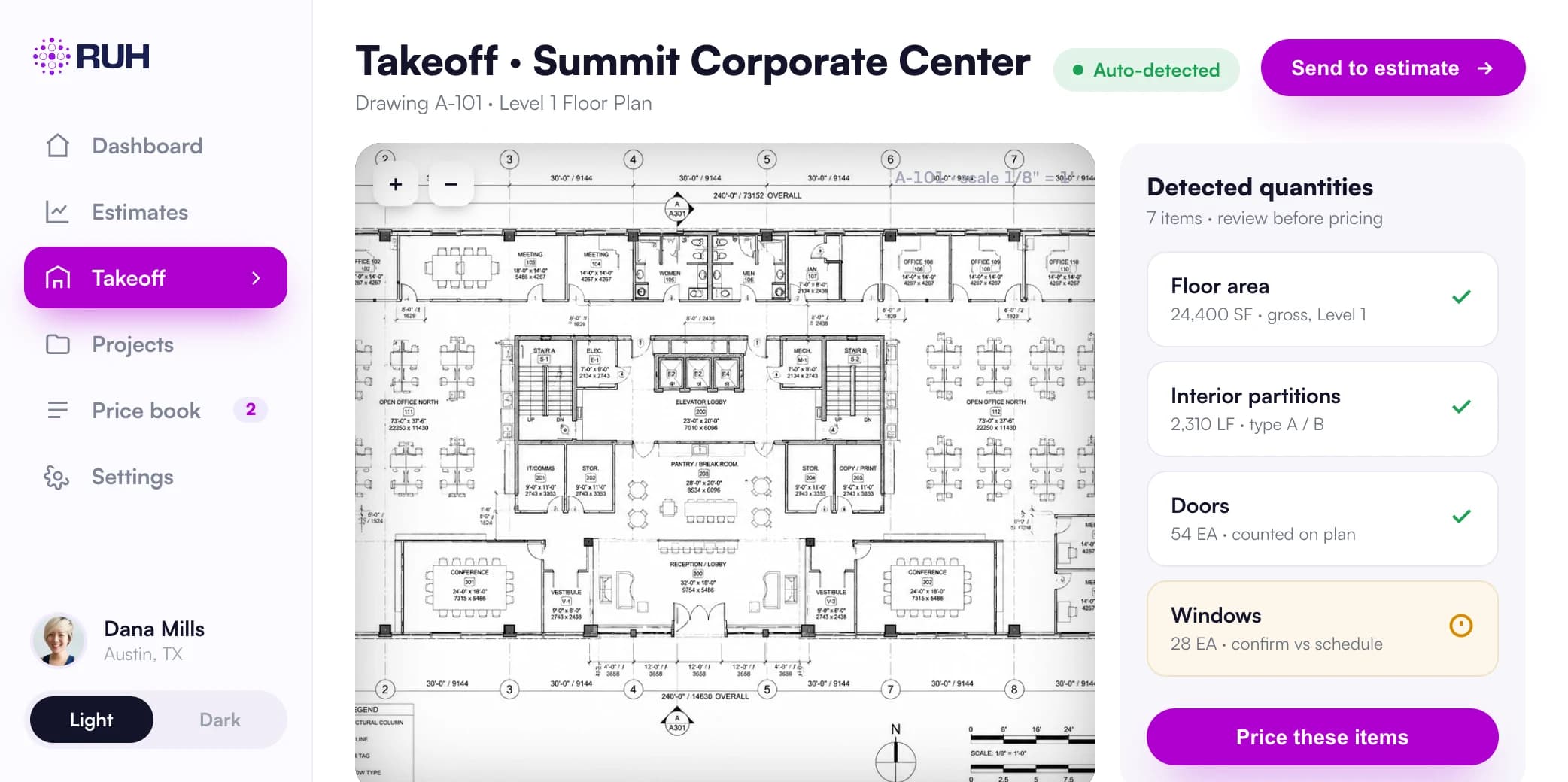
When Ruh performs a takeoff, it reads the psi callouts on the structural notes and mix schedules and splits concrete quantities into separate line items by strength class. Each class is priced from the contractor's own price book, so a 4,000 psi slab mix carries the contractor's real unit cost rather than a blended average. The estimator then reviews the draft, confirms the mix assignments match the spec, and signs off.

See AI construction takeoff and estimating software

PSI (pounds per square inch): frequently asked questions

What psi concrete is typical for commercial construction?+

Most commercial jobs run 3,000 psi for footings and foundations, 3,500 to 4,000 psi for slabs on grade, and 4,000 to 5,000 psi for columns and elevated decks. Parking structures and exterior flatwork in freeze-thaw climates often require 4,000 psi or higher with air entrainment for durability. The structural general notes govern; never assume strength by element type.

Why is concrete strength tested at 28 days?+

Concrete gains strength gradually as the cement hydrates, and 28 days is the standard age at which a mix is expected to reach its specified strength. Labs usually break a 7-day cylinder as well; a common rule of thumb is that a healthy mix shows roughly two thirds to three quarters of its specified strength at 7 days, which flags a low-trending pour early. Some specs allow 56-day acceptance for mixes heavy in fly ash or slag.

Does higher psi concrete cost more per cubic yard?+

Yes. Higher strength means more cement and often admixtures, so the per-yard price climbs with the psi. As an illustrative US figure, stepping from a 3,000 psi mix to a 5,000 psi mix might add roughly $10 to $25 per cubic yard depending on market and mix design. On a 1,500 cubic yard structure that swing is $15,000 to $37,500, which is why estimators split concrete quantities by strength class instead of using one blended price.

Still measuring by hand? Your next takeoff can run while you review this one.

See it on your plans

Related terms

Keep going: read the full guide or explore AI construction takeoff and estimating software.

The Units of measure estimating cheat sheet
Every unit, waste factor, and conversion on one page. Free PDF.

See Ruh price a bid from your own drawings.

AI takeoff and estimating on your price book, your estimator signs off.

Figures on this page are illustrative. Construction estimates depend on project-specific conditions, source documents, market pricing, and professional judgment. Ruh's AI assists the estimator and does not replace professional review: your team reviews, validates, and approves every estimate, bid, and pricing decision.