Construction glossary · Units of measure
What is MBF (thousand board feet) in construction?
MBF stands for thousand board feet, the standard unit for pricing and buying framing lumber at the mill and wholesale level in US construction (M is the Roman numeral for 1,000). One board foot is the volume of a board measuring 12 inches by 12 inches by 1 inch in nominal dimensions, so 1 MBF equals 1,000 board feet. Mills, wholesalers, and commodity price indexes quote lumber in dollars per MBF, and estimators convert their framing takeoff to MBF to apply those prices.
Updated June 2026 · Reviewed by the Ruh construction team
Board feet to MBF
Estimating units of measure scope this week? Watch Ruh take off a real plan in 30 minutes.
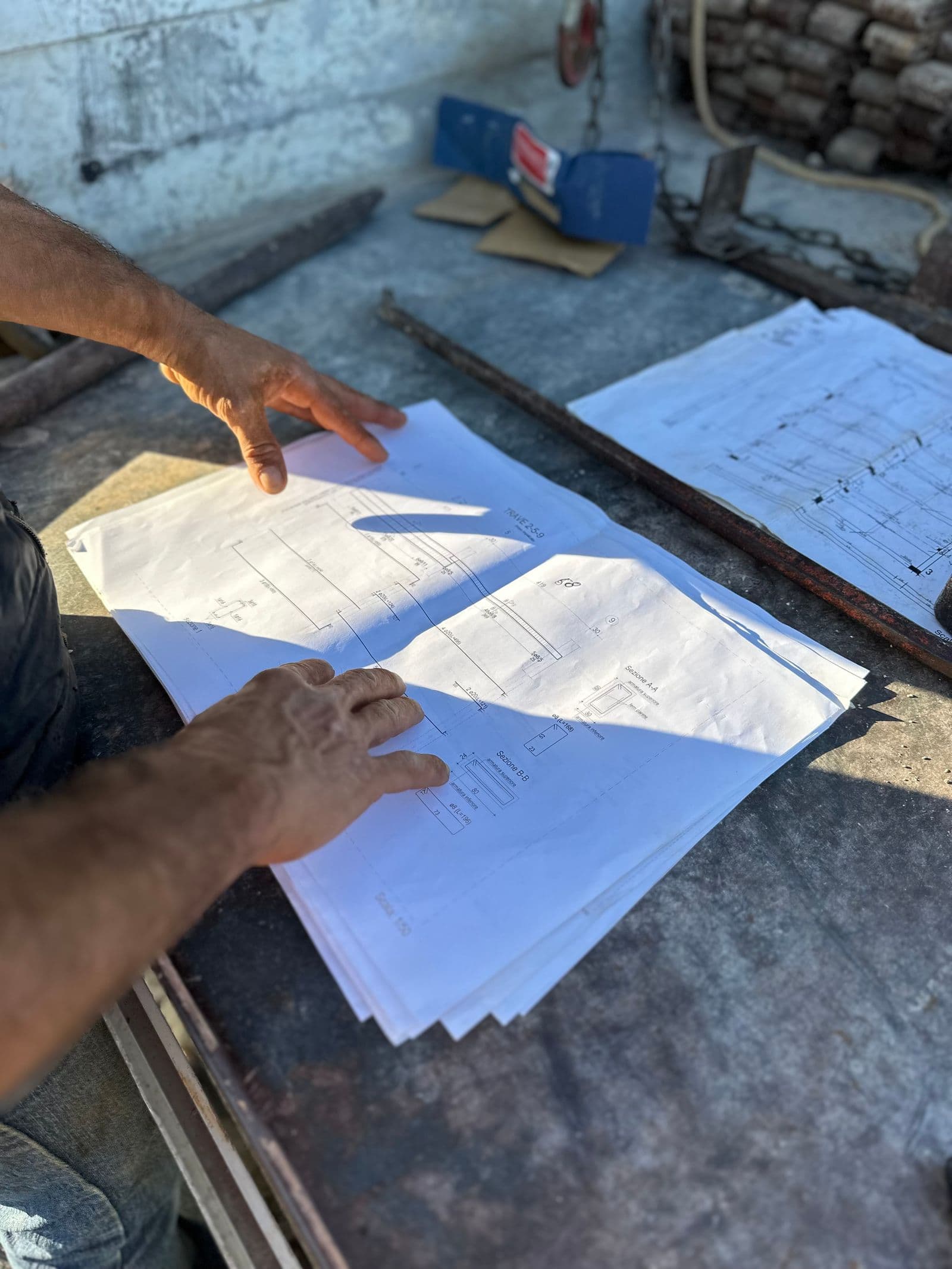
Book a walkthroughMBF is how framing lumber is bought and sold once you move past the retail yard. Mill price sheets, wholesaler quotes, commodity indexes like the Fastmarkets (formerly Random Lengths) framing lumber composite, and lumber futures all quote in dollars per MBF. You will not see MBF on the drawings. The structural sheets give you member sizes, spacing, and lengths; the estimator builds board footage from the framing takeoff and converts it to MBF to apply supplier pricing. On wood-framed commercial work (podium decks, multifamily, light commercial shells) the lumber line is big enough that a small swing in the $/MBF rate moves the bid, so purchasing and estimating both live in this unit. New estimators trip on three things: board feet use nominal dimensions, not actual (a 2x4 counts as 2 inches by 4 inches even though it dresses to 1.5 by 3.5 inches); M means one thousand, not one million; and sheet goods like plywood and OSB are priced per MSF (thousand square feet), not MBF.
One board foot is (nominal thickness in inches x nominal width in inches x length in feet) divided by 12. A 2x4 that is 8 ft long works out to (2 x 4 x 8) / 12 = 5.33 board feet. To get MBF, total the board footage for the package and divide by 1,000. In practice the estimator counts members from the framing plans by size and length, converts each line to board feet, adds a waste factor (commonly 5 to 10 percent on framing), and totals. Supplier quotes, mill order confirmations, and index pricing all show $/MBF, so the takeoff total in MBF multiplies straight against the quoted rate. Keep dimensional lumber (per MBF) separate from panels (per MSF) and engineered wood (often per linear foot or per piece).
Calculate board feet (1 MBF = 1,000 bf)
Live calculatorTry Ruh on a real bid. 100% money-back guarantee if you are not satisfied.*
*Scoped delivery, terms apply. Read the guarantee terms
How Ruh handles MBF (thousand board feet)
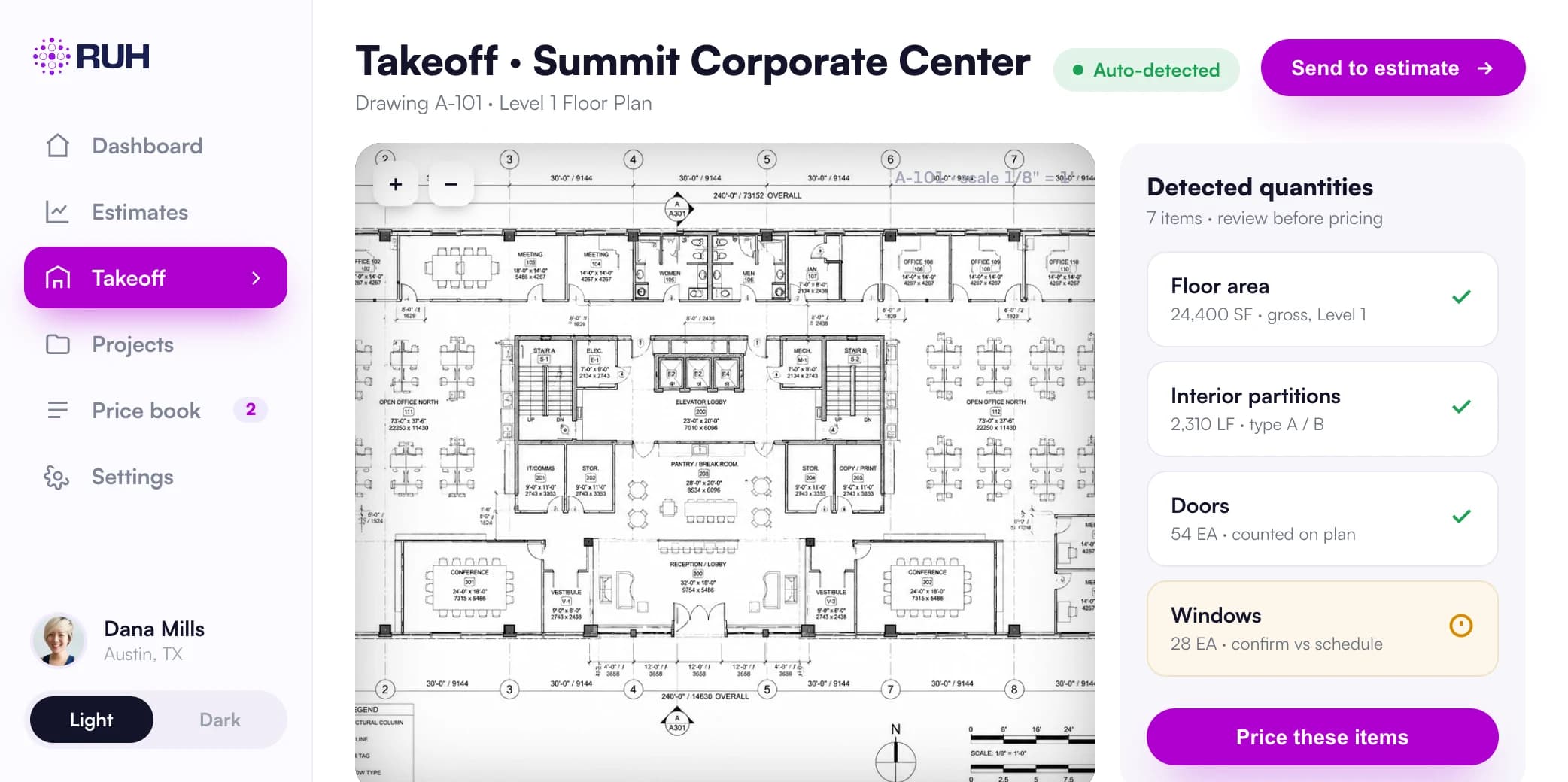
Ruh reads the framing plans, counts members by size and length, converts the takeoff to board feet and MBF automatically, and prices the package against the $/MBF rates in the contractor's own price book rather than a generic index. The estimator receives a line-item draft with lumber quantities already rolled up in MBF, then reviews waste factors and species and grade pricing, adjusts, and signs off. The conversion math is automated; the lumber market judgment stays with the estimator.
See AI construction takeoff and estimating softwareMBF (thousand board feet): frequently asked questions
How do I convert board feet to MBF?+
Divide total board feet by 1,000. A takeoff of 8,450 board feet is 8.45 MBF, so at an illustrative quote of $480 per MBF the material runs 8.45 x $480 = $4,056. Carry three or four decimal places on the MBF figure for larger packages, because rounding early can move real dollars on the lumber line.
Why is lumber priced per MBF instead of per piece?+
Mills and wholesalers sell in volume, and a single $/MBF rate lets buyers compare pricing across different sizes and lengths on the same basis. Commodity reporting and lumber futures also settle in $/MBF, so the whole supply chain above the retail yard speaks that unit. Retail yards convert to per-piece pricing for walk-in trade, which is why many new estimators first meet MBF on a framing package quote.
Is MBF based on nominal or actual lumber dimensions?+
Nominal. A 2x4 counts as 2 inches by 4 inches in the board foot formula even though it dresses to 1.5 by 3.5 inches after surfacing. The whole supply chain uses the same convention so quotes stay comparable, but never use board footage to compute the true volume or weight of a load.
Still measuring by hand? Your next takeoff can run while you review this one.
See it on your plansRelated terms
Keep going: read the full guide or explore AI construction takeoff and estimating software.
See Ruh price a bid from your own drawings.
AI takeoff and estimating on your price book, your estimator signs off.
Figures on this page are illustrative. Construction estimates depend on project-specific conditions, source documents, market pricing, and professional judgment. Ruh's AI assists the estimator and does not replace professional review: your team reviews, validates, and approves every estimate, bid, and pricing decision.