Construction glossary · Units of measure
What is EA (each) in construction?
EA (each) is the unit of measure used in construction takeoffs and estimates for items counted as individual pieces rather than measured by length, area, or volume. Doors, plumbing fixtures, light fixtures, and equipment are typical EA items. The estimator counts them on the drawings, enters the quantity as EA, and extends it by a unit cost per item.
Updated June 2026 · Reviewed by the Ruh construction team
How each (EA) is counted
Estimating units of measure scope this week? Watch Ruh take off a real plan in 30 minutes.
Book a walkthroughEA is the standard abbreviation for each, one of the basic units of measure in a construction estimate. Anything you count one at a time gets quantified in EA: doors, frames, hardware sets, toilets, lavatories, light fixtures, receptacles, diffusers, fire extinguishers, and equipment like rooftop units or pumps. You will see EA in the unit column of estimates and bid forms, on unit price schedules in the contract, in the schedules on the drawings (door schedule, fixture schedule, equipment schedule), and on supplier quotes. The unit looks simple, which is exactly why new estimators get burned by it. The common mistakes are counting from a schedule without verifying it against the plans (the two disagree more often than you would expect), missing what one EA actually includes (a door leaf is not the same as a complete opening with frame, hardware, and hanging labor), and double counting items that show up on both an enlarged plan and the overall floor plan. A clean EA line always states what each unit includes, because the count is only half the number; the scope behind each unit drives the cost.
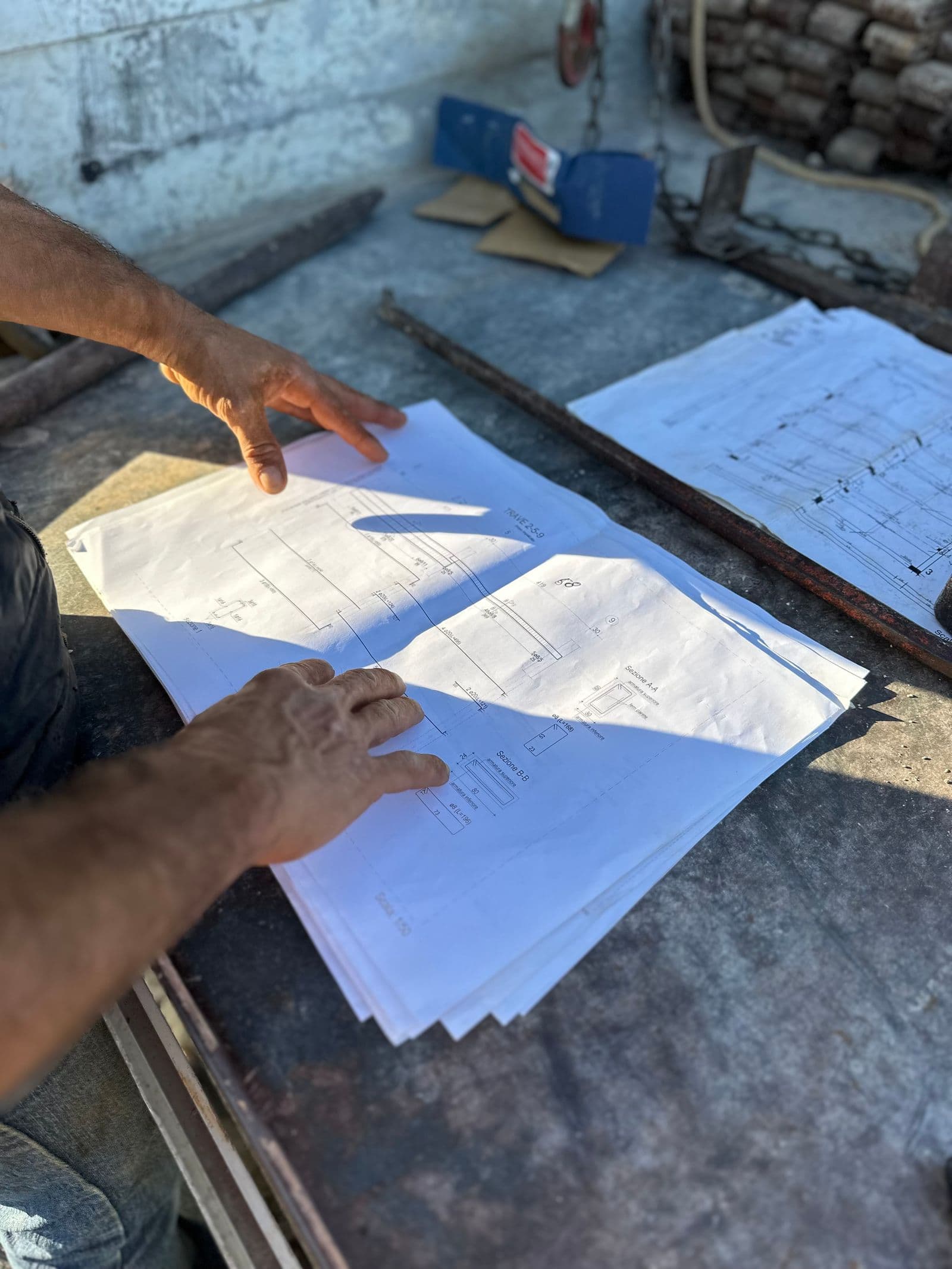
EA items are counted, not measured. The estimator works through the drawings sheet by sheet, marks each item as it is counted, and totals by type. Schedules are the starting point: the door schedule, plumbing fixture schedule, and equipment schedule give counts by mark or type, and the estimator verifies those counts against the floor plans and enlarged plans. In takeoff software the tool is a count symbol dropped on each instance, which leaves an auditable trail of what was counted where. The quantity carries to the estimate as a whole number with the unit EA, priced as quantity times unit cost. Counts are exact, so nothing gets rounded, and spec-required spares or attic stock go in as separate EA lines.
Worked example
Take the door schedule for a small office building. It lists 24 type A doors (interior single, 3 ft 0 in by 7 ft 0 in), 6 type B doors (interior pairs), and 4 type C doors (exterior hollow metal). Hardware sets are priced per opening: 24 + 6 + 4 = 34 openings, so 34 EA hardware sets. Leaves are priced per leaf: 24 + (6 x 2) + 4 = 40 EA leaves. With illustrative unit costs, type A at $850 per opening runs 24 x $850 = $20,400, type B at $2,100 per opening runs 6 x $2,100 = $12,600, and type C at $1,950 per opening runs 4 x $1,950 = $7,800. Material subtotal: $20,400 + $12,600 + $7,800 = $40,800. Hanging labor at $120 per leaf adds 40 x $120 = $4,800, for $45,600 total. Two different EA bases (openings and leaves) live in the same bid item, which is why each line must say what it counts.
Try Ruh on a real bid. 100% money-back guarantee if you are not satisfied.*
*Scoped delivery, terms apply. Read the guarantee terms
How Ruh handles EA (each)
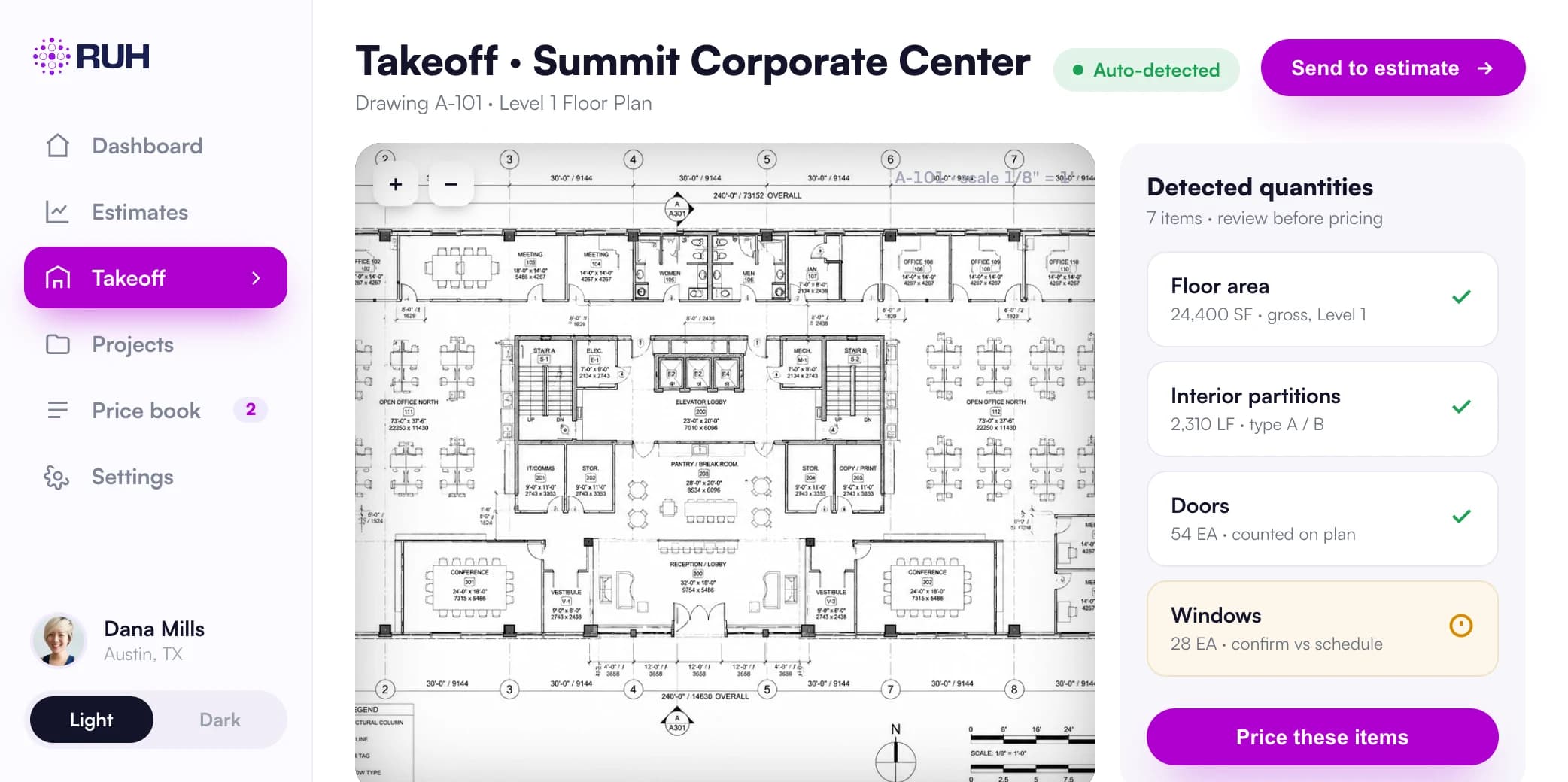
Ruh reads the door, fixture, and equipment schedules on the drawings, counts each instance on the plans, and reconciles the two so the EA quantities in its draft reflect what is actually shown. It prices those counts against the contractor's own price book, so an EA door opening carries that contractor's real unit cost for leaf, frame, and hardware set. The estimator reviews the line items, adjusts counts or scope where judgment is needed, and signs off before the number goes in a bid.
See AI construction takeoff and estimating softwareEA (each): frequently asked questions
What is the difference between EA and LS on a construction estimate?+
EA prices repeated identical items by the piece, so the extension moves when the count moves. LS (lump sum) prices a defined chunk of work as one all-in figure with no stated quantity. Estimators prefer EA where counts may change through addenda or change orders, because a unit price gives both sides a clean way to adjust the contract value.
Is a pair of doors counted as 1 EA or 2 EA?+
It depends on what the line counts, and the line should say so. As an opening, a pair is 1 EA opening with one hardware set; as leaves, it is 2 EA leaves for material and hanging labor. Door suppliers often quote per leaf while hardware suppliers quote per opening, and mixing the two bases without noticing is a classic takeoff error.
How do estimators avoid miscounting EA items in a takeoff?+
Count from the floor plans and check the totals against the schedules instead of trusting either source alone. Use count symbols in takeoff software so every counted item is marked once and the trail is auditable. Watch enlarged plans and addenda, which are the two most common places double counts and missed revisions come from.
Still measuring by hand? Your next takeoff can run while you review this one.
See it on your plansRelated terms
Keep going: read the full guide or explore AI construction takeoff and estimating software.
See Ruh price a bid from your own drawings.
AI takeoff and estimating on your price book, your estimator signs off.
Figures on this page are illustrative. Construction estimates depend on project-specific conditions, source documents, market pricing, and professional judgment. Ruh's AI assists the estimator and does not replace professional review: your team reviews, validates, and approves every estimate, bid, and pricing decision.