Construction glossary · MEP
What is heat pump in construction?
A heat pump in construction is HVAC equipment that moves heat rather than generating it, using a refrigeration cycle that can reverse to provide both heating and cooling from one machine, with capacity sized in tons (12,000 Btu per hour each). The three common families are air-source (heat exchanged with outdoor air), water-source (heat exchanged with a building water loop), and ground-source (heat exchanged with the earth through a buried loop or wellfield). On commercial takeoffs they are counted each (ea) from the mechanical schedule, often in large quantities of small units.
Updated June 2026 · Reviewed by the Ruh construction team
How heat pumps are counted
Estimating mep scope this week? Watch Ruh take off a real plan in 30 minutes.
Book a walkthroughHeat pumps show up on the mechanical equipment schedule (tagged HP or WSHP) and in Division 23, and the estimating character of the scope depends on the family. Air-source units look like packaged rooftop or split-system work. Water-source heat pump jobs are different: a typical office or hotel floor carries dozens of small units (often 0.75 to 5 tons each) hung above ceilings or stacked in closets, all tied to a shared condenser water loop served by a boiler and a cooling tower or, on ground-source projects, a wellfield. Ground-source adds drilling scope that usually goes to a specialty sub. The classic new-estimator mistake on water-source work is pricing the boxes and missing the per-unit tail: hose kits, isolation and balancing valves, condensate piping, hangers and vibration isolation, controls, and filters, multiplied across every unit in the building. Forty units with $450 of missed accessories each is an $18,000 hole. The loop piping itself is hydronic piping scope, taken off separately in lf by size.
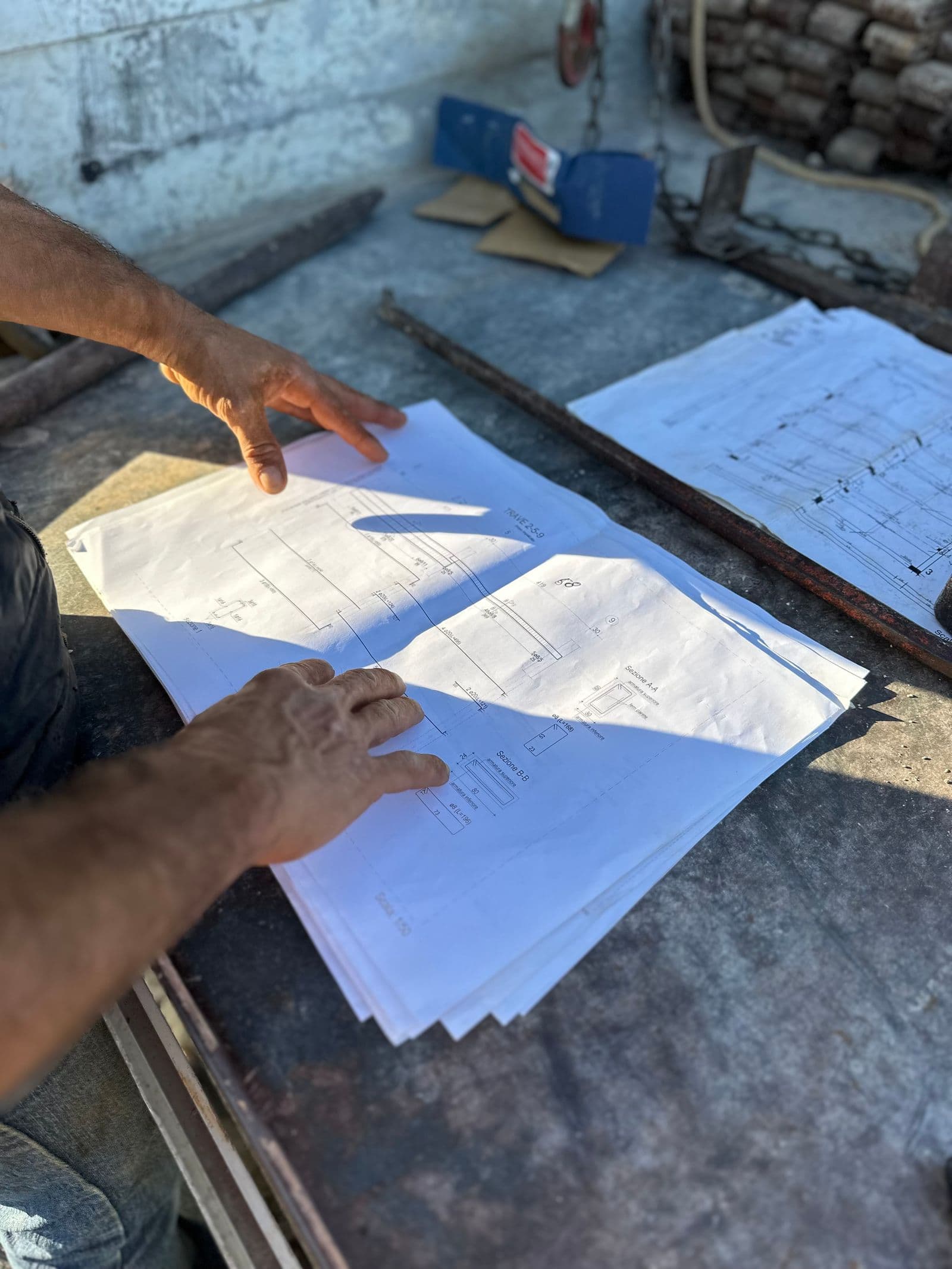
Heat pumps are counted each (ea) from the mechanical equipment schedule, broken out by capacity in tons and by configuration (horizontal ceiling-hung, vertical closet, console, rooftop). Tonnage, voltage, and family (air-source, water-source, ground-source) drive unit cost, while quantity drives the labor story, since hanging 40 small units above ceilings is a different job than setting two large ones. Floor plans locate each unit, the schedule carries capacities and electrical data, and details show hanging, piping, and condensate connections. Per-unit accessories (hose kits, valves, condensate, isolation) are taken off as counts alongside the equipment, the condenser water or ground loop is measured separately in lf, and electrical feeds belong to Division 26. Ground-source projects add the wellfield as drilling footage plus header piping.
Worked example
A four-story office runs water-source heat pumps. The schedules and floor plans count 36 units: 20 at 1.5 tons, 12 at 2.5 tons, and 4 at 5 tons. Connected capacity: 20 x 1.5 = 30 tons, 12 x 2.5 = 30 tons, and 4 x 5 = 20 tons, for 80 tons total. Installed pricing at illustrative rates: 20 x $3,200 = $64,000 for the 1.5 ton units, 12 x $4,100 = $49,200 for the 2.5 ton units, and 4 x $6,800 = $27,200 for the 5 ton units, an equipment subtotal of $140,400. Hose kits and isolation valves at an illustrative $450 per unit add 36 x $450 = $16,200, bringing the package to $156,600 before the condenser water loop, condensate piping, controls, or electrical. Benchmark: $156,600 / 80 tons is about $1,958 per ton for the terminal equipment alone.
Try Ruh on a real bid. 100% money-back guarantee if you are not satisfied.*
*Scoped delivery, terms apply. Read the guarantee terms
How Ruh handles heat pump
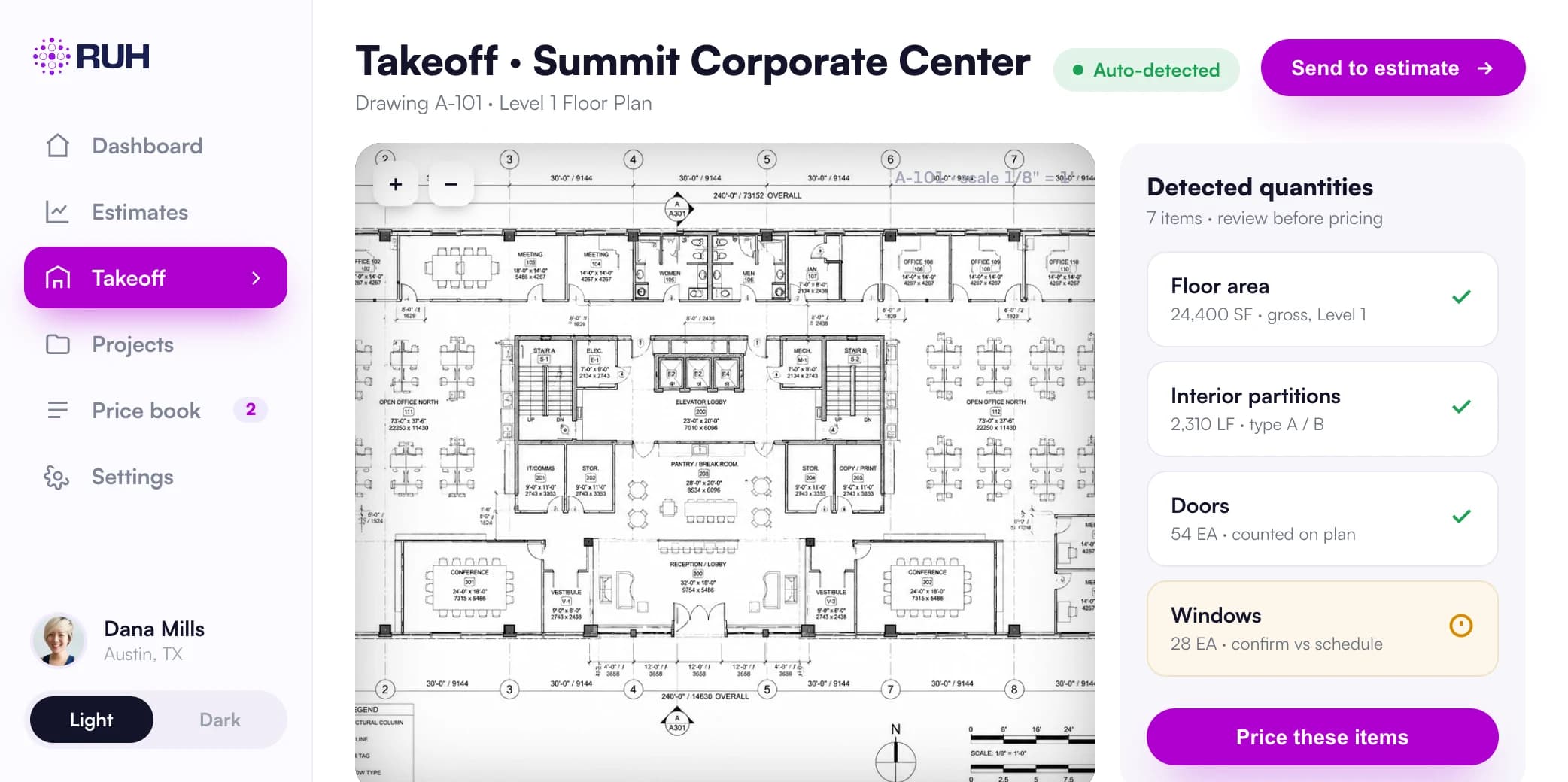
Ruh performs this takeoff the way an estimator would, reading the schedules and floor plans, counting every heat pump by size and configuration, and carrying the per-unit accessories alongside, then pricing the lines against the contractor's own price book. The draft estimate goes back to the estimator, who verifies counts against the schedule totals, adjusts assumptions, and signs off.
See AI construction takeoff and estimating softwareHeat pump: frequently asked questions
What is the difference between air-source, water-source, and ground-source heat pumps?+
The difference is where the unit exchanges heat. Air-source units trade heat with outdoor air and lose capacity in extreme cold. Water-source units trade heat with a building loop kept in a workable temperature range by a boiler and cooling tower, which is why they suit multi-tenant buildings. Ground-source (geothermal) units use the stable temperature of the earth through a buried loop or wellfield, trading higher first cost in drilling for lower operating cost.
Can one heat pump provide both heating and cooling?+
Yes. A reversing valve flips the direction of the refrigeration cycle, so the same coil that rejects heat in summer absorbs it in winter. That is the core appeal of heat pump buildings: one piece of terminal equipment per zone covers both seasons. Air-source units in cold climates often pair with electric or hydronic backup heat for the coldest hours, and that backup is a separate takeoff line.
Does a heat pump system replace the chiller and boiler?+
Sometimes. A ground-source system can eliminate the chiller and most of the boiler plant. A conventional water-source heat pump building still carries a boiler and a cooling tower or fluid cooler to keep the loop in range, just no chiller. Read the plant side of the mechanical drawings before assuming scope has disappeared, because the loop equipment and the hydronic piping that serves it usually remain.
Still measuring by hand? Your next takeoff can run while you review this one.
See it on your plansRelated terms
Keep going: read the full guide or explore AI construction takeoff and estimating software.
See Ruh price a bid from your own drawings.
AI takeoff and estimating on your price book, your estimator signs off.
Figures on this page are illustrative. Construction estimates depend on project-specific conditions, source documents, market pricing, and professional judgment. Ruh's AI assists the estimator and does not replace professional review: your team reviews, validates, and approves every estimate, bid, and pricing decision.