100% money-backBook a walkthrough

Construction glossary · MEP

What is grease trap in construction?

A grease trap in construction is a plumbing device that intercepts fats, oils, and grease (FOG) from kitchen waste lines before they reach the sanitary sewer, where they would congeal and block the pipe. Small hydromechanical units rated in gallons per minute sit at or near the fixtures; large gravity grease interceptors, in-ground tanks rated in gallons, serve full commercial kitchens. Estimators count them each, and food service projects almost always carry one because the local sewer authority requires it.

Updated June 2026 · Reviewed by the Ruh construction team

Counted in eachFill factor 75 percentGallon conversion 231 cu inLives on plumbing sheets

How a grease trap is measured

1 eaGrease interceptorPlumbing sheets

Estimating mep scope this week? Watch Ruh take off a real plan in 30 minutes.

Book a walkthrough
Definition

Grease traps and interceptors live on the plumbing sheets, and for the large in-ground type, often on the civil sheets too, with the plumbing subcontractor owning the unit and the excavation sometimes sliding into the sitework package. The driver is the local sewer authority's FOG (fats, oils, and grease) program: any food service occupancy will be required to intercept grease before it reaches the sanitary sewer, and the authority, not just the plumbing code, often dictates the size. Two families exist. Hydromechanical units, the traditional grease trap, are rated in gpm and sit indoors near the fixtures they serve. Gravity grease interceptors are tanks rated in gallons (1,000 and 1,500 gallon sizes are common), buried outside with manhole access for pumping. The piping is the part new estimators miss: grease-bearing fixtures drain through a dedicated grease waste line, separate from the sanitary system, all the way to the interceptor, which can add a second underground run across the building. Exterior units also bring excavation, bedding or a pad, traffic-rated covers in drive areas, and often a downstream sampling well.

How it is measured

The interceptor itself is counted each, with the rating carried on the line item: gpm for hydromechanical units sized by the flow-rate method, gallons for gravity interceptors sized by the sewer authority's formula or fixture load. Around that each-count, the takeoff picks up the dedicated grease waste piping in lf from every grease-bearing fixture to the unit, and for exterior tanks, the excavation in cy, bedding and backfill, traffic-rated covers each, and the sampling well each. Cost drivers: interior versus exterior placement, tank size, depth of bury (the inlet must stay below the kitchen's invert), and traffic loading over the lid. The plumbing plans show the unit; the local FOG ordinance frequently overrides whatever size the first design pass showed.

Worked example

Worked example

Compartment volume24 x 24 x 12 = 6,912 cu in x 3 = 20,736 cu in
Drainage volume20,736 x 0.75 = 15,552 cu in, 15,552 / 231 = about 67.32 gallons
Flow rate67.32 / 2 = 33.66 gpm, select 35 gpm
Exterior alternative (illustrative)$6,500 + $2,800 + $1,200
Exterior interceptor total (illustrative)$6,500 + $2,800 + $1,200 = $10,500
100%

Try Ruh on a real bid. 100% money-back guarantee if you are not satisfied.*

*Scoped delivery, terms apply. Read the guarantee terms

Start with a walkthrough
How Ruh handles it

How Ruh handles grease trap

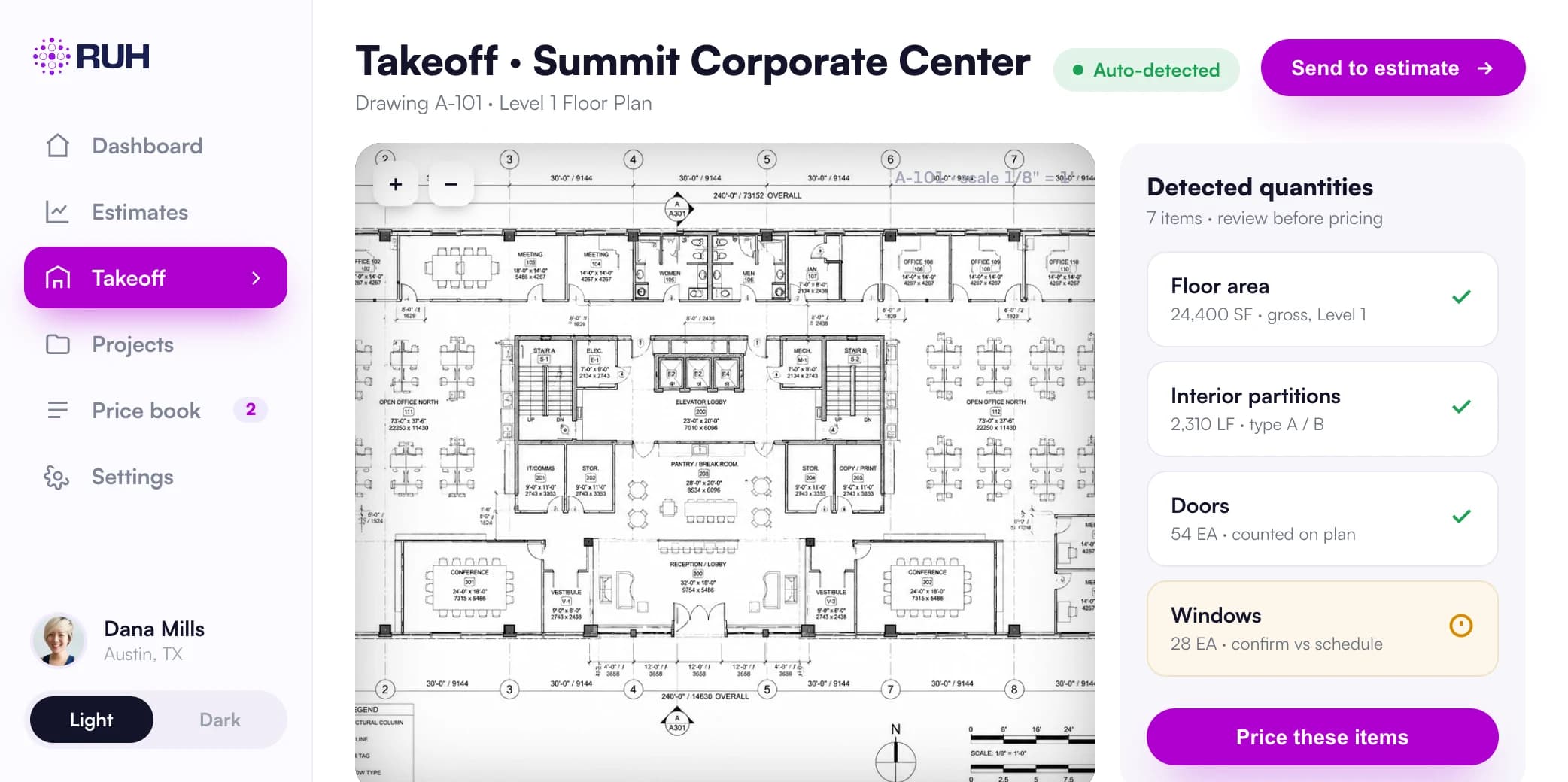
Ruh identifies the interceptor on the plumbing sheets, counts it each with its gallons or gpm rating, picks up the dedicated grease waste piping in lf, and prices the package on the contractor's own price book. The estimator checks the takeoff against the local FOG requirements and signs off before bid day.

See AI construction takeoff and estimating software

Grease trap: frequently asked questions

What is the difference between a grease trap and a grease interceptor?+

In everyday trade language, a grease trap is the small hydromechanical unit rated in gpm that sits at or near a sink, and a grease interceptor is the large in-ground gravity tank rated in gallons. The plumbing codes now group both under interceptor, split into hydromechanical and gravity types. For an estimator the distinction is the cost structure: a trap is a fixture-like each-count, while a gravity interceptor brings excavation, structure, covers, and a sampling well with it.

Which fixtures have to drain to the grease interceptor?+

Grease-bearing kitchen fixtures: pot and pre-rinse sinks, wok stoves, kettles, and floor drains and floor sinks in cooking and dishwashing areas, with dishwashers handled per local rules (many jurisdictions prohibit dishwashers ahead of small hydromechanical traps because hot detergent water defeats them). Restrooms and other sanitary fixtures must bypass the interceptor entirely, which is why the rough-in carries a dedicated grease waste line alongside the regular sanitary system. The local FOG ordinance gives the binding list.

How often does a grease trap need to be pumped out?+

Local FOG ordinances set the schedule, and many apply the 25 percent rule: pump when accumulated grease and solids reach a quarter of the unit's liquid depth. A high-volume kitchen can hit that in weeks while a small cafe might take months, so the honest answer is measured, not calendar based. For construction estimators this is an operating cost, not a bid item, but the access covers and sampling well that make pumping and inspection possible are bid items.

Still measuring by hand? Your next takeoff can run while you review this one.

See it on your plans

Related terms

Keep going: read the full guide or explore AI construction takeoff and estimating software.

The MEP estimating cheat sheet
Every unit, waste factor, and conversion on one page. Free PDF.

See Ruh price a bid from your own drawings.

AI takeoff and estimating on your price book, your estimator signs off.

Figures on this page are illustrative. Construction estimates depend on project-specific conditions, source documents, market pricing, and professional judgment. Ruh's AI assists the estimator and does not replace professional review: your team reviews, validates, and approves every estimate, bid, and pricing decision.