Construction glossary · MEP
What is cast iron pipe in construction?
Cast iron pipe in construction is a heavy, durable piping material used mainly for drain, waste, and vent (DWV) systems in commercial buildings, specified where quiet operation and fire resistance matter. Modern commercial installs are almost entirely hubless (no-hub) pipe joined with shielded couplings instead of the older hub-and-spigot joints. Estimators take it off in linear feet of pipe by diameter, with fittings and couplings counted each.
Updated June 2026 · Reviewed by the Ruh construction team
Cast iron pipe wall section
Estimating mep scope this week? Watch Ruh take off a real plan in 30 minutes.
Book a walkthroughCast iron soil pipe lives on the plumbing sheets: waste and vent riser diagrams, underground plumbing plans, and the Division 22 specifications, which often restrict plastic DWV and require cast iron in specific locations. The plumbing contractor owns the scope. Engineers specify cast iron over PVC for two main reasons: it is far quieter (drainage noise through a PVC stack above a conference room is a real callback), and it does not burn, which matters in return air plenums and in noncombustible construction types where plastic pipe is limited. Hubless pipe manufactured to CISPI 301 is joined with shielded couplings to CISPI 310, and many specs require heavy-duty couplings on larger sizes or seismic jobs. What new estimators get wrong: pricing cast iron from a PVC mindset. The pipe sticks are only part of the cost; the couplings, the no-hub fittings, and the denser hanger spacing carry a large share of the material and labor dollars. Missing the coupling count, or pricing standard couplings where the spec calls for heavy duty, quietly erodes the margin on every stack in the building.
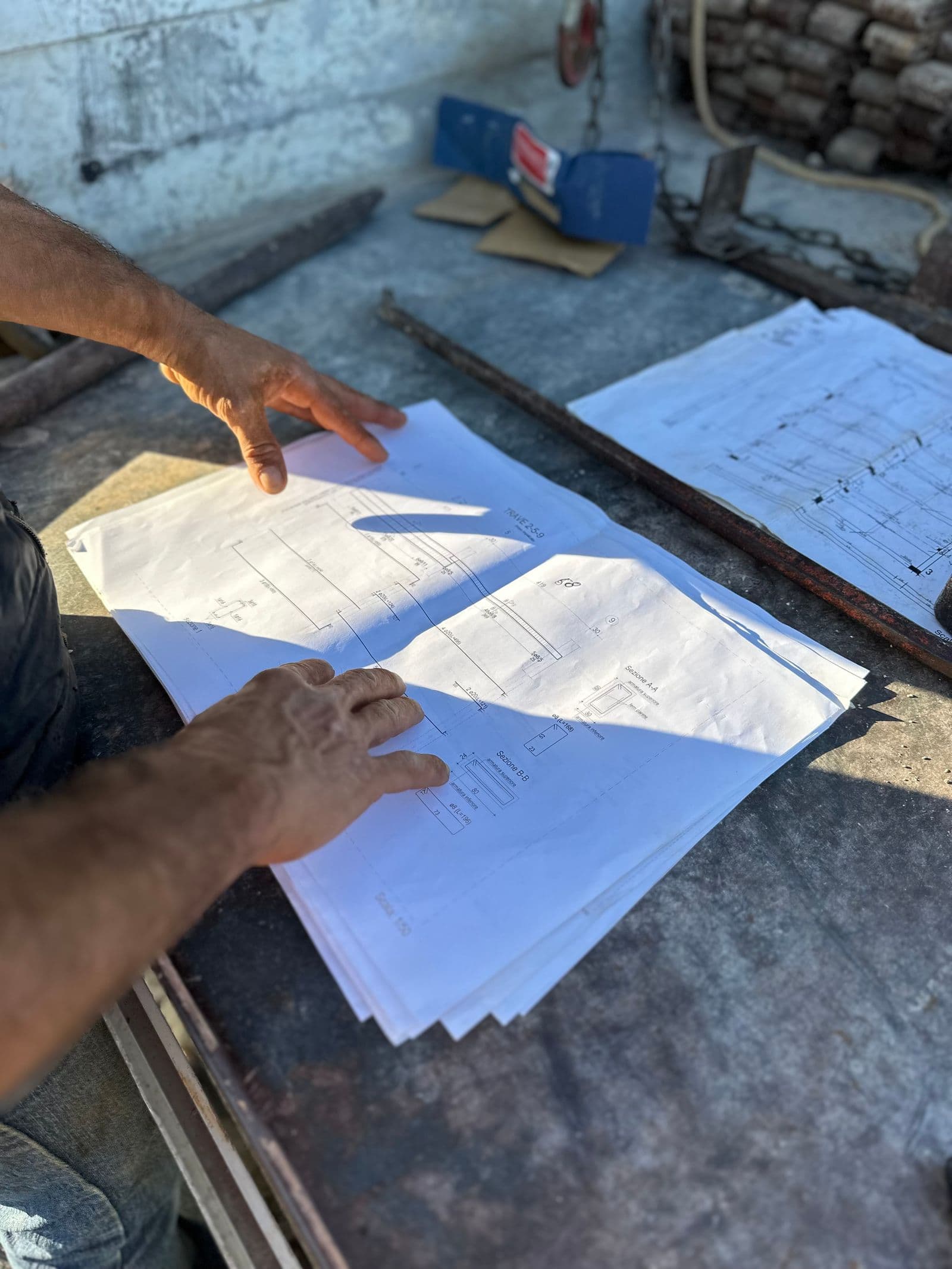
Cast iron pipe is taken off in linear feet, separated by diameter (2, 3, 4, 6, and 8 inch are common) and by service (sanitary waste, vent, storm). Fittings (wyes, sanitary tees, quarter bends, cleanouts) are counted each by size and type, and no-hub couplings are counted each, one for every joint. Quantities come from the plumbing floor plans for horizontal runs and from the waste and vent riser diagrams for the stacks, with underground portions on the below-slab plumbing plan. Cost drivers: diameter, coupling grade (standard versus heavy duty), hanger density, and whether runs are overhead, in chases, or below slab. The spec section tells you where cast iron is mandatory and where the contractor may substitute plastic, which can swing the bid significantly.
Worked example
Take a 4-story building with one 4 inch sanitary stack. Vertical: 4 floors x 12 ft floor to floor = 48 lf. Horizontal collection: 35 lf per floor x 4 floors = 140 lf. Total: 48 + 140 = 188 lf of 4 inch no-hub cast iron. Pipe ships in 10 ft sticks: 188 / 10 = 18.8, so figure about 19 stick-to-stick joints. Fittings: 16 sanitary tees (3 openings each) and 8 quarter bends (2 openings each) give 16 x 3 + 8 x 2 = 64 fitting openings, each needing a coupling. Couplings: 19 + 64 = 83, carried as 85 ea. At an illustrative $15 per lf for pipe, 188 x $15 = $2,820, and at an illustrative $12 per coupling, 85 x $12 = $1,020. The couplings add roughly 36 percent on top of the pipe material, which is exactly why a lf-only takeoff underprices cast iron.
Try Ruh on a real bid. 100% money-back guarantee if you are not satisfied.*
*Scoped delivery, terms apply. Read the guarantee terms
How Ruh handles cast iron pipe
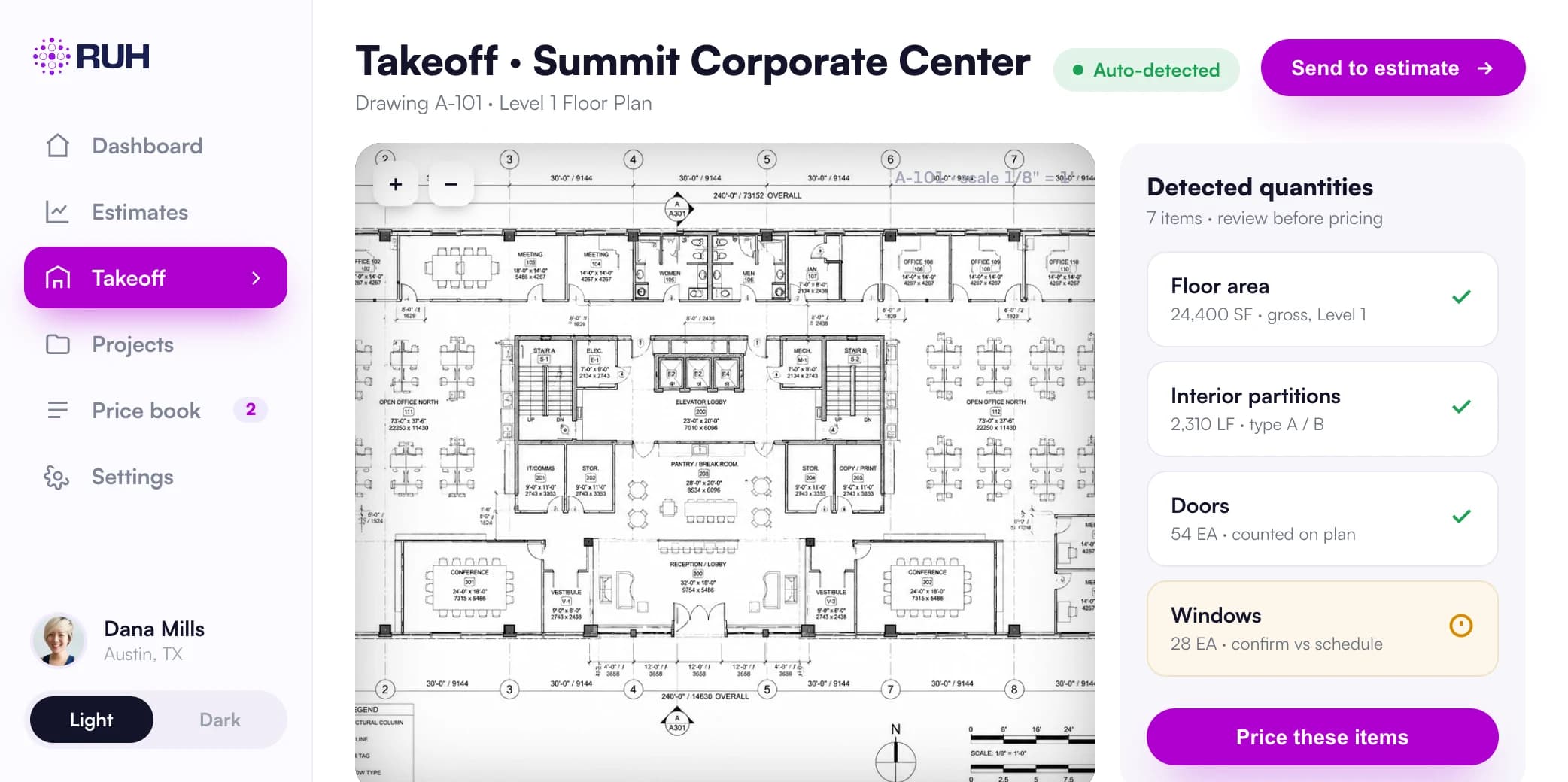
Ruh reads the plumbing plans and riser diagrams, takes off the cast iron by diameter in lf, and counts the fittings and couplings each, then prices the lines from the contractor's own price book. The estimator reviews the draft, confirms coupling grade and hanger assumptions against the spec, and signs off before the number goes into the bid.
See AI construction takeoff and estimating softwareCast iron pipe: frequently asked questions
Why do specs require cast iron pipe instead of PVC for drainage?+
Two reasons dominate: sound and fire. Cast iron is dense enough that you barely hear water falling through a stack, while PVC drainage above occupied spaces is a common noise complaint. Cast iron is also noncombustible, so it avoids the restrictions plastic pipe faces in return air plenums and in noncombustible building types. Many commercial specs allow plastic underground but require cast iron above grade for exactly these reasons.
What is no-hub (hubless) cast iron pipe?+
No-hub pipe has plain ends with no bell, and joints are made with a shielded coupling: an elastomeric gasket inside a stainless steel shield tightened with band clamps. It replaced the older hub-and-spigot system on most commercial above-grade work because it installs faster and fits in tight joist and chase spaces. Hubless pipe and fittings are made to CISPI 301 and the couplings to CISPI 310, which is the language you will see in the spec.
How do you estimate couplings for no-hub cast iron?+
Count one coupling for every joint: each stick-to-stick connection plus every fitting opening. A sanitary tee consumes three couplings, a quarter bend two. A quick check is to count fittings from the riser diagram, multiply by openings, and add roughly one coupling per 10 ft stick of straight run. Confirm whether the spec requires standard or heavy-duty couplings, because the price difference across hundreds of joints is real money.
Still measuring by hand? Your next takeoff can run while you review this one.
See it on your plansRelated terms
Keep going: read the full guide or explore AI construction takeoff and estimating software.
See Ruh price a bid from your own drawings.
AI takeoff and estimating on your price book, your estimator signs off.
Figures on this page are illustrative. Construction estimates depend on project-specific conditions, source documents, market pricing, and professional judgment. Ruh's AI assists the estimator and does not replace professional review: your team reviews, validates, and approves every estimate, bid, and pricing decision.