Construction glossary · MEP
What is sump pump in construction?
A sump pump in construction is a pump set in a pit, called a sump basin, at the low point of a basement, elevator pit, or foundation drainage system, where it collects groundwater and lifts it up to a storm drainage point. Commercial installations are commonly duplex, two pumps in one basin with a control panel and high water alarm, so one pump can fail without flooding the space. Estimators count the pump each, but the priced scope is the whole assembly: basin, check valves, discharge piping, and controls.
Updated June 2026 · Reviewed by the Ruh construction team
How sump pumps are counted
Estimating mep scope this week? Watch Ruh take off a real plan in 30 minutes.
Book a walkthroughSump pumps appear on the plumbing plans at basements, elevator pits, loading dock drains, and stairwells below grade, with a pump schedule giving gpm, head, and horsepower. The plumbing contractor typically owns the scope, with the electrician providing power. A sump pump moves clear water (groundwater, foundation drainage, seepage); it is not a sewage ejector, which handles waste from fixtures below the gravity sewer, and confusing the two is the first mistake new estimators make. The second is pricing the pump alone: the basin and cover, the check valve and isolation valve on each discharge, the float controls and alarm panel, and the discharge piping up and over to the storm system routinely cost more than the pump. Elevator pit sumps carry extra requirements; ASME A17.1 requires a means to remove water from the pit, and many jurisdictions require oil-sensing controls or an interceptor so hydraulic fluid cannot be pumped to the storm sewer. Duplex configuration, lead-lag alternation, and standby power tie-ins are spec-driven and worth a careful read before pricing.
Sump pumps are counted each from the plumbing schedule, with gpm, total dynamic head, and horsepower defining the price tier. The supporting assembly is measured around that count: the basin each by diameter and depth, the cover each, a check valve and shutoff valve each per pump, the control panel with floats each, and the discharge piping in lf by size from the basin to the point of connection. Quantities live on the plumbing plans and details; the pit detail usually shows basin size and the discharge route. Cost drivers: duplex versus simplex, head and run length of the discharge, controls sophistication (alarms, BAS points, oil sensing at elevator pits), and how deep the basin sits below slab, which is excavation and coordination money.
Worked example
Price a duplex basement sump. Pumps: 2 ea at an illustrative $1,900 each = $3,800. Basin, 36 inch diameter by 60 inch deep with a gas-tight cover: $1,500. Check valves: 2 x $180 = $360. Shutoff valves: 2 x $150 = $300. Duplex control panel with floats and high water alarm: $1,400. Discharge piping: 45 lf of 3 inch pipe at $28 per lf installed = $1,260. Assembly total: $3,800 + $1,500 + $360 + $300 + $1,400 + $1,260 = $8,620. The pumps are $3,800 of that, about 44 percent, so an estimator who carries only the scheduled pump price leaves more than half the assembly on the table. All figures are illustrative, but the ratio is the lesson: the basin, valves, panel, and piping around a sump pump are most of the line item, and every added foot of lift or run is head the pump has to be selected for.
Try Ruh on a real bid. 100% money-back guarantee if you are not satisfied.*
*Scoped delivery, terms apply. Read the guarantee terms
How Ruh handles sump pump
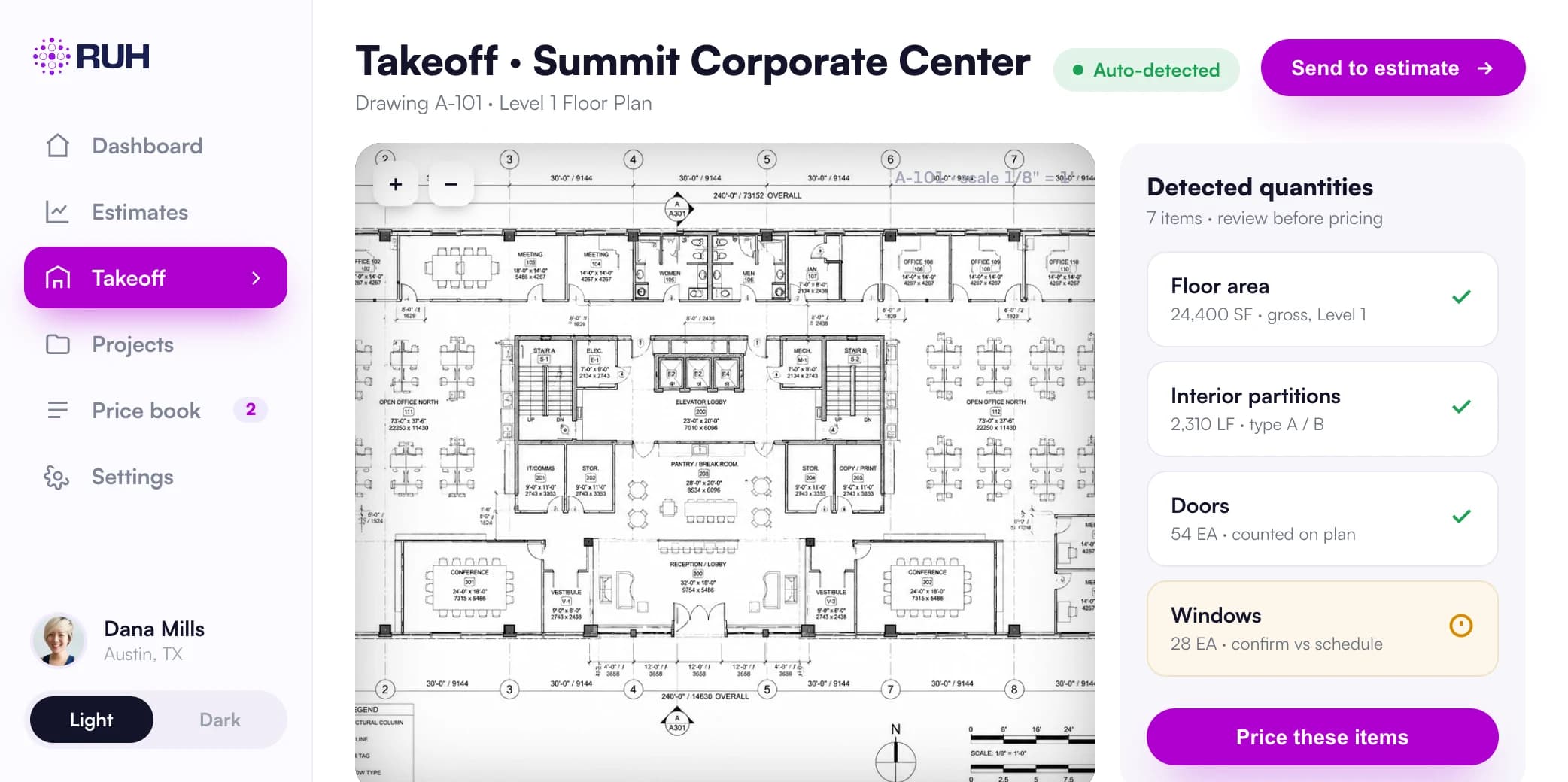
When Ruh runs the takeoff, it reads the pump schedule and pit details, counts the pumps, basins, valves, and panels each, measures the discharge piping in lf, and prices the assembly from the contractor's own price book. The estimator then reviews the draft, verifies controls and elevator pit requirements against the spec, and signs off.
See AI construction takeoff and estimating softwareSump pump: frequently asked questions
What is the difference between a sump pump and a sewage ejector?+
A sump pump handles clear water: groundwater, foundation drain flow, and seepage collected in a basin, discharging to storm drainage. A sewage ejector handles waste from plumbing fixtures that sit below the gravity sewer, uses a sealed and vented basin, and discharges to the sanitary sewer. They are scheduled, vented, and priced differently, and swapping one for the other in a takeoff is a real and expensive mix-up.
Why are commercial sump pumps duplex?+
Redundancy. With two pumps in one basin on an alternating lead-lag controller, a single pump failure does not flood the space, and the alternation evens out wear. The controller brings the lag pump on if inflow exceeds what the lead pump can handle or if the lead fails, and a high water alarm signals trouble. Specs for basements with real damage exposure, and most elevator pits, call for duplex for exactly this reason.
Do elevator pits need a sump pump?+
Elevator code (ASME A17.1) requires a means to remove water from the pit, and a sump with a pump is the usual answer. Because hydraulic elevators can leak oil, many jurisdictions require an oil-sensing control or an interceptor so the pump cannot discharge oil to the storm system. Check the elevator spec and local amendments, because the oil-sensing panel and the indirect discharge details add real cost beyond a basic pump.
Still measuring by hand? Your next takeoff can run while you review this one.
See it on your plansRelated terms
Keep going: read the full guide or explore AI construction takeoff and estimating software.
See Ruh price a bid from your own drawings.
AI takeoff and estimating on your price book, your estimator signs off.
Figures on this page are illustrative. Construction estimates depend on project-specific conditions, source documents, market pricing, and professional judgment. Ruh's AI assists the estimator and does not replace professional review: your team reviews, validates, and approves every estimate, bid, and pricing decision.