Construction glossary · Sitework
What is asphalt paving in construction?
Asphalt paving in construction is the placement of hot mix asphalt in compacted lifts over a prepared aggregate base to build parking lots, drives, and roadways. It is bought and priced per ton, and estimators convert measured area to tonnage using the common rule of thumb of about 110 pounds per square yard per inch of thickness. A typical commercial section places a coarser base course lift first, then a finer surface course lift over it.
Updated June 2026 · Reviewed by the Ruh construction team
How asphalt paving is measured
Estimating sitework scope this week? Watch Ruh take off a real plan in 30 minutes.
Book a walkthroughAsphalt paving is the wearing surface of the paving assembly and the last major sitework scope before striping. It lives on the civil paving plan, which hatches each pavement type, and the pavement section details, which give lift thicknesses for standard duty stalls and heavy duty drive aisles, with the geotech report behind the section design. A paving subcontractor owns the scope, often under the sitework contractor on commercial work. The section goes down in lifts: a base course (binder) with larger aggregate provides structure, and a surface course (wearing lift) with finer aggregate provides smoothness and density, with a tack coat between lifts. New estimators get burned in predictable ways: they price one blended thickness across the whole lot when the heavy duty aisles and dumpster approach carry a thicker section, they quote per sf when the paver bids per ton, and they miss that liquid asphalt pricing moves with the oil market, which is why many paving bids carry an asphalt cement price adjustment clause.
Asphalt is measured by converting area to weight. Take off the sy of each pavement section separately (sf divided by 9), read each lift thickness from the section detail, and convert using the rule of thumb of about 110 lbs per sy per inch: tons = sy x inches x 110 / 2,000. Cost drivers are total tonnage, the number of lifts and mobilizations, the mix designs (surface mix typically costs more per ton than base mix), haul distance from the plant, and night or phased work. Small placements carry a much higher per-ton price because plant minimums and mobilization spread over little tonnage.
Worked example
Try Ruh on a real bid. 100% money-back guarantee if you are not satisfied.*
*Scoped delivery, terms apply. Read the guarantee terms
How Ruh handles asphalt paving
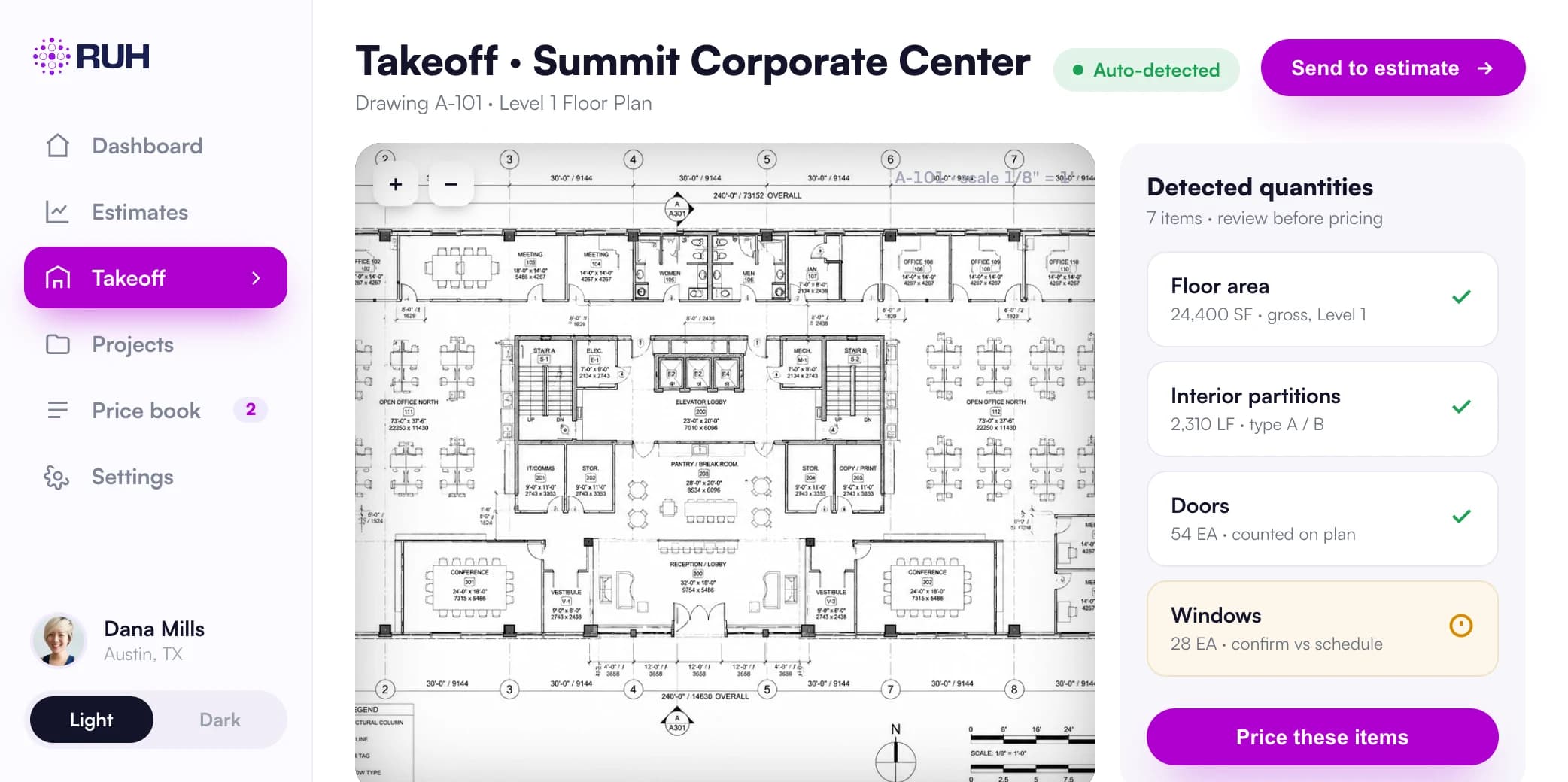
Ruh takes the paving plan and section details, measures each pavement type in sy, and converts the lifts to tonnage automatically, pricing the result from the contractor's own price book rather than published averages. The draft estimate goes to the estimator, who checks the section splits and mix assumptions and signs off.
See AI construction takeoff and estimating softwareAsphalt paving: frequently asked questions
How many tons of asphalt cover one square yard?+
Using the common rule of thumb of about 110 pounds per square yard per inch of thickness, one sy at 3 inches weighs about 330 lbs, or 0.165 tons. Flipped around, one ton covers roughly 6 sy at 3 inches thick. Actual coverage shifts with the mix design and compacted density, so paving contractors check the rule against the plant's mix-specific conversion before committing tonnage.
What is the difference between base course and surface course asphalt?+
Base course (often called binder) uses larger aggregate and goes down first in a thicker lift to carry structural load. Surface course, the wearing lift, uses finer aggregate for a tight, smooth, water-resistant finish and goes down last, often after curbs and utilities are complete. They are separate mix designs at separate prices, placed in separate passes with a tack coat between them, so estimators take them off as separate lines.
Why is asphalt priced per ton instead of per square foot?+
The plant batches, sells, and trucks hot mix by the ton, and tonnage captures thickness in a way area cannot: 2 inches and 4 inches over the same square footage are very different costs. Per-ton pricing also lets bids carry an asphalt cement adjustment when the liquid asphalt index moves. Square foot pricing shows up mostly in early budgets, then gets converted to tons for the real bid.
Still measuring by hand? Your next takeoff can run while you review this one.
See it on your plansRelated terms
Keep going: read the full guide or explore AI construction takeoff and estimating software.
See Ruh price a bid from your own drawings.
AI takeoff and estimating on your price book, your estimator signs off.
Figures on this page are illustrative. Construction estimates depend on project-specific conditions, source documents, market pricing, and professional judgment. Ruh's AI assists the estimator and does not replace professional review: your team reviews, validates, and approves every estimate, bid, and pricing decision.