Every quantity that comes off a drawing set is a neat number: the exact area, length, or volume the design shows. The field never installs the neat number. Cuts, breakage, overlap, and the occasional mismeasure mean you have to buy more material than the drawing strictly calls for, and the waste factor is how an estimator turns a neat quantity into a buy quantity. Get it wrong in either direction and you either run short in the field or price yourself out of the bid.
What is a waste factor in construction estimating?
A waste factor is a percentage you add to a measured (neat) quantity to cover material that gets consumed but never ends up as finished, installed work. It exists because real installation is messy in predictable ways. Sheet goods get cut to fit and the offcuts are too small to reuse. Concrete spills, coats an uneven subgrade, and gets left in the pump line. Lumber comes in stock lengths that rarely divide cleanly into the framing layout. Tile breaks on the saw and at corners. Rebar is spliced with laps that add length the drawing does not dimension. On top of those physical losses, you carry a smaller allowance for the human and site realities: damaged deliveries, theft off an open jobsite, and ordinary takeoff and layout error.
The waste factor is not a fudge number you sprinkle on at the end. It is a deliberate, line-by-line adjustment that reflects the material and the means and methods you actually plan to use. A diagonal tile pattern in a room full of jogs wastes more than a straight lay in a square room, and your factor should say so.
How do you apply a waste factor to a takeoff?
The mechanics are simple: finish the quantity takeoff first, then multiply the net quantity by one plus the waste percentage, then round up to the unit the supplier actually sells.
Buy quantity = net quantity x (1 + waste factor)
Two rules keep this clean. First, keep the neat quantity and the waste factor as separate, visible numbers. Do not bury waste inside the unit price, because you will want the neat quantity later for buyout and for comparing against subcontractor numbers, and a reviewer needs to see both halves of the math. Second, apply waste to the quantity, then round up to the purchase increment last. Concrete orders in whole or half cubic yards, rebar in fabricated tons, drywall in full sheets, so the rounding step is its own decision after the percentage is applied.
A worked walkthrough of the whole measurement process lives in how to do a construction takeoff. The waste factor is the step that sits between the measured quantity and the purchase order.
Typical waste factors by material
The numbers below are commonly used starting points for US commercial work, not fixed rules. Every firm calibrates them against its own historical job cost data, because your real waste depends on layout complexity, crew, supplier pack sizes, and how tight your detailing is. Treat these as the figure you start from and then adjust.
Drywall and sheet goods
Gypsum board and other sheet goods commonly carry about 10 percent, and more on layouts with lots of small rooms, soffits, and openings where you cut a full sheet and throw most of it away. A large open warehouse demising wall might justify less; a hospital floor full of small exam rooms might justify more.
Concrete
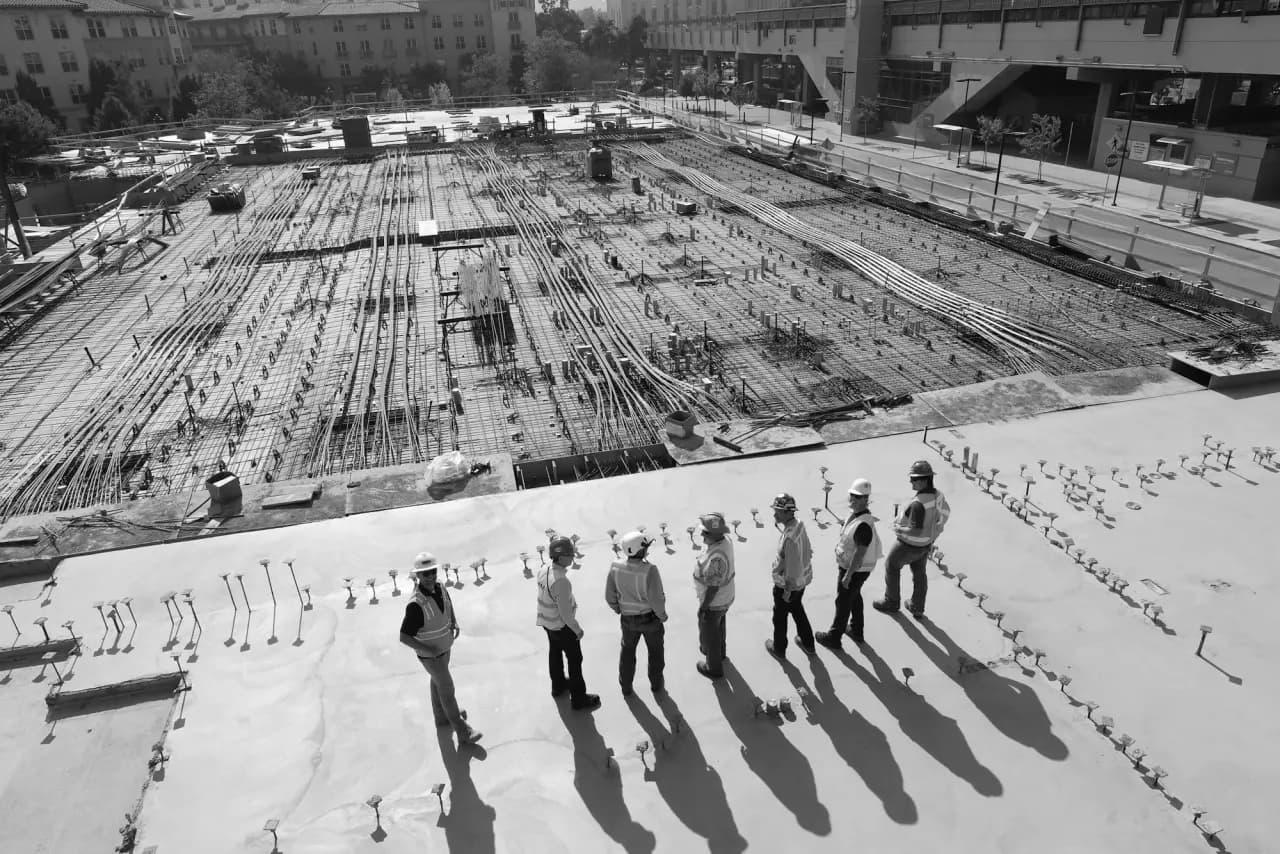
Cast-in-place concrete commonly runs about 5 percent for a clean slab on grade, and higher when the subgrade is rough, the forms are irregular, or pump line loss is significant. Footings poured against earth often carry more than a slab on a prepared base because over-excavation gets filled with concrete.
Lumber and framing
Dimensional lumber commonly carries about 10 to 15 percent because stock lengths rarely match the framing module and you cut to fit. Studs at a fixed spacing waste less than rafters and blocking, which generate a lot of short offcuts.
Tile and finishes
Tile commonly runs about 10 percent for a straight lay and can reach 15 percent or more for diagonal patterns, mosaics, or rooms with many cuts and corners. Always check the spec for an attic stock requirement, which is extra material delivered for the owner and is not waste.
Rebar laps
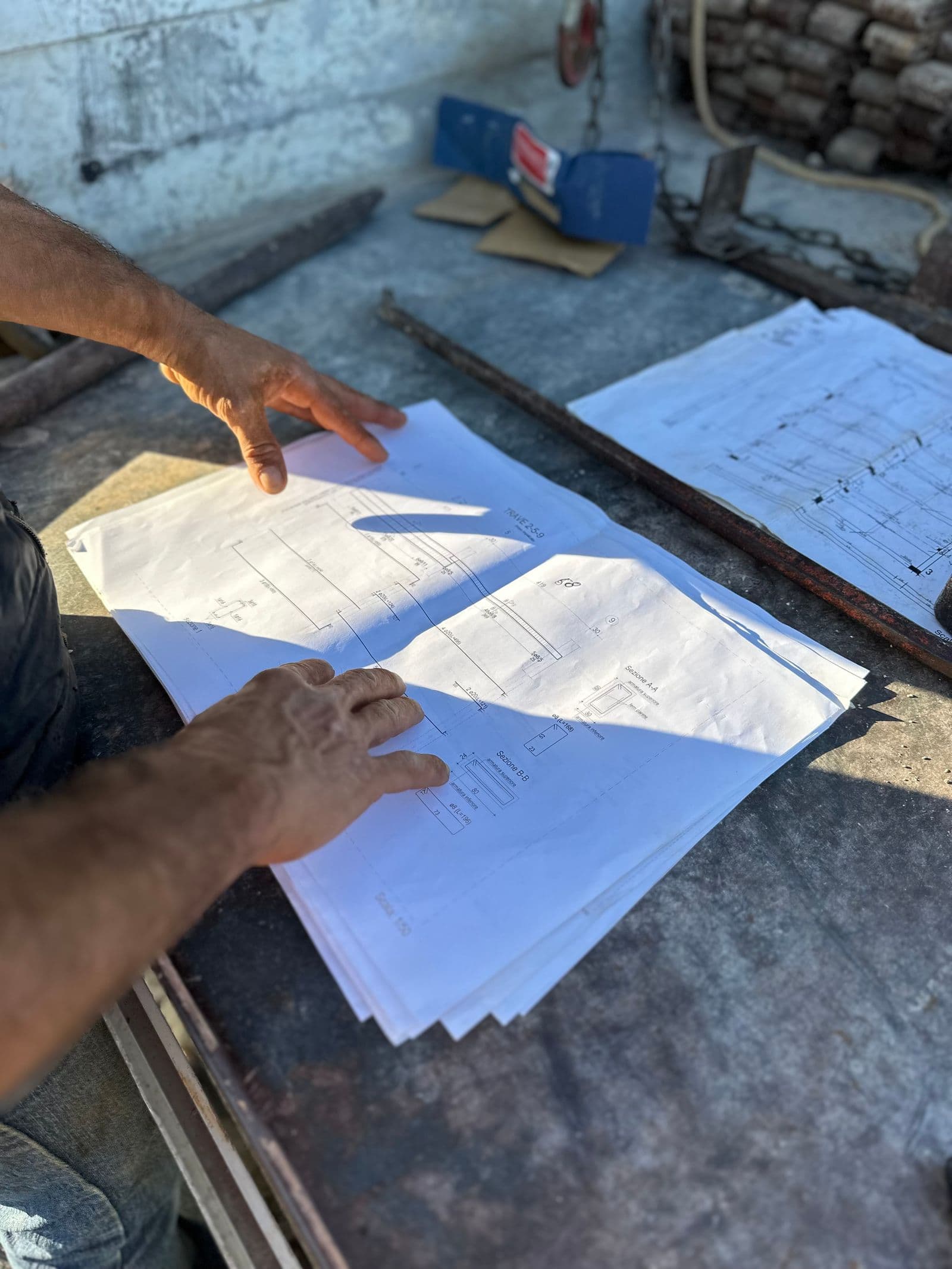
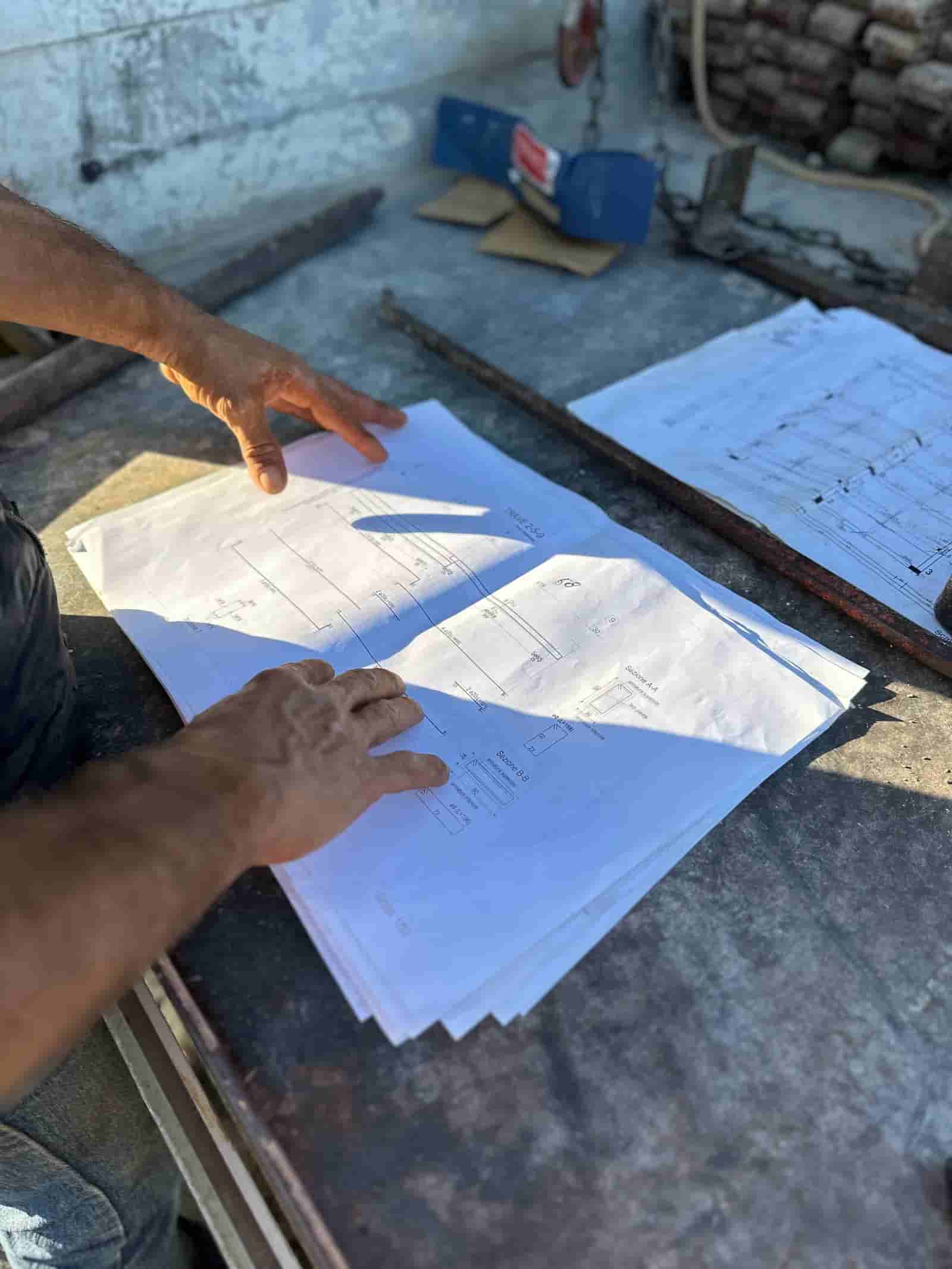
Reinforcing steel is a special case. The extra length at a splice is a lap, not waste, but it still adds steel the drawing does not dimension, so estimators commonly fold a single allowance of about 5 to 10 percent into the takeoff to cover laps, supports, and ordinary waste together. If you are detailing laps explicitly, count them as length and keep the pure waste allowance smaller.
Waste factor versus contingency
These two get confused, and confusing them costs money. A waste factor is a quantity adjustment on a specific material, tied to how that material installs. Contingency is a dollar allowance on the whole estimate for costs that are likely but cannot be pinned to a line yet, like minor scope gaps between trades or field conditions.
The practical difference: waste lives inside the material line and gets bought, used, and largely consumed on every job. Contingency lives as its own line on the estimate summary and is only drawn down when an unplanned cost actually hits. Adding a generous waste factor and then padding contingency to cover the same risk is double-dipping, and it makes your bid fat. Waste covers the offcuts you know you will throw away. Contingency covers the surprise you cannot name yet.
When over- or under-applying waste loses bids or money
This is where the factor earns its keep. The two failure modes are mirror images.
Under-apply waste and you win the bid on a number you cannot build to. The field runs short, you place rush reorders at higher prices and worse lead times, the schedule slips, and the margin you thought you had evaporates into expedite fees and crew downtime. On a fixed-price job, the owner does not refund you for material you forgot to buy.
Over-apply waste and you never get the chance to lose money, because you do not win the work. A factor that is two or three points too high across every material line quietly inflates the bid by a meaningful amount on a large job, and on competitive hard bid work the spread between first and second place is often razor thin. The estimator who carries 18 percent on drywall out of habit loses to the one who calibrated 10 percent against real history.
The defensible position is the calibrated middle: a factor you can trace to your own completed jobs, adjusted up or down for the specific layout in front of you, and documented on the line so a reviewer can see your reasoning.
Worked example 1: drywall on a tenant improvement
Take an office fit-out. The floor plan shows 320 linear feet (lf) of new interior partition at 10 feet tall. The walls are finished both faces.
Step 1, wall area: 320 lf x 10 ft = 3,200 square feet (sf) of wall.
Step 2, both faces: 3,200 sf x 2 = 6,400 sf of gypsum board.
Step 3, apply waste. The plan is a mix of private offices and a few small huddle rooms, so cuts are frequent. You carry 12 percent: 6,400 sf x 1.12 = 7,168 sf.
Step 4, convert to sheets and round up. Standard 4 ft x 8 ft sheets are 32 sf each: 7,168 sf divided by 32 sf per sheet = 224 sheets exactly, so order 224 sheets.
Step 5, price it. At an illustrative $14 per sheet delivered, the material line is 224 x $14 = $3,136. Notice steps 1 and 2 are pure measurement, while the 12 percent in step 3 is the estimator's judgment about this specific layout. Drop the factor to 10 percent and you order 6,400 x 1.10 = 7,040 sf, or 220 sheets, a four-sheet swing on one wall package that scales fast across a whole building.
Worked example 2: concrete slab on grade
Take a slab on grade that is 120 feet long, 80 feet wide, and 6 inches thick. Concrete is measured and ordered in cubic yards (cy).
Step 1, area: 120 ft x 80 ft = 9,600 sf.
Step 2, volume in cubic feet: 6 inches is 0.5 ft, so 9,600 sf x 0.5 ft = 4,800 cubic feet (cf).
Step 3, convert to cubic yards: 4,800 cf divided by 27 cf per cy = 177.8 cy. This is the neat quantity.
Step 4, apply waste. The subgrade is prepared and the pour is straightforward, so 5 percent is reasonable: 177.8 cy x 1.05 = 186.7 cy.
Step 5, round to the order increment. Ready-mix is bought in whole or half yards, so order 187 cy.
Step 6, price it. At an illustrative $185 per cy delivered, the material line is 187 cy x $185 = $34,595, before placing, finishing, and reinforcing. If the subgrade were rough or the forms irregular, bumping the factor to 8 percent gives 177.8 x 1.08 = 192.0 cy, about 5 extra cubic yards, or roughly $925 of additional material on this one slab. That is the cost of the means-and-methods call, made visible.
How Ruh fits into this
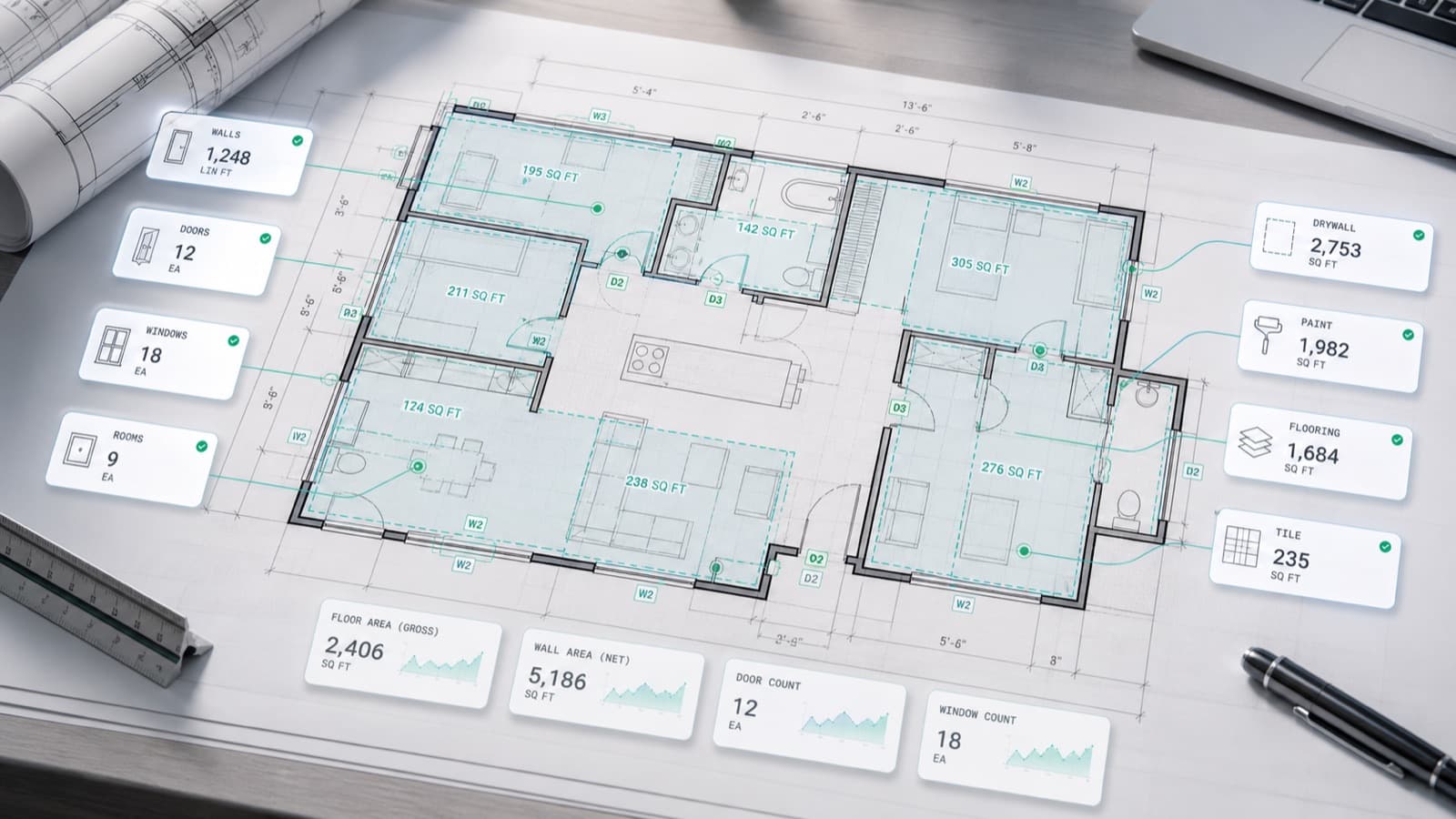
Ruh reads the contractor's drawing set, performs the takeoff (the partition lengths, the slab dimensions, the counts), and prices those quantities against the contractor's own price book rather than generic cost data. It returns a line-item draft with the neat quantities laid out, so the estimator can apply or adjust the waste factor on each line, set it against the planned means and methods, and sign off. The measuring and the arithmetic get faster, but the waste factor stays a professional judgment call the estimator owns.
A waste factor is one of the few places in an estimate where a single percentage, repeated across dozens of lines, decides whether you win the bid and whether you make money once you do. Keep the neat quantity and the factor visible and separate, calibrate the percentage against your own completed jobs instead of inherited habit, adjust it for the layout actually in front of you, and document the reasoning on the line. Do that and the number stops being a guess and starts being defensible.
Try Ruh on a real bid. 100% money-back guarantee if you are not satisfied.*
*Scoped delivery, terms apply. Read the guarantee terms
Frequently asked questions
What is a typical waste factor in construction?+
There is no single number, but commonly used US starting points are roughly 5 percent for cast-in-place concrete, 10 percent for drywall and tile on straightforward layouts, 10 to 15 percent for dimensional lumber, and 5 to 10 percent folded into rebar to cover laps and waste together. These are rules of thumb each firm calibrates against its own job cost history. A complex layout with many cuts justifies the high end, a simple open one the low end.
Do you add waste to the quantity or to the unit price?+
Add it to the quantity, then round up to the purchase increment, and keep the neat quantity and the waste factor as separate visible numbers. Burying waste inside the unit price hides the math from reviewers and makes the neat quantity unusable for buyout and for comparing against subcontractor bids. The clean form is buy quantity equals net quantity times one plus the waste factor.
What is the difference between a waste factor and contingency?+
A waste factor is a quantity adjustment on a specific material, tied to how that material installs, and it gets bought and consumed on every job. Contingency is a dollar allowance on the whole estimate for likely costs that cannot be pinned to a line yet, and it is only drawn down when an unplanned cost actually hits. Using both to cover the same risk is double-dipping and inflates the bid.
Is a rebar lap the same as waste?+
No. A lap is the extra length of bar at a splice, which the structural drawings require but often do not dimension, so it is real installed steel rather than discarded material. Many estimators fold a single allowance of about 5 to 10 percent into the rebar takeoff to cover laps, supports, and ordinary waste together. If you detail and count laps explicitly as length, keep the pure waste allowance smaller so you are not paying for the same steel twice.
Can AI set the waste factor for me?+
AI can read the drawings, run the takeoff, and lay out the neat quantities line by line so the percentage is easy to apply, but it should not pick the number for you. The right waste factor depends on the planned means and methods, the layout complexity, and your own historical job cost data, which is a judgment call the estimator owns and signs off on. Treat an AI draft as a fast, defensible first pass that you verify.
Still pricing in a spreadsheet? Your price book, automated end to end. Your estimator signs off.
See it runTerms used in this guide
Figures on this page are illustrative. Construction estimates depend on project-specific conditions, source documents, market pricing, and professional judgment. Ruh's AI assists the estimator and does not replace professional review: your team reviews, validates, and approves every estimate, bid, and pricing decision.