Construction glossary · Envelope and finishes
What is VCT (vinyl composition tile) in construction?
VCT (vinyl composition tile) is a hard, low-cost resilient floor tile made of vinyl, limestone filler, and color pigment, supplied in 12 by 12 inch squares and adhered to a prepared slab. The estimator takes it off by the square foot of floor area, then converts to tile count and to boxes for ordering. VCT is common in schools, retail back-of-house, and healthcare corridors because it is cheap and field-repairable, though it requires regular stripping and waxing.
Updated June 2026 · Reviewed by the Ruh construction team
VCT tile count from floor area
Estimating envelope and finishes scope this week? Watch Ruh take off a real plan in 30 minutes.
Book a walkthroughVCT, vinyl composition tile, is a composite resilient flooring of vinyl binder, limestone or mineral filler, and pigment, pressed into rigid tiles. The standard format is a 12 by 12 inch tile (1 sf each) in a 1/8 inch gauge, installed in full-spread adhesive over a smooth, dry, level slab. VCT relies on a wax or floor-finish topcoat for sheen and stain resistance, so the maintenance program (strip and wax) is part of the life-cycle picture even though it is not in the install bid. The estimator reads the floor finish schedule and the finish plan to identify which rooms get VCT versus LVT, sheet vinyl, or sealed concrete, and notes the tile pattern (straight, ashlar, or feature borders) because patterns and color changes drive cut waste and layout labor. Floor prep, including patching, skim-coating, and moisture testing of the slab, is a separate and often significant line. VCT is priced low per square foot, but the prep and the long-term maintenance are where projects get surprised.
Quantify VCT by the square foot of net floor area from the finish plan, measured room by room and totaled by tile color or pattern where borders or accents are called out. Because a 12 by 12 tile equals 1 sf, the net tile count equals the net square footage before waste. Add a waste factor (commonly 5 to 10 percent) for cuts at walls, columns, and diagonal or patterned layouts. Convert to boxes using the coverage printed on the carton (commonly about 45 sf per box for 12x12 VCT). Quantify adhesive by the spread rate on the product data sheet against the net area, and measure floor prep (patch, skim, moisture mitigation) and transition strips separately.
Worked example
Illustrative, US market. A 4,000 sf corridor gets one color of 12 by 12 VCT. Since each tile is 1 sf, net tile count equals 4,000 tiles. Apply a 5 percent waste factor: 4,000 x 1.05 = 4,200 tiles. At a carton coverage of 45 sf per box, boxes needed are 4,200 / 45 = 93.3, which rounds up to 94 boxes (you cannot buy a partial box). For material budgeting at an illustrative 1.35 per sf, the tile alone is 4,000 x 1.35 = 5,400 dollars, before adhesive, floor prep, and installation labor. The estimator keeps adhesive, slab prep, and transitions on their own lines, since on a tight slab the prep can rival the tile cost.
Try Ruh on a real bid. 100% money-back guarantee if you are not satisfied.*
*Scoped delivery, terms apply. Read the guarantee terms
How Ruh handles VCT (vinyl composition tile)
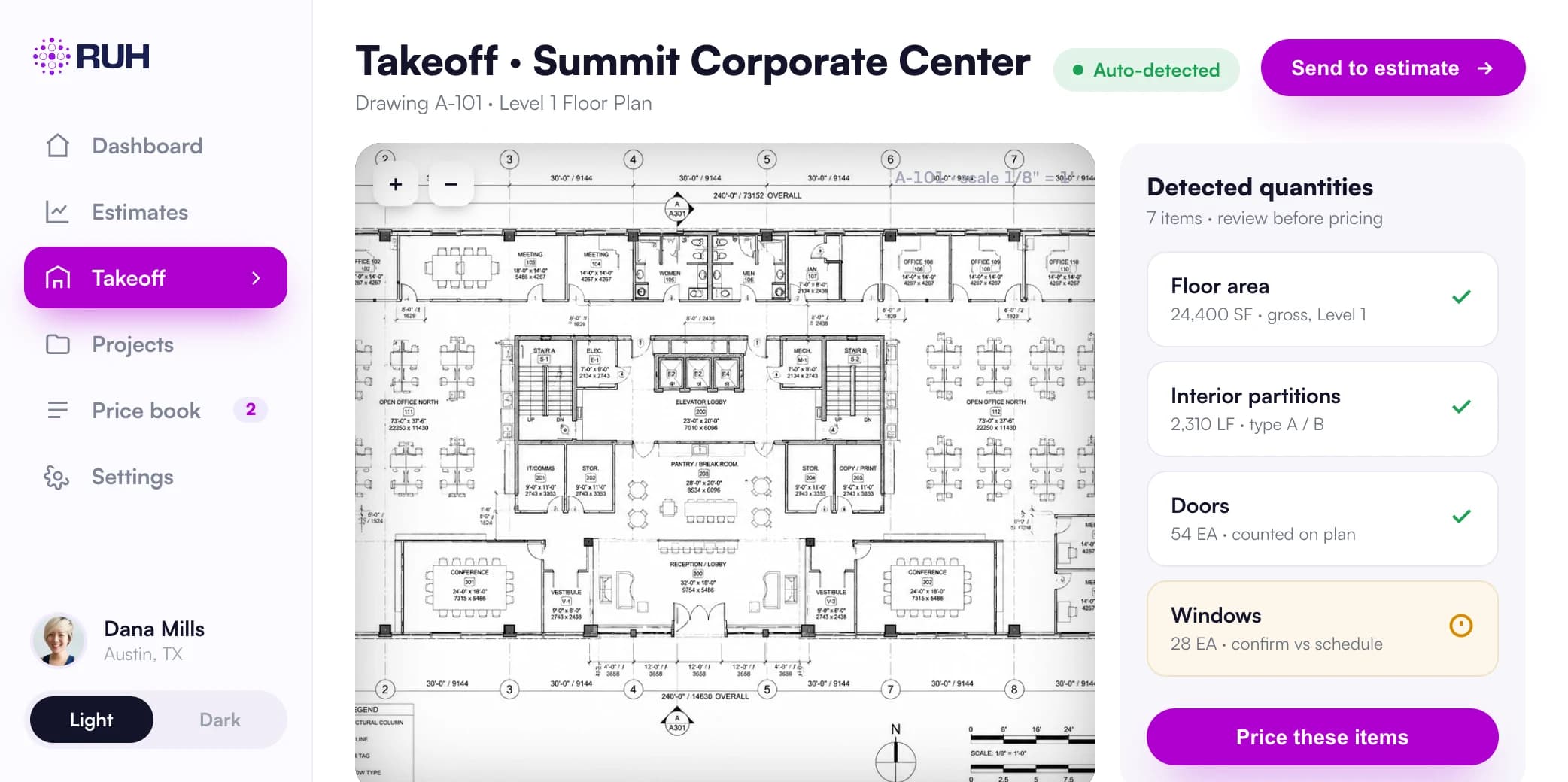
Ruh reads the floor finish plan and the finish schedule, takes off VCT by the square foot of net floor area per room, and splits it by color or pattern where the drawings call for borders or accents. It converts area to tile count and to full boxes using the carton coverage and the firm's waste factor, and it carries adhesive, floor prep, and transitions as separate lines. It prices everything on the contractor's own price book, and the estimator reviews the layout assumptions and signs off.
See construction estimating softwareVCT (vinyl composition tile): frequently asked questions
How do I turn VCT square footage into a tile count?+
A standard VCT tile is 12 by 12 inches, which is exactly 1 sf, so the net tile count equals the net square footage. Then add 5 to 10 percent for cuts and pattern waste, and round boxes up to the next whole carton using the coverage printed on the box (often about 45 sf per box).
Why does VCT prep cost so much relative to the tile?+
VCT shows every slab imperfection and needs a smooth, dry, level substrate. Patching, skim-coating, grinding, and slab moisture testing or mitigation are separate scope and can equal or exceed the tile material cost. Always carry floor prep as its own line rather than burying it in a blended square-foot rate.
When is LVT specified instead of VCT?+
LVT is chosen where appearance, comfort, water resistance, and no-wax maintenance matter more than first cost. VCT is cheaper per square foot but needs ongoing strip-and-wax. Read the finish schedule to see which rooms get which product, since many projects mix the two.
Still measuring by hand? Your next takeoff can run while you review this one.
See it on your plansRelated terms
Keep going: read the full guide or explore construction estimating software.
See Ruh price a bid from your own drawings.
AI takeoff and estimating on your price book, your estimator signs off.
Figures on this page are illustrative. Construction estimates depend on project-specific conditions, source documents, market pricing, and professional judgment. Ruh's AI assists the estimator and does not replace professional review: your team reviews, validates, and approves every estimate, bid, and pricing decision.