100% money-backBook a walkthrough

Construction glossary · Wood framing

What is header in construction?

A header is the horizontal beam over a door, window, or other wall opening that carries the loads from above and transfers them around the opening to the studs on each side. In light-frame walls a header is commonly built up from two or more 2x members, sized by the opening width and the load it carries.

Updated June 2026 · Reviewed by the Ruh construction team

Typical build (2) 2x10 + spacerSpan rule ~1 in. depth per ftBearing King + jack studs each endOver openings Doors, windows

Built-up header over opening

2x10 ply1/2 in. plywood spacer2x10 ply3-1/2 in. (matches 2x4 wall)Spans 3 ft to 6 ft opening

Estimating wood framing scope this week? Watch Ruh take off a real plan in 30 minutes.

Book a walkthrough
Definition

A header spans the top of an opening and picks up the floor, roof, or wall loads that would otherwise have come straight down through the missing studs, redirecting that load to the jack studs and king studs framing the opening. In conventional light-frame construction headers are built up from dimensional lumber, often two plies of 2x stock such as (2) 2x8, (2) 2x10, or (2) 2x12, sometimes with a plywood or OSB filler between plies to make up the wall thickness, or upgraded to engineered members like LVL where spans or loads are larger. The depth of the header (the 2x size) grows with the clear span of the opening and the load above: a wider opening or a header carrying roof and floor loads needs a deeper or stronger member than a short opening in a non-bearing wall. Each end of the header bears on a jack stud (trimmer), which carries the load down to the plate and floor, while a full-height king stud nailed alongside keeps the assembly plumb and braced. The structural plan or header schedule specifies the size for each opening.

How it is measured

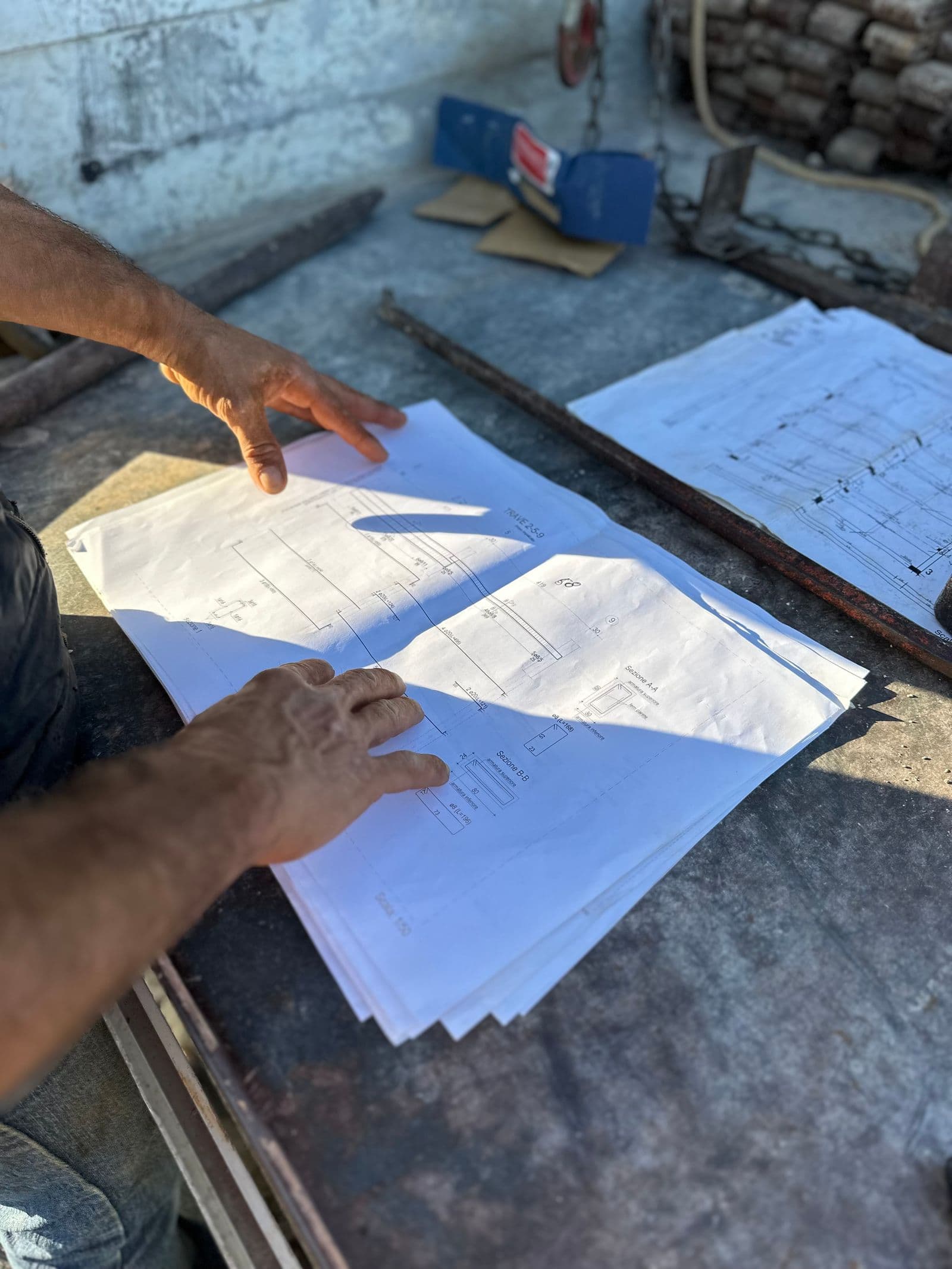
Read the opening width from the door and window schedule and the header size from the structural plan or header schedule. Header length per ply equals the rough opening width plus the bearing at each end on the jack studs, typically 1.5 in of bearing per end, so length per ply is the opening plus 3 in. Multiply by the number of plies for total board footage of header stock, and add the jack and king studs at each end from the stud takeoff. Note depth (2x8, 2x10, 2x12, or an engineered size) because it drives both material and the cripple stud fill above the header up to the top plate. Report headers by opening as a size, length, and ply count, plus the supporting jacks and kings.

Worked example

Worked example

Take a 6 ft opening getting a (2) 2x10 header in a 2x4 bearing wall. Opening width = 6 ft = 72 in. Add bearing on a jack stud at each end at 1.5 in per end: 72 + 1.5 + 1.5 = 75 in per ply. Two plies: 75 in x 2 = 150 in of 2x10, which is 12.5 lf. Buying a 16 ft 2x10 covers both plies with one board cut in half (16 ft = 192 in, enough for two 75 in plies). Add 2 jack studs and 2 king studs at the opening. Illustrative US pricing: one 2x10x16 at $34 = $34, plus 4 supporting studs at $9.50 = $38, for $72 in framing material for this header and its supports, before cripples and the plywood spacer.

100%

Try Ruh on a real bid. 100% money-back guarantee if you are not satisfied.*

*Scoped delivery, terms apply. Read the guarantee terms

Start with a walkthrough
How Ruh handles it

How Ruh handles header

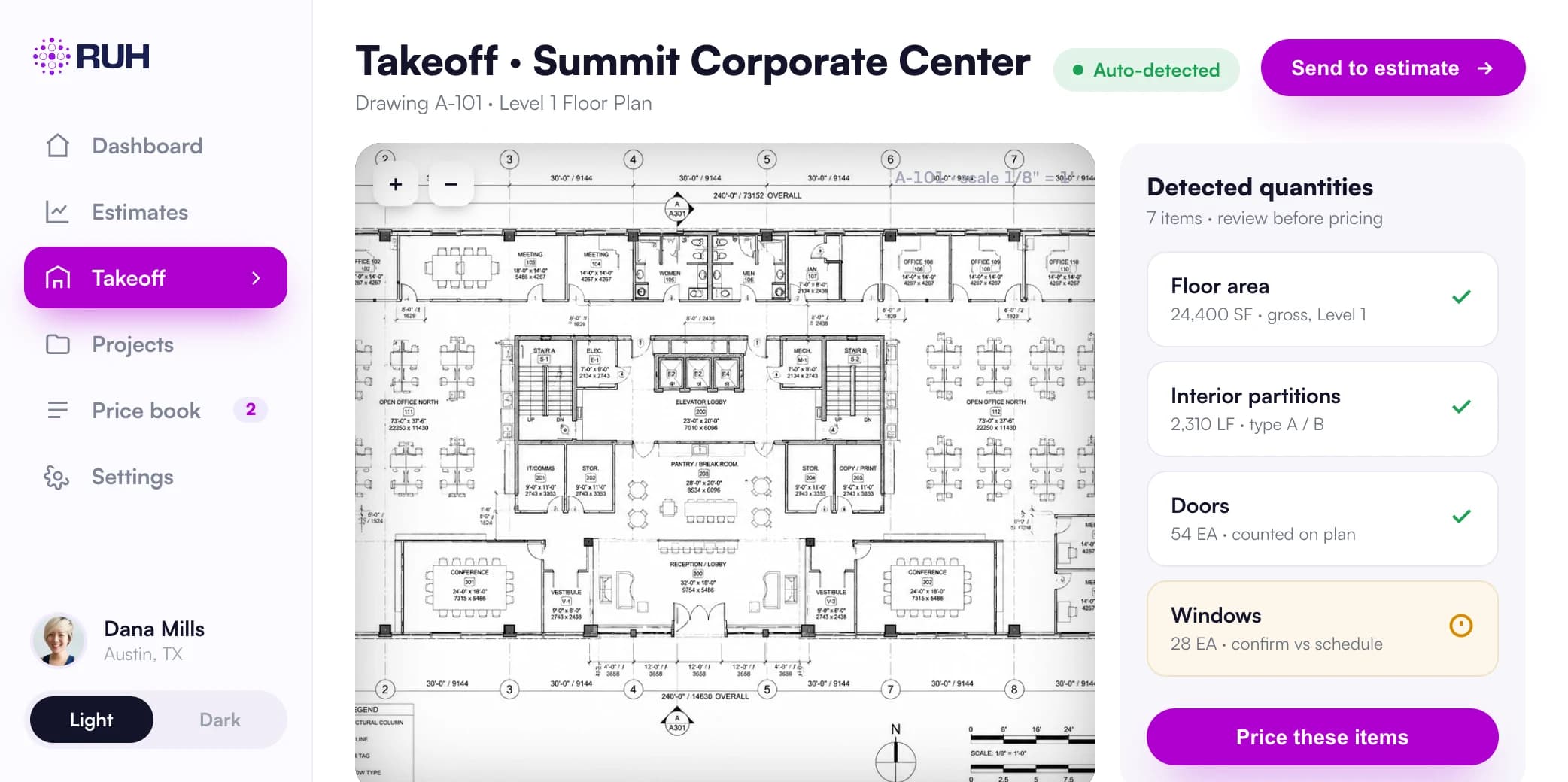
Ruh reads the opening widths off the door and window schedule and the header sizes off the structural plan or header schedule, then computes header length per ply as the opening plus end bearing, multiplies by the ply count, and adds the jack and king studs and the cripples above each header. It converts the lengths to board feet and pieces and prices the headers and supports on your own price book. The estimator confirms the schedule sizes and signs off.

See framing estimating software

Header: frequently asked questions

How long does a header need to be?+

Per ply, the header equals the rough opening width plus the bearing at each end, commonly 1.5 in on each jack stud, so opening plus 3 in. For a 6 ft (72 in) opening that is 75 in per ply. Then multiply by the number of plies.

How do I know what size header to use?+

Header depth grows with the clear span and the load above. The structural plan or header schedule specifies the size, such as (2) 2x10 over a 6 ft opening in a bearing wall. Do not guess; larger spans or roof-plus-floor loads may call for LVL.

What carries the header at each end?+

Each end of the header bears on a jack stud, also called a trimmer, which carries the load down to the plate and floor. A full-height king stud is nailed alongside to keep the opening plumb and braced. Both are counted with the header takeoff.

Still measuring by hand? Your next takeoff can run while you review this one.

See it on your plans

Related terms

Keep going: read the full guide or explore framing estimating software.

The Wood framing estimating cheat sheet
Every unit, waste factor, and conversion on one page. Free PDF.

See Ruh price a bid from your own drawings.

AI takeoff and estimating on your price book, your estimator signs off.

Figures on this page are illustrative. Construction estimates depend on project-specific conditions, source documents, market pricing, and professional judgment. Ruh's AI assists the estimator and does not replace professional review: your team reviews, validates, and approves every estimate, bid, and pricing decision.