Construction glossary · MEP
What is gas piping in construction?
Gas piping in construction is the fuel gas distribution system that carries natural gas or propane from the utility meter to appliances such as water heaters, boilers, rooftop units, and kitchen equipment. It is sized from the connected BTU load and the length of the run, and installed mostly in black steel pipe or CSST. In a takeoff, pipe is measured in linear feet by size, while meters, regulators, and valves are counted each.
Updated June 2026 · Reviewed by the Ruh construction team
How gas piping flow is sized from BTU load
Estimating mep scope this week? Watch Ruh take off a real plan in 30 minutes.
Book a walkthroughGas piping shows up on the plumbing sheets on most commercial jobs (sometimes the mechanical set) as a plan routing, a gas riser diagram, and an equipment connection schedule listing the BTU per hour input of every appliance. The utility owns everything up to the meter; the plumbing or mechanical subcontractor owns the meter outlet to the appliance valves. The first thing to read is the pressure regime. A low pressure system runs at inches of water column throughout and needs big pipe on long runs; a 2 psi system runs smaller pipe but adds a line regulator at each appliance to step pressure back down, so the pipe gets cheaper while the each-counts get longer. Material splits by size and setting: black steel threaded at 2 inch and smaller, welded above that, with CSST common in light commercial and tenant work (and it carries a bonding requirement). New estimators miss the rooftop scope, supports, painting, and labeling for exposed gas pipe serving RTUs, and the seismic shutoff valve some jurisdictions require at the meter.
Pipe is taken off in lf by size and material from the gas plan and riser diagram, with welded steel priced differently from threaded. Meters (or the meter connection), line regulators, appliance regulators, shutoff valves, dirt legs, and flex connectors are counted each. The sizes themselves come from the engineer's sizing run: total connected BTU load, the developed length to the farthest appliance, and the allowable pressure drop set every diameter, which is why a long run to a single rooftop unit can carry surprisingly large pipe. Cost drivers: pressure class and testing requirements, welded versus threaded labor, rooftop routing with supports every few feet, and painting and labeling of exposed pipe. Check the equipment schedule for BTU inputs the gas plan forgot to show.
Worked example
Try Ruh on a real bid. 100% money-back guarantee if you are not satisfied.*
*Scoped delivery, terms apply. Read the guarantee terms
How Ruh handles gas piping
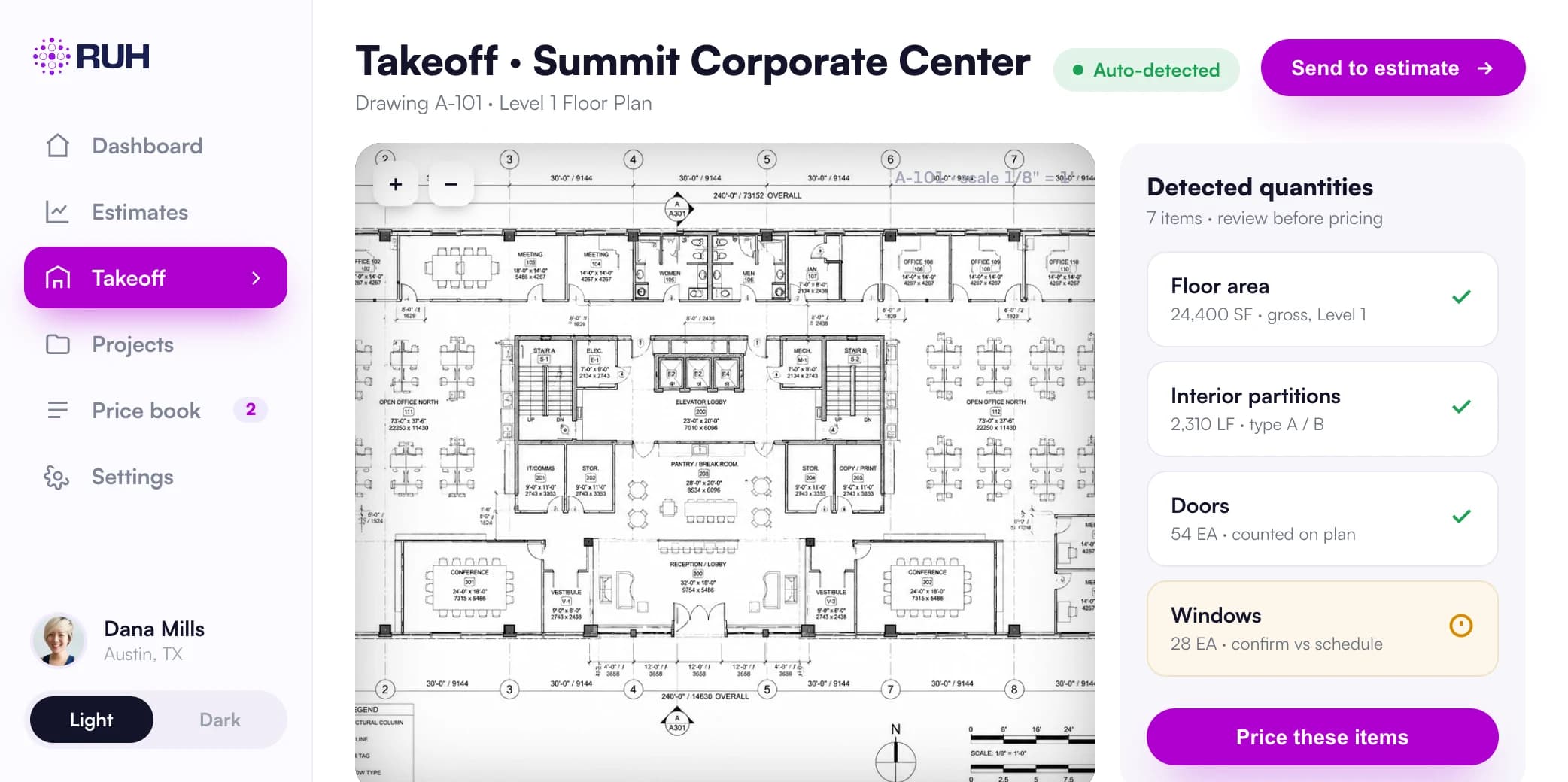
Ruh measures gas pipe lf by size off the riser diagram and plans, counts regulators, valves, and meter connections each, and applies the contractor's own unit costs to build a draft estimate. The estimator reviews the pressure regime assumptions and approves the line items before they reach the bid.
See AI construction takeoff and estimating softwareGas piping: frequently asked questions
What is the difference between black steel pipe and CSST for gas?+
Black steel (black iron) is rigid Schedule 40 pipe, threaded at small sizes and welded at larger ones; it is the default for commercial gas work, tough against physical damage, cheap as material but labor heavy. CSST is corrugated stainless steel tubing that routes like cable, cutting labor dramatically in framed construction, but it costs more per foot, requires manufacturer certification for installers, and must be bonded to the electrical grounding system to protect against lightning-induced damage.
Who owns the gas meter, the contractor or the utility?+
The utility owns and sets the meter and everything upstream of it, including the service line and the service regulator. The contractor's scope starts at the meter outlet: the house line, line regulators on medium pressure systems, valves, and every run to the appliances. The estimator's trap is schedule, not dollars: the meter set requires a utility application and load letter, sometimes a service upgrade with long lead times, so the coordination belongs in the bid assumptions.
Why does gas pipe size depend on the length of the run?+
Because the sizing tables work on pressure drop. Gas flowing through pipe loses pressure to friction, and the longer the run, the more it loses, so the same BTU load needs a larger diameter to arrive at the appliance with usable pressure. Code sizing methods use the developed length to the farthest appliance for the whole system, which is why one distant rooftop unit can upsize pipe serving everything else, and why a 2 psi system can run smaller pipe than a low pressure one.
Still measuring by hand? Your next takeoff can run while you review this one.
See it on your plansRelated terms
Keep going: read the full guide or explore AI construction takeoff and estimating software.
See Ruh price a bid from your own drawings.
AI takeoff and estimating on your price book, your estimator signs off.
Figures on this page are illustrative. Construction estimates depend on project-specific conditions, source documents, market pricing, and professional judgment. Ruh's AI assists the estimator and does not replace professional review: your team reviews, validates, and approves every estimate, bid, and pricing decision.