Construction glossary · MEP
What is fire sprinkler in construction?
A fire sprinkler in construction is an automatic discharge head connected to a piped water network that opens individually when its heat-sensitive element reaches its rated temperature, putting water directly on the fire below it. Commercial systems are designed to NFPA 13, which sets coverage area per head and water density by the hazard classification of the space. In a takeoff, heads are counted each, pipe runs in linear feet, and the work is usually bought as a design-build fire protection subcontract.
Updated June 2026 · Reviewed by the Ruh construction team
How sprinkler heads are counted
Estimating mep scope this week? Watch Ruh take off a real plan in 30 minutes.
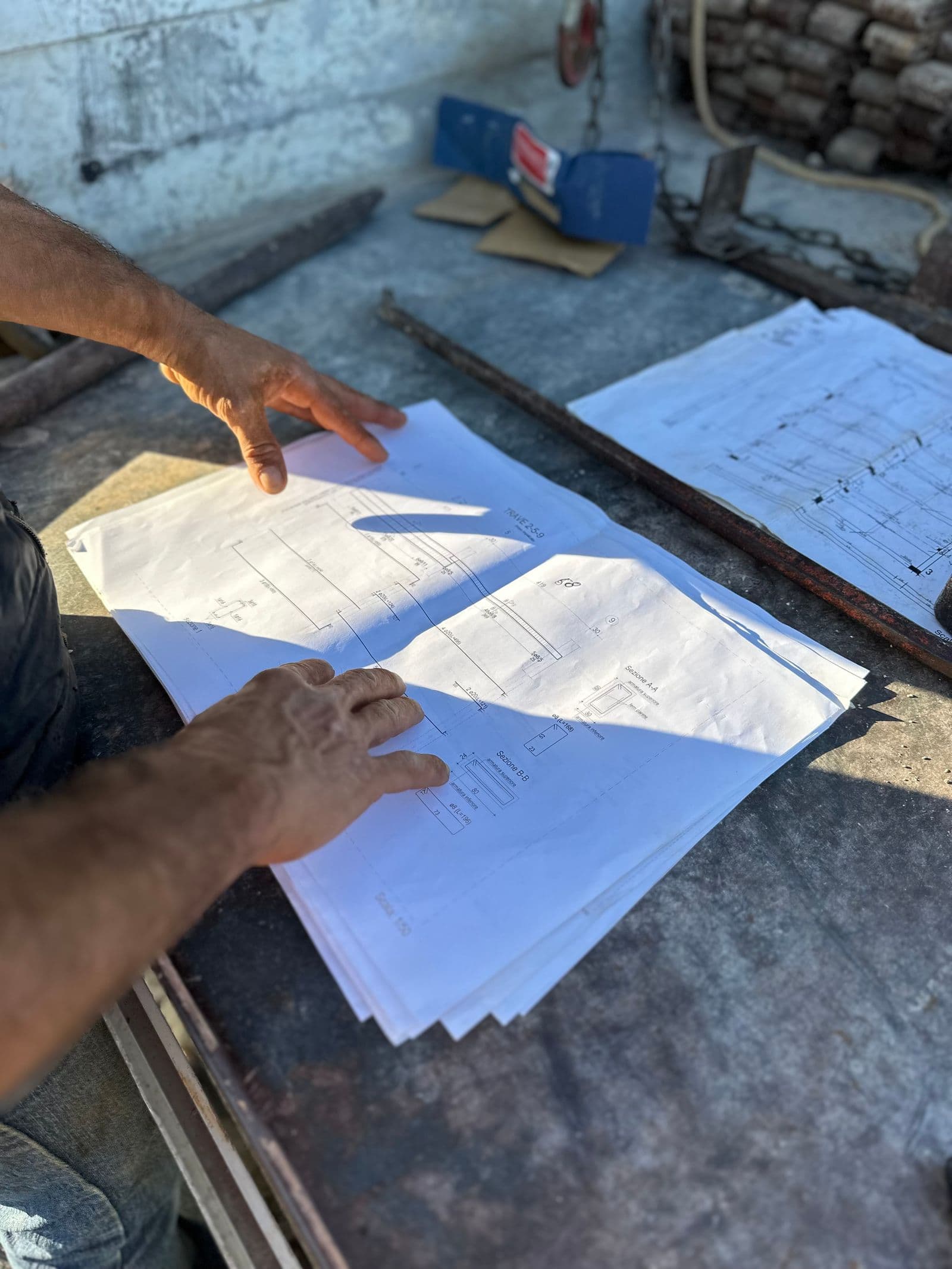
Book a walkthroughFire sprinkler scope lives partly in the contract drawings and partly in deferred design. Bid sets often show only performance criteria: hazard classifications, water supply data, and riser locations, with the fire protection subcontractor producing hydraulically calculated shop drawings after award. That makes it a design-build trade on most US commercial jobs, and the GC estimator's job at bid time is sanity checking sub quotes rather than rebuilding the system. Hazard class drives everything: light hazard (offices, classrooms) needs less water per square foot than ordinary hazard (most manufacturing, parking) or extra hazard, so design density and head spacing set the pipe sizes and the price. Head locations coordinate with the reflected ceiling plan, and centering heads in ceiling tiles is a finish expectation that adds fitting labor. What new estimators get wrong: comparing sub bids without checking that each assumed the same hazard classification and water supply, missing seismic bracing scope, and forgetting that anything that changes the ceiling (added soffits, relocated walls) changes head counts downstream. The flexible drop and the head are cheap; the engineering and the overhead mains are not.
Sprinkler heads are counted each, derived from coverage: NFPA 13 caps the floor area one head may protect by hazard class, so head count is roughly floor area divided by the per-head coverage the layout achieves. Pipe is measured in lf by size, branch lines versus mains, with fittings, hangers, and seismic bracing following the pipe. The riser assembly, valves, flow switches, and the fire department connection are counted each. At bid stage, with no shop drawings yet, estimators benchmark per head or per sf from history; after award, quantities come off the sub's hydraulically calculated drawings. Cost drivers: hazard class and design density, ceiling type, building height, dry versus wet system, and how much of the layout has to weave around ductwork and structure.
Worked example
Budget an 18,000 sf office floor, light hazard, 120 ft x 150 ft. Lay branch lines across the 120 ft dimension, spaced 12 ft apart along the 150 ft length: 150 / 12 = 12.5, call it 13 branch lines x 120 ft = 1,560 lf of branch pipe, plus a 150 ft cross main = 1,710 lf of pipe. Heads at 12 ft spacing on each line: 120 / 12 = 10 heads x 13 lines = 130 heads, each covering 12 x 12 = 144 sf, inside the 225 sf light hazard limit for standard spray heads. Coverage check: 130 x 144 = 18,720 sf, which blankets the 18,000 sf floor. Demand check: light hazard design density of 0.10 gpm per sf over a 1,500 sf remote area is 0.10 x 1,500 = 150 gpm before hose allowance. At an illustrative all-in budget of $350 per head, 130 x $350 = $45,500, about $2.53 per sf to sanity check against history.
Try Ruh on a real bid. 100% money-back guarantee if you are not satisfied.*
*Scoped delivery, terms apply. Read the guarantee terms
How Ruh handles fire sprinkler
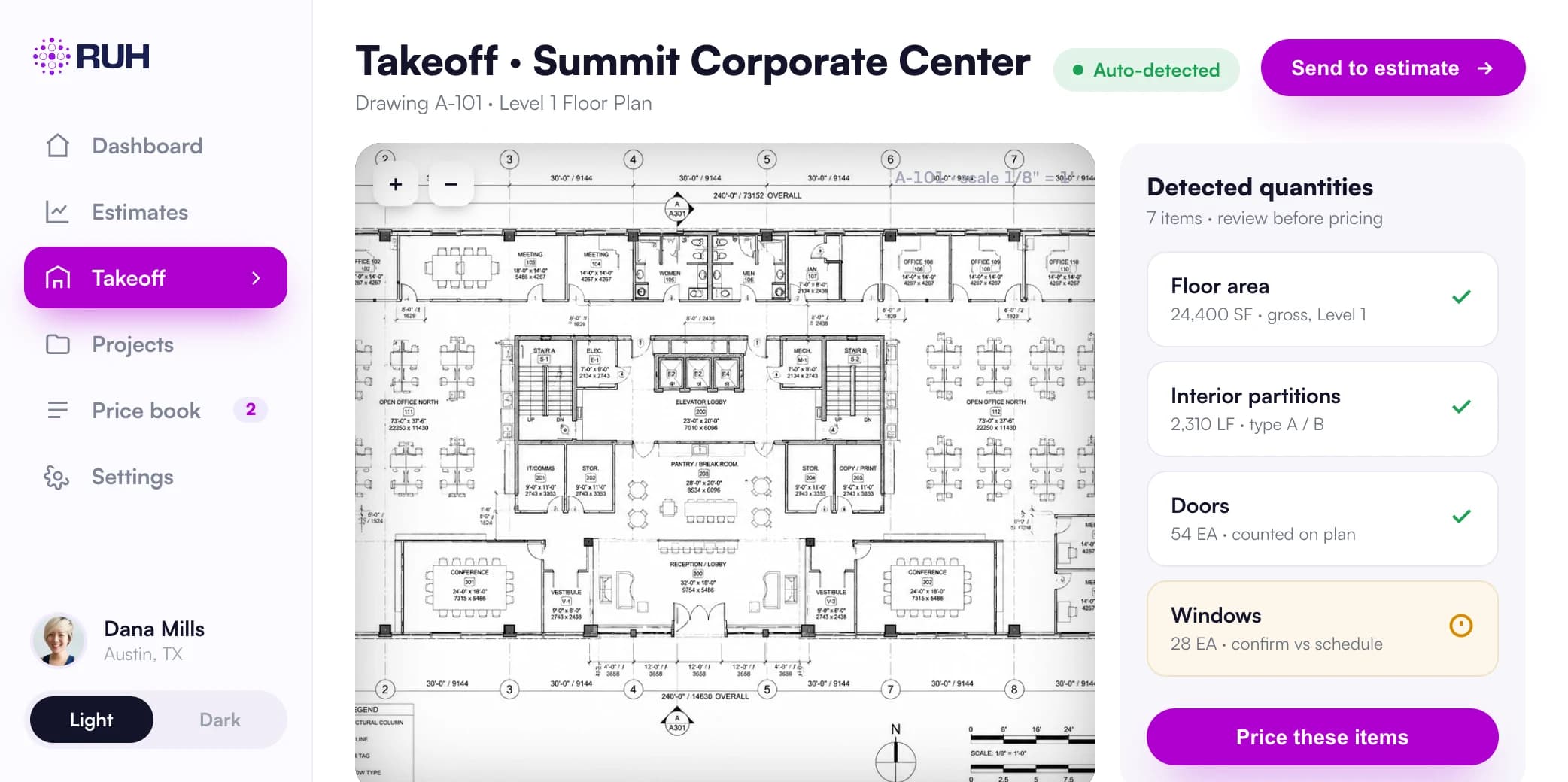
Ruh reads the floor plans and ceiling drawings, counts sprinkler heads each and measures pipe in lf, and prices the takeoff against the contractor's own price book, giving the estimator a benchmark to hold design-build sub quotes against. The estimator reviews the draft, checks the hazard class assumptions, and signs off before bid day.
See AI construction takeoff and estimating softwareFire sprinkler: frequently asked questions
How many fire sprinkler heads do I need per square foot?+
It depends on hazard classification and head type. Under NFPA 13, a standard spray head in a light hazard occupancy may protect up to 225 sf, and ordinary hazard tightens that to 130 sf, so plan roughly one head per 130 to 225 sf of floor area. Walls, soffits, and obstructions push the practical coverage below the code maximum, which is why head counts from real layouts run higher than a simple area division suggests.
Why is fire sprinkler work usually design-build?+
Because the final layout depends on hydraulic calculations against the actual water supply, and on coordination with ductwork, structure, and ceilings that are not settled at bid time. Contract documents typically give performance criteria (hazard classes, water flow test data, riser locations) and the licensed fire protection contractor engineers the system in shop drawings reviewed by the engineer and the fire marshal. The GC estimator prices it as a sub quote and verifies the assumptions behind each bid.
What does hazard classification mean for sprinkler cost?+
Hazard class sets the design density, the gallons per minute each square foot of the remote area must receive, and the maximum coverage per head. Light hazard offices need less water than ordinary hazard warehouses or manufacturing space, which means smaller pipe, fewer heads per area, and a lower cost per square foot. Misclassifying a space, like treating dense storage as light hazard, produces a bid-day price that cannot survive the fire marshal's review.
Still measuring by hand? Your next takeoff can run while you review this one.
See it on your plansRelated terms
Keep going: read the full guide or explore AI construction takeoff and estimating software.
See Ruh price a bid from your own drawings.
AI takeoff and estimating on your price book, your estimator signs off.
Figures on this page are illustrative. Construction estimates depend on project-specific conditions, source documents, market pricing, and professional judgment. Ruh's AI assists the estimator and does not replace professional review: your team reviews, validates, and approves every estimate, bid, and pricing decision.