
Owners and the consultants who run their procurement use four acronyms that get treated as interchangeable on jobsites and in bid rooms: RFI, RFP, RFQ, and ITB. They are not interchangeable. Each one signals a different stage of buying, a different basis of award, and a different kind of response from you. Reading the wrong one into a solicitation costs real money. A team that prices a design-build RFP the way it would price a hard-bid ITB either leaves the design risk uncovered or buries the number so deep it never makes the shortlist. This guide walks each instrument, who issues it, what the response looks like, and how the estimator handles it, with two worked numbers and one project run both ways.
What is an RFI and when is it used?
A Request for Information is the narrowest of the four and the only one that is not a procurement event by itself. An RFI is a question with a paper trail. It shows up in two places.
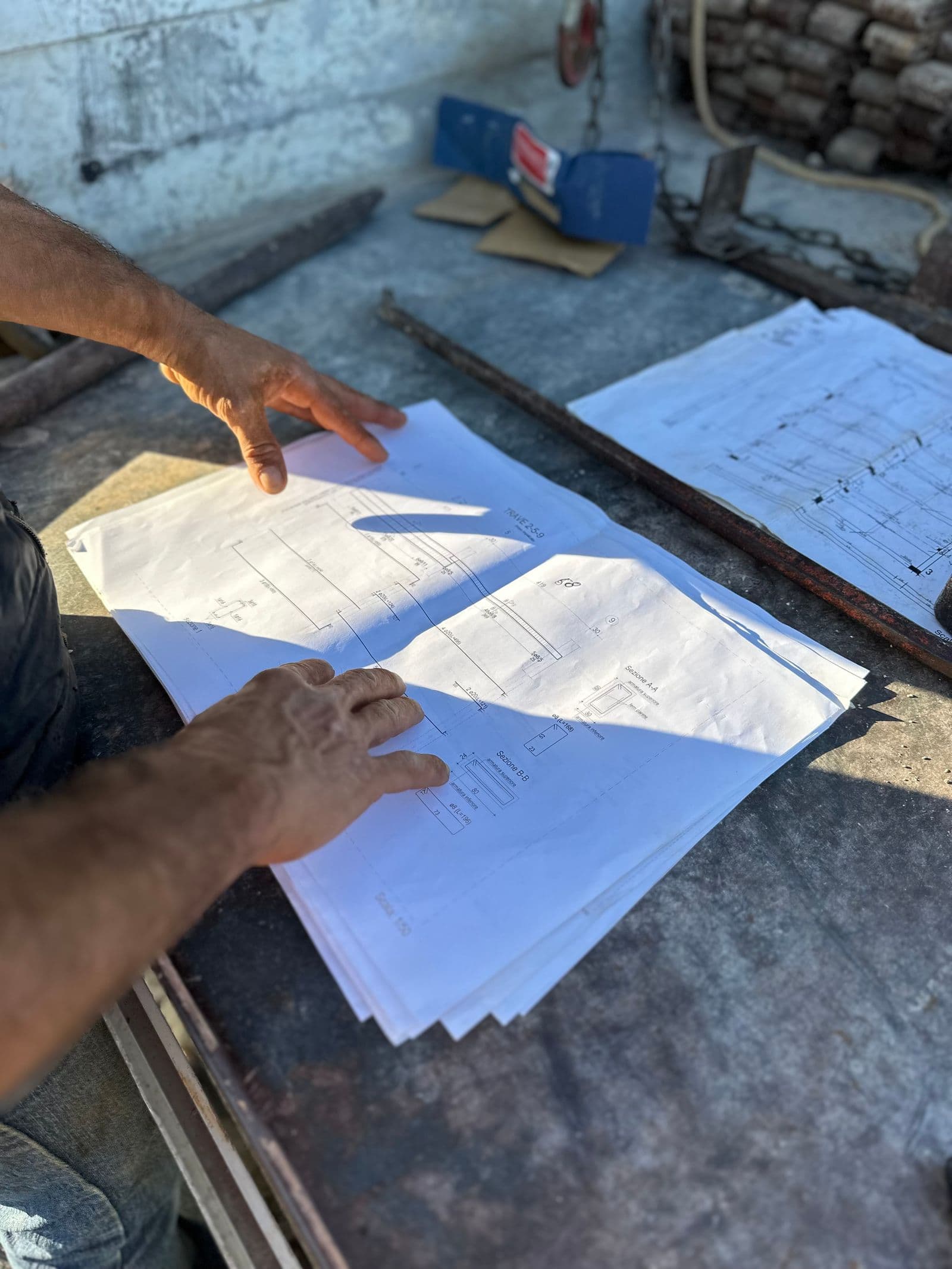
During bidding, an owner or design team issues an RFI process so bidders can ask about gaps, conflicts, or missing scope before numbers are due. You read the drawings, find that the structural slab edge does not match the architectural face of building on grid line C, and you submit an RFI. The answer comes back as an addendum that every bidder sees, so the playing field stays level.
During construction, the contractor issues RFIs to the design team to resolve field conditions that the documents do not cover. The response can drive a change order if it adds scope or cost.
The estimator's job with an RFI is discipline. Every unanswered question is a number you are guessing at. A clean bid carries a short, specific RFI log, not a vague note that says "clarify later." If the answer does not arrive before bid day, you carry an assumption in writing and price to it, so your exclusions match your number.
What is an RFQ and when is it used?
A Request for Quotation asks one thing: give me a price for this defined scope. The scope is already drawn or specified. There is little to interpret. An RFQ is how owners, general contractors, and construction managers buy commodity scopes and well-defined trade packages, and it is how a GC solicits subcontractor and supplier pricing to build up a bid.
The response is a quotation: a unit price or a lump sum tied to the documents referenced, usually with a validity window and a short list of inclusions and exclusions. Award is mostly about price, because the scope is fixed and the qualified bidders are roughly equal.
The estimator handles an RFQ with a takeoff and a price book. Because the scope is locked, the work is quantity times rate plus markup. There is little to no design risk to carry. The discipline here is making sure every quotation you receive covers the same scope, so you are comparing equal numbers and not letting a low quote win on a missing line.
Note one wrinkle in public work: some agencies use "RFQ" to mean Request for Qualifications, a statement-of-qualifications round that shortlists firms before any pricing. Read the body of the document, not just the acronym.
What is an RFP and when is it used?
A Request for Proposal asks for more than a price. An RFP is used when the owner wants the market to bring approach, team, schedule, and sometimes design, and when award will be scored on a combination of factors rather than low number alone. This is the standard instrument for design-build, for construction manager at risk selections, and for any project where the owner is buying expertise and not just labor and material against finished drawings.
The response is a proposal. It carries a technical section (team, approach, schedule, qualifications, sometimes a design concept) and a price section, which on design-build often becomes a GMP or a price tied to a stated design basis. Award uses a weighted matrix: price might be 40 to 60 percent of the score, with the balance on experience, schedule, and approach.
The estimator handles an RFP differently from an RFQ in one critical way: you are pricing incomplete information. The drawings may be at 30 percent or there may be only a program. You carry design contingency, design allowances, and qualifications that define what the number assumes. The proposal lives or dies on whether the price and the stated basis line up, because the owner will hold you to both.
What is an ITB or IFB and how does it differ?
An Invitation to Bid, also written IFB for Invitation for Bid, is the hard-bid instrument. The owner has complete construction documents, issues them to a qualified or open pool, and awards to the lowest responsive and responsible bidder. This is the backbone of public works delivery, where statute often requires open competitive bidding on completed plans.
The response is a sealed bid on the owner's form: a single lump sum, often with unit prices for measured items and additive or deductive alternates. There is no technical proposal to score. Responsiveness and price decide it.
The estimator handles an ITB as a full quantitative exercise against finished documents. You do a complete takeoff, solicit RFQs from subs and suppliers, level those quotes, add general conditions and fee, and submit one number. The risk is execution, not design, because the design is done. The discipline is coverage: every spec section accounted for, every alternate priced, every addendum acknowledged. Miss an addendum and a low bid gets thrown out as non-responsive.
Here is the quick read on all four:
- RFI: a question. No award. Used in bidding and in construction.
- RFQ: a price for a defined scope. Award mostly on price.
- RFP: a proposal scored on more than price. Used for design-build and CMAR.
- ITB/IFB: a sealed hard bid on complete documents. Award to low responsive bidder.
Worked example one: pricing an RFQ for a defined scope
A GC sends you an RFQ for the door hardware package on an office fit-out. The scope is fully specified: 48 openings, hardware sets averaging $420 per opening in material, installation at 1.5 labor hours per opening, your loaded labor rate $68 per hour, markup 12 percent. This is illustrative math, not a quoted job.
- Material: 48 openings × $420 = $20,160
- Labor hours: 48 openings × 1.5 hours = 72 hours
- Labor cost: 72 hours × $68 = $4,896
- Direct subtotal: $20,160 + $4,896 = $25,056
- Markup: $25,056 × 0.12 = $3,006.72
- Quoted price: $25,056 + $3,006.72 = $28,062.72
The quotation is clean because the scope is fixed. There is no contingency line, because there is no design risk to cover. You quote the number, state your inclusions and exclusions (hollow metal frames by others, for example), and set a 30-day validity window. That is the shape of an RFQ response.
Worked example two: the same project as an ITB and as an RFP
Take a 12,000-square-foot single-story office shell and run it both ways. All figures are illustrative.
As a hard-bid ITB. The owner issues complete construction documents. You take off the work, send RFQs to subs, and level the quotes to a total subcontractor direct cost of $2,640,000. You add general conditions and fee.
- Subcontractor and material direct cost: $2,640,000
- General conditions: $185,000
- Subtotal before fee: $2,640,000 + $185,000 = $2,825,000
- Fee at 4%: $2,825,000 × 0.04 = $113,000
- Bid: $2,825,000 + $113,000 = $2,938,000
There is no contingency for design, because the design is finished. Your risk is build risk and the accuracy of the leveled quotes.
As a design-build RFP. Now the owner issues a program and performance criteria, not finished drawings, and asks for a proposal that includes design. You estimate the construction at $2,500,000 based on the program, then carry the risk the incomplete documents create.
- Estimated construction cost: $2,500,000
- Design fees (architect and engineers): $95,000
- Design contingency at 5% of construction: $2,500,000 × 0.05 = $125,000
- Construction contingency at 3% of construction: $2,500,000 × 0.03 = $75,000
- Subtotal before fee: $2,500,000 + $95,000 + $125,000 + $75,000 = $2,795,000
- Fee at 4.5%: $2,795,000 × 0.045 = $125,775
- Proposed GMP: $2,795,000 + $125,775 = $2,920,775
The two numbers land close, $2,938,000 against $2,920,775, but they are not the same product. The ITB buys a defined building at a fixed scope with low design risk and low margin for the contractor's interpretation. The RFP buys a team and a design path, with contingencies that absorb the unknowns of incomplete documents and a basis-of-design statement the owner will hold you to. Price the RFP like an ITB, drop the contingencies to look cheap, and you have signed up to eat every gap between the program and the finished drawings.
How the estimator's playbook changes by instrument
The takeoff is the constant. What changes is what you wrap around it.
On an RFQ and an ITB, the documents are complete, so the estimate is quantitative: quantity times rate, leveled quotes, general conditions, fee. The energy goes into coverage and into making sure competing quotes cover identical scope.
On an RFP, the documents are incomplete by design, so the estimate is part quantitative and part judgment: allowances, design contingency, construction contingency, and a written basis that ties the price to a defined set of assumptions. The energy goes into making the basis airtight, because that is what protects the number when the design develops.
The RFI sits underneath all of them. On hard documents it cleans up conflicts before bid day. On incomplete documents it is how you sharpen the program enough to price it. Either way, an unanswered RFI is an assumption you carry in writing.
This is where an AI assist earns its keep on the quantitative side. Ruh reads the drawings, runs the takeoff, and prices the line items against your own price book, so the estimator starts from a complete quantity set instead of building it by hand under a bid clock. The estimator still owns the judgment calls, the contingencies, the qualifications, and the signature on the number. The tool gets you to a reviewable estimate faster; the human decides what goes out the door.
Read the instrument before you price it. RFI means answer the question and log the assumption. RFQ means quote the fixed scope and match the exclusions. RFP means price the unknowns honestly and write the basis that defends them. ITB means cover every section and acknowledge every addendum so a low bid stays responsive. The acronym tells you the basis of award, and the basis of award tells you how to build the number. Get that read right and the rest of the estimate follows.
Try Ruh on a real bid. 100% money-back guarantee if you are not satisfied.*
*Scoped delivery, terms apply. Read the guarantee terms
Frequently asked questions
What is the difference between an RFP and an RFQ?+
An RFQ asks for a price on a scope that is already drawn or specified, and award is mostly about the lowest qualified price. An RFP asks for a full proposal, including team, approach, schedule, and often design, and award is scored on a weighted matrix where price is only one factor. Use an RFQ when the scope is fixed; use an RFP when you are buying expertise or a design path.
Is an ITB the same as an IFB?+
Yes, in practice. Invitation to Bid (ITB) and Invitation for Bid (IFB) both name the hard-bid instrument: the owner issues complete construction documents and awards to the lowest responsive and responsible bidder. The label varies by agency, but the basis of award is the same.
Is an RFI a type of bid?+
No. An RFI, or Request for Information, is a question with a documented answer, not a procurement event. During bidding it resolves gaps and conflicts before numbers are due, with the answer issued as an addendum to all bidders. During construction it resolves field conditions and can drive a change order if it adds scope or cost.
When should an owner use an RFP instead of an ITB?+
Use an RFP when the documents are not finished and the owner wants the market to bring design, approach, and a team, as in design-build or construction manager at risk. Use an ITB when complete construction documents exist and the goal is the lowest price on a fixed scope, which is common and often legally required on public works.
Does RFQ always mean Request for Quotation?+
Not always. Most often RFQ means Request for Quotation, a price for a defined scope. On some public projects RFQ means Request for Qualifications, a statement-of-qualifications round that shortlists firms before any pricing. Read the body of the document to confirm which one you are answering.
Still pricing in a spreadsheet? Your price book, automated end to end. Your estimator signs off.
See it runTerms used in this guide
Figures on this page are illustrative. Construction estimates depend on project-specific conditions, source documents, market pricing, and professional judgment. Ruh's AI assists the estimator and does not replace professional review: your team reviews, validates, and approves every estimate, bid, and pricing decision.