Construction bid software for subcontractors. Bids you can defend.
Construction bid software for subcontractors takes a general contractor's bid package to a priced, approved proposal: the scope for your trades, the quantities, the prices and the document you send back. Below is what Ruh does at each step of a bid and what it leaves to you, a worked bid-day price change, and a free takeoff on a job you are bidding.
Clients include



Construction companies working with Ruh







Is Ruh a bid management platform?
No. Ruh does not find projects, send bid invitations or track who is bidding. It prices the bids you decide to chase: it reads the set, writes the scope for your trades, measures it, prices it, from your own price list first when you have the price files option, and writes the proposal, which a person on your team approves before your team sends it.
- trades with built-in reading and takeoff guidance
- 37
- tied to the sheet it came from
- Every line
- before the proposal can be downloaded
- Approved first
What does Ruh do with the general contractor's set?
The set is read for the trades you bid, then measured on the sheets. Each count, length and area lands on the sheet it came from, a sheet with no scale gets no area instead of a guess, and every stage stays open for your estimator to review and change.
- 1
The drawings, specifications and addenda are read for the trades you bid.
- 2
Each count, length and area is measured on the sheet it came from.
- 3
A line waiting on a missing schedule stays open, and your estimator reviews every stage.
Why subcontractors pass on bids they could win
Invitations arrive faster than an estimating team can price them, so the work a subcontractor turns down is often decided by hours, not by fit.
More invitations than estimators
Three bid packages land in the same week, and the one with the best margin is the one nobody had time to open.
Scope hidden in the book
The requirement that changes the price sits in a specification section, not on the sheet everybody measured.
No backup behind the number
When the general contractor asks how a count was reached, the answer lives in one estimator's head.
The late quote
A supplier price arrives an hour before the deadline, and every total downstream of it has to move at once.
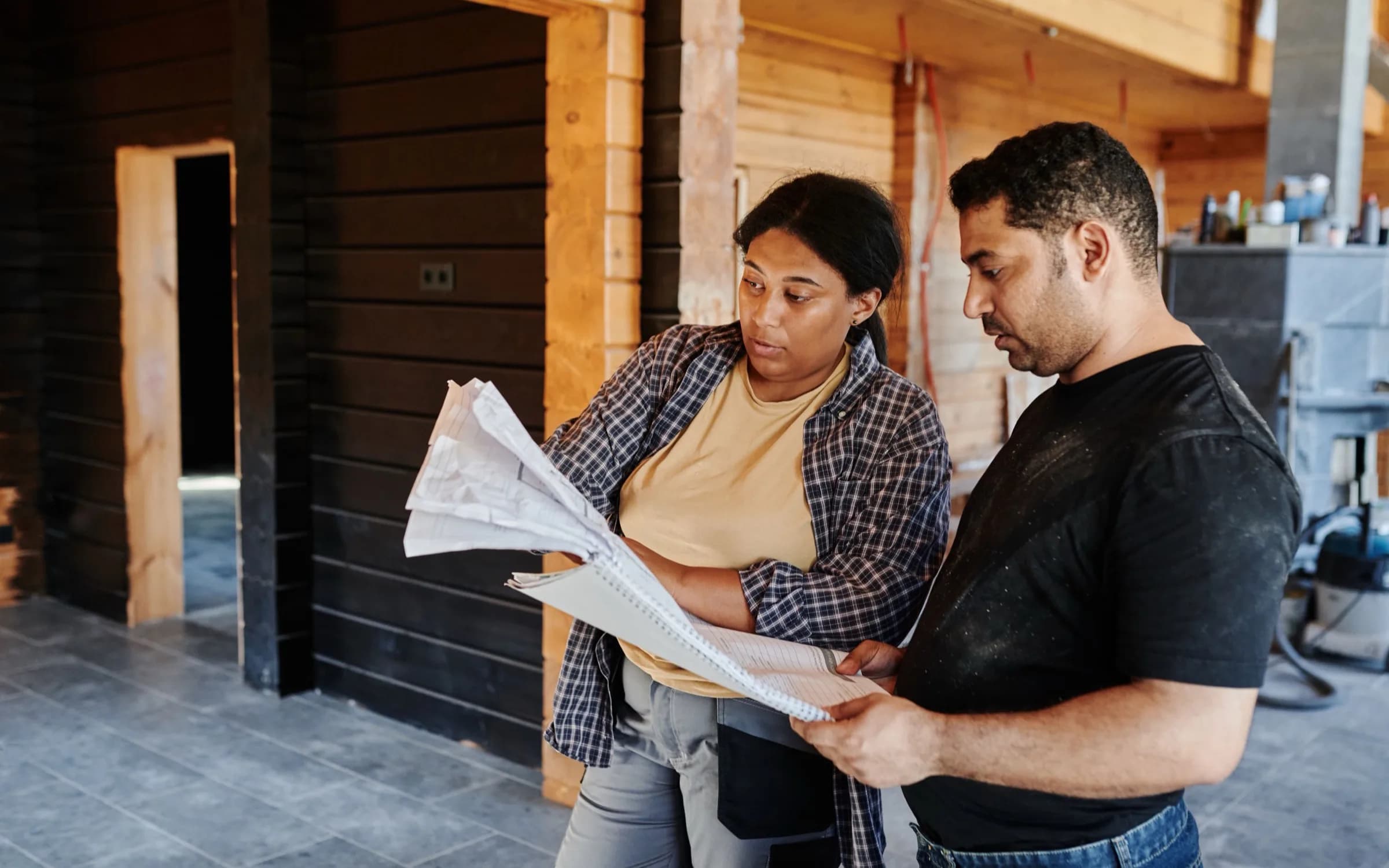
Our view: Choose bids by fit, not by how much time is left on the clock. A subcontractor who can price every package gets to pick the right ones.
Each step of a subcontractor bid, and who does it
Bid software means different things to different buyers. This is where Ruh starts and stops on a subcontractor bid.
| Step | What happens | Ruh | Who decides |
|---|---|---|---|
| Find the work | Plan rooms, invitations and relationships bring the job | Not Ruh | You |
| Read the set | Scope for your trades, each line citing the page it came from | Ruh writes it | Your estimator reviews it |
| Take off | Counts, lengths and areas measured on the sheets | Ruh measures it | Your estimator checks it |
| Price | Unit costs, labor, quotes and markups | Ruh prices it, the basis recorded on each line | Your estimator edits it |
| Propose | The proposal with scope, exclusions, alternates and terms | Ruh writes it, locked until approved | A person on your team approves it |
| Send and follow up | The bid goes to the general contractor | Not Ruh | Your team |
With the company price files option, this job's quotes come first, then your rate book and price files.
A worked bid-day price change
An illustrative drywall bid. A supplier quote for board arrives late, and the change runs through overhead, fee and contingency the way the budget compounds them.
Illustrative figures, not a customer job or a market price for board.
- 1Board in the approved budget3,400 sheets x $14.20 = $48,280
- 2Supplier quote at 11:003,400 sheets x $15.10 = $51,340
- 3Change in direct cost$51,340 - $48,280 = $3,060
- 4With overhead 10%, fee 8% and contingency 3%$3,060 x 1.10 x 1.08 x 1.03 = $3,744.34
What has to happen before the bid leaves?
Before anything leaves, a person on your team who approves proposals signs it off, reading the same words and figures the GC will get. The PDF and Word files stay locked until then, and an edit to what it prints sends it back for approval.
- ✓
Someone owns the number
Approval sits with the people your company gives Approve proposals to.
- ✓
Late changes need a fresh approval
After a bid-day change, approve the budget again, then approve the proposal again so it carries the new price.
- ✓
Your team sends it
Ruh never sends a bid. You download the approved file and send it yourself.
Price your first live bid with Ruh
- 1
Pick a live bid
Drawing PDFs, specifications and addenda for a job due soon.
- 2
We run scope and takeoff
Your trades only, every quantity tied to its sheet.
- 3
Price, approve and send
A person on your team approves the proposal, which approves the budget with it, and your team sends it.

Your first live bid, taken off at no cost
Pick a job you are bidding now. We take it off free, each quantity naming its sheet.
Heard from an excavation contractor
“Ruh helped us win a job during the demo, so we saw value before we even became a client.”
- means no area is measured, never a guess
- No scale
- Takeoff
- alternates priced with the base bid's markups
- Add or deduct
- Budget
- by Ruh. Your team sends every bid
- Never sent
- Proposal screen
Construction bid software FAQs
What subcontractors ask before pricing a live bid with Ruh.
What is construction bid software?
It is software that helps a contractor prepare and send bids. For a general contractor it usually means sending invitations and comparing subcontractor bids. For a subcontractor it means turning a bid package into a priced proposal, which is the part Ruh does.
Does Ruh find projects to bid?
Does Ruh send the bid to the general contractor?
Which trades does it cover?
What files does it read?
Where do the prices come from?
What does the free first takeoff include?
Price one live bid
A free takeoff on a set you are bidding, then a 30-minute call to go through it.