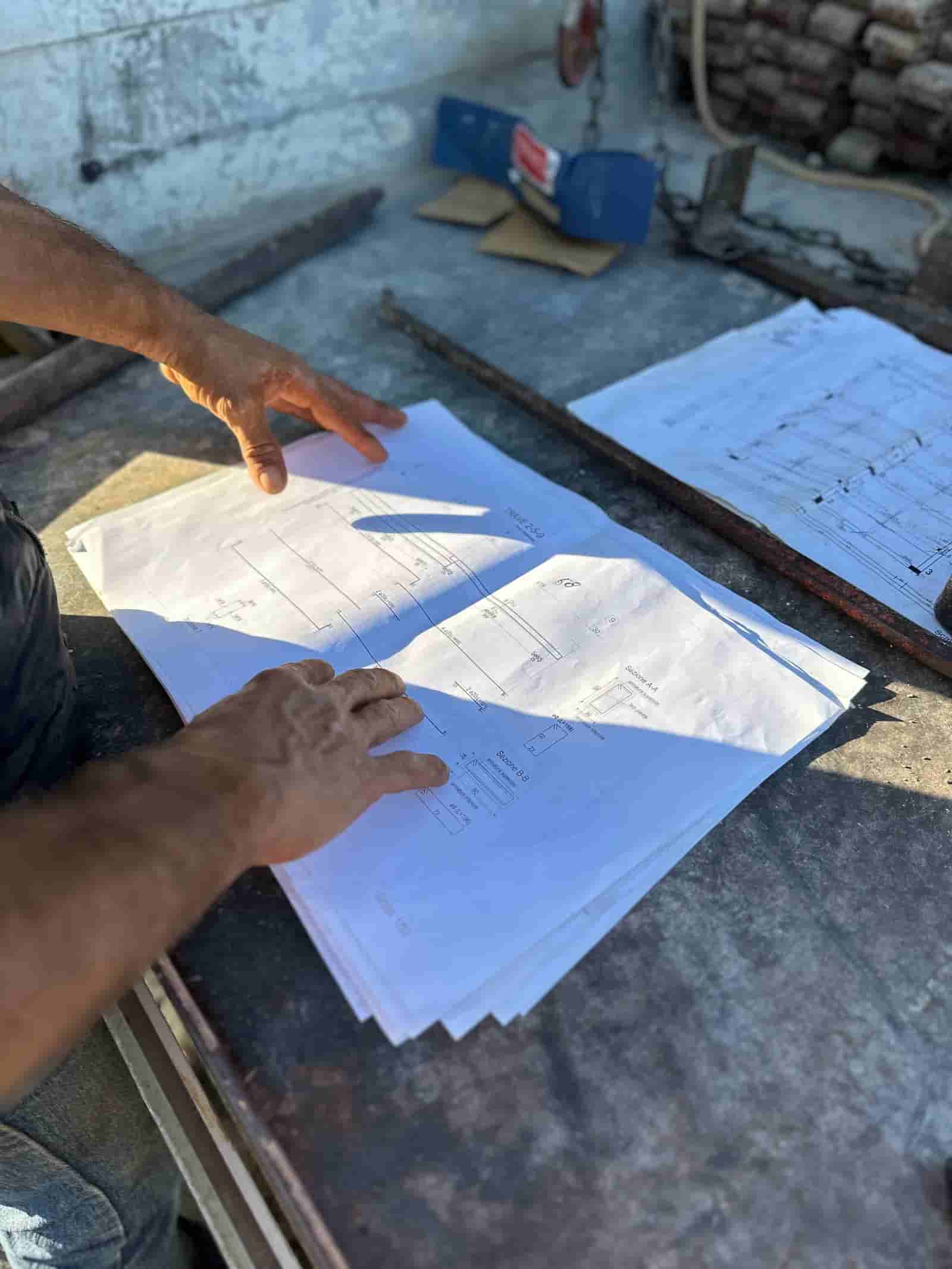
Turns are priced per unit type, at volume.
A unit turn is interior paint plus drywall repair, repeated at volume against a clock. The estimate is not a measurement problem, it is a per-unit-type problem, and the thing that decides whether it is profitable is how repair is separated from paint.
100% money-back guarantee. Terms apply.
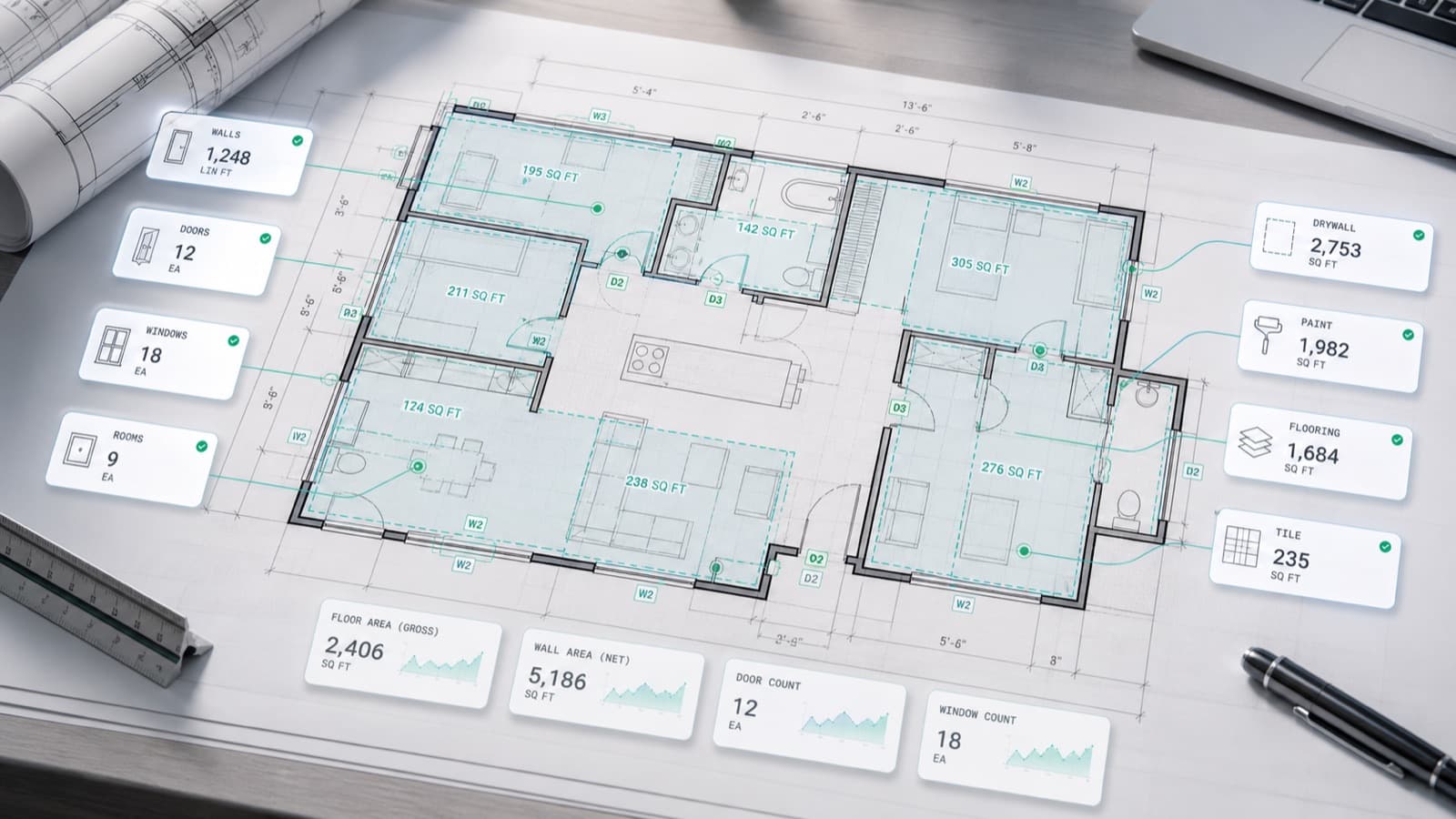
Repair and paint on one line
Turns get bid as a flat price per unit. That works until a unit needs real drywall repair, and then a flat price is a loss. Separating patch work from paint work per unit type is the whole game, and it is the split most turn bids do not make.
The quantities, and where each one comes from.
Units an estimator on this work would recognise, with the note that matters rather than a definition.
| Item | Unit | Note |
|---|---|---|
| Wall and ceiling area by unit type | sf | Priced once per type from the unit mix, then multiplied. Measuring every unit is wasted work. |
| Drywall patch areas | count and sf | Counted and sized separately from full sheet replacement, because a patch is labour and a sheet is labour plus material. |
| Finish level | level | Level 4 against level 5 is a labour delta, not a material one, and it is frequently stated in the painting spec rather than the finish schedule. |
| Doors, frames and trim | ea, lf | Counted per unit type. Frequently absorbed into a flat price and then found on site. |
| Units per day | count | The assumption the whole schedule rests on. State it in the proposal. |
The three things that decide whether the number holds.
A flat price per unit hides the repair
Two units with identical square footage can differ by hours of patching. Bid a base turn price plus a separate repair schedule with unit rates, so heavy units are priced rather than absorbed.
The finish level is usually buried elsewhere
Check the painting specification and the keynotes, not just the finish schedule. A level 4 wall finished with a high sheen coating will telegraph every seam, and the painter gets blamed for a drywall decision.
Volume changes the labour rate, not the quantity
Forty units in sequence is a different production rate from four scattered across a property. Say which you assumed, because the material is identical and the labour is not.
Try Ruh on a real bid. 100% money-back guarantee if you are not satisfied.*
*Scoped delivery, terms apply. Read the guarantee terms
Where to read next.
The trade pages, tools and guides that carry the detail this page summarises.
Unit turn estimating: frequently asked questions
Should a unit turn be a flat price or measured?+
Both. A base price per unit type covers the predictable paint and light patching, and a separate schedule of unit rates covers real drywall repair by area or by count. Flat-price-only bids lose money on heavy units and overcharge on clean ones. Splitting them means the owner pays for what a unit actually needed and you are not gambling on the average.
How do you estimate turns without walking every unit?+
Price one of each unit type properly from the unit mix, then multiply by the count from the rent roll. Walk a sample of each type to set the repair assumption, and state the sample size in the proposal. Walking every unit on a large property is not estimating, it is auditing, and it costs more than the difference it finds.
Why does the finish level matter so much?+
Because it is pure labour. The material is nearly identical between a level 4 and a level 5 finish, but the additional skim coat and sanding is significant time across a whole property. It is also frequently specified in the painting section or a keynote rather than the finish schedule, so it gets missed, and then a drywall decision shows up as a paint complaint.
What is the most expensive thing to get wrong on a turn bid?+
The units-per-day assumption. It sets the crew size, the duration and therefore the price, and it is the number nobody writes down. Forty sequential units and four scattered ones have the same square footage and very different production rates. Put the assumption in the proposal, because if it is not written down you have accepted whatever the property manager schedules.
Try Ruh on a job you are leveling now.
Put us on a live trade package rather than a canned demo. Ruh reads the drawings, measures that scope independently of any bid already in hand, and prices it on your own rates, with every line traceable to the sheet. If it does not hold up, you are covered by the guarantee below.
- 1Tell us about a job you are leveling and which trade package to take
- 2Ruh measures that scope from the drawings, independently of the sub bids you have received
- 3You get quantities you can hold the proposals against, each one traceable to the sheet
Put it on a property you are pricing now.
Ruh reads the walk photos and the documents, measures the scope, and prices it on your own rates, with every line traceable to what it was read from.