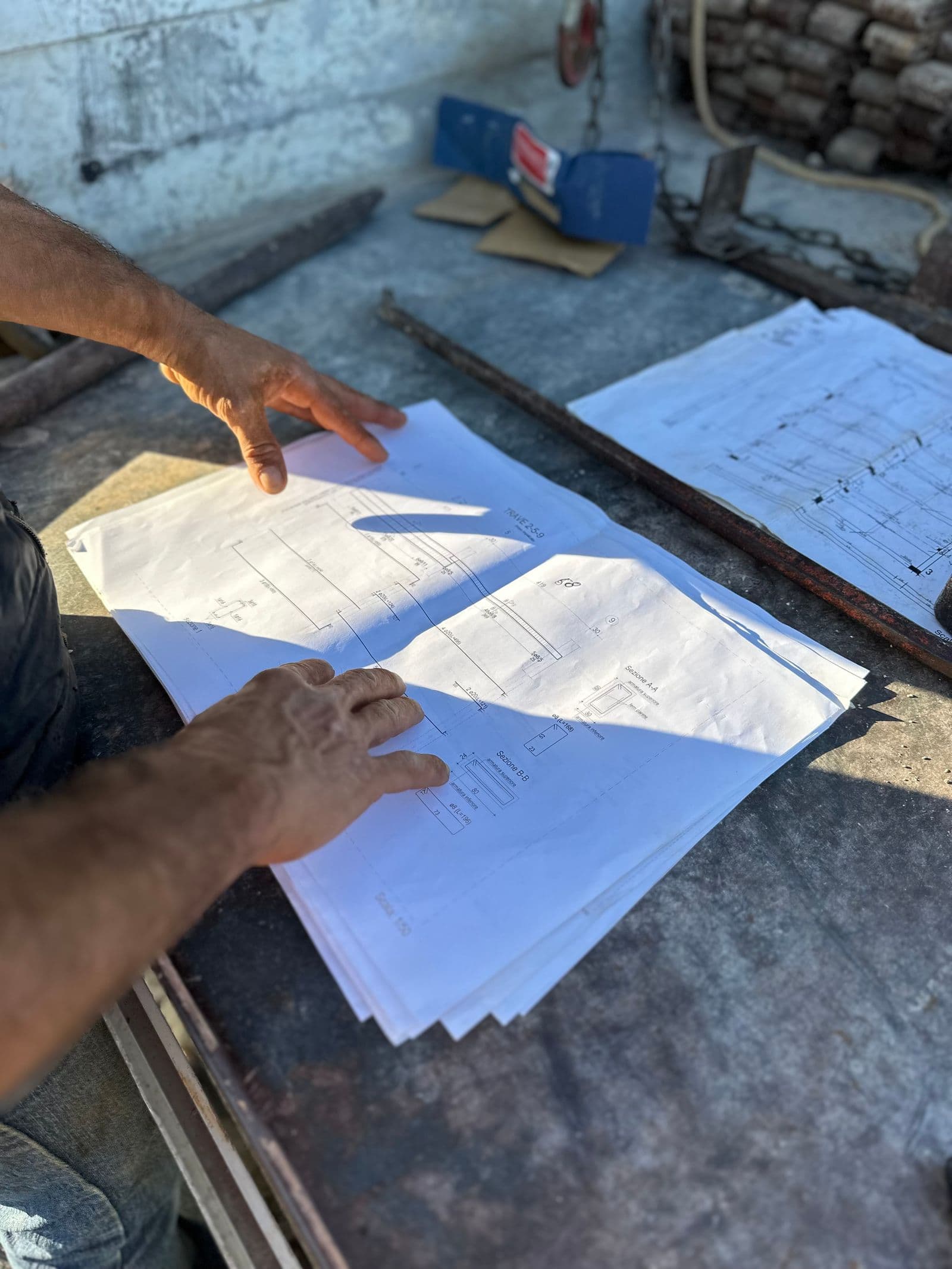
Construction contracts bury risk in language most teams skim under deadline pressure: pay-when-paid clauses, broad indemnification, tight notice windows, and scope that reads clean until the field proves otherwise. AI contract review gives a project team a fast, consistent first pass so the people who own the decision spend their attention on the clauses that matter, not on hunting for them. The sections below explain what the AI actually reads, what it flags, where the human stays in control, and how Ruh runs this inside your own systems on your own documents.
What does AI contract review for construction actually do?
It reads the full executed agreement and its attachments (the prime contract, subcontract, general conditions, exhibits, and incorporated documents) and surfaces the language a reviewer would want to see. It does not approve, sign, or "decide" anything. Think of it as a tireless first reader that never gets tired on page 40 of the general conditions.
A useful first pass does four things:
- Locates risk clauses by category so nothing important hides in dense boilerplate.
- Quotes the exact language and cites the page and section, so a human can verify in seconds.
- Flags what is missing, such as an absent mutual notice provision or no cap on liquidated damages.
- Compares against your standard positions, the clauses your team has already decided it will and will not accept.
The output is a structured summary, not a verdict. Counsel and the project team make the call.
Which risk language does it flag first?
These are the categories that most often turn into disputes on US commercial projects, and the ones the AI is tuned to find:
- Payment terms. Pay-when-paid versus pay-if-paid, retention percentage and release timing, conditions precedent to payment, and how change order pricing gets approved. The distinction between "when" and "if" can shift who carries the risk of owner nonpayment, so the AI quotes the operative sentence rather than paraphrasing it.
- Indemnification. Scope of the indemnity, whether it is mutual, whether it reaches the indemnitee's own negligence, and how it interacts with insurance and additional insured requirements. In some states certain broad-form indemnity language is limited by anti-indemnity statutes, so the AI flags the clause for review rather than asserting it is enforceable.
- Notice requirements. Day counts for claims, delay, and changed conditions, the required method (written, certified, through a portal), and who must receive it. Missed notice is one of the most common reasons a legitimate claim gets denied, so short or unusual windows get surfaced prominently.
- Scope ambiguity. "As required," "to the satisfaction of," "all work reasonably inferable," and gaps between the scope narrative and the drawings or specifications. The AI marks vague obligations and points to where the same scope is described differently in two places.
- Schedule and damages. Liquidated damages rates, whether they are capped, no-damage-for-delay clauses, and float ownership.
- Termination and dispute resolution. Termination for convenience, cure periods, venue, governing law, and whether disputes go to arbitration or court.
Each flag is a starting point for a human, never a conclusion.
How does the AI read a contract that lives in your documents?
Ruh runs in your own tenant on your own documents. The contract does not leave your environment to be reviewed, and the AI works from the executed files your team already stores, not a generic template library. That matters for two reasons: the review reflects your actual deal, including the redlined exhibits and the version that was signed, and your contract data stays inside your security boundary.
Because it works on your real documents, the AI can also compare an incoming subcontract against the prime contract you are bound to, and flag where a downstream agreement fails to flow down an obligation you are required to pass through. This is the same document-grounded approach you can see how Ruh vets change orders with, applied to the contract itself.
A worked example: reviewing an incoming subcontract
Here is a concrete, illustrative walkthrough. The numbers and clauses are examples, not data from a real project.
What goes in: A project engineer uploads an executed subcontract (28 pages), its exhibits, and the prime contract it sits under. The team has already loaded its standard positions, for example "no pay-if-paid," "notice windows of at least 14 days," and "indemnity must be mutual."
What the AI does:
- Reads all documents and builds a clause map by category.
- Flags Section 7.2 as pay-if-paid and quotes the sentence, noting it conflicts with the team's standard position and may be limited under the project's governing law (flagged for counsel, not decided).
- Flags a 5-day notice window for claims in Section 11 as shorter than the team's 14-day standard and shorter than the 21-day window in the prime contract, creating a flow-down gap.
- Flags the indemnity in Section 9 as one-directional and reaching the contractor's sole negligence, and marks it against the "must be mutual" standard.
- Flags scope ambiguity: the exhibit says "all work reasonably inferable" while the drawings show a narrower limit of work, and notes the mismatch.
- Produces a summary with each flag, the exact quoted text, the page and section, and the standard it conflicts with.
What the human checks: The PM reviews the flags, confirms which are real, and routes the indemnity and pay-if-paid items to counsel. Counsel decides what to negotiate, accept, or escalate. The project engineer turns the accepted flags into redline comments. The AI drafted the first read; the people kept the judgment and the sign-off.
Total reviewer time shifts from reading 28 pages cold to confirming a short, cited list. The decision authority does not move.
Is this legal advice?
No. This is the most important line on the page. AI contract review assists a human review. It is not a lawyer, it does not provide legal advice, and it does not replace counsel. Enforceability of clauses like broad-form indemnity, no-damage-for-delay, and pay-if-paid varies by state and by the facts of the deal, and only a qualified attorney can advise on your specific contract. The AI's job is to make sure the right clauses reach the right people quickly. The call stays with your team and your counsel.
How does it fit with the tools we already use?
It reads the documents where they already live and produces output your team can act on in its existing process. The flags are exportable as comments or a summary that a reviewer can paste into a redline, attach to a routing email, or carry into a negotiation log. There is an audit trail of what was flagged and what the team did with each flag, which is useful when you need to show why a clause was accepted or pushed back. The goal is to compress the first read, not to add another system your PMs have to babysit.
What stays human?
Everything that involves judgment. The AI finds and quotes; people interpret, negotiate, and sign. A reviewer confirms each flag is real, counsel rules on enforceability and strategy, and an authorized signer commits the company. The AI never sends, signs, or accepts a clause on its own. That separation is the point: faster reading, same accountability.
Treat AI contract review as a way to get a complete, consistent first pass on every agreement instead of a thorough pass on the few you have time for. It surfaces payment, indemnity, notice, and scope risk with the exact language attached, so your team spends its attention on the clauses that decide who carries the risk. Run it on your own documents, keep counsel in the loop, and let the people who sign keep signing.
Why teams trust Ruh with this
The two reasons construction teams hesitate on AI are accuracy and data security. Ruh runs in your own tenant on your documents, every output is traceable and reviewed by your team before it is used, and the work is backed by a money-back guarantee. The AI does the heavy lifting, your people keep the judgment and the sign-off.
Try Ruh on a real bid. 100% money-back guarantee if you are not satisfied.*
*Scoped delivery, terms apply. Read the guarantee terms
Ready to go deeper? see how Ruh vets change orders.
Frequently asked questions
How accurate is AI contract review, and what happens when it is wrong?+
The AI is built to over-surface rather than miss, so expect it to flag some clauses that turn out to be acceptable. Every flag includes the exact quoted text plus the page and section, so a reviewer can confirm or dismiss it in seconds. It is a first-pass reader that points your team at the right language; a human verifies each item and counsel decides the close calls.
Does our contract data leave our environment?+
No. Ruh runs in your own tenant on your own documents. The contract, exhibits, and prime agreement are reviewed inside your security boundary, not shipped to a generic outside service. Because it works on your actual signed files, the review reflects your real deal, including redlined exhibits and the executed version.
Will this work with the tools and process we already use?+
It reads documents where they already live and outputs flags as exportable comments or a cited summary your team can drop into a redline, a routing email, or a negotiation log. It also keeps an audit trail of what was flagged and what your team did with each item. The aim is to shorten the first read, not to add another system to manage.
Is the AI giving us legal advice?+
No. AI contract review assists a human review and is not legal advice. Enforceability of clauses like indemnity, no-damage-for-delay, and pay-if-paid varies by state and by the facts, and only a qualified attorney can advise on your specific contract. The AI surfaces and quotes the language so the right clauses reach counsel faster; the legal call stays with your lawyer.
What decisions stay with people?+
All of them that involve judgment. The AI finds and quotes risk language; your team interprets it, negotiates, and signs. A reviewer confirms each flag is real, counsel rules on enforceability and strategy, and an authorized signer commits the company. The AI never accepts a clause, sends, or signs on its own.
Reading about it is slower than watching it. 30 minutes, your data, your team in the room.
Book a demoFigures on this page are illustrative. Construction estimates depend on project-specific conditions, source documents, market pricing, and professional judgment. Ruh's AI assists the estimator and does not replace professional review: your team reviews, validates, and approves every estimate, bid, and pricing decision.