Part 01 made the case that a data center campus is a delivery problem, and that the schedule is hostile. Take that seriously and the order of operations writes itself. If time is the enemy, the first move is not to draw. It is to learn, fast and cheap, whether a site can carry the load at all. That answer is almost always about power.
The Site Is a Power Path
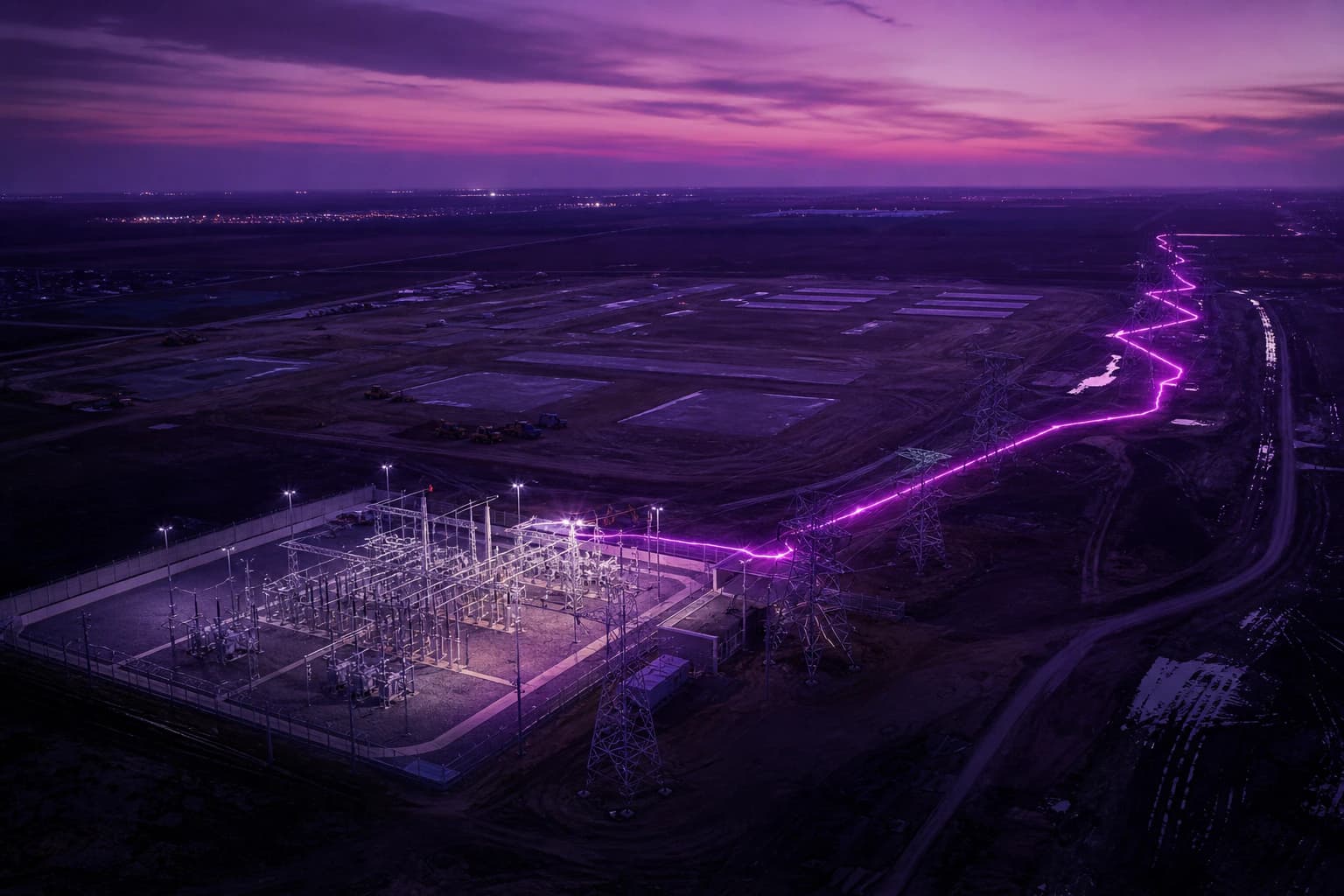
Power is the gating question. Megawatts, interconnection timelines, and utility capacity decide whether a site is real. A parcel can carry a fair price, clean dirt, and friendly zoning and still be worthless, because the path to interconnect stretches for years while the demand it was meant to serve moves on. Take a 200 MW campus as a hypothetical. It is not sited on land. It is sited on a power path, and everything downstream assumes that path exists.
Power decides everything.
Answering Late Is the Expensive Way
Design cycles fight the market. The traditional order options the land first, commissions the studies next, and then waits. By the time the interconnection answer comes back, land money and design money are already committed to a parcel that may never connect in time. That is the exact failure Part 01 named: paying to design a site that was never going to serve capacity.
The cheaper order is the reverse. Ask the gating question before the commitment, not after. A site that cannot interconnect should die on the desk, in an afternoon, not in a quarter of billed work.
Feasibility First, From Real Data
This is the part we are previewing. In preview, the feasibility engine gathers the hard questions into one answer: power availability and interconnection, water, fiber, environmental clearances, and zoning, pulled from real data sources instead of a fresh round of consultant memos. The output is not a prettier deck. In preview, it is meant to be one report, assembled before land and design money is committed, so a dead site dies cheap.
The feasibility engine and the parcel scheme it produces are in preview, not shipped; the bid-side products, AI Takeoff and Estimating, are what runs for customers today.
Solving the Campus on the Real Site
A feasibility answer is only useful once it becomes a decision about a parcel, so the afternoon does not stop at a yes. In preview, the surviving site gets a scheme tested on the actual ground: module pads laid to the real setbacks, a circulation spine the deliveries and the crews can actually use, and a substation reservation held on the parcel for the power path the feasibility read found. This is the power question made spatial. Then, still in preview, the whole thing is phased, delivery sequenced against the interconnection timeline rather than against a wish, so first energization and first modules line up instead of colliding.
A Filter, Not a Promise
Feasibility answered early is a filter, not a guarantee. The engine reads real sources and puts the constraint in front of a person. It does not build a substation, clear a queue, or overrule a utility, and the scheme is a starting point for the design partners who steer intent, not a replacement for them. What changes is when you learn the answer and what it costs to learn it. Cheap to ask, expensive to guess wrong.
The receipts discipline from Part 01 carries over. Every input in the report should say where it came from and how sure it is, source by source, so a reader can challenge any line. A feasibility answer that cannot show its sources is not a decision. It is a hunch.
From an Approved Model to a Drawing Set
A tested scheme is still not a set. Once the model is approved, the next question is production: in preview, turning that approved model into the drawing set that becomes the contractual spec, with revisions carried on the record instead of scattered across inboxes. That is where the next part goes.