Connect and map the books
Connect Ruh to your QuickBooks company file, Online or Desktop, and let it read the chart of accounts, items, and vendor list. Map your cost codes to the GL accounts and items the accountant already uses, so everything Ruh codes lands on a real account name rather than a guess. This one-time setup is what keeps the books clean once transactions start flowing.
Run the construction work in Ruh
Drop in vendor invoices and subcontractor bills, and Ruh extracts the line items, codes them to cost codes and GL accounts, and ties them back to the job. Build customer invoices from the job costing detail, and watch estimate-to-actual as bills land against each code. All the construction-side intelligence happens here, before anything touches the books.
Review and sync back to QuickBooks
The AP lead or estimator reviews each coded bill and invoice, fixing any coding before it posts. Approved bills sync to QuickBooks as bills, customer invoices sync as invoices, and any new vendor pushes back to keep the list clean. Payment status reads back into Ruh, so the accountant runs payments in QuickBooks exactly as they always have.
Catching duplicate bills before they post
Illustrative AP volume for a smaller GC, recomputable from the numbers shown.
Try Ruh on a real bid. 100% money-back guarantee if you are not satisfied.*
*Scoped delivery, terms apply. Read the guarantee terms
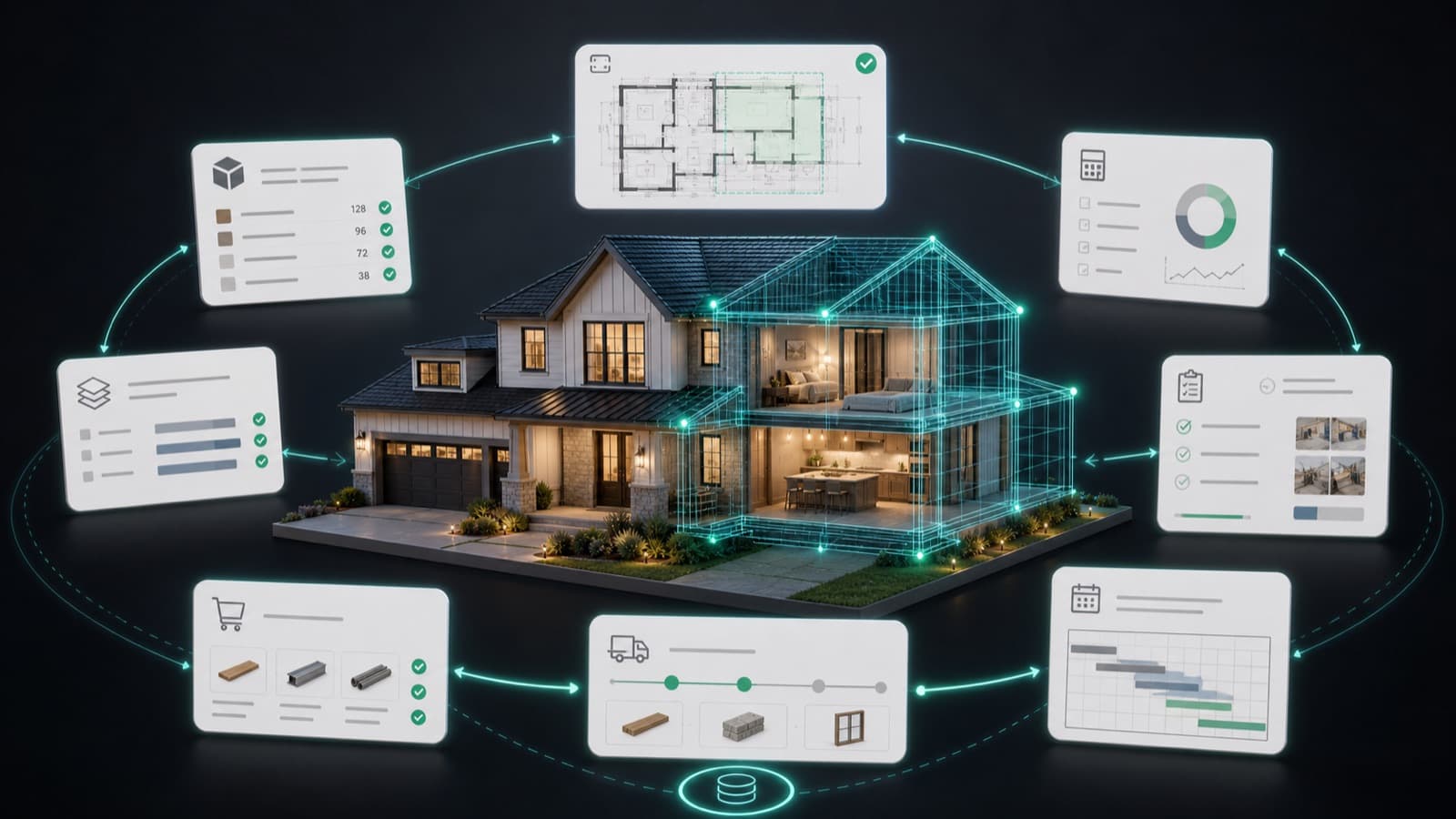
Ruh reads the drawings and the documents: the vendor invoice, the subcontractor bill, the PO it should match. It pulls the line items, codes them to the contractor's own cost codes, and checks each one against the takeoff and the purchase order before it ever posts. What lands in QuickBooks is a coded, traceable bill, not a scanned PDF the bookkeeper has to retype.
The judgment stays with the AP lead and the estimator. Ruh drafts the coding and flags the duplicates and the over-PO amounts; a person reviews each line, adjusts the cost code where the job demands it, and signs off before the sync runs. The books only ever see transactions a human approved.
Ruh + QuickBooks: frequently asked questions
Does connecting Ruh to QuickBooks work with both QuickBooks Online and Desktop?+
Teams connect Ruh with QuickBooks in either flavor. The pattern is the same: QuickBooks stays the system of record for the chart of accounts, items, vendors, and payments, while Ruh handles the construction-side work and syncs clean, coded transactions back. Confirm which edition your books run in during setup, because the connection details differ between Online and Desktop.
Will syncing from Ruh create duplicate vendors or bills in QuickBooks?+
The connection is built to avoid that. Ruh matches against your existing QuickBooks vendor list before posting a bill, and only creates a new vendor when there is no match, pushing it back so both sides stay in sync. On the bill side, Ruh flags likely duplicates at review so the AP lead can catch them before anything posts to the books.
Does Ruh replace QuickBooks for a smaller contractor?+
No. The point of connecting the two is that each tool does what it is good at. QuickBooks keeps the books, runs AP payments, and stays the system of record your accountant already trusts. Ruh adds the construction layer QuickBooks does not have: invoice extraction, job costing detail, and estimate-to-actual, then feeds clean transactions into the books.
How do customer invoices and job costs flow between Ruh and QuickBooks?+
Customer invoices built in Ruh from job costing detail post to QuickBooks as customer invoices, carrying the customer, item, and amount. Coded AP bills post as bills for your normal approval and payment run. Payment status reads back from QuickBooks into Ruh, so the job costing in Ruh reflects what has actually been paid and received.
Connected estimating beats copy-paste. See it on your plans.
Book a demo